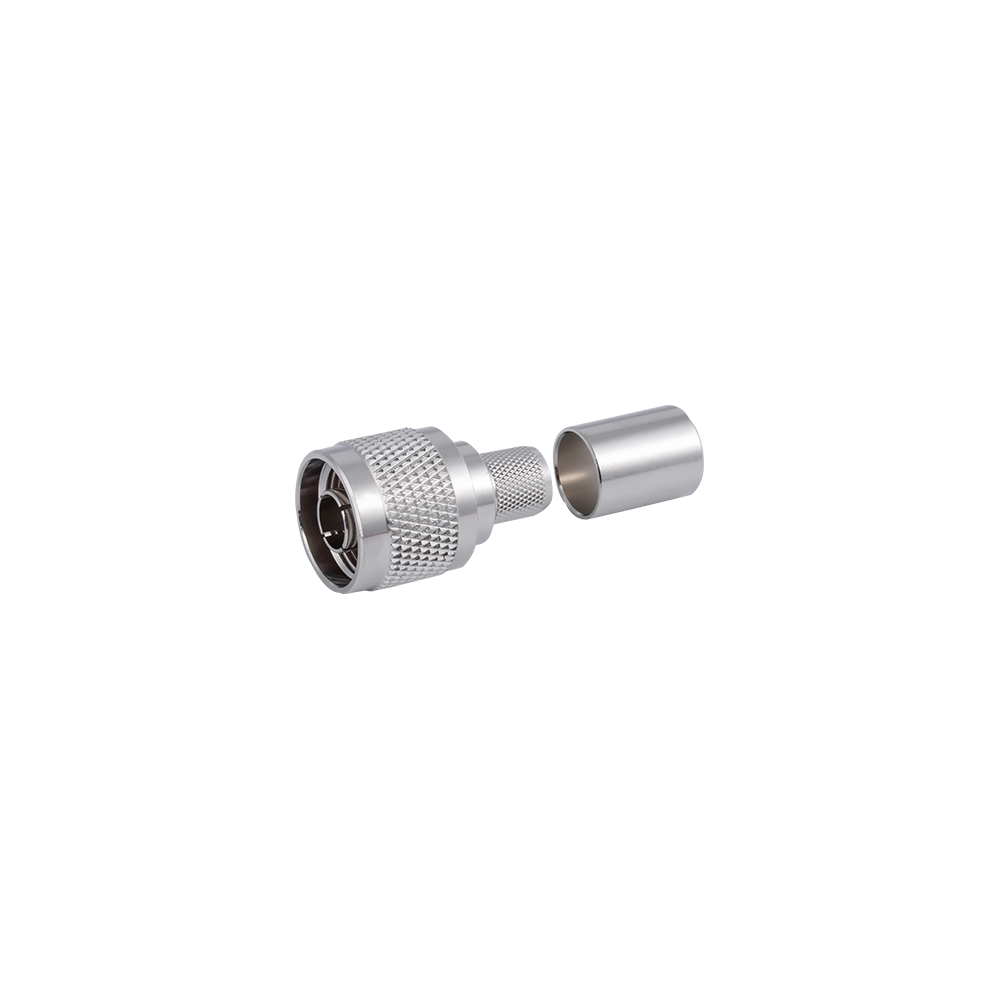
As a manufacturer of RF coaxial connectors and cable assemblies, Yangzhou Jingcheng Electronics Co., Ltd (JC Company) regularly works with the RPN connector (Reverse Polarity N-type connector) as part of its reverse polarity connector series. This article summarizes the technical background, structure, applications, and comparison points relevant to RPN connectors used with flexible cable, based on general RF connector industry standards.
1. What Is an RPN Connector
The RPN connector is a reverse polarity variant of the standard Type N RF coaxial connector. In a conventional Type N connector, the plug carries a male center pin and the jack carries a female center socket. In the reverse polarity configuration, this arrangement is inverted: the RPN plug has a female center contact housed inside a male-style coupling shell, and the RPN jack has a male center pin housed inside a female-style coupling shell. As a result, an RPN connector is mechanically incompatible with a standard Type N connector, even though the outer coupling threads may appear similar.
This reverse gender configuration originated from regulatory requirements in the wireless communications industry, where certain consumer radio equipment (such as early Wi-Fi routers) was required to use non-standard connector polarity to prevent unauthorized connection to high-gain external antennas or amplifiers not certified for that equipment.
2. Structure and Electrical Characteristics
Since the RPN connector is derived from the Type N interface, it generally follows Type N mechanical dimensions and threaded coupling mechanisms, while inverting only the center contact gender. Typical characteristics referenced in the industry include:
- Impedance: 50 ohm, consistent with standard Type N connectors
- Coupling mechanism: Threaded coupling nut, similar to Type N
- Frequency range: Type N series connectors are commonly rated up to approximately 11 GHz, with some variants extended further, depending on connector design and cable used
- Center contact: Reversed gender compared to standard Type N (female contact in the plug body, male contact in the jack body)
- Body material: Typically brass or nickel-plated brass, with gold-plated center contacts, consistent with common RF connector construction practices
3. Flexible Cable Compatibility
RPN connectors are produced in versions suited for termination onto flexible coaxial cable, generally through crimp or clamp assembly methods. Flexible cable types commonly paired with RPN connectors include standard 50 ohm flexible coaxial cables used in wireless communication, antenna feeder lines, and RF test cable assemblies. The choice of cable diameter and construction affects attenuation, flexibility, and the maximum operating frequency of the finished cable assembly.
As with other coaxial connector types, matching the connector interface dimensions to the correct cable size is necessary to maintain impedance consistency and mechanical retention along the length of the assembly.
4. Common RPN Connector Types
| Type |
Center Contact Gender |
Typical Assembly Method |
Common Use Context |
| RPN Plug |
Female center contact |
Crimp or clamp on flexible cable |
Cable-end termination |
| RPN Jack |
Male center contact |
Panel mount or cable-end termination |
Equipment interface or cable-end termination |
| RPN Bulkhead Jack |
Male center contact |
Panel/bulkhead mount |
Enclosure feed-through |
5. Application Areas
RPN connectors and RPN-terminated flexible cable assemblies are used in several categories of wireless equipment and infrastructure, including:
- Wireless network access points and routers requiring reverse polarity antenna interfaces
- External antenna feeder cables for wireless communication equipment
- Base station and repeater interconnection where reverse polarity interfaces are specified
- RF test and measurement setups involving reverse polarity equipment
6. RPN Compared with Related Reverse Polarity Connectors
| Connector |
Base Interface |
Size |
Typical Frequency Range |
| RPN |
Type N |
Medium |
DC to approximately 11 GHz |
| RP-SMA |
SMA |
Small |
DC to approximately 18 GHz |
| RP-TNC |
TNC |
Small to medium |
DC to approximately 11 GHz |
The main differentiator among these reverse polarity families is the base connector interface they derive from, which determines overall connector size, coupling method, and general frequency capability, rather than the reverse polarity feature itself.
7. Manufacturing Considerations
Producing RPN connectors for flexible cable assemblies requires attention to dimensional precision of the reversed center contacts, consistent plating quality for corrosion resistance and low contact resistance, and reliable crimp or clamp termination to the flexible cable to maintain mechanical strength and signal integrity across the connector-cable interface. As a company engaged in the design, production, and testing of RF coaxial connectors and cable assemblies, JC Company applies these considerations across its reverse polarity connector series, including RPN connectors, using in-house manufacturing and testing equipment.
8. Frequently Asked Questions
Is an RPN connector compatible with a standard Type N connector?
No. Due to the reversed center contact gender, an RPN connector will not mate correctly with a standard Type N connector, even though the outer coupling nut dimensions are similar.
Why do reverse polarity connectors exist?
Reverse polarity connectors were introduced primarily to meet regulatory requirements for certain categories of wireless communication equipment, preventing direct connection to non-certified external antennas or amplifiers.
What cable types are typically used with RPN connectors?
RPN connectors are commonly terminated onto 50 ohm flexible coaxial cables through crimp or clamp assembly, with the specific cable size selected according to the required attenuation, flexibility, and frequency performance of the application.
Can RPN connectors be custom manufactured for specific cable assemblies?
Yes. RPN connectors can be produced and assembled onto flexible cable according to specified cable type, connector plating, and assembly length as part of a custom cable assembly production process.
Summary
The RPN connector is a reverse polarity variant of the Type N interface, used primarily where regulatory or equipment design requirements call for a non-standard center contact gender arrangement. When paired with flexible cable, RPN connectors support a range of wireless communication and antenna feeder applications. Attention to contact dimensional accuracy, plating, and termination method remains central to producing reliable RPN cable assemblies, an area in which JC Company, as a designer and manufacturer of RF coaxial connectors, is engaged as part of its reverse polarity connector product range.


 English
 中文简体
中文简体