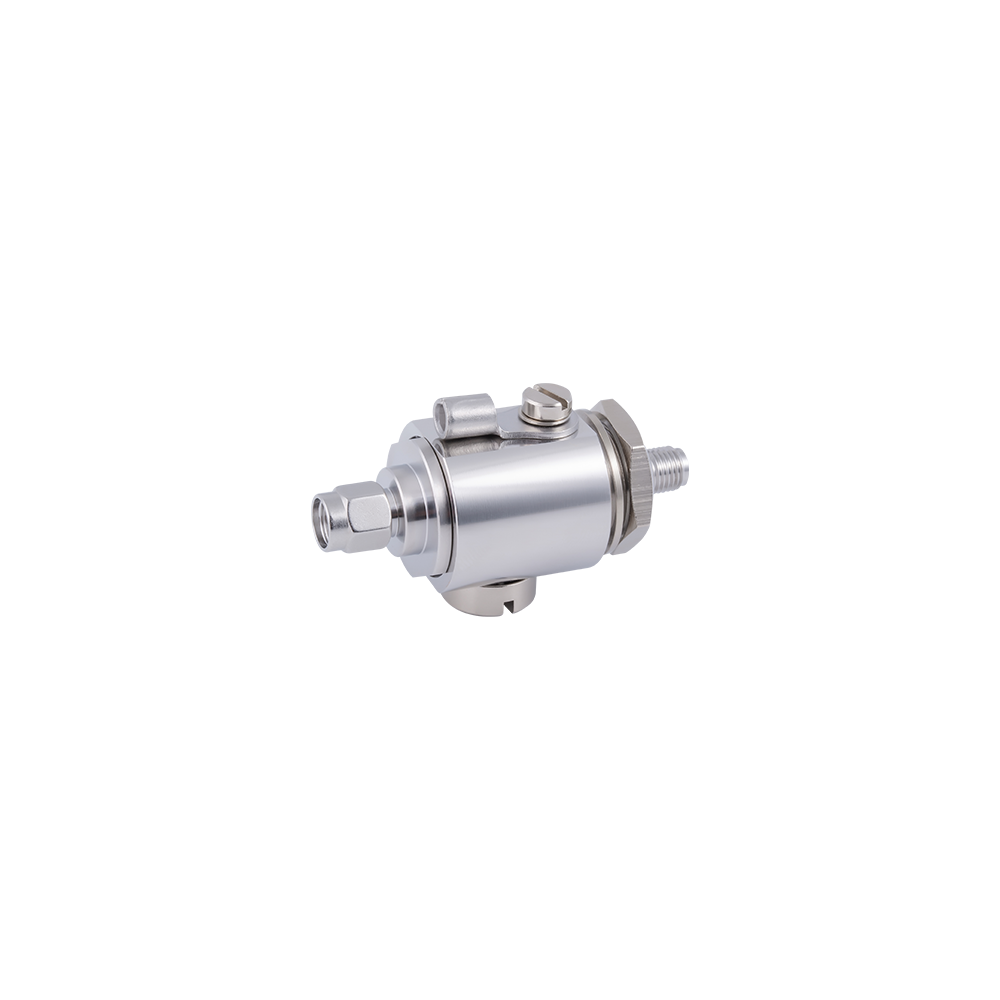
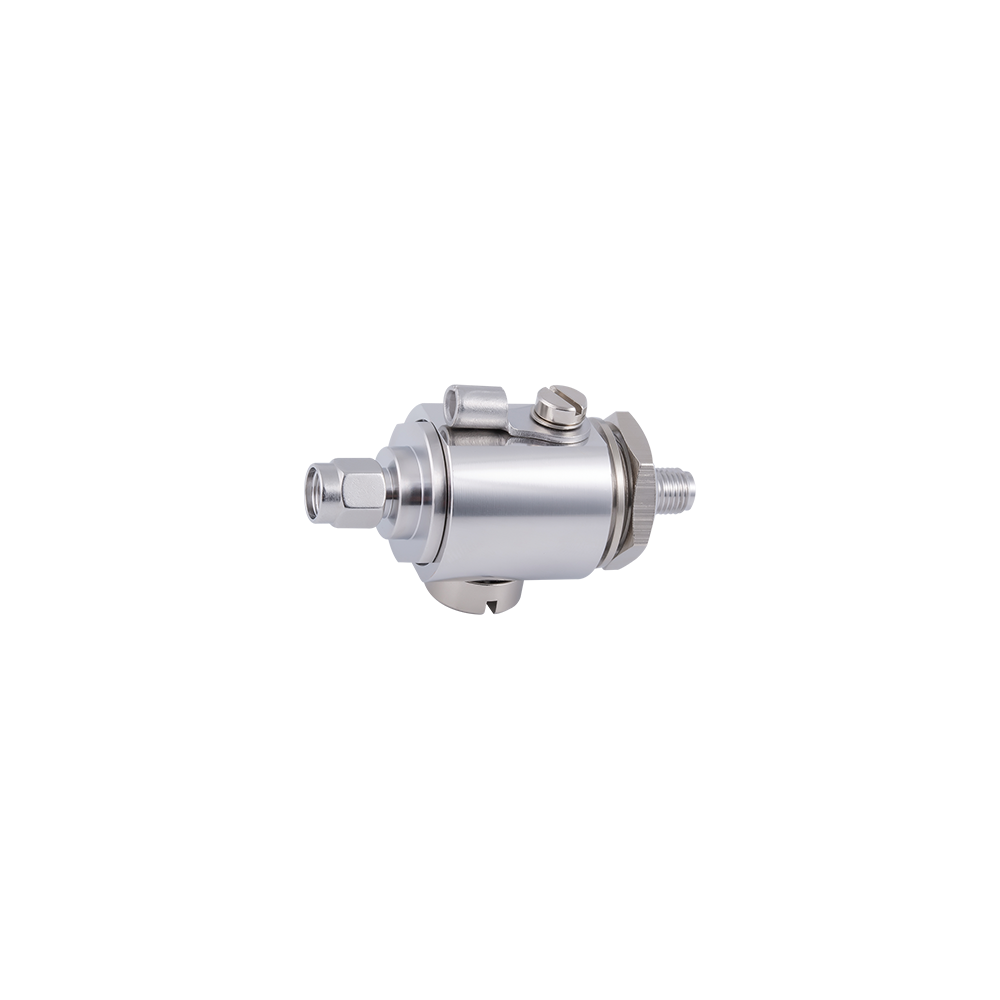
Product Overview The RP-SMA Coaxial Lightning Protector from Yangzhou Jingcheng Electronics is optimised for the reverse-polarity SMA (RP-SMA) interface standard, which is the dominant coaxial connection used on consumer and commercial Wi-Fi routers, access points, and IoT gateway devices. Installed between the antenna and the radio module or router chassis, this compact inline protector diverts transient surge energy that can couple into RP-SMA antenna ports through exposed omnidirectional or directional antennas, protecting sensitive Wi-Fi chipsets and associated power management circuitry from surge damage.
Key Features RP-SMA female-to-male inline configuration matching the standard antenna-port polarity convention on routers and access points Operating frequency from DC to 6 GHz covering Wi-Fi 2.4 GHz, 5 GHz, and 6 GHz (Wi-Fi 6E/7) bands 50 Ω impedance matching with low capacitance GDT to preserve Wi-Fi receiver sensitivity and throughput Compact subminiature form factor—minimal added cable length—suitable for installation directly at the router chassis Gold-plated brass contact surfaces for low-resistance connection and corrosion resistance in indoor environments Fast GDT response time to protect CMOS-level Wi-Fi front-end components from overvoltage transients Available in both PCB-mount and inline cable versions for OEM integration and field installation RoHS-compliant and produced under ISO 9001 certified processes
Typical Applications Consumer and enterprise Wi-Fi router and access point antenna port protection IoT gateway device antenna interface surge suppression Outdoor Wi-Fi CPE (customer premises equipment) antenna connection Wireless industrial control panel antenna port protection MIMO antenna array port protection on multi-antenna Wi-Fi systems
FAQ Q: What is the difference between SMA and RP-SMA, and which do I need? A: RP-SMA reverses the male/female gender of the inner contact relative to the outer thread; most Wi-Fi routers and access points use RP-SMA on the equipment side—confirm your equipment's port gender before ordering. Q: Will the protector reduce Wi-Fi range or throughput? A: The low-capacitance GDT design minimises impact on Wi-Fi antenna gain and receiver noise figure; insertion loss at 2.4 GHz and 5 GHz is very low—contact us for measured data. Q: Is a version available with a pigtail cable instead of inline connectors? A: Yes, pigtail versions with flexible low-loss cable are available for applications requiring physical separation between the router chassis and the protector. Q: Can I use this to protect both TX and RX antenna ports on a MIMO system? A: Yes, one protector per antenna port is the recommended approach for full MIMO TX/RX protection.
Yangzhou Jingcheng Electronics Co., Ltd., a premier China RP-SMA Coaxial Lightning Protector Manufacturer and RP-SMA Coaxial Lightning Protector Factory, was founded in 1999. It is a high-tech enterprise specializing in the R&D and manufacturing of RF coaxial connectors, cable assemblies, and passive microwave components.
Equipped with a comprehensive R&D and production system, the company has obtained international certifications including ISO9001. Adhering strictly to standards such as MIL, IEC and GB, we offer over 30 product series with more than 2,000 specifications, covering SMA, BNC, N-type and other mainstream models. Our products are widely applied in the fields of communications, aerospace, automotive electronics and beyond, and exported to many countries and regions across Europe, America and Asia.
We uphold the tenet of "Quality as the Foundation, Customers as the Core", committed to providing reliable interconnection solutions and professional services for global clients.
RP-SMA Coaxial Lightning Protector Industry knowledge
1. RP-SMA Coaxial Lightning Protector Overview
The RP-SMA Coaxial Lightning Protector is a compact surge protective device designed for the reverse‑polarity SMA (RP‑SMA) interface—a standard adopted widely in consumer and enterprise Wi‑Fi routers, access points, and IoT gateways. Installed directly between the antenna port and the radio module, this protector diverts transient surge energy that may couple into antenna systems through exposed antennas, safeguarding sensitive Wi‑Fi chipsets and front‑end components from overvoltage damage.
Yangzhou Jingcheng Electronics Co., Ltd., with over two decades of RF connector manufacturing experience, offers RP-SMA Coaxial Lightning Protectors that maintain 50Ω impedance and operate from DC to 6 GHz, covering the full Wi‑Fi 2.4 GHz, 5 GHz, and 6 GHz (Wi‑Fi 6E/7) bands. Manufactured under ISO9001 certification and complying with MIL, IEC, and GB standards, these protectors feature gold‑plated brass contacts and low‑capacitance gas discharge tube (GDT) technology, ensuring minimal signal degradation while providing effective surge suppression for indoor and outdoor wireless equipment.
The RP‑SMA interface reverses the gender of the inner contact relative to the outer thread compared to standard SMA, making it the de‑facto connection on Wi‑Fi equipment. The RP-SMA Coaxial Lightning Protector is available in both inline cable and PCB‑mount versions, accommodating OEM integration and field installation. Its compact subminiature form factor adds negligible length to the RF path, making it suitable for space‑constrained router chassis and multi‑antenna MIMO systems.
Key Attributes of RP-SMA Coaxial Lightning Protector:
50Ω impedance matching for Wi‑Fi and IoT radio systems
DC – 6 GHz frequency coverage for all Wi‑Fi generations
Low insertion loss (≤ 0.3 dB) and VSWR (≤ 1.25:1) across the band
GDT‑based surge protection with 10 kA (8/20 μs) discharge capacity
2. Frequency Response and Insertion Loss Performance
The electrical performance of an RP-SMA Coaxial Lightning Protector is critical for maintaining wireless link quality. Insertion loss and return loss (VSWR) directly affect receiver sensitivity and transmit power. The following chart shows typical insertion loss over the operating frequency range for protectors manufactured by Yangzhou Jingcheng Electronics.
The line chart above compares insertion loss for two common protection variants of the RP-SMA Coaxial Lightning Protector—pure GDT and hybrid (GDT with TVS diode). The GDT‑based protector exhibits a flat insertion loss below 0.15 dB from DC to 3 GHz, rising slightly to 0.2 dB at 6 GHz. The hybrid version shows marginally higher loss at higher frequencies due to added capacitance but maintains values under 0.25 dB across the entire band. This low loss ensures that Wi‑Fi receivers maintain their noise figure and that transmit power reaches the antenna with minimal attenuation. Both designs meet the typical requirements for consumer and enterprise wireless systems, where link budget margins are limited. Yangzhou Jingcheng Electronics optimises the internal geometry to achieve a VSWR of ≤ 1.25:1, further reducing signal reflections that could degrade throughput in MIMO configurations.
3. Protection Technology Comparison
RP-SMA Coaxial Lightning Protectors are available with different internal surge‑suppression elements. The choice affects response time, residual voltage, and maintenance requirements. The following table summarises the three primary technologies.
Table 1: Comparison of Protection Technologies for RP-SMA Coaxial Lightning Protectors
Technology
Response Time
Residual Voltage
DC Pass
Maintenance
Bandwidth
GDT
~1 μs
Moderate
Yes
Periodic replacement
DC – 6 GHz
Quarter‑Wave
N/A (frequency‑selective)
Low
No
None
Narrowband (2.4 or 5 GHz only)
Hybrid (GDT+TVS)
~5 ns
Very low
Yes
Periodic replacement
DC – 6 GHz
For most Wi‑Fi and IoT applications, GDT‑based RP-SMA Coaxial Lightning Protectors offer the best balance of cost, bandwidth, and performance. Hybrid versions are recommended where the radio front‑end is particularly sensitive to residual voltage, such as in high‑power outdoor CPE devices. Quarter‑wave types are rarely used in RP‑SMA due to their narrowband nature, which limits them to single‑band operation and prohibits DC powering of external amplifiers.
The bar chart above illustrates the significant difference in response time between pure GDT and hybrid protection. The hybrid RP-SMA Coaxial Lightning Protector reacts in approximately 5 nanoseconds—200 times faster than a standalone GDT. This ultra‑fast response is critical for protecting modern CMOS‑based Wi‑Fi 6 and Wi‑Fi 7 front‑ends, which have very low voltage tolerances. The faster clamping action limits the let‑through voltage to below 50 V, whereas a GDT alone may allow up to 500 V for a few hundred nanoseconds. Yangzhou Jingcheng Electronics offers both variants, allowing system designers to choose based on the specific sensitivity of their radio circuitry and the expected surge environment.
4. Application Scenarios
RP-SMA Coaxial Lightning Protectors are deployed in a variety of wireless communication systems where the RP‑SMA interface is used. The primary applications include indoor and outdoor Wi‑Fi equipment, IoT gateways, and wireless industrial controls. The protector is typically installed immediately at the router or access point antenna port, before the signal enters the chassis.
(1) Residential and Enterprise Wi‑Fi Routers
In home and office networks, RP-SMA Coaxial Lightning Protectors safeguard the router's internal Wi‑Fi chipsets from surges that may enter via external antennas—especially in installations where antennas are mounted on rooftops or near windows.
(2) Outdoor CPE and Point‑to‑Point Bridges
Outdoor customer‑premises equipment (CPE) and wireless bridge devices often use RP‑SMA for antenna connections. The protector is installed at the equipment enclosure to prevent lightning‑induced transients from damaging the radio board.
(3) IoT Gateways and Industrial Sensors
Industrial IoT gateways with external antennas benefit from the compact size of the RP-SMA Coaxial Lightning Protector, which can be integrated directly onto the PCB or into the antenna cable path without adding significant bulk.
(4) MIMO Antenna Arrays
For multi‑antenna systems (2×2, 4×4 MIMO), one protector per antenna port is recommended to ensure that surge energy does not couple between ports through the shared ground plane.
The horizontal bar chart above shows the estimated application distribution for RP-SMA Coaxial Lightning Protectors. Residential and enterprise routers account for the largest share (38%), driven by the high volume of consumer Wi‑Fi devices. Outdoor CPE and point‑to‑point bridges represent 28%, where the risk of lightning strikes is greater. IoT gateways and industrial sensors make up 22%, while MIMO antenna arrays—often found in high‑end access points—comprise 12%. This distribution reflects the widespread adoption of the RP‑SMA interface across the wireless ecosystem. Yangzhou Jingcheng Electronics supplies protectors tailored to each of these segments, with options for both inline and PCB‑mount configurations.
5. Selection Considerations
Selecting the correct RP-SMA Coaxial Lightning Protector involves evaluating the following factors to ensure compatibility and optimal protection.
(1) Connector Gender
RP‑SMA connectors have reversed inner contacts: an RP‑SMA male has a female inner contact (socket), while an RP‑SMA female has a male inner contact (pin). Most Wi‑Fi routers use an RP‑SMA female jack on the chassis; therefore, the protector should have an RP‑SMA male plug on the equipment side. Verify the port gender on your device before ordering.
(2) Frequency Range
Ensure the protector covers all operating bands. For dual‑band Wi‑Fi (2.4 GHz and 5 GHz), a DC–6 GHz specification is sufficient. For Wi‑Fi 6E/7 (6 GHz), confirm that the protector is rated to at least 7 GHz, although most 6 GHz rated units perform adequately.
(3) Surge Current Rating
For indoor equipment, a 5 kA to 10 kA (8/20 μs) rating is typically sufficient. Outdoor installations may require 20 kA versions. The RP-SMA Coaxial Lightning Protector from Yangzhou Jingcheng Electronics is available in multiple current ratings to suit different exposure levels.
(4) Form Factor
Inline protectors are inserted into the cable path and are suitable for field retrofits. PCB‑mount versions are designed for direct soldering onto the router's motherboard during manufacturing, saving space and reducing assembly cost.
(5) Environmental Conditions
For outdoor use, select a protector with a weather‑resistant housing and an IP rating if exposed to moisture. Most RP‑SMA protectors are for indoor use; Yangzhou Jingcheng Electronics offers outdoor‑rated variants with sealed enclosures and corrosion‑resistant plating.
6. Installation and Maintenance
Installing an RP-SMA Coaxial Lightning Protector is straightforward but requires attention to proper torque and grounding. The protector should be placed as close as possible to the equipment port to minimise the unprotected cable length. Hand‑tighten the RP‑SMA connectors (approximately 0.3–0.4 N·m) to avoid over‑torquing, which can damage the delicate inner contact. A grounding stud is provided on most inline models; connect this to the equipment chassis ground using a short, low‑inductance strap.
Maintenance primarily consists of visual inspection for corrosion or physical damage. GDT‑based protectors have a finite lifetime; after a known surge event, measure the insertion loss and VSWR to verify performance. If the protector shows increased loss or degraded return loss, replacement is recommended. Yangzhou Jingcheng Electronics provides detailed installation guides and technical support for all RP-SMA Coaxial Lightning Protectors.
7. Frequently Asked Questions
(1) What is the difference between SMA and RP‑SMA for lightning protectors?
The difference lies in the gender of the centre contact relative to the outer thread. RP‑SMA reverses this polarity, matching the antenna port configuration on most Wi‑Fi routers and access points. A standard SMA protector will not mate correctly with an RP‑SMA port without an adapter, which introduces additional loss.
(2) Will the protector affect my Wi‑Fi speed or range?
The low insertion loss (≤ 0.2 dB) and excellent VSWR of the RP-SMA Coaxial Lightning Protector ensure that signal attenuation and reflections are minimal. In practice, the impact on throughput is negligible—typically well below the measurement uncertainty of standard Wi‑Fi performance tests.
(3) Can I use one protector for multiple antennas in a MIMO system?
Each antenna port requires its own protector to maintain independent surge paths and prevent cross‑coupling. A single protector cannot protect multiple ports simultaneously.
(4) Is the RP‑SMA protector suitable for 6 GHz Wi‑Fi 6E?
Yes, the DC–6 GHz specification covers the entire 5 GHz band and the lower portion of the 6 GHz band (up to 6 GHz). For full 6 GHz operation (including 6.425 GHz), consult the manufacturer for extended‑range versions.
(5) How do I know if my protector has been damaged?
A significant increase in insertion loss or VSWR, or physical signs of arcing or discolouration, indicate damage. After a severe lightning event, it is prudent to replace the protector even if it appears intact, as the GDT may have degraded.
8. Quality and Compliance
Yangzhou Jingcheng Electronics Co., Ltd. manufactures RP-SMA Coaxial Lightning Protectors under strict quality controls, holding ISO9001 certification. All products comply with IEC 61643‑21 for surge protective devices and meet the dimensional requirements of IEC 60169‑36 for RP‑SMA connectors. The company's 30‑year heritage in RF interconnect manufacturing ensures consistent electrical and mechanical performance. Each unit undergoes 100% testing for insertion loss, VSWR, and surge‑withstand capability before shipment.
The compliance badges above highlight the key standards to which the RP-SMA Coaxial Lightning Protector is certified. ISO9001 assures a robust quality management system. IEC 61643‑21 confirms the device meets international surge protection requirements for telecommunications networks. IEC 60169‑36 guarantees that the RP‑SMA interface conforms to the defined mechanical and electrical specifications. RoHS compliance ensures the product is free from hazardous substances, suitable for global markets. Yangzhou Jingcheng Electronics' commitment to these standards underpins the reliability and performance of every protector delivered.


 English
 中文简体
中文简体