English
 中文简体
中文简体MINI UHF Connectors for flexible cable Manufacturer
Product Overview
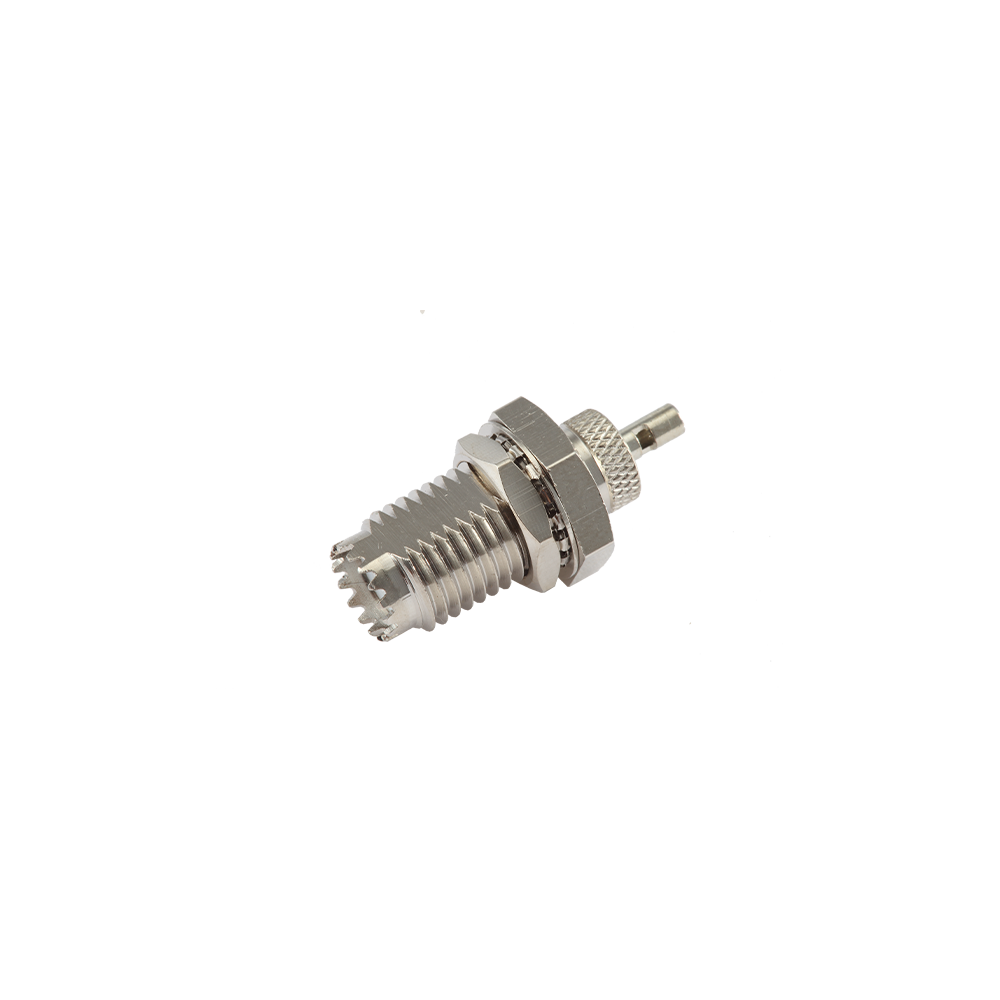
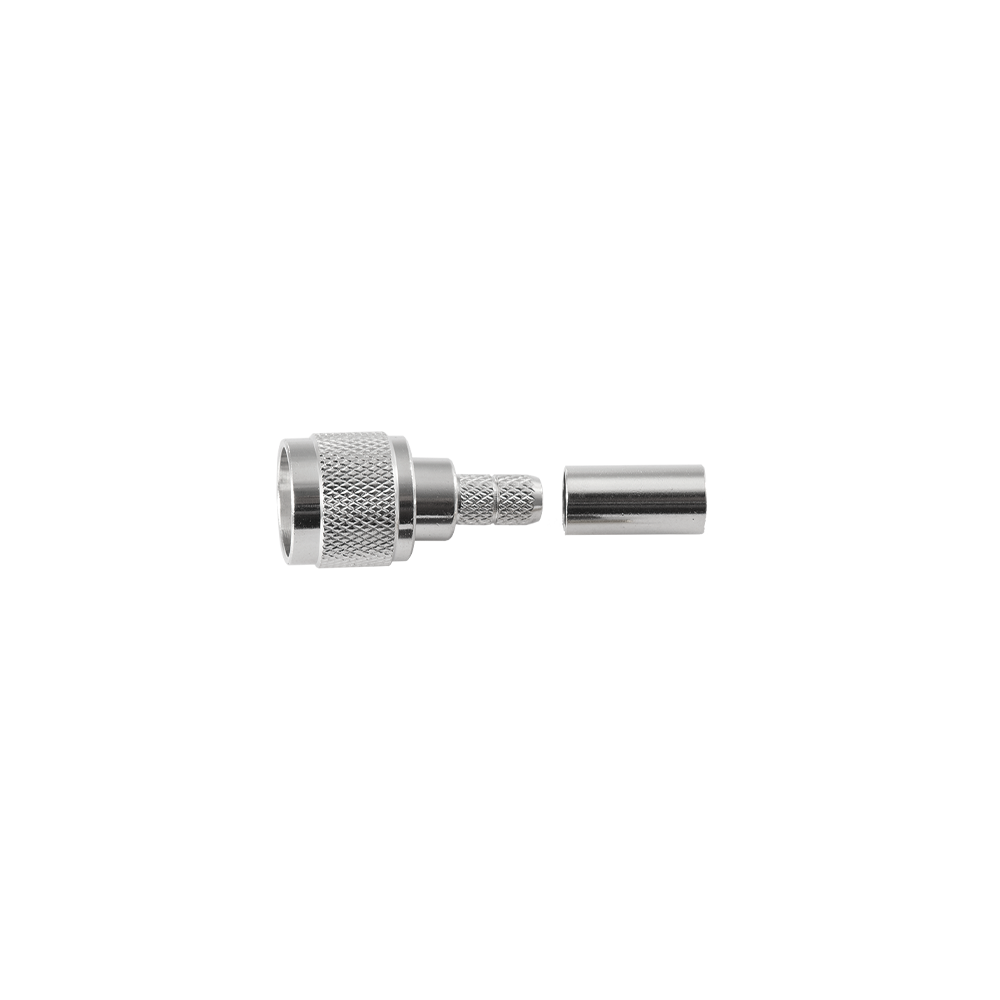
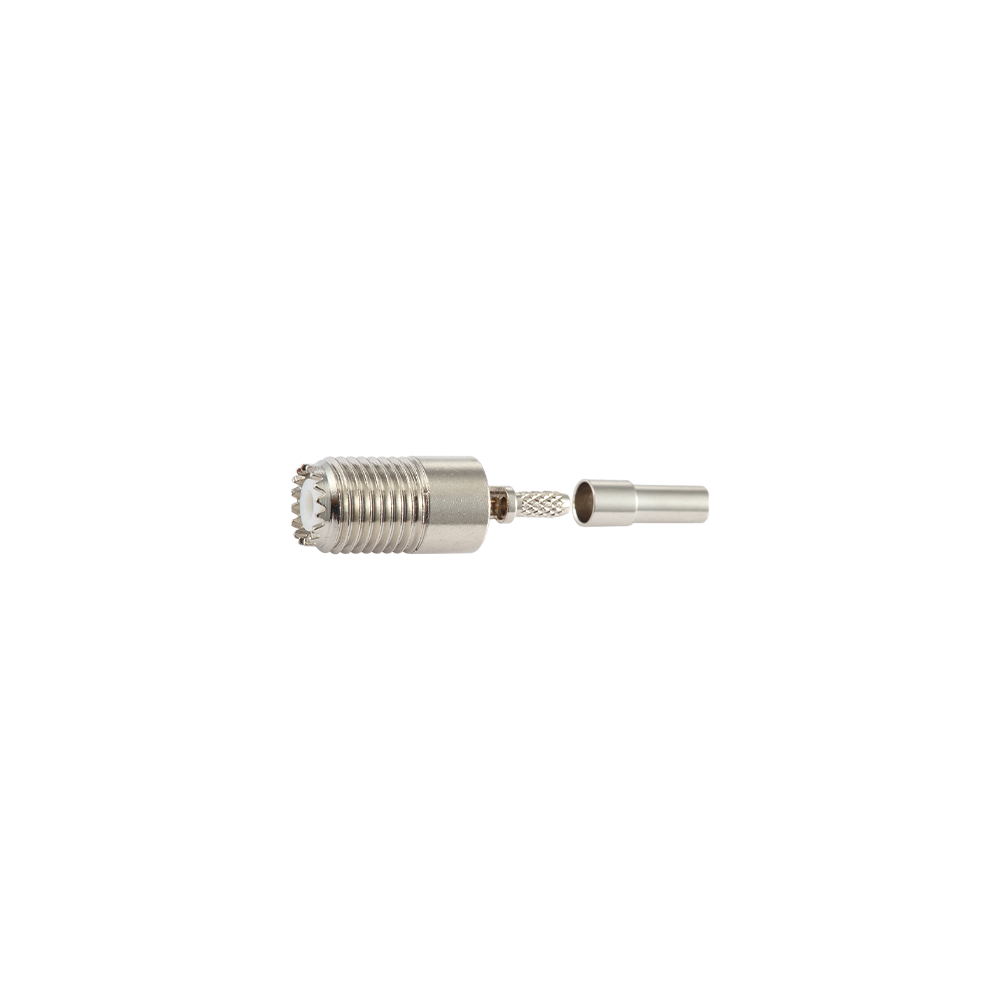
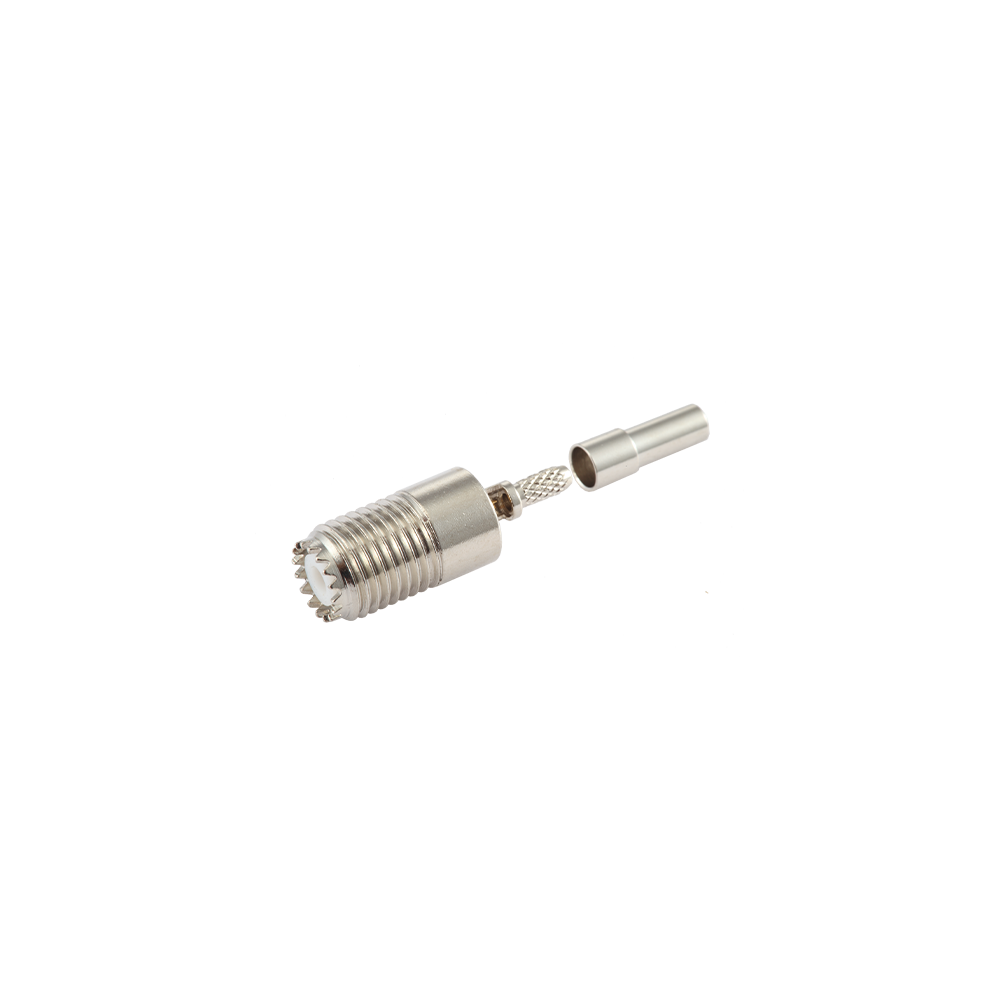
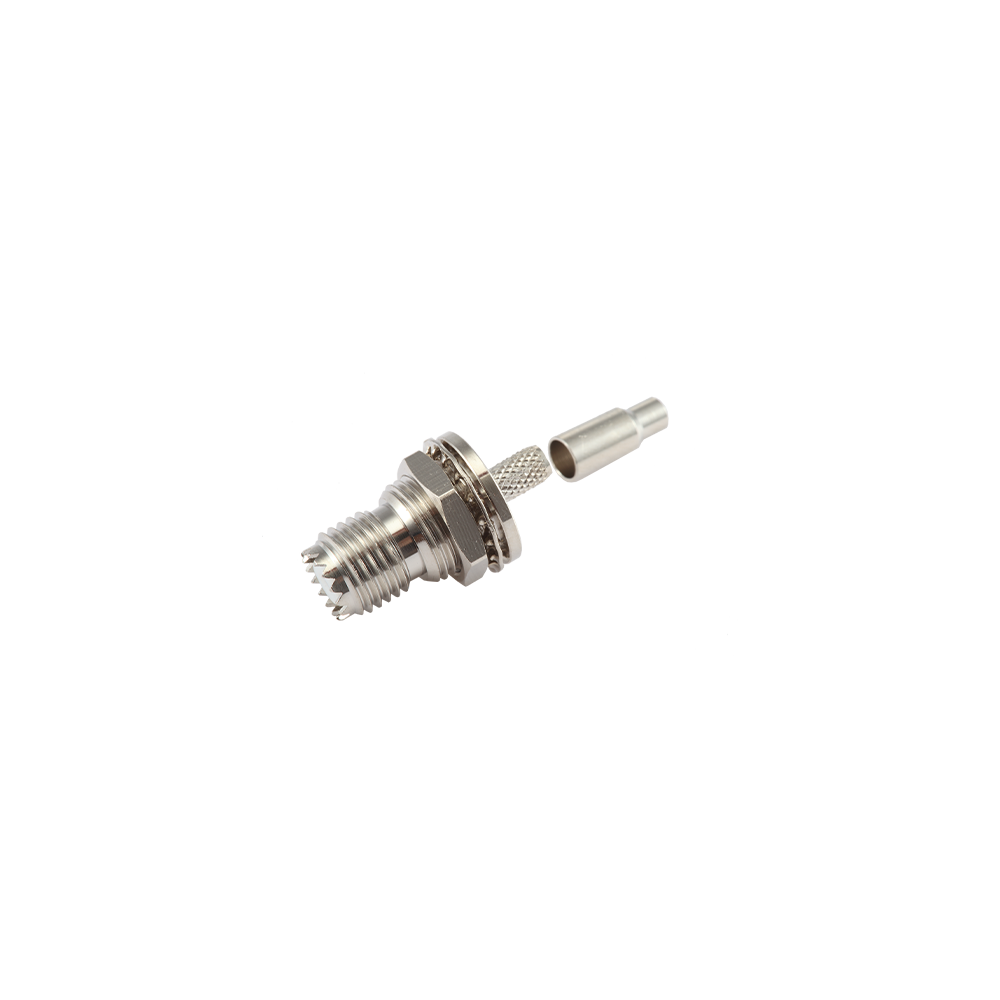
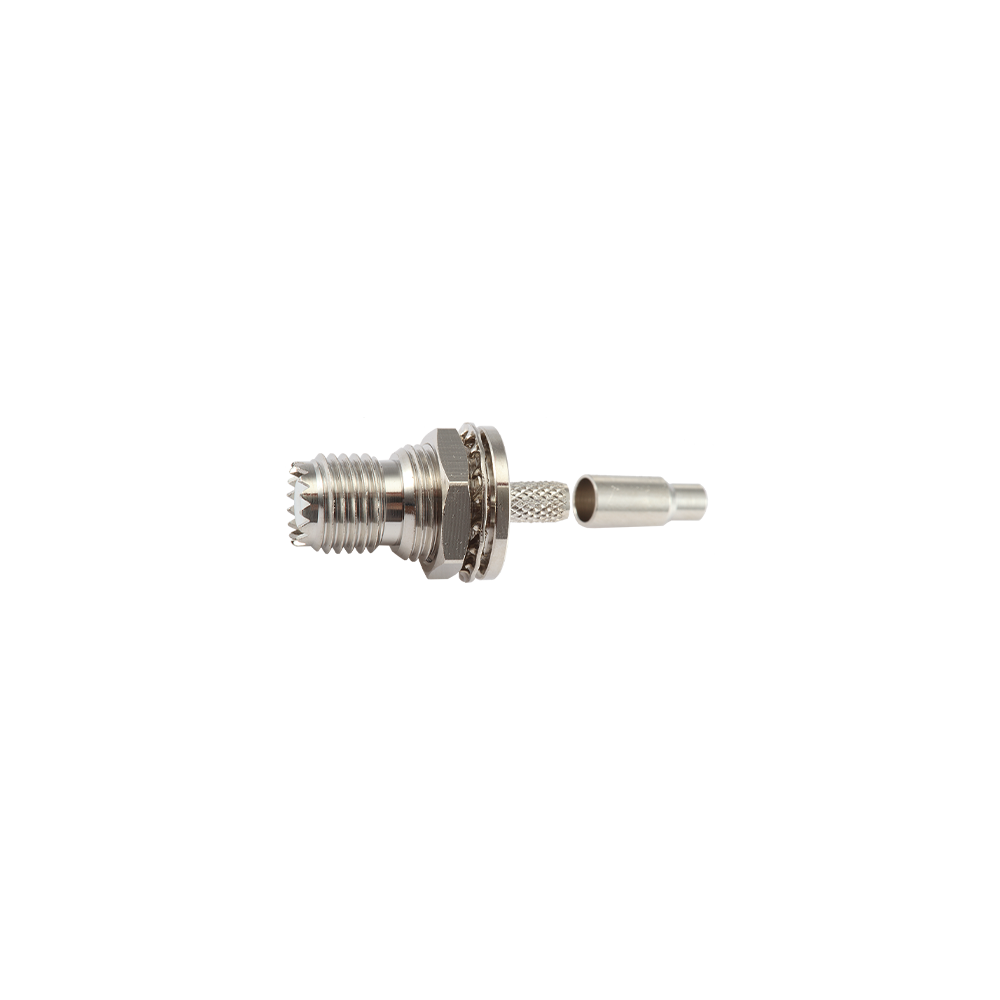
The Mini UHF flexible cable connector functions as the male plug within the mating system, terminating flexible coaxial cables to interface with bulkhead, chassis, or device female ports. Designed as the movable end of the connection, it enables repeated mating and unmating during antenna installation or system reconfiguration. The series utilizes a threaded coupling nut and a toothed interlocking geometry to maintain a secure mechanical connection under vibration, shock, and cable flexing while ensuring RF signal transmission across DC to 1 GHz. Available in crimp, clamp, and solder configurations, these connectors adapt to both manual assembly and automated production lines for standard small-diameter flexible coaxial cables.
Key Features
Toothed Interlocking Interface: Precision-machined teeth on the plug body interlock with the mating jack, providing a positive lock against vibration-induced loosening without auxiliary hardware or thread-locking compounds.
Threaded Coupling Nut: Ensures consistent mating torque and contact force over an engineered rating of 500 mating cycles for signal continuity.
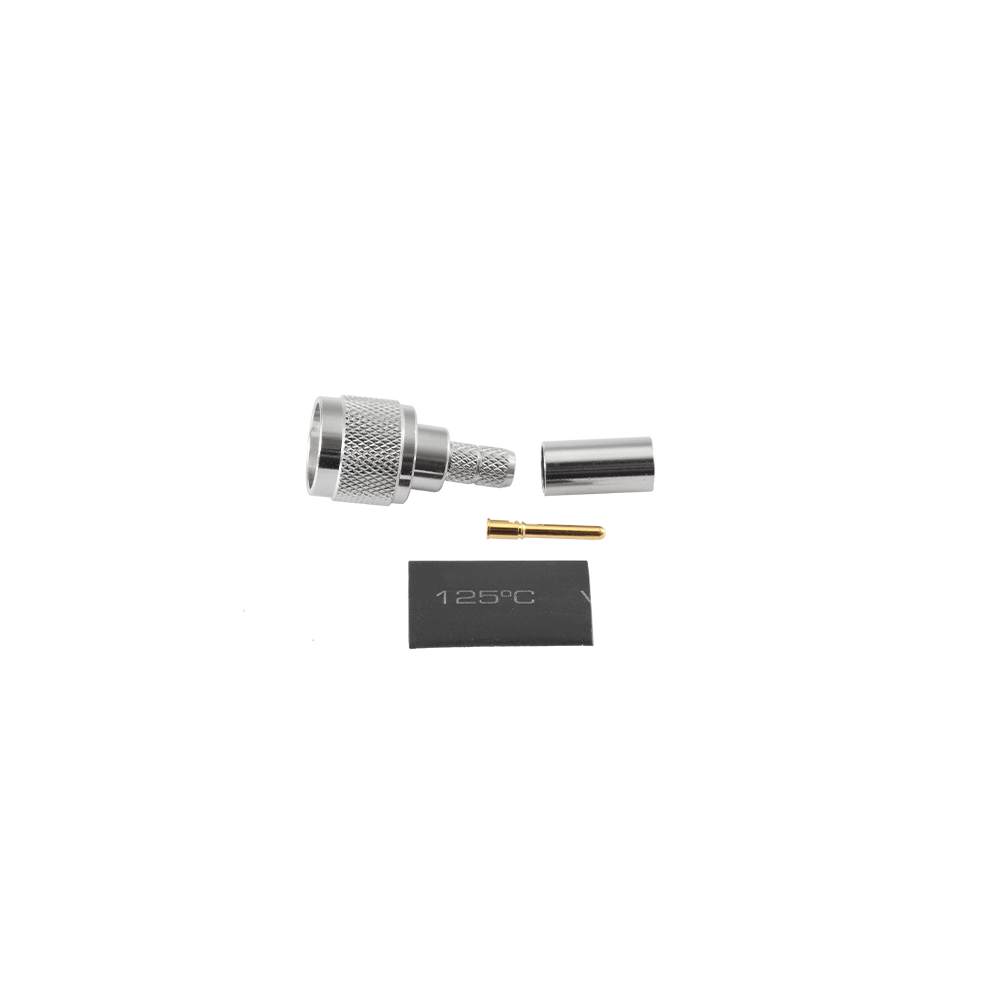
Crimp, Clamp, and Solder Options: Crimp configurations support repeatable, automated high-volume production; clamp designs enable field assembly without specialized tools; solder options minimize tooling costs for low-volume runs.
Integrated Strain Relief: Crimp sleeves or cable clamps redirect axial and bending forces away from the RF contact joint, preventing flex fatigue during operation.
Dual Center Pin Designs: Available with solder cups or crimp pins to accommodate varying cable conductor diameters and assembly methodologies.
Cable Compatibility: Standard configurations match standard RG-316, RG-174, and equivalent small-diameter flexible coaxial cables used in antenna pigtails.
Compact, Lightweight Structure: Minimizes total assembly weight and physical size, meeting the requirements of weight-sensitive mobile devices and portable wireless terminals.
Competitive Advantages
Single-Source Tooling Match: Manufactured on a unified production platform with bulkhead jacks to ensure exact interlocking geometries and eliminate standard deviation wear caused by mixing vendors.
High-Volume Crimp Support: Provision of exact crimp tool specifications and sleeve dimensions simplifies automated production line setups, removing cross-verification engineering risks.
Component Interchangeability: Unified connector bodies accept interchangeable sleeves or clamps to accommodate multiple cable outer diameters, reducing inventory part number (SKU) counts.
Batch Consistency Control: Controlled manufacturing processes combined with network analyzer verification ensure that every production run complies with standard physical and electrical specifications.
Direct Factory Pricing: Sourcing directly from the origin manufacturer eliminates intermediate trading markups, optimizing margins for high-volume device production.
Typical Applications
Mobile phone and portable radio handset internal antenna pigtail cables
WLAN access point and wireless router antenna cable assemblies
Vehicle-mounted radio equipment antenna cable connections to the antenna or to the radio unit
Portable base station and field-deployable repeater antenna cable connections
IoT gateway and wireless sensor device external antenna pigtail cables
Two-way radio and PTT device antenna cable assemblies for field use
Compact wireless communication module RF antenna interface cables
FAQ
Q: Which cable types are compatible with the MINI UHF flexible cable connector?
A: The standard connector is tooled for RG-316 and RG-174 (and equivalent small-diameter flexible cables). Other cable types with different outer diameters or jacket constructions may be compatible with different crimp ferrule or clamp sizes. Please specify the cable type, outer diameter, and braid construction when ordering to confirm compatibility and receive the correct accessory hardware.
Q: Can the MINI UHF plug be re-terminated in the field if the cable is damaged?
A: Yes. Solder-type and clamp-type MINI UHF plug versions can be re-terminated in the field using basic tools (knife, soldering iron, or cable clamp tool), making them suitable for field maintenance kits for portable and vehicle-mounted radio equipment. Crimp versions require a crimp tool and are not recommended for field re-termination.
Q: What is the minimum bend radius for cable assemblies using the MINI UHF flexible cable connector?
A: The minimum bend radius is determined by the cable specification rather than the connector—the cable manufacturer's recommended minimum bend radius for the specific cable type (typically 10× the cable outer diameter for dynamic flex applications) should be observed. Violating the cable minimum bend radius adjacent to the connector strain relief is the most common cause of cable assembly fatigue failure.
Q: Is a right-angle (90°) MINI UHF plug available for compact cable routing?
A: A right-angle MINI UHF plug version is available for applications where the cable must exit the connector at 90° to the mating interface—typical in compact wireless equipment where the cable routing path is constrained by the device enclosure geometry. Please specify right-angle configuration when ordering.