RPMCX Connectors For Flexible Cable Custom

Home / Products / Reverse Polarity Connectors / RPMCX Reverse Polarity Connectors / RPMCX Connectors For Flexible Cable

RPMCX Connectors For Flexible Cable Manufacturer

Product Overview
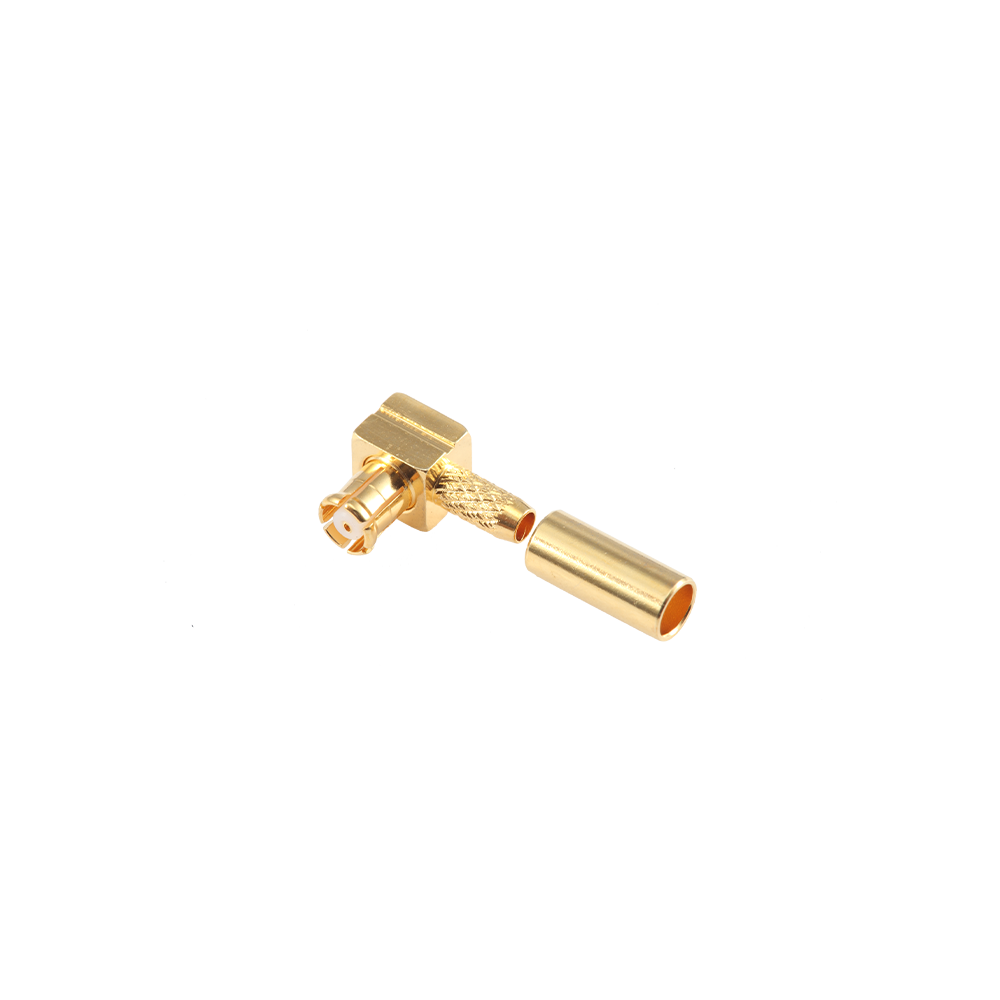
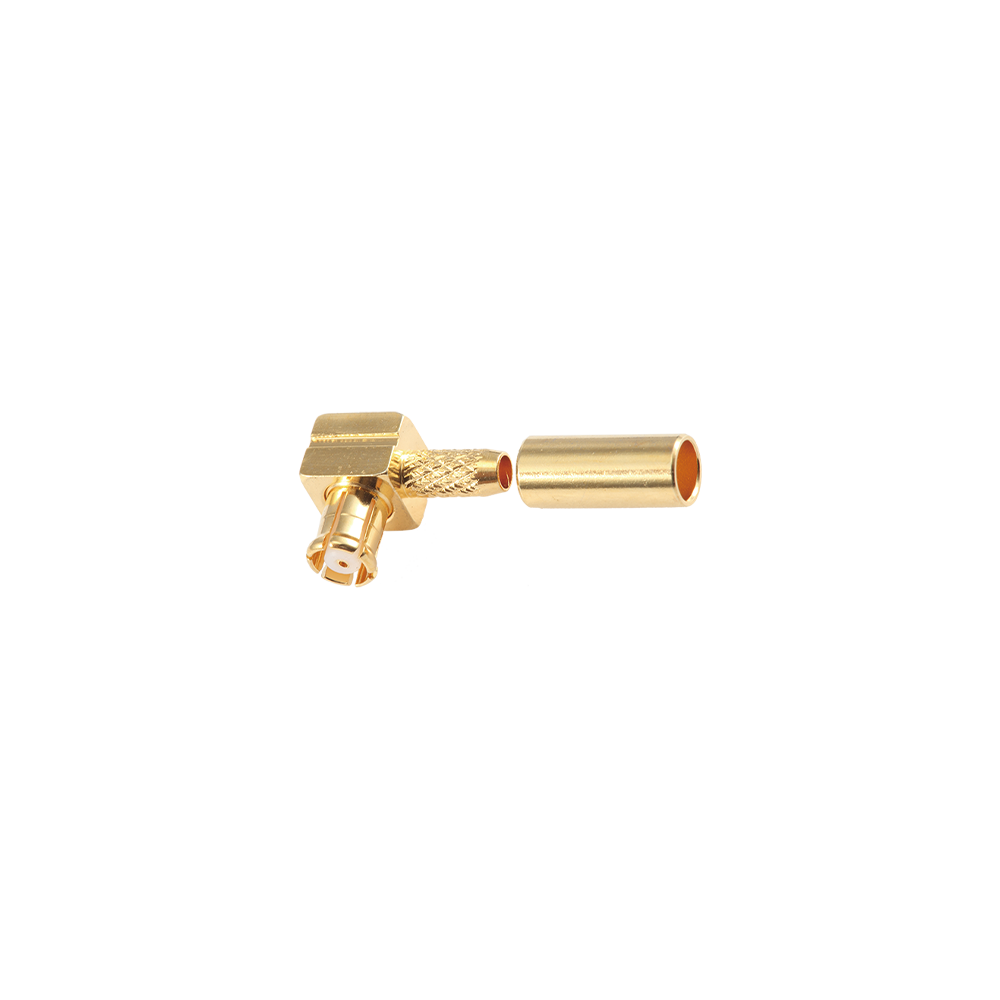
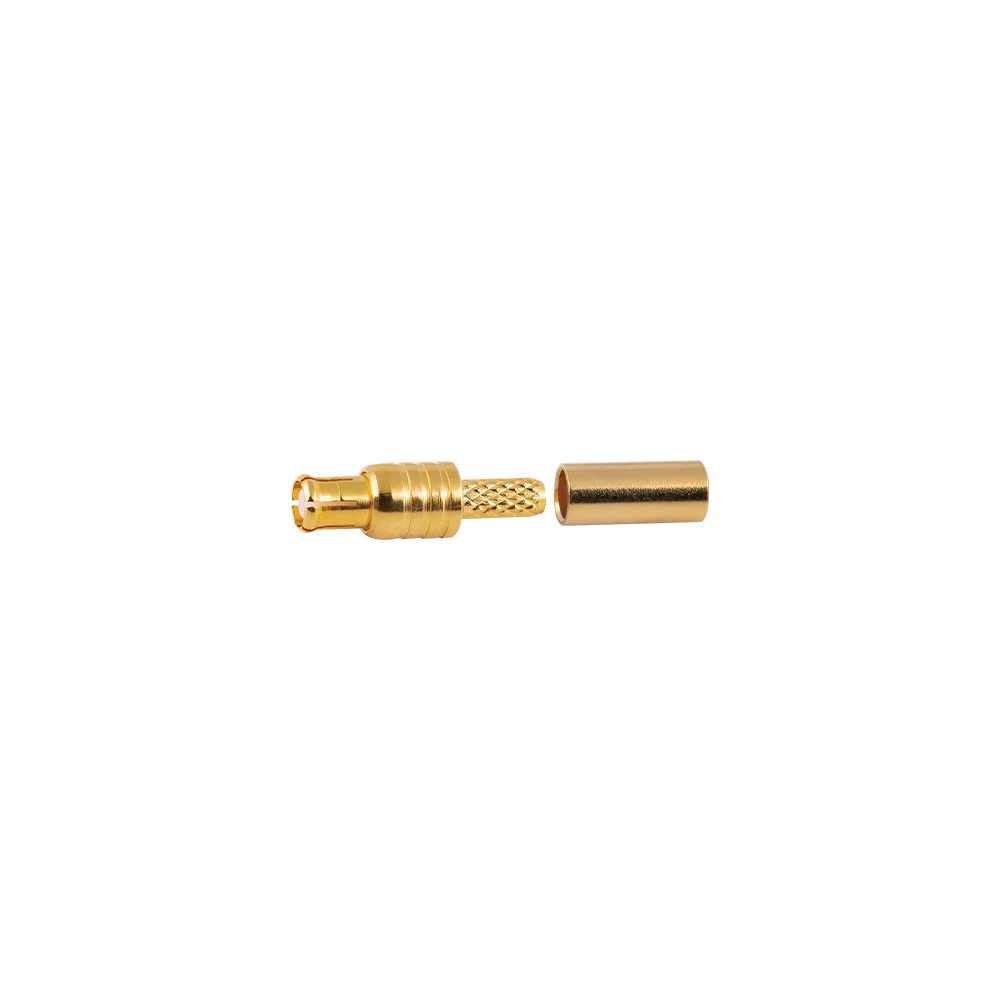
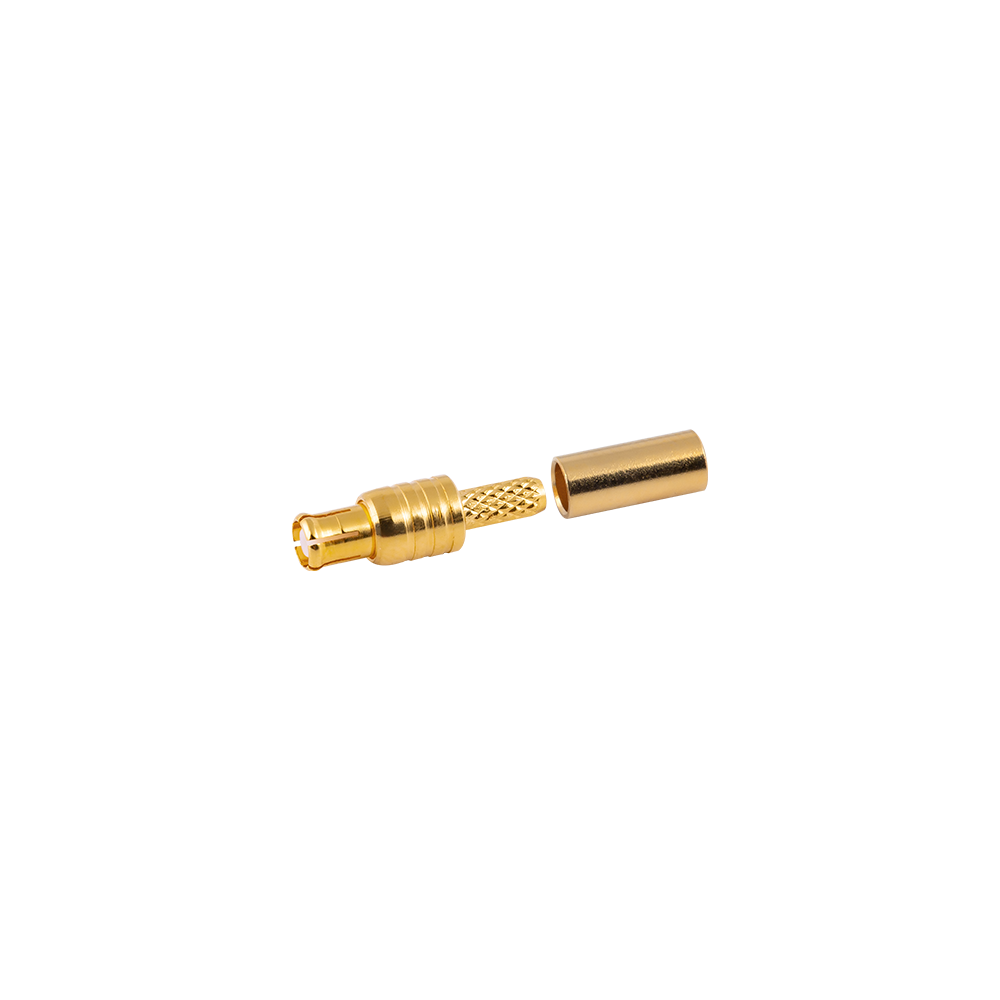
The RPMCX flexible cable connector terminates miniature and standard flexible coaxial cables to the reverse-polarity MCX interface for compact WLAN device antenna pigtail assemblies and IoT module antenna connections where MCX's snap-lock mechanism provides fast, tool-free mating in space-constrained enclosures.

Key Features
Reversed center conductor gender (female socket on plug, male pin on socket) compliant with RP convention
Snap-on MCX coupling mechanism providing secure, tool-free mating and unmating for rapid antenna cable connection
Crimp and clamp termination for miniature coaxial cable types used in WLAN and IoT device antenna assemblies
50 Ω matched impedance maintaining WLAN system signal integrity
Gold-plated center contact for reliable, low-resistance connection over repeated mating cycles
Compact body minimizing antenna pigtail connector footprint inside WLAN and IoT device enclosures
Straight and right-angle body orientations available for flexible routing in space-constrained designs
RoHS-compliant

Typical Applications
WLAN router and access point internal antenna pigtail cable assemblies
IoT gateway and smart home wireless device antenna connections
Compact wireless module to external antenna cable interface
USB Wi-Fi adapter and dongle antenna cable connections
Industrial wireless sensor node antenna pigtail assemblies

FAQ
Q: Will an RPMCX plug mate with a standard MCX socket?
A: No — the reversed center conductor gender of the RPMCX interface physically prevents mating with standard-polarity MCX connectors; this interface segregation is the deliberate purpose of the RP design.
Q: What cable types are compatible with your RPMCX flexible cable connectors?
A: Our RPMCX connectors are available for the miniature coaxial cable types most commonly used in WLAN and IoT device internal antenna assemblies; please provide your cable outer diameter for part number confirmation.

About
Yangzhou Jingcheng Electronics Co., Ltd.

Yangzhou Jingcheng Electronics Co., Ltd., a premier China RPMCX Connectors For Flexible Cable Manufacturer and RPMCX Connectors For Flexible Cable Supplier, was founded in 1999. It is a high-tech enterprise specializing in the R&D and manufacturing of RF coaxial connectors, cable assemblies, and passive microwave components.
Equipped with a comprehensive R&D and production system, the company has obtained international certifications including ISO9001. Adhering strictly to standards such as MIL, IEC and GB, we offer over 30 product series with more than 2,000 specifications, covering SMA, BNC, N-type and other mainstream models. Our products are widely applied in the fields of communications, aerospace, automotive electronics and beyond, and exported to many countries and regions across Europe, America and Asia.
We uphold the tenet of "Quality as the Foundation, Customers as the Core", committed to providing reliable interconnection solutions and professional services for global clients.

News & Updates
50 Ohm Coax Cable Explained: What It Means, Why It Matters, and How to Choose
Industry News
2026-09-11
50 Ohm Coax Cable Explained: What It Means, Why It Matters, and How to Choose
A 50 ohm coax cable is a transmission line with a characteristic impedance of 50 ohms, and it is the default choice in most RF systems because it balances low signal loss with reasonable power-handling capability. The “50 ohm” rating does...
12G BNC Connector Guide: 75-Ohm Coaxial Connectors for 4K and 8K SDI Video Systems
Industry News
2026-09-04
12G BNC Connector Guide: 75-Ohm Coaxial Connectors for 4K and 8K SDI Video Systems
A 12G BNC connector is a 75-ohm RF coaxial connector engineered to carry 12G-SDI signals up to 12 Gbps, supporting 4K and 8K video over a single cable. It is not merely a "standard BNC" with a different part number; its electrical perform...
Antenna Connector Types: SMA vs N Type vs TNC vs BNC vs RP-SMA Complete Guide
Industry News
2026-08-24
Antenna Connector Types: SMA vs N Type vs TNC vs BNC vs RP-SMA Complete Guide
Choosing an antenna connector is one of those small decisions that can make or break an RF installation. Get it right, and the system performs almost invisibly; get it wrong, and you lose signal before power even reaches the antenna. For ...
Coaxial Cable Selection Guide: Choosing Cable, Connectors, and RF Performance
Industry News
2026-08-21
Coaxial Cable Selection Guide: Choosing Cable, Connectors, and RF Performance
An RF engineer once told me that most field failures are not component failures; they are selection failures. Selecting a coaxial cable starts with three decisions: characteristic impedance, cable size, and connector family. Get these thr...
Coax Cable Comparison: RG58 vs RG59 vs RG6 vs RG11 and Connector Matching
Industry News
2026-08-14
Coax Cable Comparison: RG58 vs RG59 vs RG6 vs RG11 and Connector Matching
Choosing a coaxial cable without comparing impedance, attenuation, and connector compatibility usually ends in poor signal quality. The practical rule is short: 50 Ω cables such as RG58 are for radio equipment, test instruments, and compac...
RPMCX Connectors For Flexible Cable Industry knowledge

Interface Concept

An RPMCX connector is the reverse-polarity variant of the standard MCX interface. In a conventional MCX plug, the center contact is a male pin and the outer body incorporates a female receptacle; the RPMCX configuration reverses this geometry — the plug contains a female center socket while the outer contact is a male interface. This intentional inversion provides a mechanical keying function that prevents accidental mating with standard MCX devices, a requirement in certain regulated wireless systems.

When specified for flexible cable termination, the connector's internal construction is adapted to accommodate stranded center conductors and conformable dielectric materials. The crimp or clamp retention mechanism must maintain consistent contact normal force without deforming the flexible cable assembly. The impedance control geometry remains at 50 Ohm, with operating frequency typically extending to 6 GHz depending on the exact cable group.

Common Configurations by Cable Termination

RPMCX connectors for flexible cable are generally categorized by the attachment method and the compatible cable group. The table below outlines three prevalent termination styles produced by Yangzhou Jingcheng Electronics Co., Ltd.

Termination Type Suitable Flexible Cable Assembly Characteristic
Solder-Clamp RG-174, RG-316, LMR-100, 0.81–2.54 mm jacket Center contact soldered to stranded conductor; braid secured by hexagonal crimp ferrule
Full-Crimp RG-178, RG-58, 1.13 mm micro-coax Inner pin crimped onto center wire; outer ferrule simultaneously grips braid and jacket
PCB Edge-Mount (flex tail) Semi-rigid pigtail / flexible jumper Connector body mounted on board edge; flexible cable soldered to a transition pad

Note: The standard body material is gold-plated brass; dielectric is PTFE. Plating thickness and body alloy are verified during QC inspection at the JC manufacturing facility.

Application Domains

RPMCX connectors terminated to flexible cable appear primarily in systems where a subminiature snap-on interface is required and reverse-polarity keying is mandated by regulation or system architecture. Observed integration environments include:

  • Wi-Fi / WLAN embedded radios — RP-MCX is commonly specified for internal antenna routing in access points and IoT gateways
  • GPS / GNSS receiver modules — flexible pigtails interconnect the receiver board with an external active antenna
  • Telematics and vehicle tracking units — compact footprint and snap-on coupling suit confined enclosures
  • Handheld test probes and spectrum analyzer accessories — flexible cable assemblies allow repetitive flexure without connector damage

Comparative Reference: RP-MCX vs. Adjacent Interface Types

The following table provides dimensional and performance reference points between RPMCX, standard MCX, and RP-SMA for flexible cable assemblies. Values are typical and sourced from JC product engineering data.

Parameter RPMCX MCX RP-SMA
Coupling Mechanism Snap-on Snap-on Threaded (1/4-36)
Outer Diameter (approx.) 3.8 mm body 3.8 mm body 8.0 mm hex nut
Interface Keying Reverse polarity Standard Reverse polarity
Typ. Frequency Range DC – 6 GHz DC – 6 GHz DC – 12.4 GHz (cable dependent)
Mating Cycle Durability 500 cycles minimum 500 cycles minimum 500 cycles minimum

The snap-on engagement of RPMCX reduces installation time compared to threaded RP-SMA, while maintaining comparable electrical performance in the sub-6 GHz band. The reverse-polarity keying differentiates it from standard MCX for compliance with FCC Part 15 intentional radiator rules.

Assembly & Selection FAQ

What cable types are supported for flexible wire termination at JC?

Yangzhou Jingcheng Electronics provides RPMCX connectors compatible with RG-174, RG-316, RG-178, 1.13 mm and 1.37 mm micro-coaxial cables, as well as LMR-100 equivalents. The specific crimp die dimensions are matched to each cable's outer jacket and dielectric diameter. Connectors are supplied as piece-parts or assembled onto cable per customer specification.

How is the VSWR performance on a flexible cable assembly?

Typical VSWR for a straight RPMCX connector terminated on a 250 mm RG-316 assembly measures ≤ 1.25:1 up to 3 GHz, and ≤ 1.40:1 from 3 GHz to 6 GHz. Actual values are recorded during final RF testing at the Jingcheng facility using vector network analyzer equipment calibrated to 50 Ohm reference planes.

Are waterproof or extended-temperature versions available?

Custom configurations with IP67-rated sealing and extended temperature range of -65 degrees Celsius to +165 degrees Celsius can be quoted based on application requirements. Standard product operational range is -40 degrees Celsius to +85 degrees Celsius with gold-plated beryllium copper contacts.