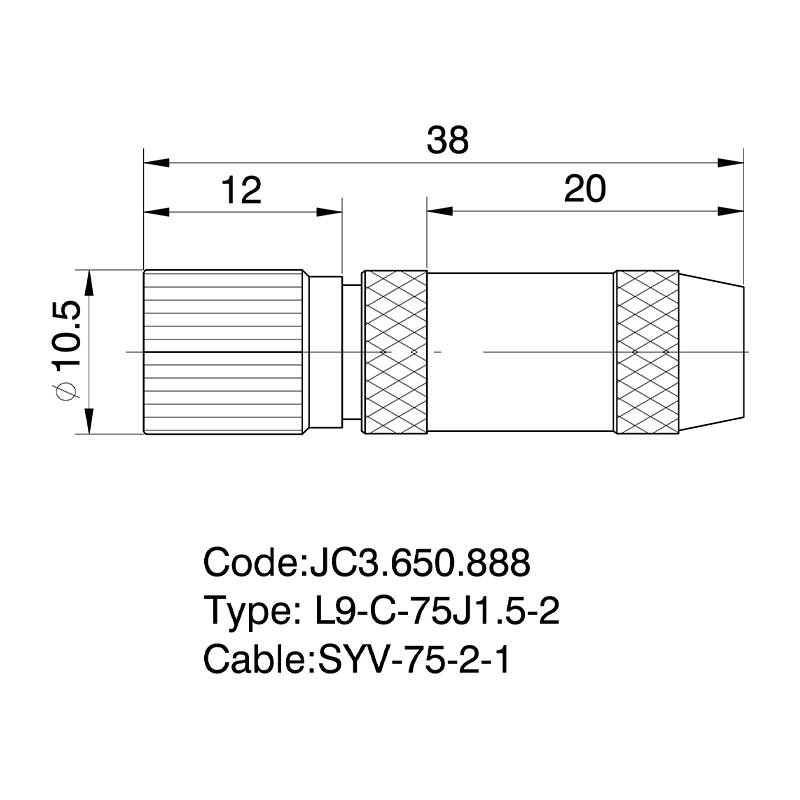
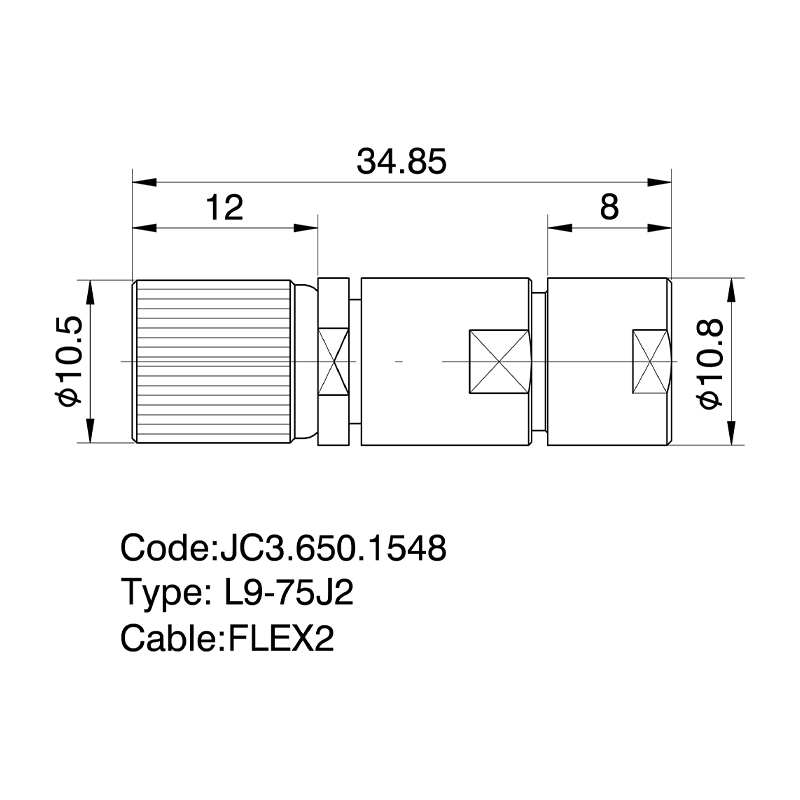
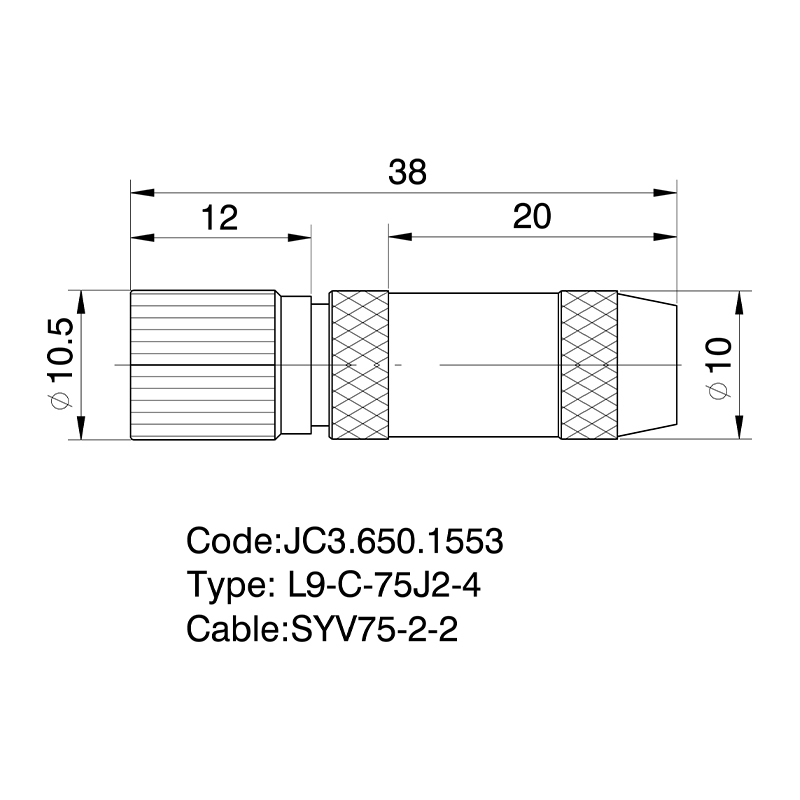
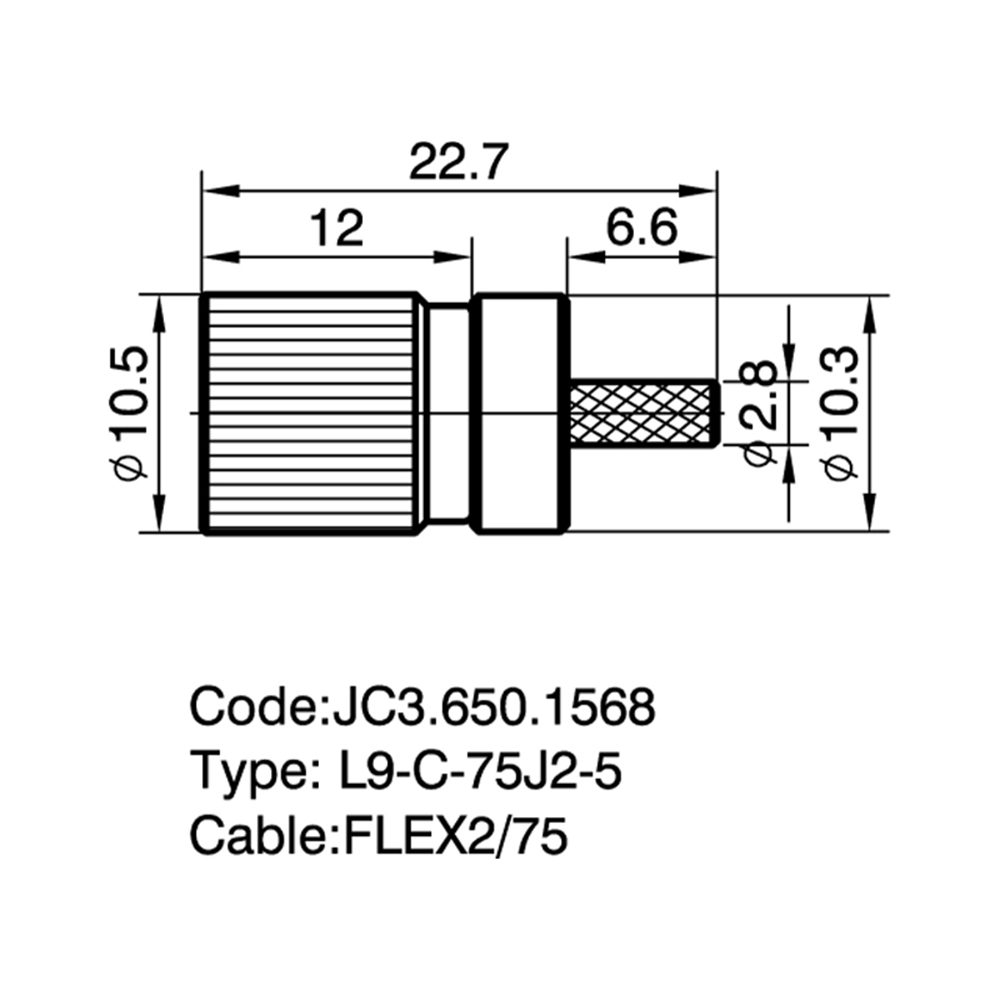
1.6/5.6(L9) Connectors For Flexible Cable Custom

Home / Products / Coaxial Connectors / 1.6/5.6(L9) RF Coaxial Connectors / 1.6/5.6(L9) Connectors For Flexible Cable

1.6/5.6(L9) Connectors For Flexible Cable Manufacturer

Product Overview
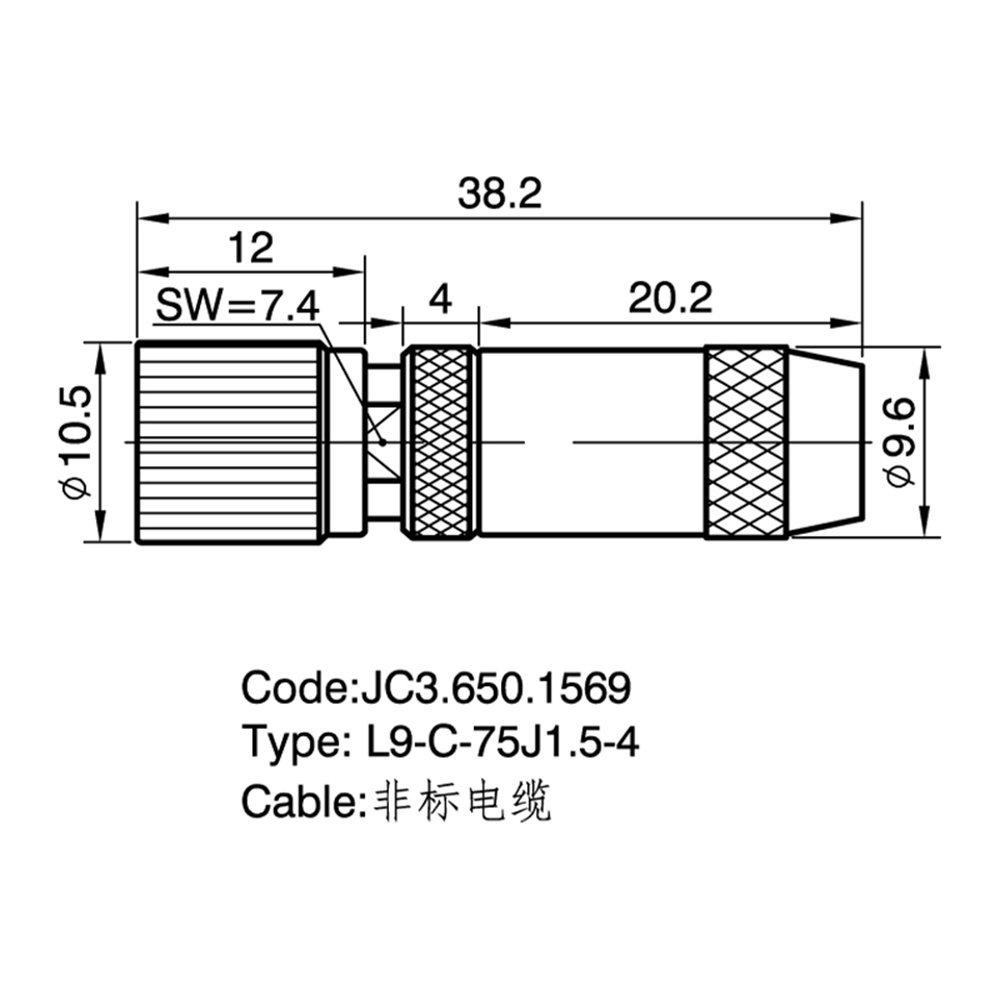
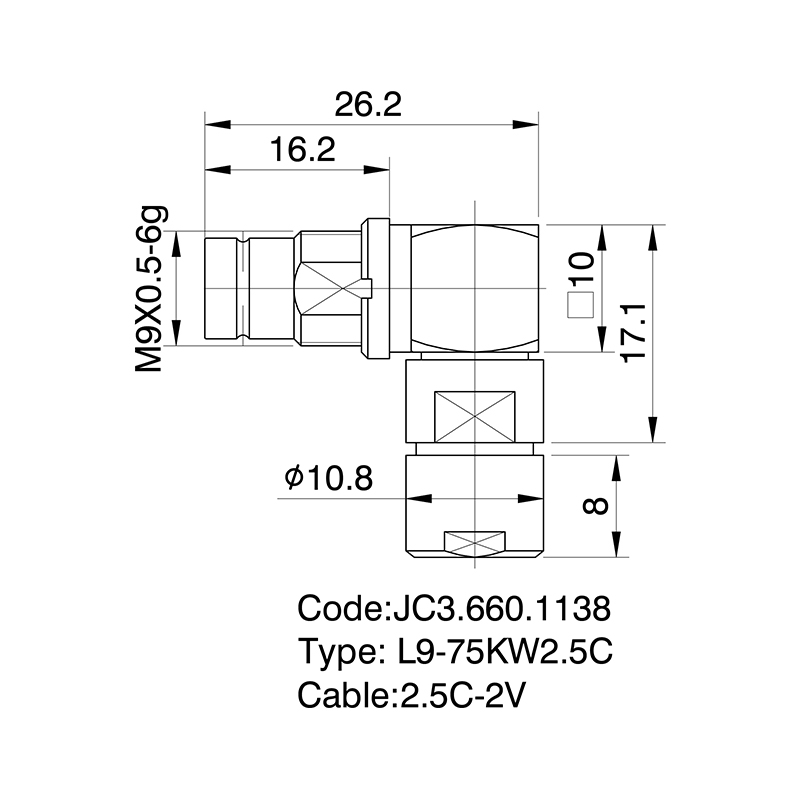
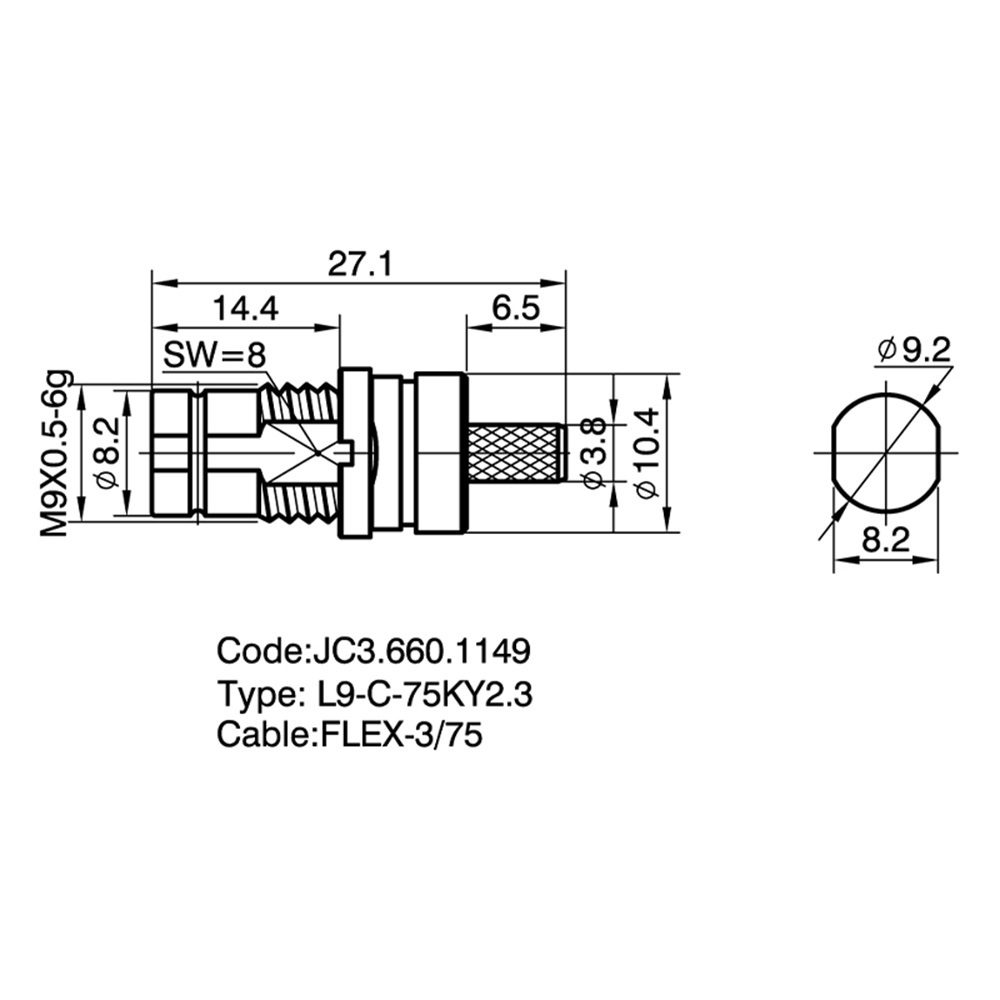
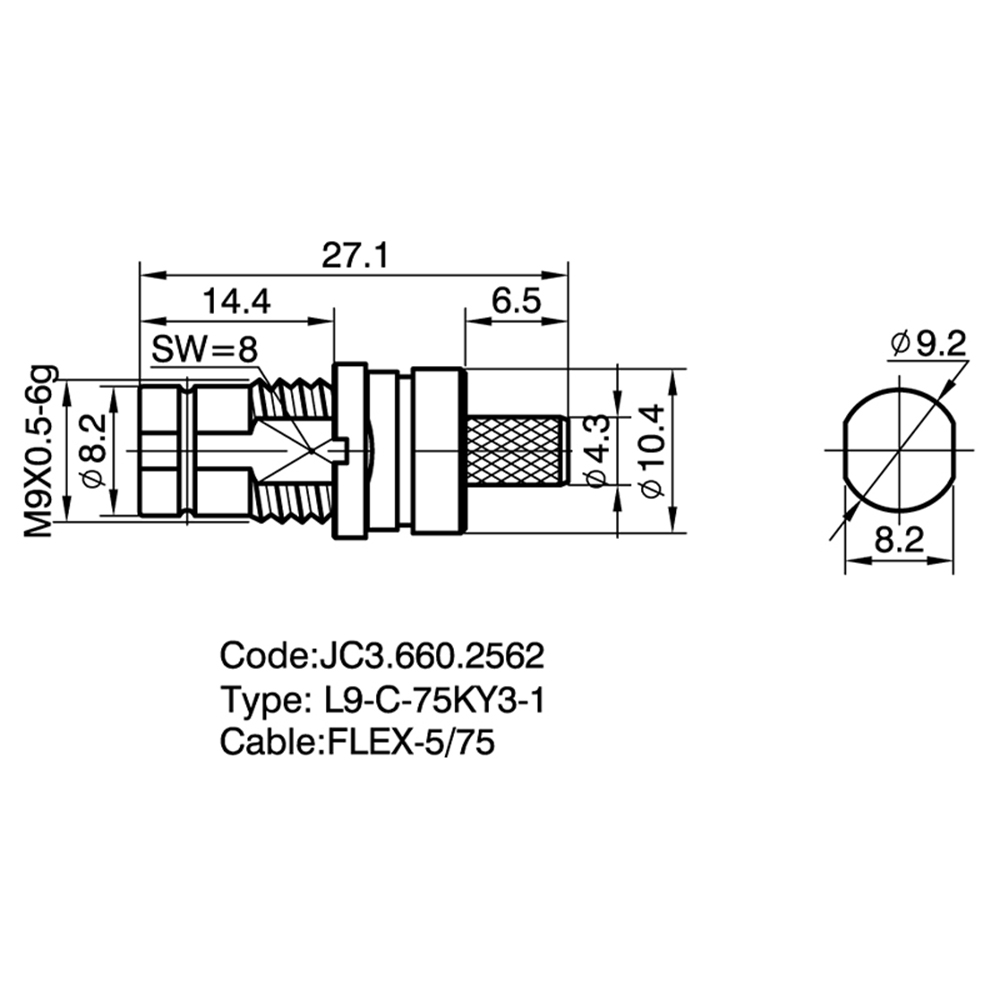
L9 connectors for flexible cable are used to terminate standard flexible coaxial cables, forming the RF interface between cable assemblies and equipment. Available in solder and crimp termination styles, they are the core component for manufacturing L9 jumper cables and custom cable assemblies. Jingcheng Electronics can supply these connectors alongside compatible 75-ohm coaxial cable for one-stop procurement.

Key Features
Solder and crimp termination options to accommodate different production processes
Inner and outer conductor dimensions precisely matched to mainstream 75-ohm coaxial cables
Clamping structure maintains mechanical integrity after repeated flexing and mating
Uniform plating provides long-term oxidation resistance on contact surfaces

Competitive Advantages
One-stop supply of L9 connectors and matching coaxial cable simplifies vendor management
Custom cable assembly service available (crimp, solder, test, and packaging to finished jumper)
Export records to the USA, Japan, and Germany with established international order processes

Typical Applications
In-rack jumper cables for broadcast video facilities
Camera and VTR cable assemblies
CATV headend and front-end equipment patch cables
Test instrument calibration cables

FAQ
Q: Solder vs. crimp — which should I choose?
A: Crimp is preferred for high-volume automated production due to consistency; solder suits small batches or field repair.
Q: Which cable OD and shield types are supported?
A: Please provide cable outer diameter and shield construction details; the sales team will recommend matching connector models.
Q: Can you manufacture finished cable assemblies?
A: Yes. Custom cable assembly services including crimping, electrical testing, and packaging are available.

About
Yangzhou Jingcheng Electronics Co., Ltd.

Yangzhou Jingcheng Electronics Co., Ltd., a premier China 1.6/5.6(L9) Connectors For Flexible Cable Manufacturer and 1.6/5.6(L9) Connectors For Flexible Cable Supplier, was founded in 1999. It is a high-tech enterprise specializing in the R&D and manufacturing of RF coaxial connectors, cable assemblies, and passive microwave components.
Equipped with a comprehensive R&D and production system, the company has obtained international certifications including ISO9001. Adhering strictly to standards such as MIL, IEC and GB, we offer over 30 product series with more than 2,000 specifications, covering SMA, BNC, N-type and other mainstream models. Our products are widely applied in the fields of communications, aerospace, automotive electronics and beyond, and exported to many countries and regions across Europe, America and Asia.
We uphold the tenet of "Quality as the Foundation, Customers as the Core", committed to providing reliable interconnection solutions and professional services for global clients.

News & Updates
Coax Terminators: How Matched Loads Protect RF Ports and Test Accuracy
Industry News
2026-10-19
Coax Terminators: How Matched Loads Protect RF Ports and Test Accuracy
A coax terminator is a matched resistive load, almost always 50 ohms, that absorbs the RF energy arriving at the end of a transmission line and converts it into heat instead of reflecting it back toward the source. When a port on a splitt...
CB Antenna Connector Types: PL-259, Mini-UHF, N, BNC and Adapter Guide
Industry News
2026-10-13
CB Antenna Connector Types: PL-259, Mini-UHF, N, BNC and Adapter Guide
Unscrew the coax from the back of a CB radio and you are almost certainly holding a PL-259 plug that just came out of an SO-239 socket. That pairing, loosely called the UHF connector, dominates 11-metre radio. The short answer to "what CB...
Coax Cable Explained: Structure, Impedance, Types and Connector Choice
Industry News
2026-10-10
Coax Cable Explained: Structure, Impedance, Types and Connector Choice
If you typed "co ax cable", you are looking for the same thing as "coax cable" or "coaxial cable" — one product, three spellings. The short answer is that a coax cable is a transmission line built from two conductors sharing a single axis...
BNC Connector Sizes Explained: Dimensions, 50Ω vs 75Ω, and Cable Types
Industry News
2026-09-28
BNC Connector Sizes Explained: Dimensions, 50Ω vs 75Ω, and Cable Types
BNC connectors are not one-size-fits-all components. The practical "size" of a BNC connector is defined by two separate characteristics: the mating interface and the center conductor. Every standard BNC shares the same bayonet shell diame...
75 Ohm vs 50 Ohm BNC Connector: Differences, Compatibility, and How to Choose
Industry News
2026-09-22
75 Ohm vs 50 Ohm BNC Connector: Differences, Compatibility, and How to Choose
A 50 ohm BNC connector is built for 50 ohm systems, and a 75 ohm BNC connector is built for 75 ohm systems. The two always fit each other mechanically — same bayonet shell, same coupling lugs, same pin arrangement — but they are not elect...
1.6/5.6(L9) Connectors For Flexible Cable Industry knowledge

1.6/5.6 (L9) Connectors for Flexible Cable are compact RF coaxial connectors designed for termination onto flexible coaxial cable, forming jumper leads, patch cables, and interconnecting cable assemblies used in video, CCTV, and telecommunication transmission systems. Built on the 1.6/5.6 DIN interface standard, this connector series maintains stable 75Ω impedance while accommodating the bend radius and routing flexibility required in cable assembly applications. 1.6/5.6 (L9) Connectors for Flexible Cable are commonly used between distribution panels, transmission racks, and terminal equipment where a flexible, repeatedly routable cable connection is required rather than a fixed panel termination.

Compared with bulkhead or flange mount connectors, 1.6/5.6 (L9) Connectors for Flexible Cable are designed with a clamp or crimp termination structure that accommodates the braided or stranded outer conductor of flexible coaxial cable, allowing the finished cable assembly to bend and route around equipment without stressing the connector-cable joint. Contact components in this category are typically machined from brass or phosphor bronze and finished with nickel or gold plating to meet the conductivity and durability requirements of repeated cable handling and installation.

Common Types and Characteristics

Type Cable Compatibility Termination Method Gender Key Characteristics
1.6/5.6 Straight Plug for Flexible Cable Standard flexible coaxial cable Clamp / Crimp Male General-purpose jumper and patch cable termination
1.6/5.6 Straight Jack for Flexible Cable Standard flexible coaxial cable Clamp / Crimp Female Mating interface for equipment ports and adapters
1.6/5.6 Right Angle Type for Flexible Cable Standard flexible coaxial cable Clamp / Crimp Male/Female Space-saving routing in compact racks and panels
1.6/5.6 Connector for Thin Flexible Cable Small-diameter flexible cable Crimp Male/Female Suited for high-density multi-channel assemblies

Application Scenarios and Selection Points

1.6/5.6 (L9) Connectors for Flexible Cable are applied in CCTV surveillance jumper cables, CATV distribution patch leads, video transmission interconnects, and telecommunication test cable assemblies where routing flexibility and repeated handling are required. When selecting a connector from this category, the following points are recommended for confirmation:

  • Cable type and diameter — flexible coaxial cable specification, matched to the connector's clamp or crimp dimensions
  • Termination method — clamp or crimp, selected according to assembly process and cable construction
  • Impedance matching — 75Ω configuration confirmed against the video or data transmission system requirements
  • Plating material — nickel plating for general durability, gold plating for improved conductivity and corrosion resistance
  • Cable assembly length and routing — considered for installation within distribution panels and equipment racks

Flexible Cable vs. Bulkhead/Flange Mount Connectors

Connector Type Installation Method Flexibility Typical Application
Connector for Flexible Cable Clamp/crimp onto cable end High, repeatedly routable Jumper cables, patch leads, portable test assemblies
Bulkhead/Flange Mount Connector Fixed panel installation None, fixed position Distribution panels, equipment enclosures

FAQ

Q: What is the difference between connectors for flexible cable and bulkhead mount connectors?
A: Connectors for flexible cable are terminated onto cable ends using clamp or crimp methods and allow repeated routing, while bulkhead mount connectors are fixed to a panel and remain in a stationary position.

Q: What is the typical impedance of these connectors?
A: 1.6/5.6 (L9) Connectors for Flexible Cable are typically configured for 75Ω impedance, matching common video and CATV transmission standards.

Q: Are these connectors suitable for high-density cable assemblies?
A: Versions designed for thin, small-diameter flexible cable are suited for high-density, multi-channel cable assembly applications.

Q: Can termination dimensions be customized for specific cable types?
A: Clamp and crimp dimensions can be adjusted according to the specific flexible cable diameter and customer drawings.

1.6/5.6 (L9) Connectors for Flexible Cable in this category are manufactured by Yangzhou Jingcheng Electronics Co., Ltd., a company specializing in RF coaxial connector design and production since 1999, with in-house manufacturing and high precision testing equipment supporting consistent performance across flexible cable connector assemblies.