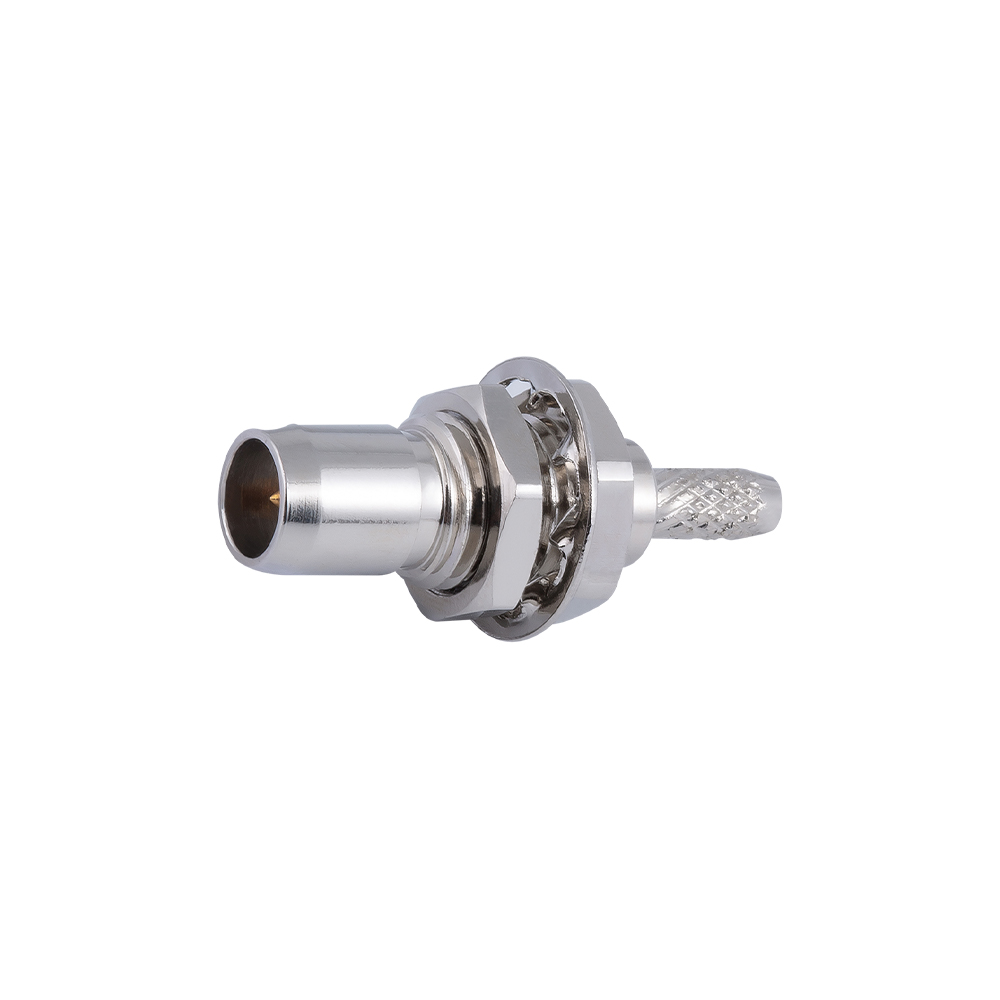
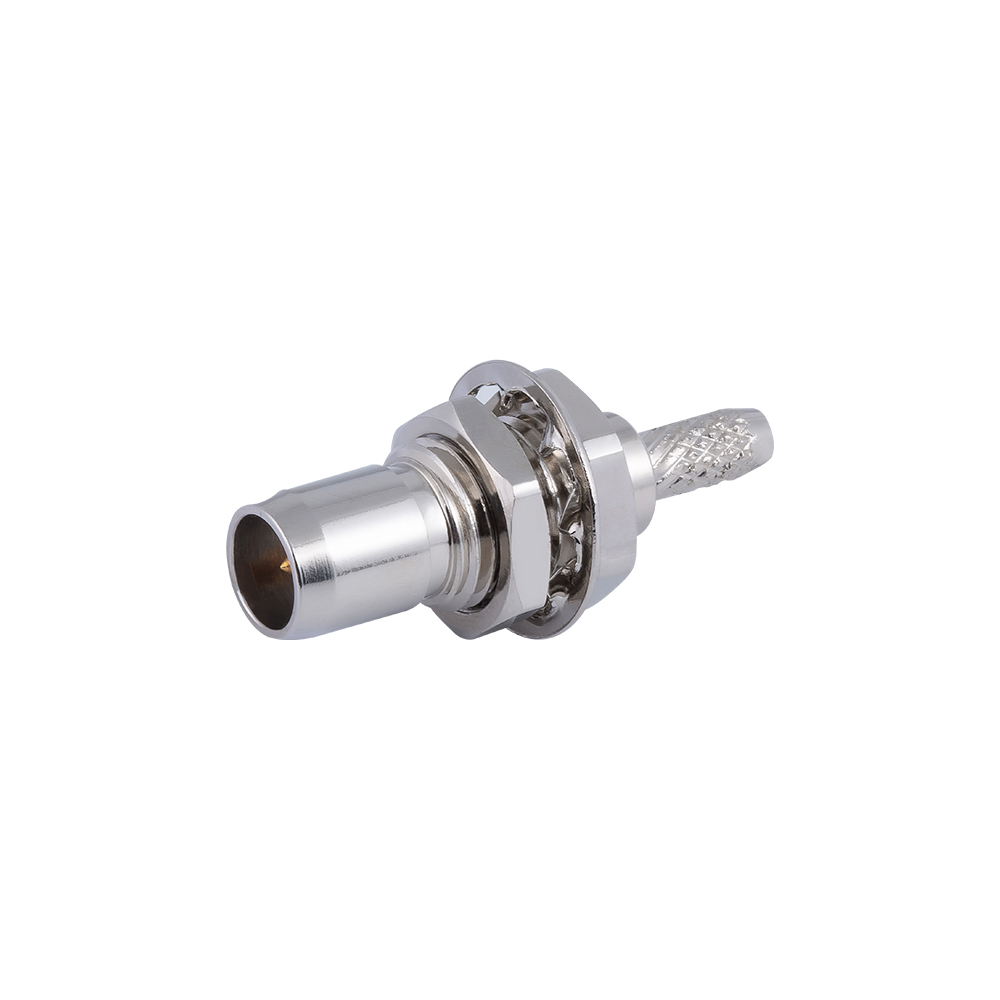
BMA RF Coaxial Connectors for Flexible Cable are designed for RF systems that require flexible cable routing, compact installation, and reliable high-frequency signal transmission. These connectors are compatible with commonly used flexible coaxial cables such as RG316 and RG174, as well as customized low-loss flexible cables, providing a practical interconnection solution for complex internal layouts and module-to-module connections.
The main function of BMA RF Coaxial Connectors for Flexible Cable is to connect flexible coaxial cables with RF modules, circuit boards, and microwave components while maintaining stable electrical performance. Compared with rigid cable solutions, flexible cable assemblies can adapt to nonlinear routing paths, reduce installation limitations, and support dynamic interconnections in compact electronic systems.
Yangzhou Jingcheng Electronics Co., Ltd. is a China BMA RF Coaxial Connectors for Flexible Cable Manufacturer and Supplier specializing in RF coaxial connectors, cable assemblies, and passive microwave components. The company develops and manufactures RF interconnection products according to international standards including MIL, IEC, and GB, with ISO9001 certification and more than 30 connector series covering over 2,000 specifications.
Structural Features of BMA RF Connectors for Flexible Cable
BMA connectors for flexible cables combine the advantages of BMA blind-mate technology with the flexibility of coaxial cable assemblies. The connector structure generally includes a BMA interface, cable termination section, center contact, dielectric support, and outer shielding structure.
- Flexible cable compatibility: Designed for RG316, RG174, and other flexible coaxial cables, supporting various cable routing requirements.
- Blind-mate connection capability: The floating interface design allows minor alignment compensation during module assembly.
- Compact installation: The small connector size supports high-density RF module layouts where installation space is limited.
- Reliable shielding: The coaxial structure maintains electromagnetic shielding and reduces external interference.
- Flexible routing performance: Cable assemblies can be bent and arranged according to equipment structure, improving installation adaptability.
- Custom cable assembly options: Different cable lengths, termination methods, and low-loss cable specifications can be selected according to system requirements.
Common Types and Characteristics of BMA RF Coaxial Connectors for Flexible Cable
| Type |
Features |
Applications |
| BMA Straight Flexible Cable Connector |
Direct signal path, suitable for standard cable routing and module connection |
RF modules, communication devices, microwave assemblies |
| BMA Right Angle Flexible Cable Connector |
Supports compact layouts and reduces cable bending space requirements |
Miniature electronic equipment and dense RF systems |
| BMA Cable Assembly Connector |
Pre-assembled with flexible coaxial cables for simplified installation |
RF interconnection systems and equipment integration |
| BMA RG316 Cable Connector |
Suitable for small diameter flexible cables with lightweight characteristics |
Aerospace electronics, communication modules, instrumentation |
| BMA RG174 Cable Connector |
Designed for flexible cable applications requiring compact wiring |
Wireless equipment, control systems, RF test devices |
Core Performance Characteristics of BMA RF Coaxial Connectors for Flexible Cable
- High-frequency signal transmission: Designed for RF and microwave applications with controlled impedance characteristics.
- Low insertion loss: Optimized connector structure helps maintain signal quality during high-frequency transmission.
- Mechanical flexibility: Flexible coaxial cables allow routing around obstacles and within irregular enclosure spaces.
- Stable connection performance: Precision manufacturing ensures consistent electrical contact between connector and cable.
- Electromagnetic compatibility: Shielded coaxial construction helps reduce signal interference and leakage.
- Easy system integration: Flexible cable assemblies simplify installation and maintenance in complex electronic equipment.
Applications of BMA RF Coaxial Connectors for Flexible Cable
BMA flexible cable connectors are widely used in systems where cable routing flexibility, compact design, and reliable RF performance are required. Common application areas include:
- Communication equipment: Used for RF module connection, wireless communication systems, and signal transmission units.
- Aerospace electronics: Applied in lightweight electronic systems requiring flexible wiring and stable RF performance.
- Automotive electronics: Used in vehicle communication modules, sensors, and electronic control systems.
- Microwave and test equipment: Suitable for internal RF signal connections in measurement instruments.
- Medical electronic equipment: Applied in compact RF-related electronic systems requiring reliable signal connections.
- Modular electronic devices: Supports connections between replaceable RF modules and flexible cable assemblies.
BMA Flexible Cable Connectors vs BMA Semi-rigid Cable Connectors
| Comparison |
BMA Flexible Cable Connector |
BMA Semi-rigid Cable Connector |
| Cable Characteristics |
Flexible structure, suitable for curved routing |
Rigid metal cable with fixed routing shape |
| Installation Flexibility |
High flexibility for complex internal layouts |
Requires predetermined cable forming |
| Typical Cable Types |
RG316, RG174, customized flexible low-loss cables |
RG402, RG405 semi-rigid cables |
| Main Advantage |
Easy installation and adaptability in limited spaces |
Excellent mechanical stability and shielding performance |
Flexible cable BMA connectors are suitable for applications requiring adjustable routing and easier installation, while semi-rigid cable BMA connectors are commonly selected for fixed RF links requiring stronger mechanical support and precise cable positioning.
How to Select the Right BMA RF Connector for Flexible Cable?
The selection of BMA flexible cable connectors should consider electrical requirements, cable specifications, installation conditions, and environmental factors.
- Cable type: Confirm compatibility with RG316, RG174, or other flexible coaxial cables.
- Frequency range: Select connector models according to the operating frequency of the RF system.
- Cable length: Determine the appropriate cable length to balance installation convenience and signal performance.
- Bending requirements: Evaluate available space and cable routing direction inside the equipment.
- Termination method: Select suitable soldering, crimping, or customized assembly options.
- Environmental conditions: Consider temperature, vibration, and shielding requirements for the application environment.
FAQ About BMA RF Coaxial Connectors for Flexible Cable
What flexible cables are compatible with BMA RF connectors?
BMA RF connectors for flexible cable are commonly used with RG316, RG174, and other flexible coaxial cables. Customized cable assemblies can also be developed according to specific RF performance requirements.
Why choose flexible cable BMA connectors instead of rigid cable connectors?
Flexible cable BMA connectors provide easier routing and installation advantages in systems with limited space or complex internal structures. They are suitable for applications requiring adjustable cable paths and module connections.
Are BMA flexible cable connectors suitable for high-frequency applications?
Yes. BMA connectors are designed for RF and microwave systems. When combined with suitable flexible coaxial cables, they provide stable signal transmission and controlled impedance performance.
Can BMA flexible cable connectors be customized?
Yes. Manufacturers can provide customized solutions including cable length, cable type, connector orientation, and assembly configuration according to equipment requirements.
What industries use BMA RF flexible cable connectors?
These connectors are widely used in communication equipment, aerospace electronics, automotive systems, microwave instruments, and other RF applications requiring compact and flexible interconnection.


 English
 中文简体
中文简体