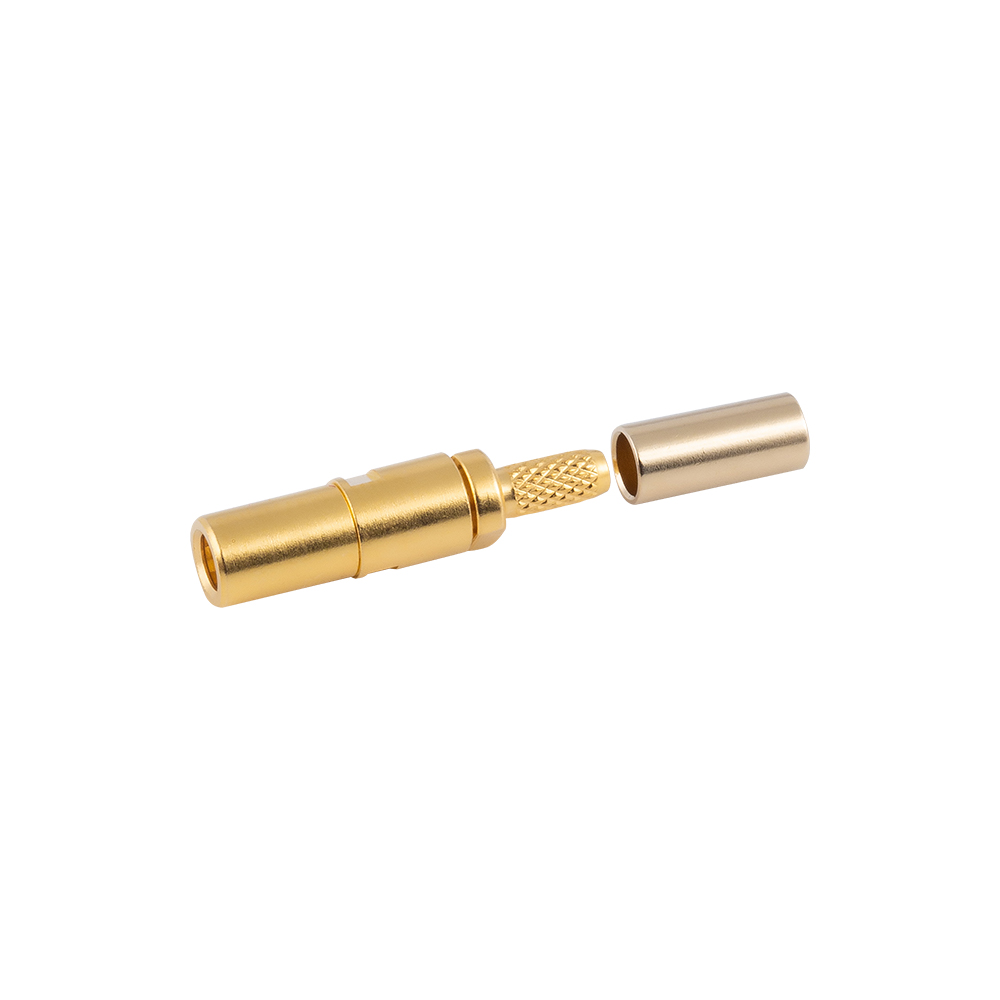
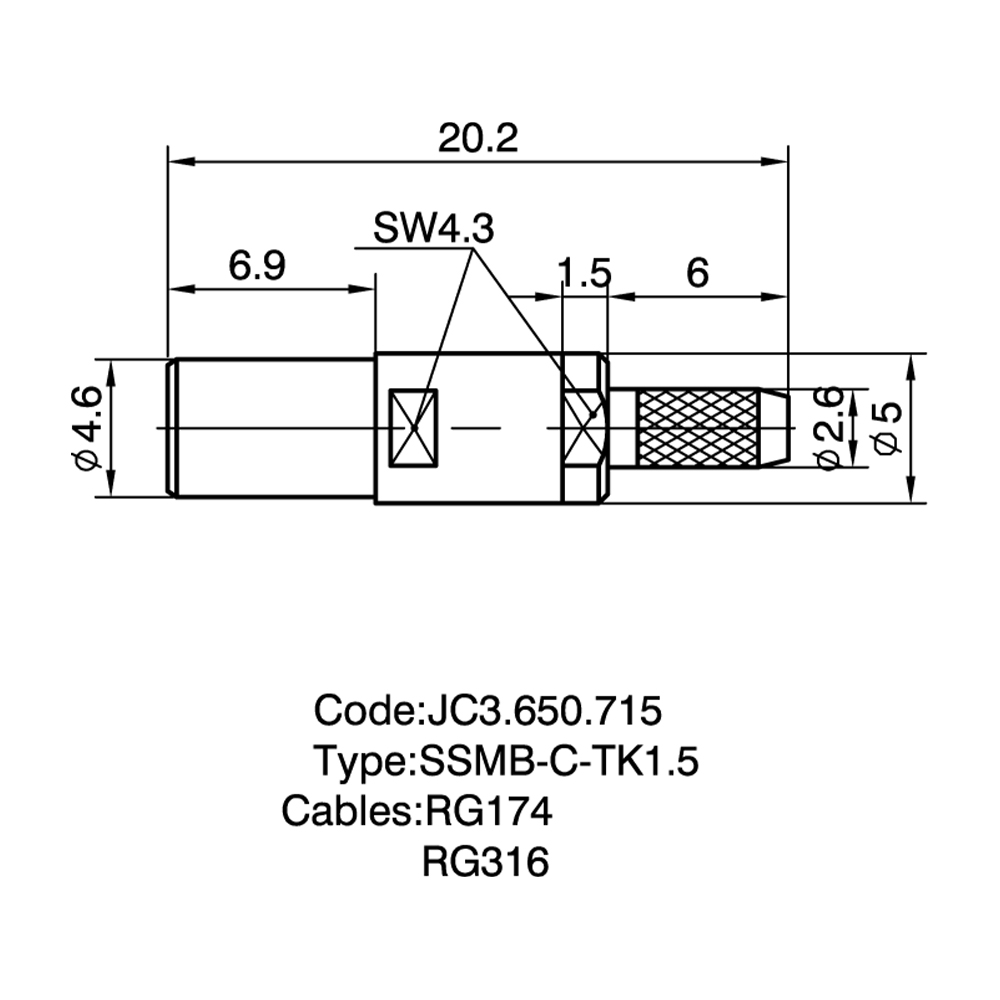
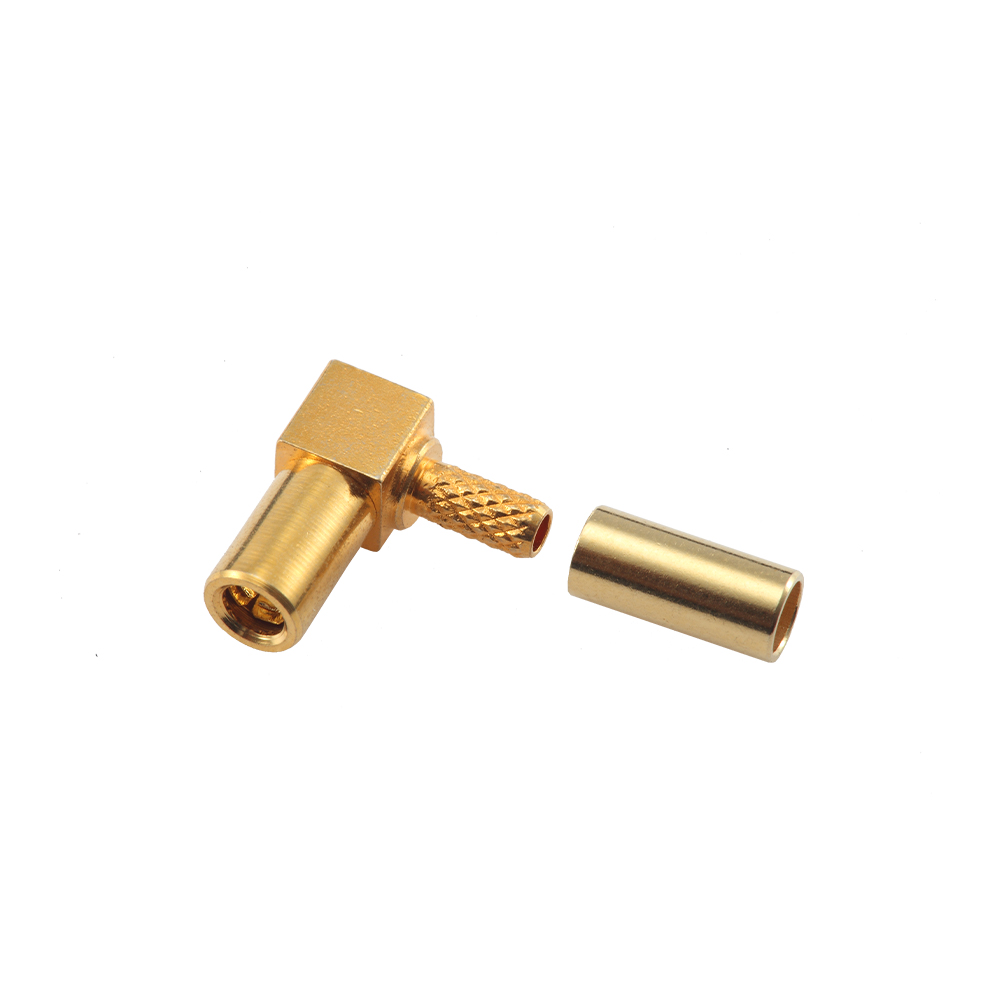
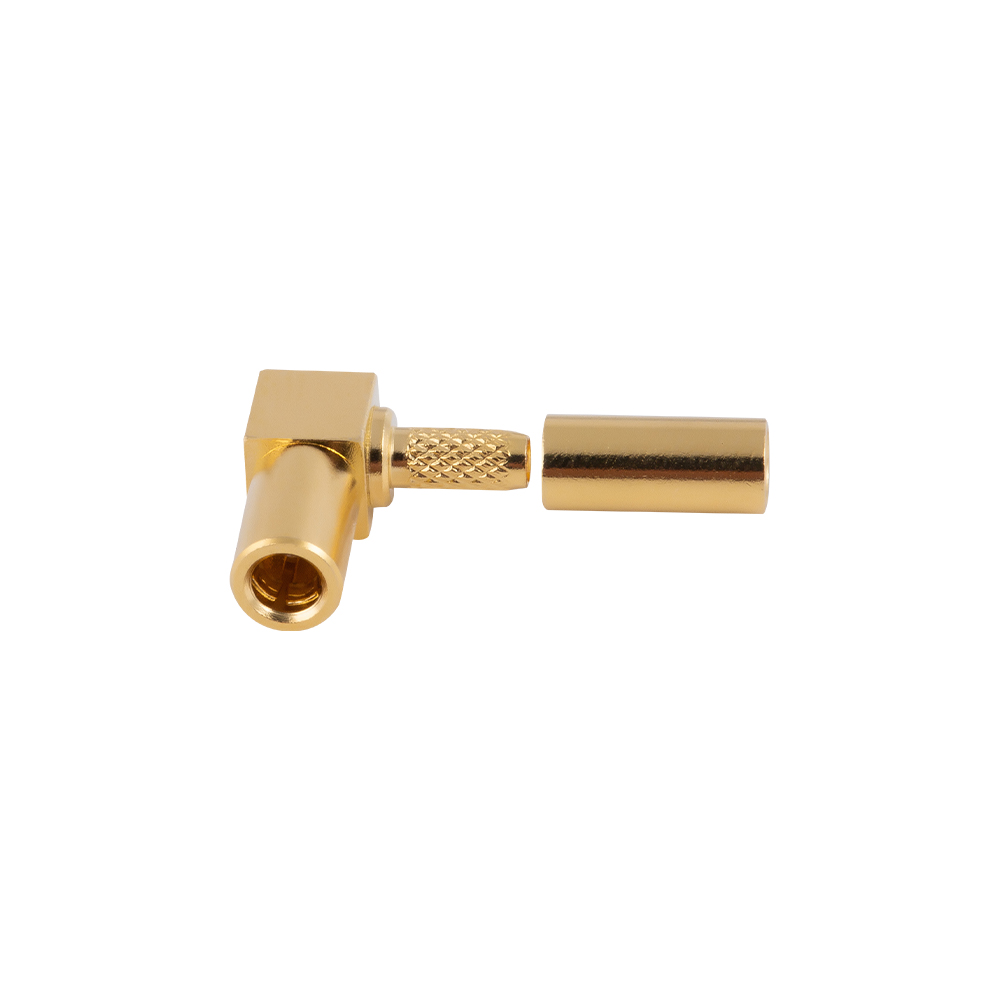
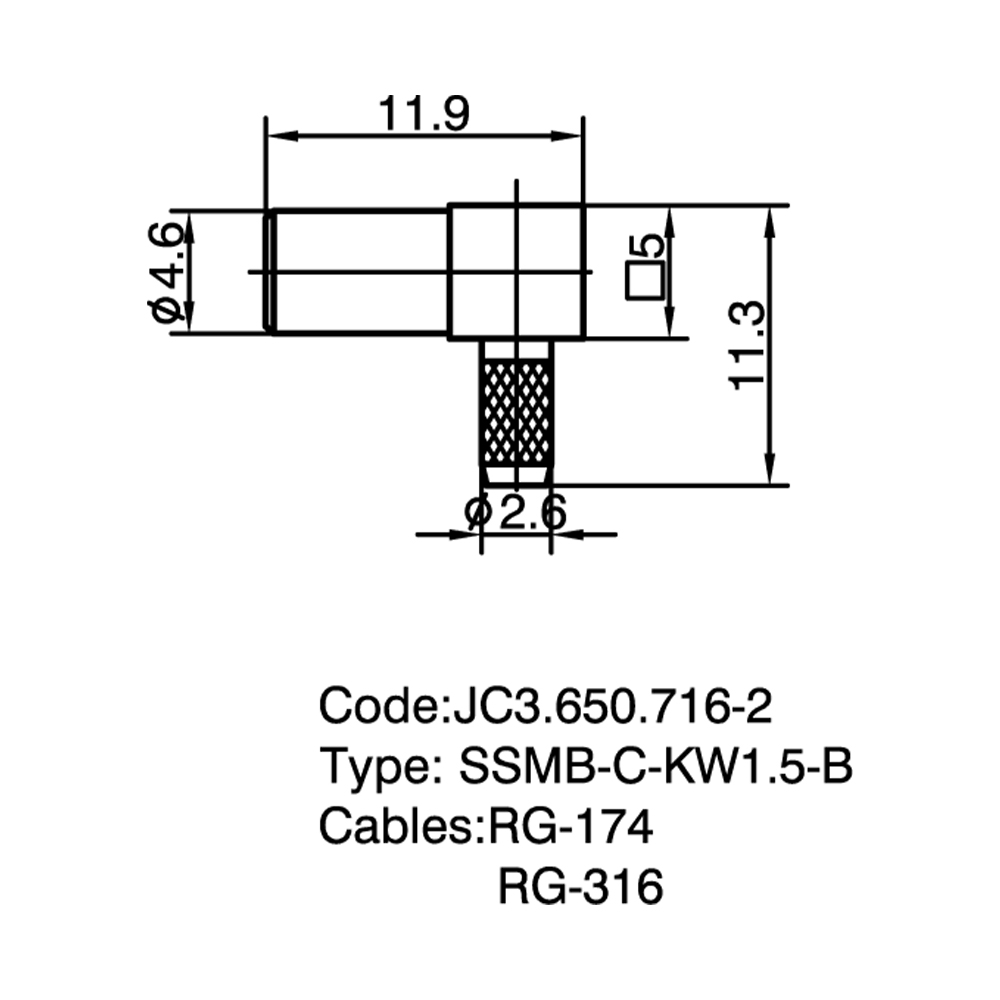
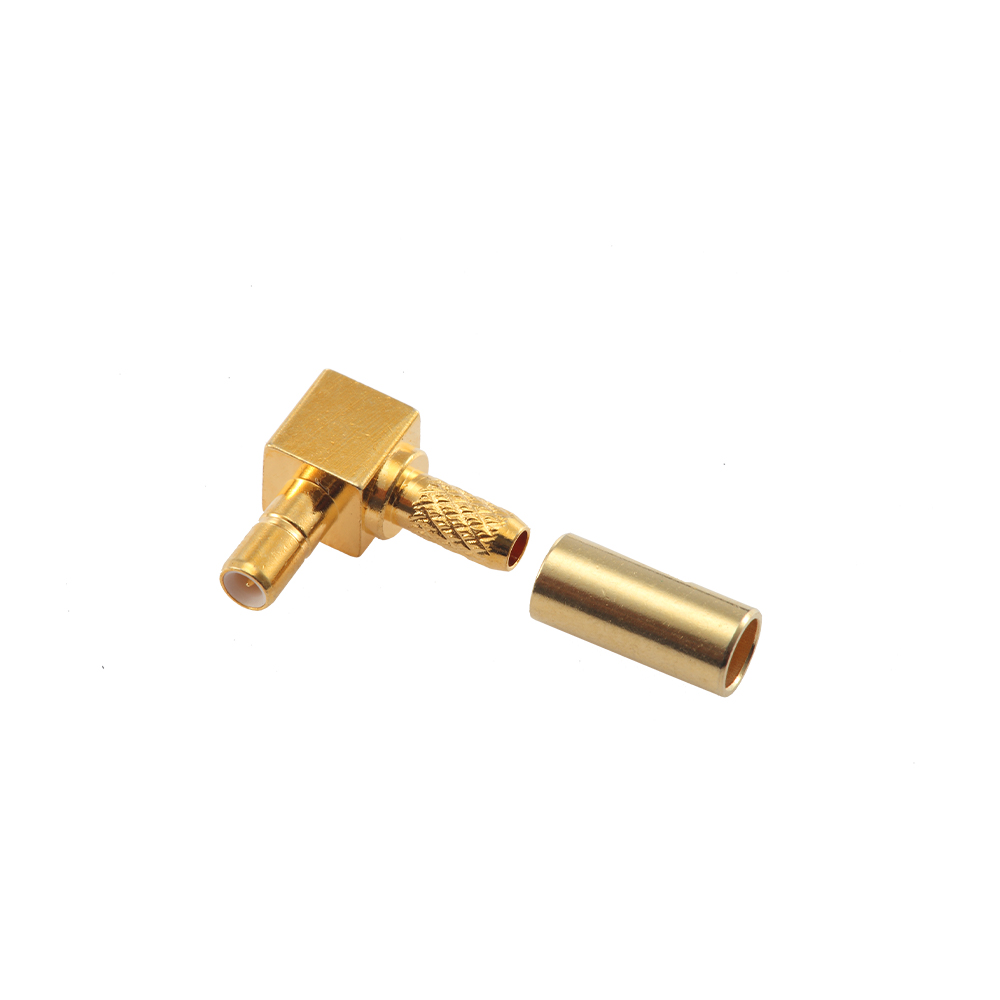
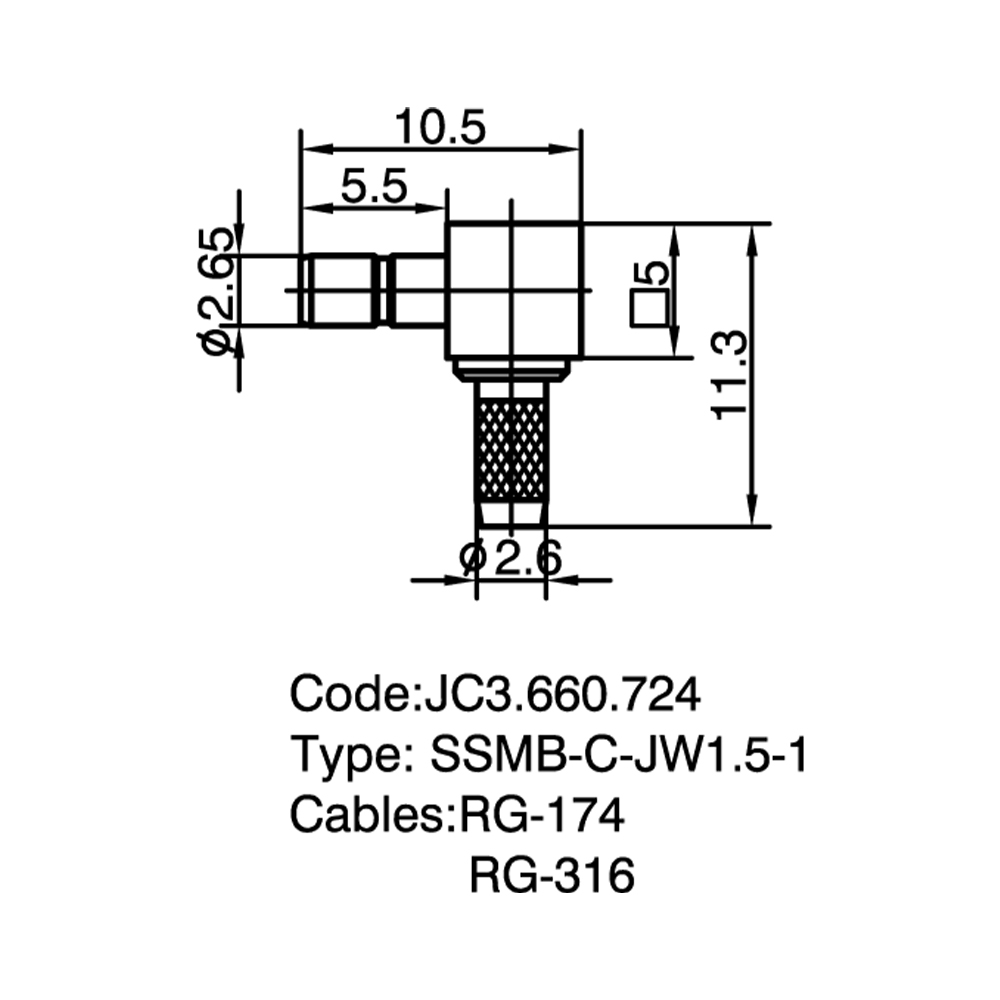
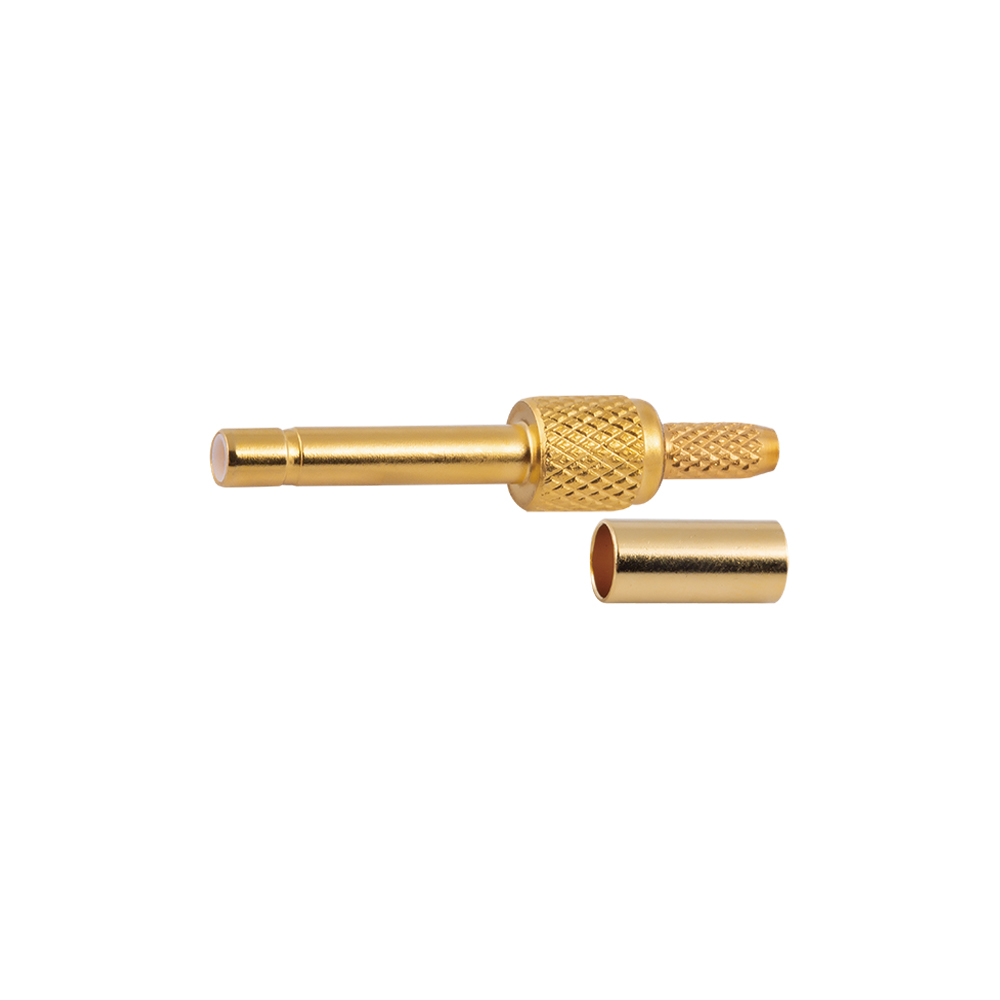
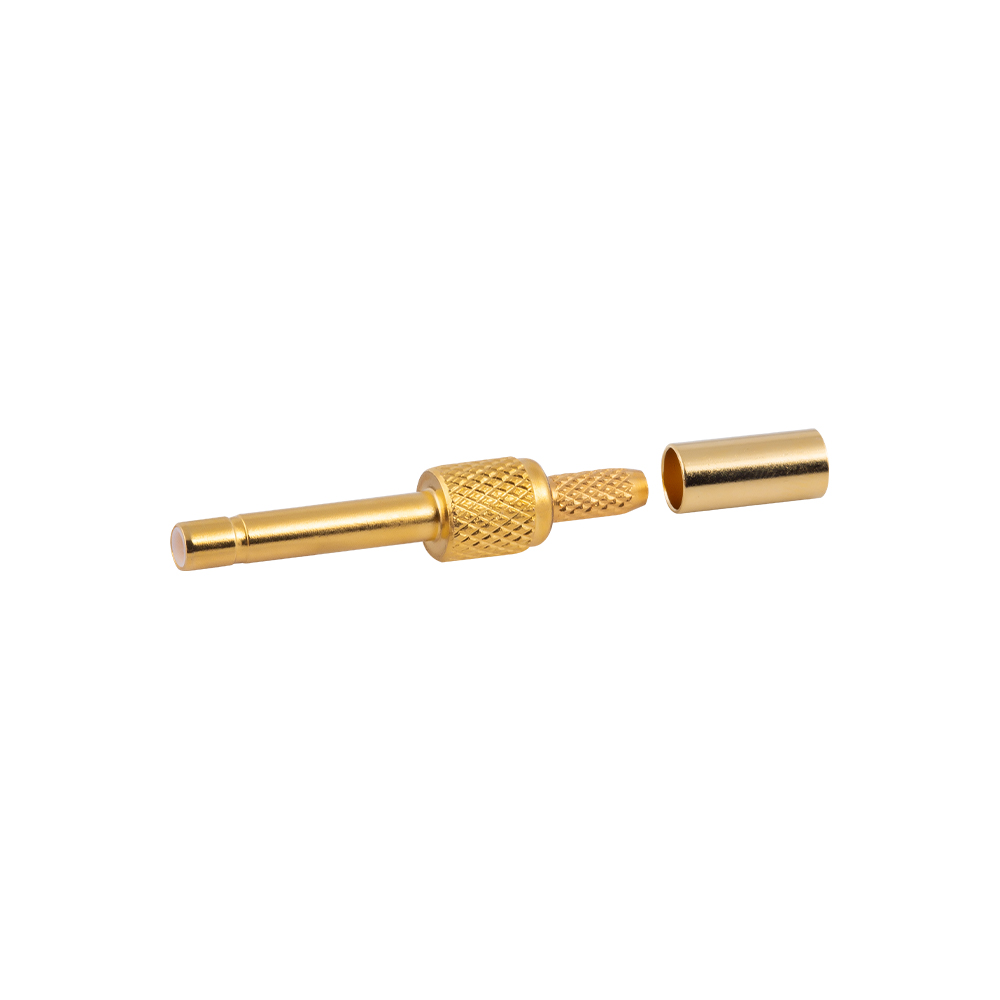
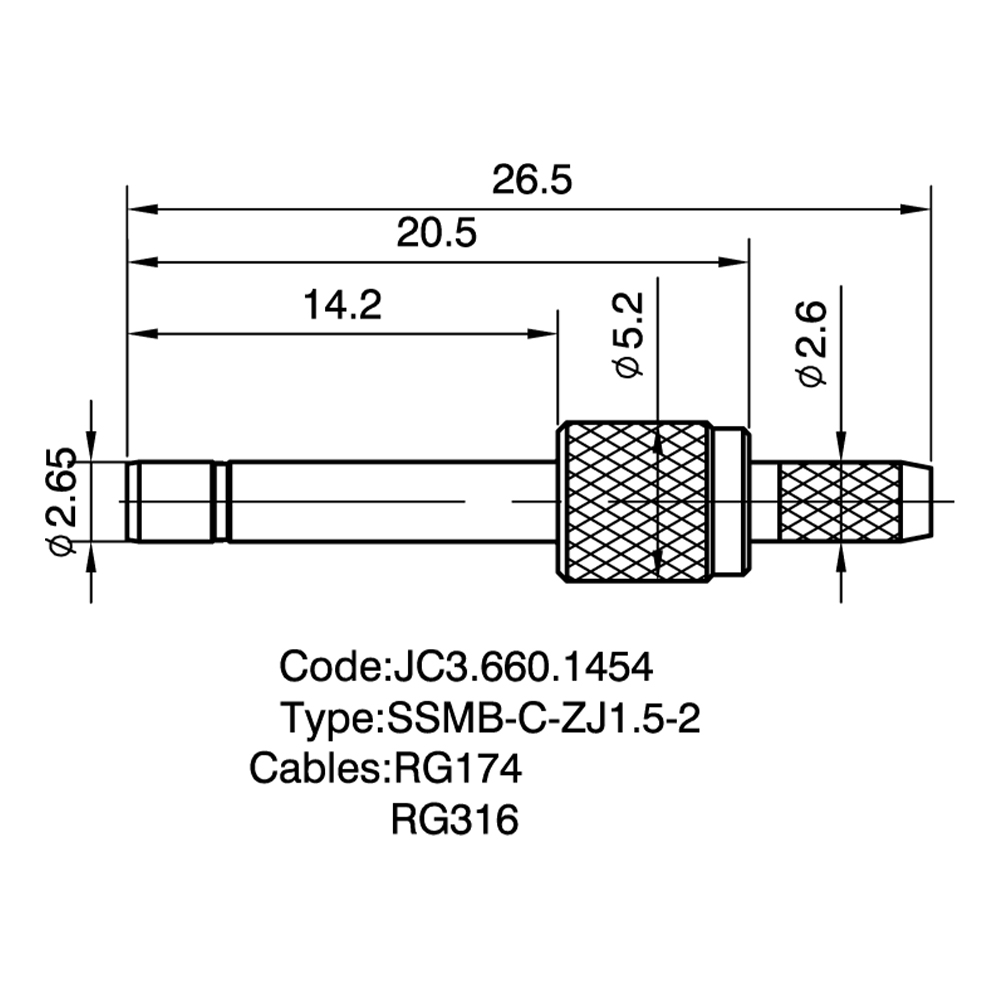
SSMB RF coaxial connectors for flexible cable are miniature push-on interconnects derived from the SMB series, designed for signal transmission in space-constrained RF and microwave assemblies. Compared with standard SMB connectors, the SSMB footprint is reduced in both diameter and length, allowing higher-density placement on PCBs, backplanes, and multi-port modules while maintaining a snap-on mating mechanism that does not require torque tools. This connector type is commonly supplied as cable assemblies terminated on flexible coaxial cable, including RG178, RG316, and equivalent low-loss micro-coax, for use in jumper connections between boards, modules, and antennas.
Common Types and Characteristics
| Type |
Configuration |
Mating Style |
Typical Use |
| SSMB Straight Plug |
Male, cable end |
Push-on |
Board-to-board jumper cables |
| SSMB Right Angle Plug |
Male, cable end |
Push-on |
Low-profile routing in enclosures |
| SSMB Straight Jack |
Female, cable or PCB end |
Push-on |
Panel or board-mount receptacle |
| SSMB Bulkhead / PCB Mount |
Female, fixed mount |
Push-on |
Direct board or housing mounting |
General characteristics of this connector family include a compact outer diameter, gold- or nickel-plated contacts, PTFE or equivalent dielectric insulation, and a working frequency range typically up to 4 GHz, with impedance commonly specified at 50 Ω. Cable assembly versions are available with customizable cable length, jacket color, and connector orientation.
Comparison with Related Miniature Connectors
| Connector |
Mating Method |
Relative Size |
Typical Frequency Range |
Common Application |
| SSMB |
Push-on (snap) |
Smallest in SMB family |
DC–4 GHz |
High-density board interconnect |
| SMB |
Push-on (snap) |
Larger than SSMB |
DC–4 GHz |
General RF jumper connections |
| MMCX |
Push-on with detent |
Comparable to SSMB |
DC–6 GHz |
Antenna and test equipment cabling |
| MCX |
Push-on (snap) |
Slightly larger |
DC–6 GHz |
GPS, wireless module connections |
Application Scenarios
SSMB RF coaxial connectors for flexible cable are applied in scenarios where board space is limited and connector height must remain low, such as internal cabling for base station modules, RF switch matrices, test fixtures, telecom equipment backplanes, and instrumentation with multiple RF ports on a single board. The flexible cable termination allows routing around obstructions inside compact enclosures without rigid connector alignment constraints.
Selection Points
- Confirm required frequency range and insertion loss tolerance for the application.
- Select straight or right-angle configuration based on available clearance and routing direction.
- Match cable type (e.g., RG178, RG316) to bend radius and length requirements.
- Verify plug/jack gender pairing with mating board connectors.
- Check plating material (gold or nickel) against environmental and durability requirements.
- Confirm impedance value (typically 50 Ω) matches system design.
FAQ
What distinguishes SSMB from SMB connectors?
SSMB connectors use a smaller shell diameter and shorter mating length than SMB connectors, while retaining the same push-on mating principle, which allows closer connector spacing on a board.
Can SSMB RF coaxial connectors for flexible cable be customized?
Cable length, connector orientation, jacket material, and plating can be configured according to project specifications.
What cable types are typically used with SSMB connectors?
Micro-coaxial cables such as RG178 and RG316, or equivalent low-diameter flexible coax, are commonly used for SSMB cable assemblies.
Is SSMB suitable for outdoor or high-vibration environments?
The push-on mating design is intended primarily for internal board-to-board or module-to-module connections; retention under vibration should be evaluated against the specific mechanical environment.
Yangzhou Jingcheng Electronics Co., Ltd. manufactures SSMB RF coaxial connectors for flexible cable along with related SMB, MCX, and MMCX series, supported by in-house tooling, CNC production, and network analyzer testing to maintain dimensional and electrical consistency across production batches.


 English
 中文简体
中文简体