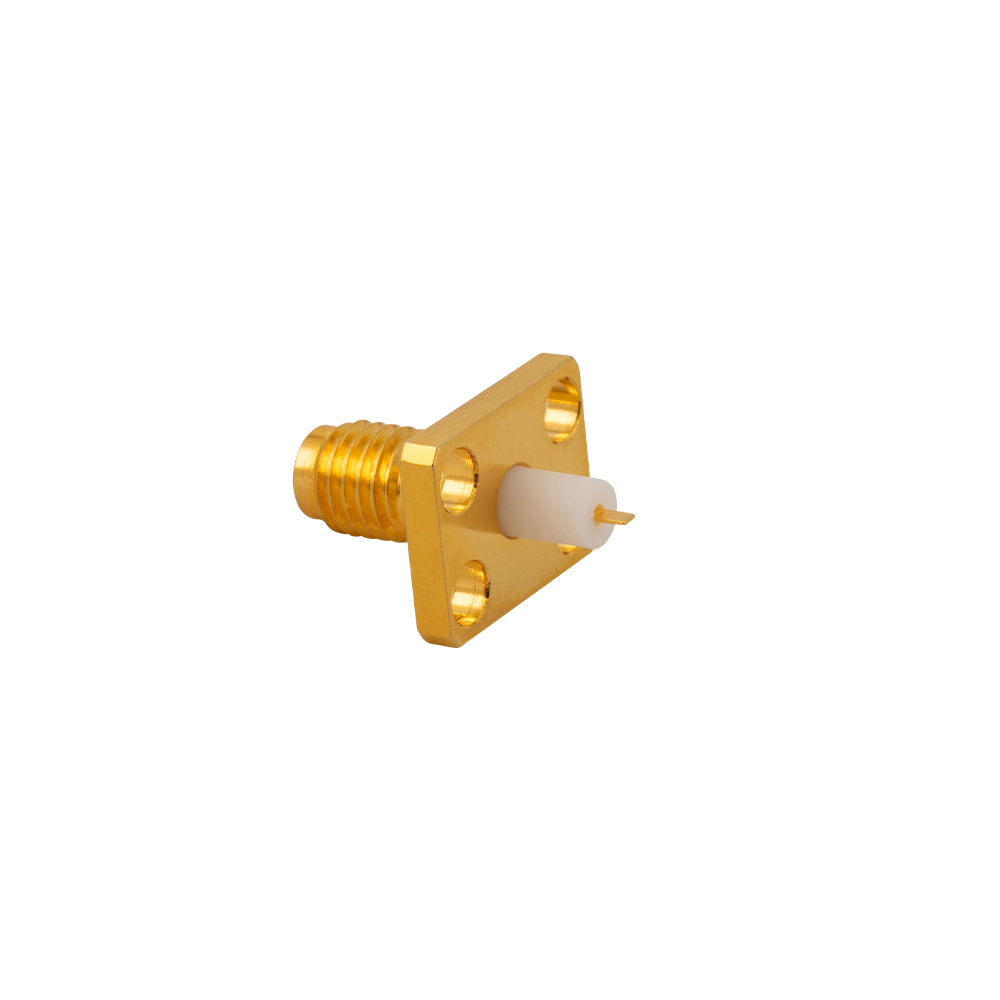
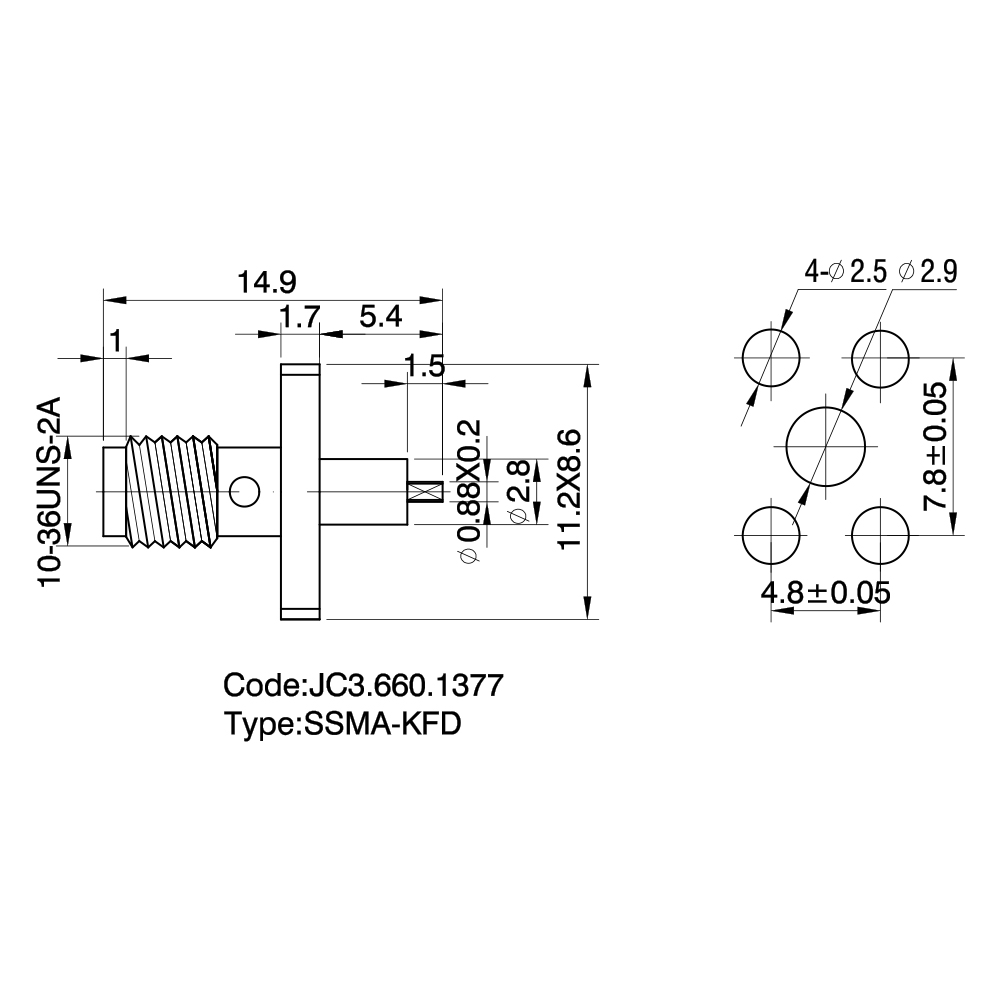
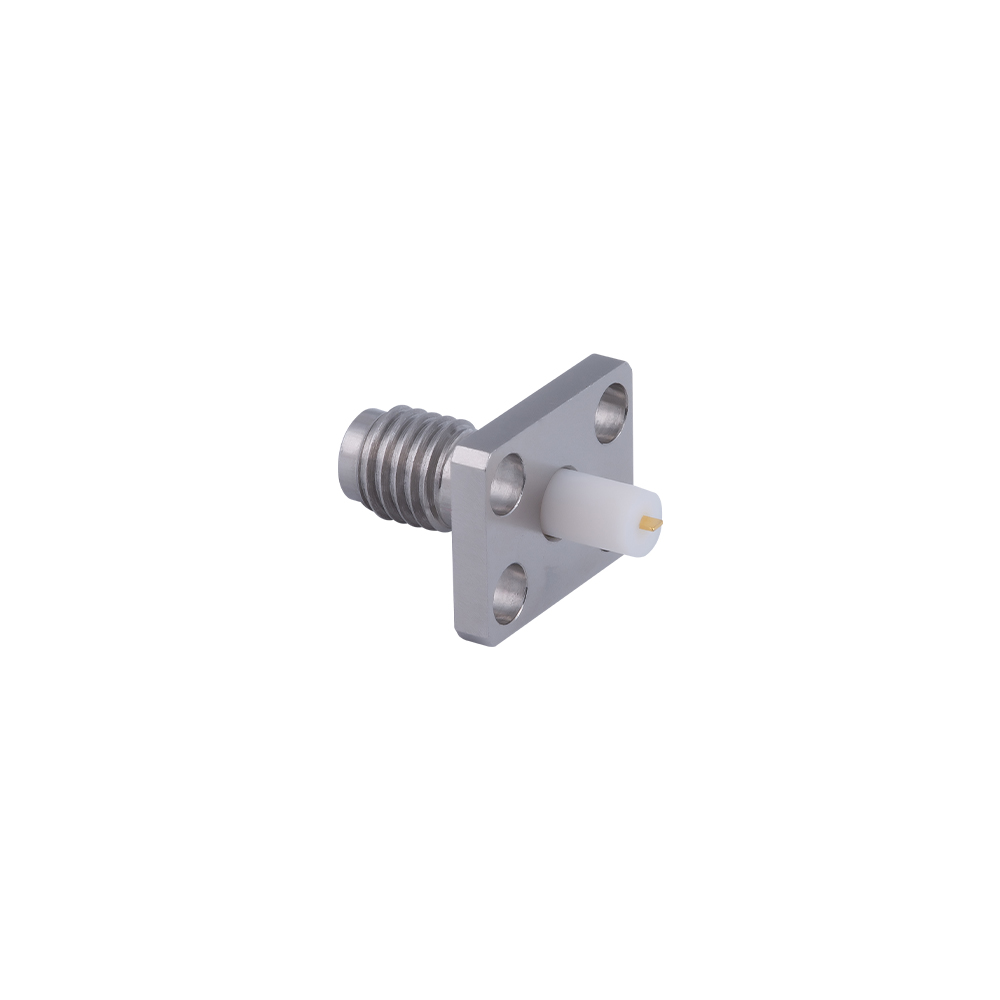
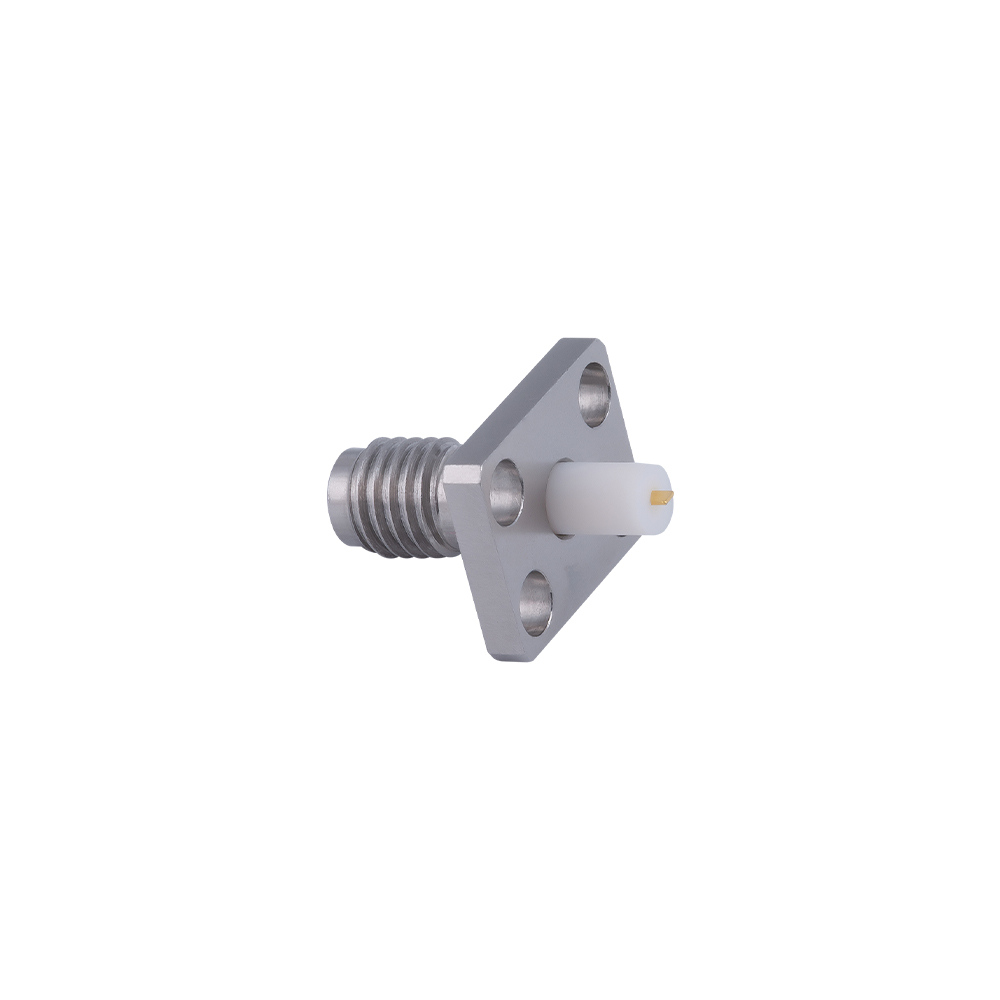
SSMA RF Coaxial Connectors Wholesale

Home / Products / Coaxial Connectors / SSMA RF Coaxial Connectors

SSMA RF Coaxial Connectors Manufacturer

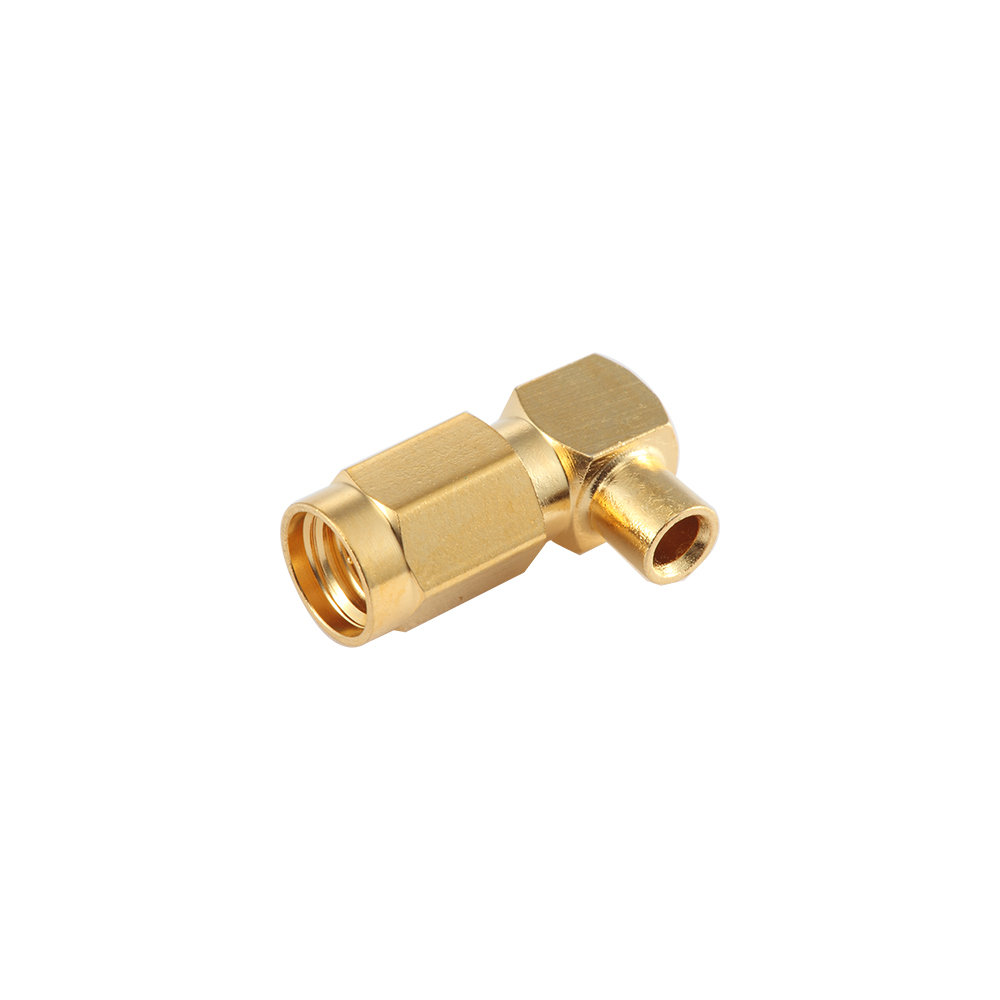
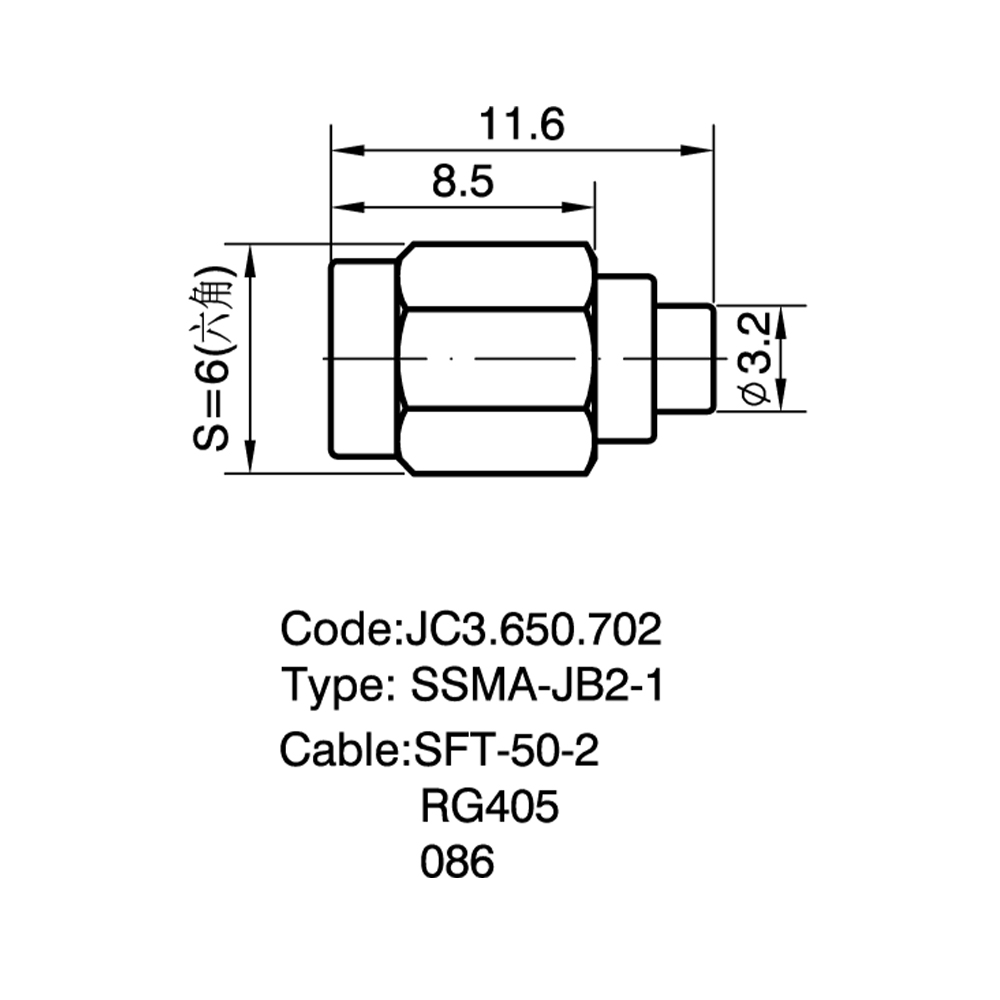
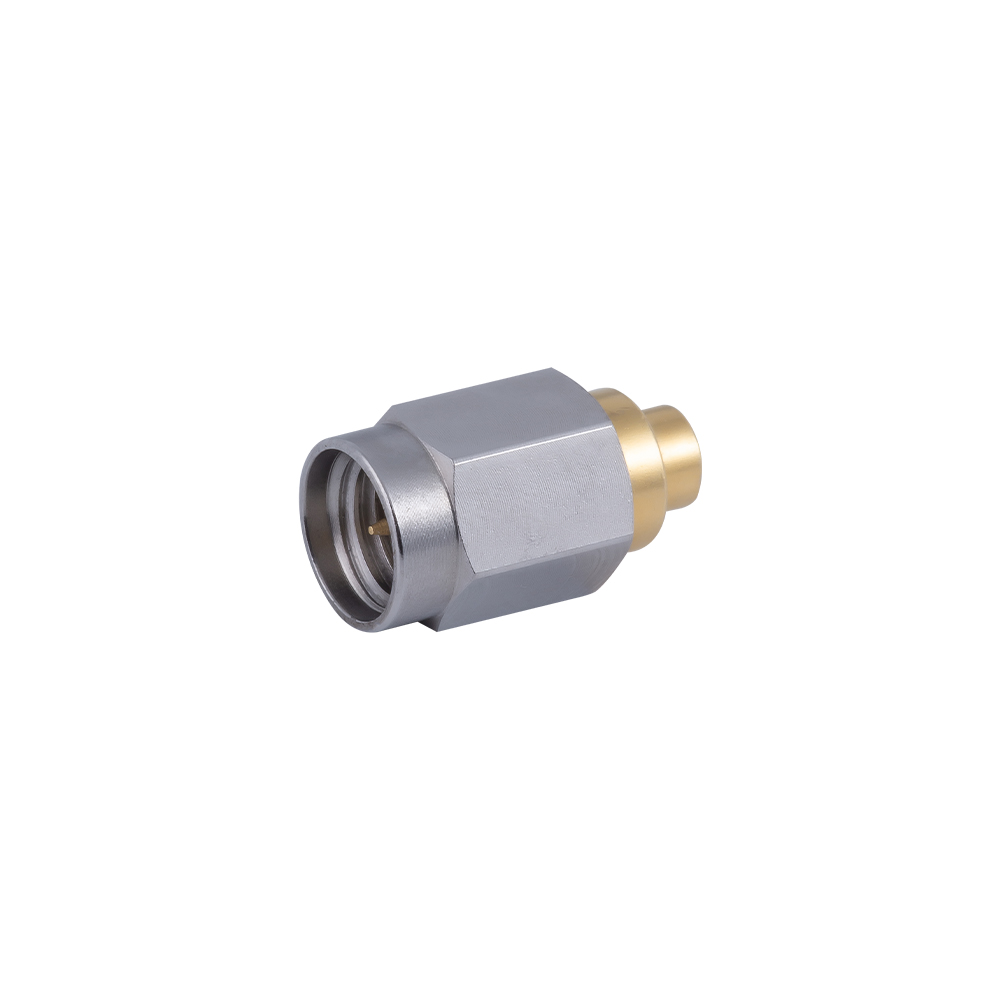
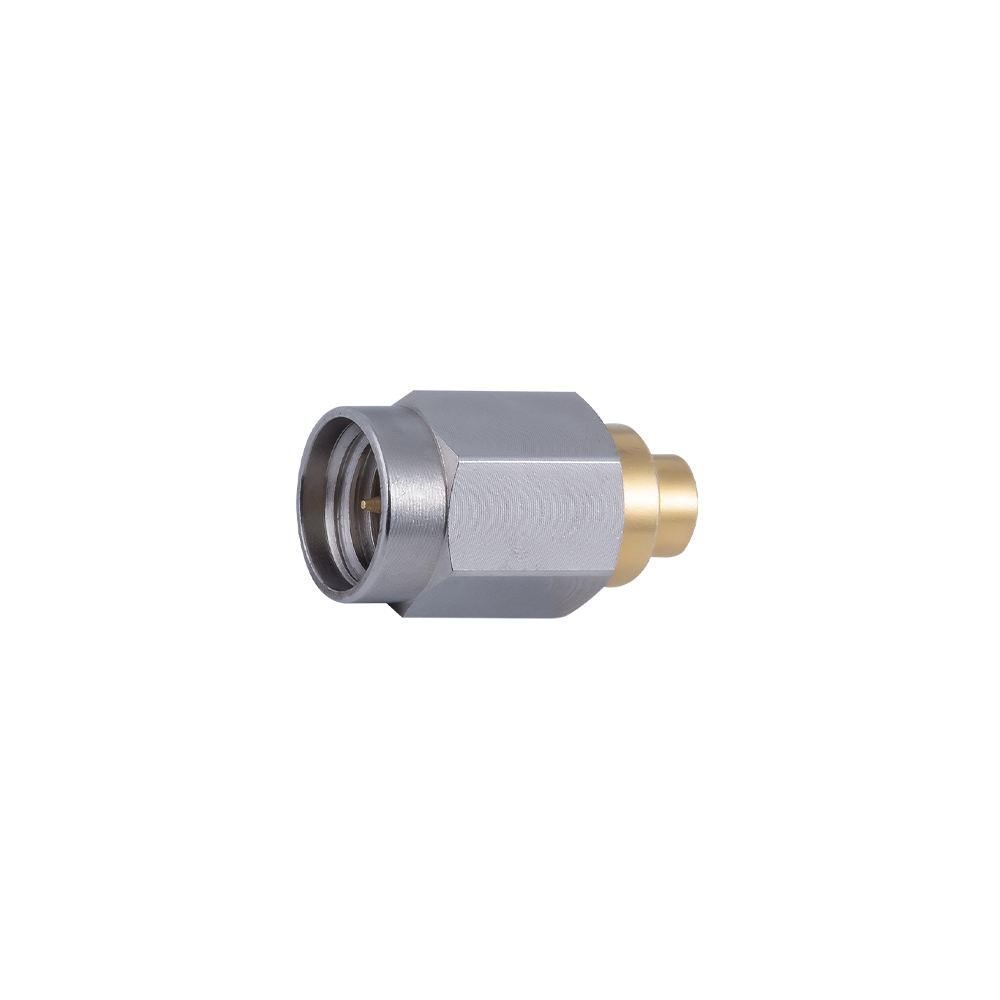
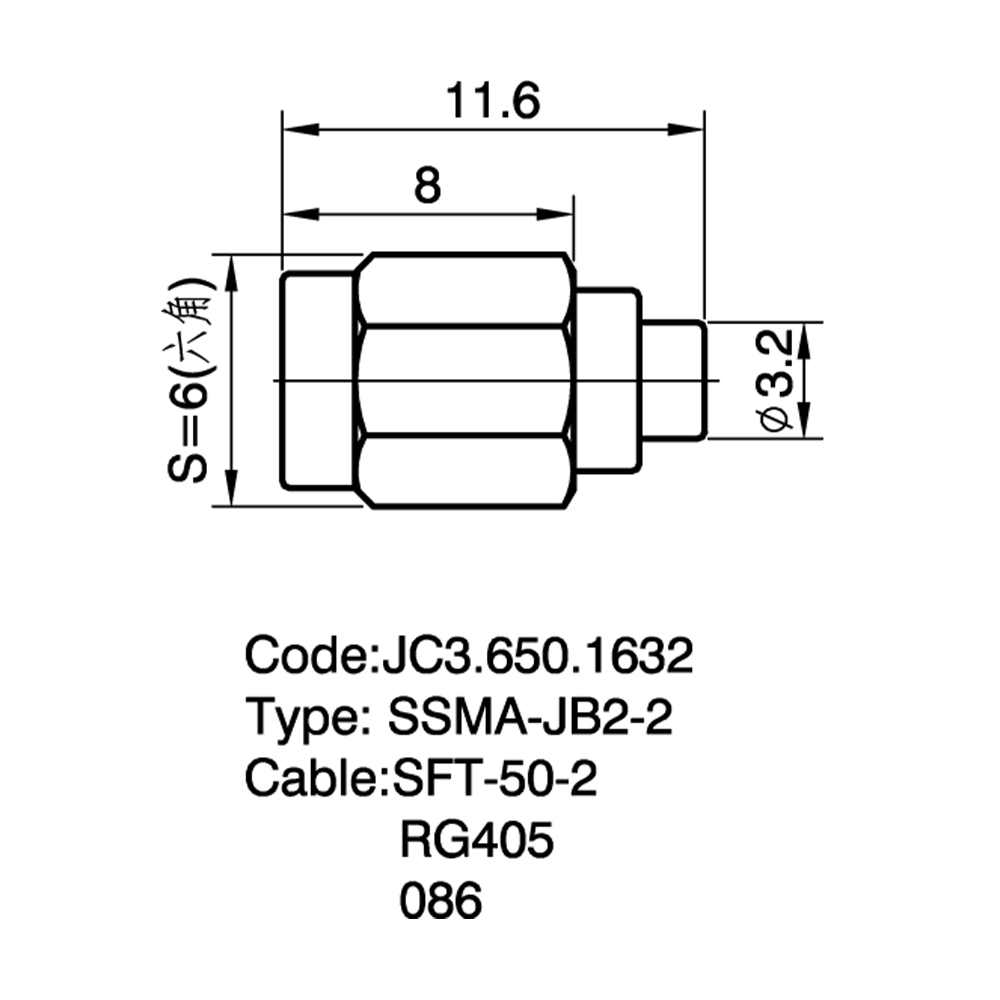
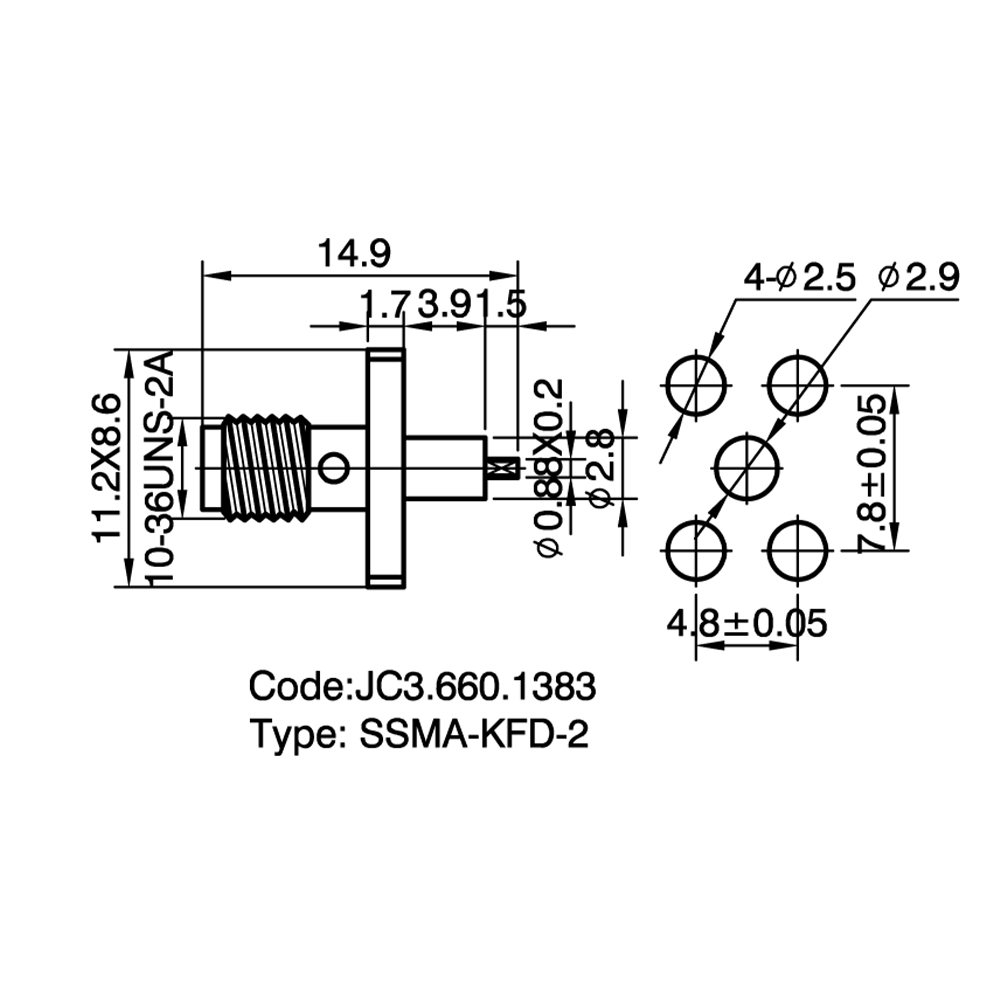
TYPE SSMA is one kind of Microminiature RF coaxial connector with Screw Coupling mechanism, Characteristic impedance is 50Ώ.The characteristic of connectors is in Small Size, light weight, wide frequency range, and high reliability.
They are used in Small-sized portable electronic equipment that are strict with the volume and weight, and used with RF coaxial cable on Network system. The frequency of the connector can be up to 18GHz by Using the high accuracy Semi-rigid Cable.

Temperature  Range

-55~+155℃

Impedance

50Ω

Frequency Range

DC~35GHz

Insulation resistance

≥1000MΩ

Voltage Standing Wave Ratio (VSWR)

≤1.07+0.10f(GHz)

 Durability(mating)

≥500cycles

About
Yangzhou Jingcheng Electronics Co., Ltd.

Yangzhou Jingcheng Electronics Co., Ltd., a premier China SSMA RF Coaxial Connectors Manufacturer and SSMA RF Coaxial Connectors Factory, was founded in 1999. It is a high-tech enterprise specializing in the R&D and manufacturing of RF coaxial connectors, cable assemblies, and passive microwave components.
Equipped with a comprehensive R&D and production system, the company has obtained international certifications including ISO9001. Adhering strictly to standards such as MIL, IEC and GB, we offer over 30 product series with more than 2,000 specifications, covering SMA, BNC, N-type and other mainstream models. Our products are widely applied in the fields of communications, aerospace, automotive electronics and beyond, and exported to many countries and regions across Europe, America and Asia.
We uphold the tenet of "Quality as the Foundation, Customers as the Core", committed to providing reliable interconnection solutions and professional services for global clients.

SSMA RF Coaxial Connectors Industry knowledge
RF Coaxial Connector Series

SSMA RF Coaxial Connectors

SSMA RF coaxial connectors are subminiature, threaded-coupling interconnects built for high-frequency signal transmission where size, phase stability and repeatable mating performance matter. Derived from the SMA interface but machined to tighter dimensional tolerances, SSMA connectors extend usable bandwidth well beyond standard SMA parts while keeping the same 1/4-36 UNS thread, allowing compatibility with SMA-interface hardware in most mechanical layouts.

Core Performance and Function

Frequency Coverage

Typical operating range spans DC to 26.5 GHz, with select precision designs extending to 34 GHz or higher, supporting broadband test and RF signal chains.

Impedance and VSWR

50 Ω characteristic impedance with low VSWR across the rated band, maintained through controlled pin geometry and dielectric consistency.

Coupling and Mechanical Life

1/4-36 UNS threaded coupling provides secure mating and repeatable torque, with mechanical life ratings suited to frequent connect/disconnect cycles in lab and field use.

Non-Magnetic Option

Non-magnetic material variants (beryllium copper, brass with non-magnetic plating) are available for use near sensitive magnetic components such as circulators and isolators.

Body Materials and Plating

Stainless steel or brass bodies with gold-plated center contacts and passivated or nickel/gold-plated outer bodies support corrosion resistance and stable contact resistance.

Dielectric

PTFE insulation supports low loss and stable dielectric performance across temperature, aligning with demanding RF and microwave signal integrity requirements.

Common Types and Characteristics

Standard SSMA (Plug/Jack)

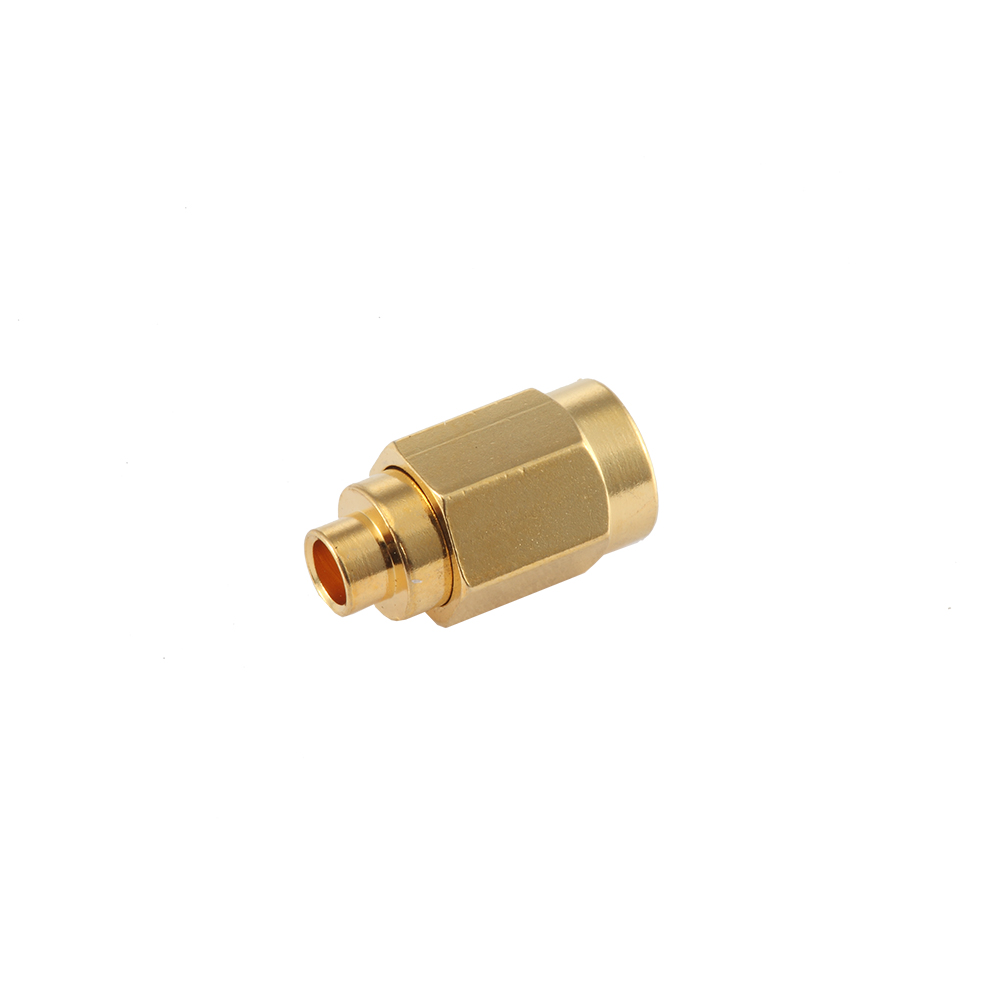
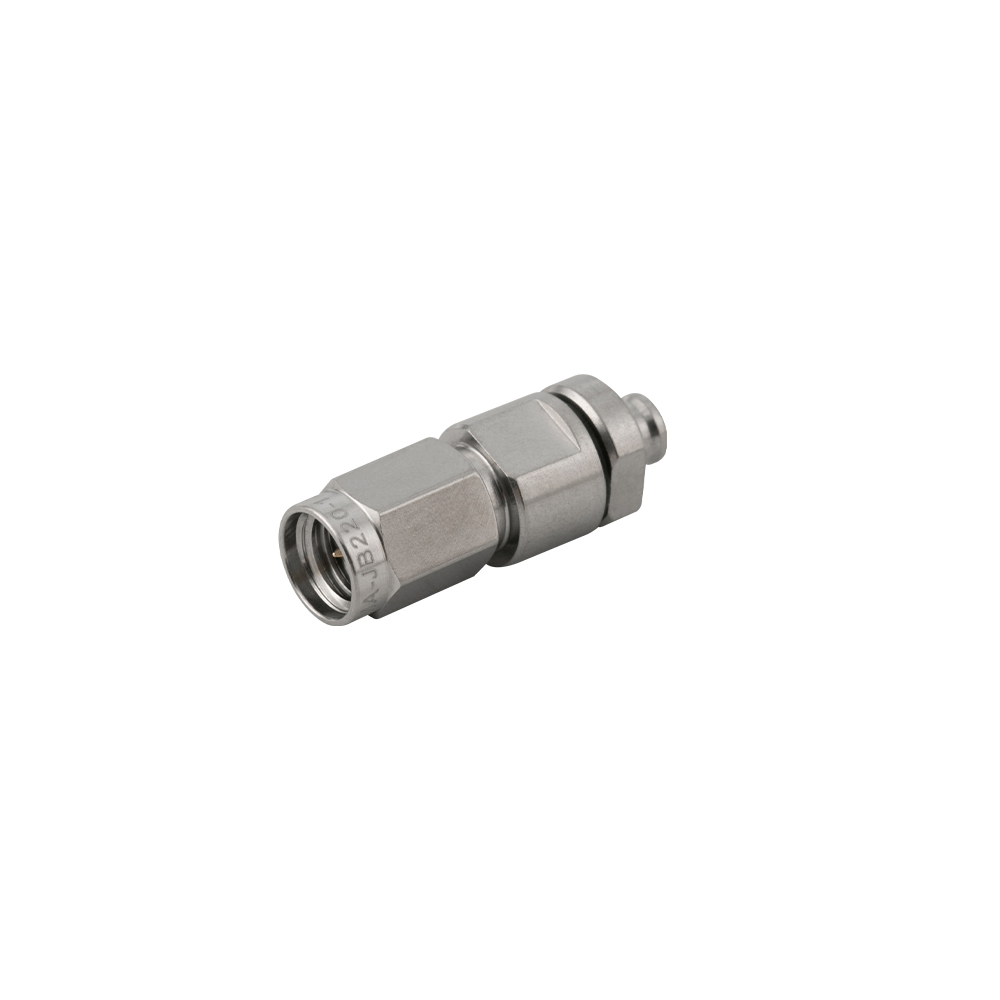
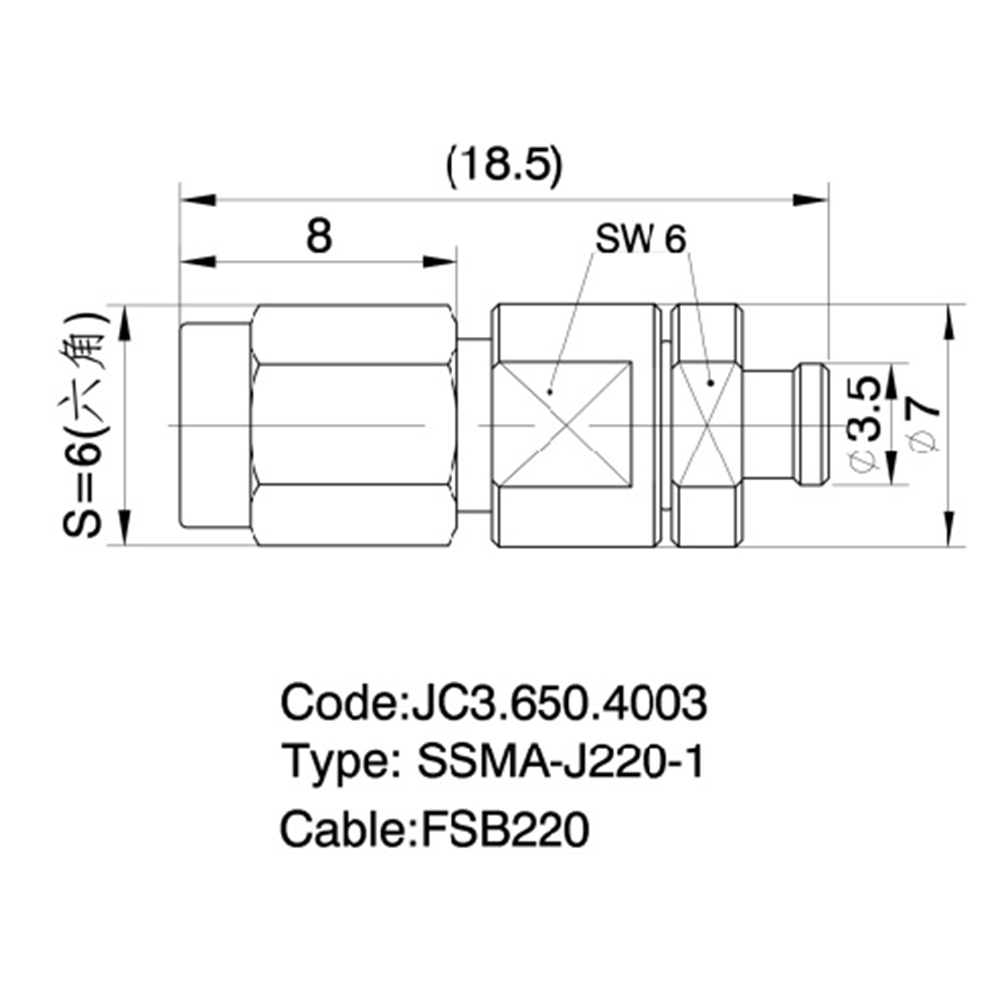
Male (plug) and female (jack) pairs for general cable-to-cable or cable-to-equipment connections, sized for high-density panel layouts.

PCB Edge-Launch / End-Launch

Surface-mount or through-hole footprints for direct transition from board traces to coaxial cable or test probes, minimizing discontinuity at the launch point.

Bulkhead / Panel Mount

Front or rear panel mounting with jam-nut or flange fixing, used where a chassis feedthrough is required between enclosure interior and exterior cabling.

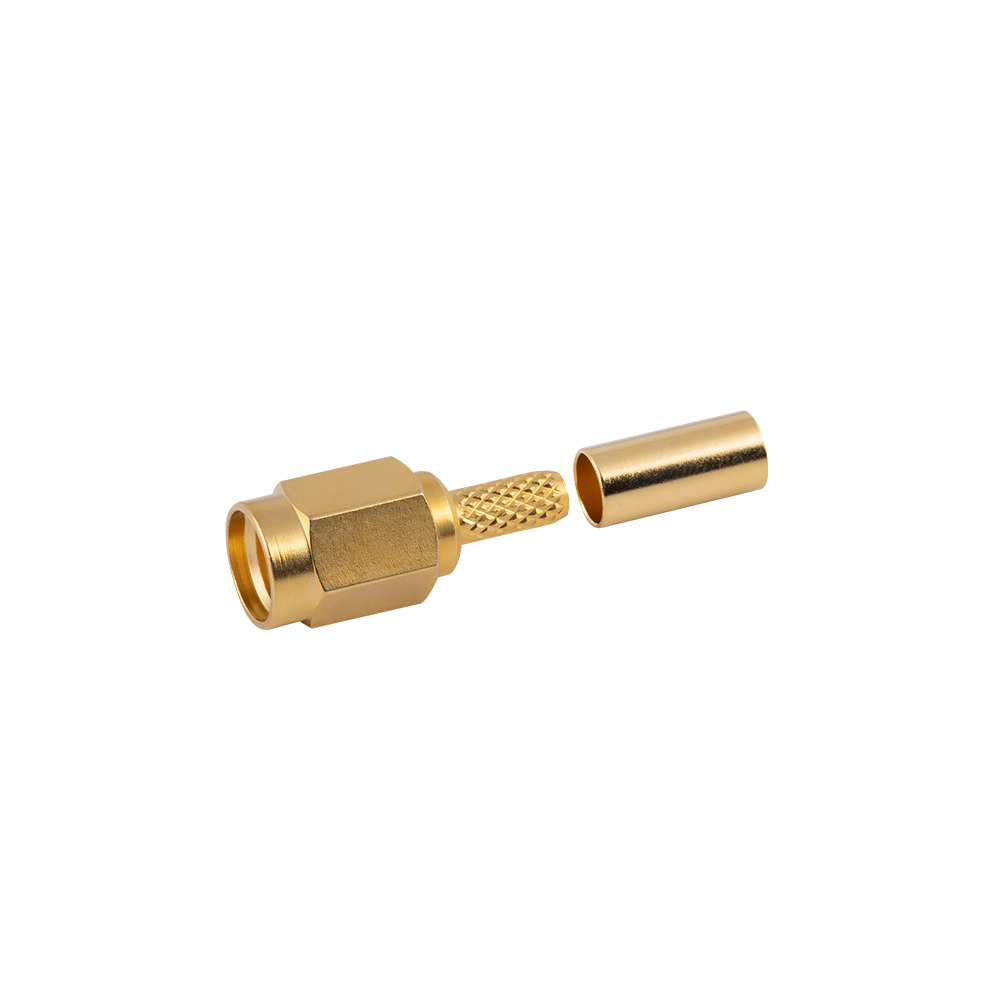
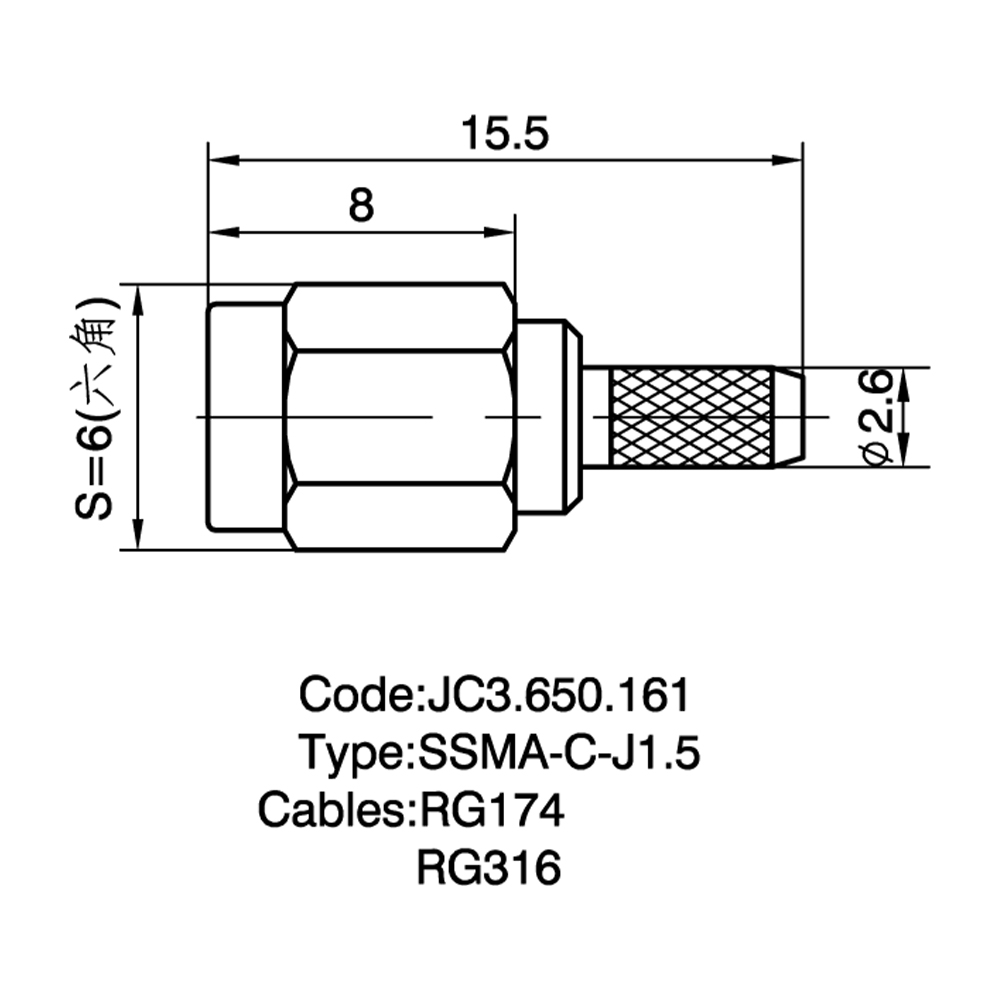
Cable Mount (Semi-Rigid / Flexible)

Solder or crimp termination for semi-rigid, conformable, or flexible coaxial cable, supporting custom cable assembly production.

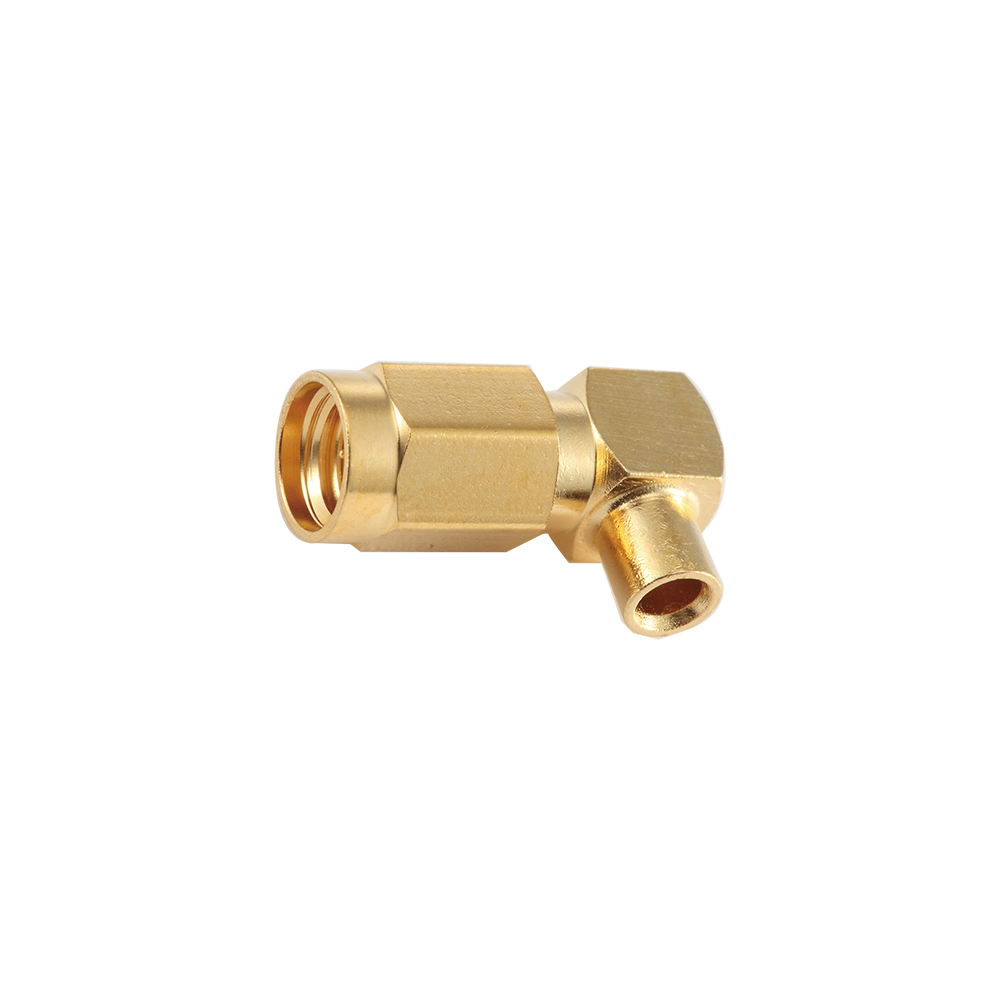
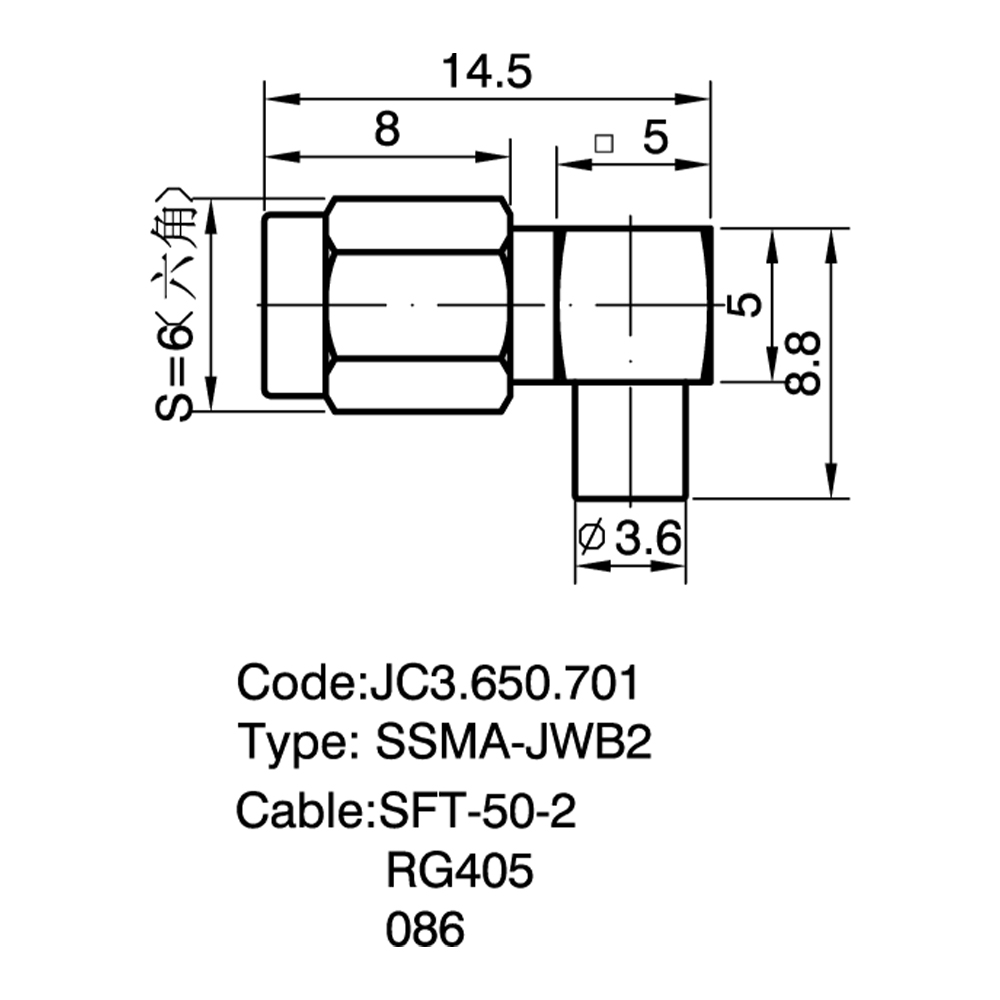
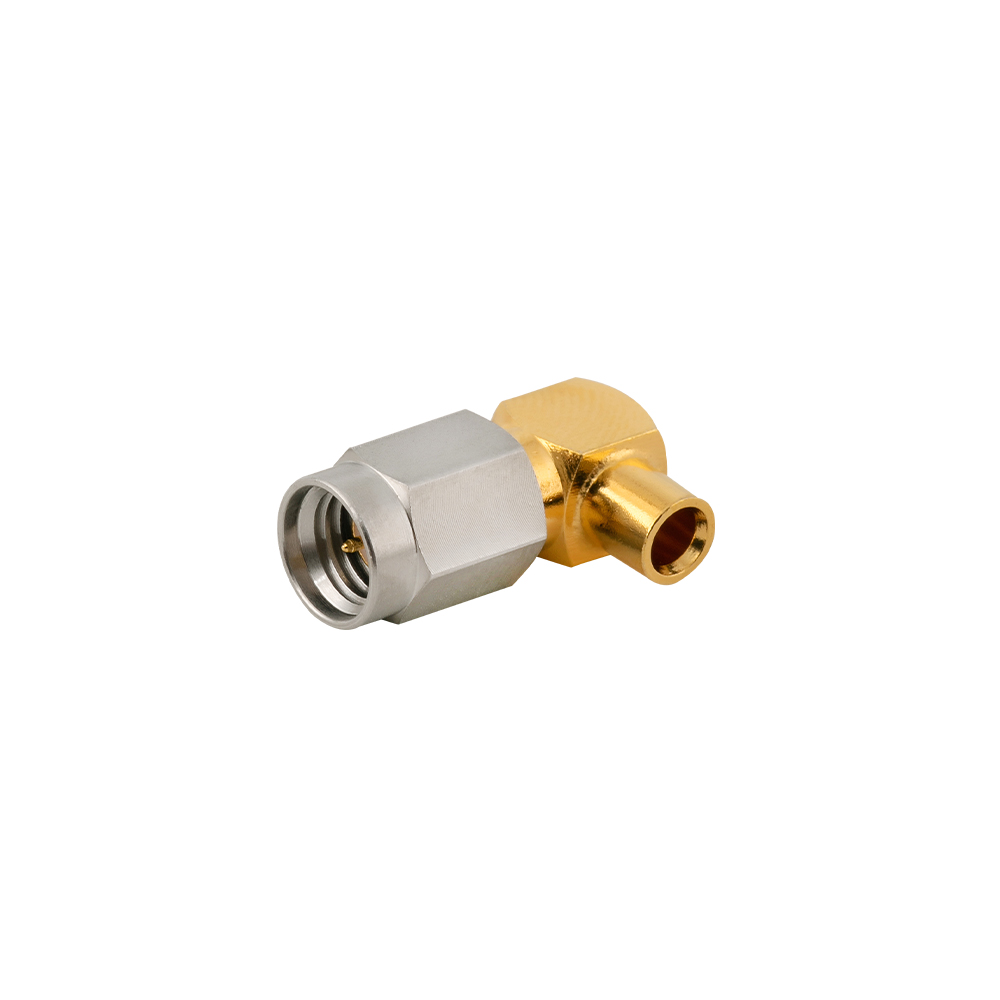
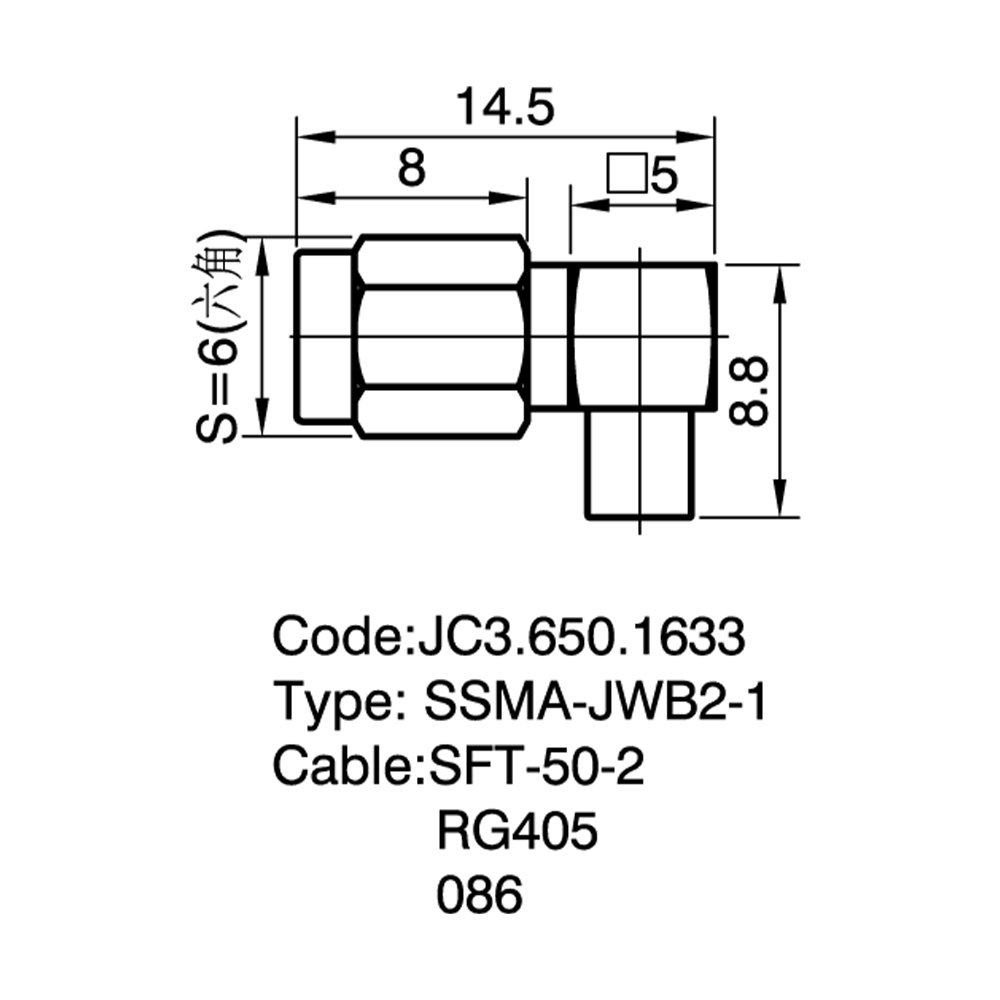
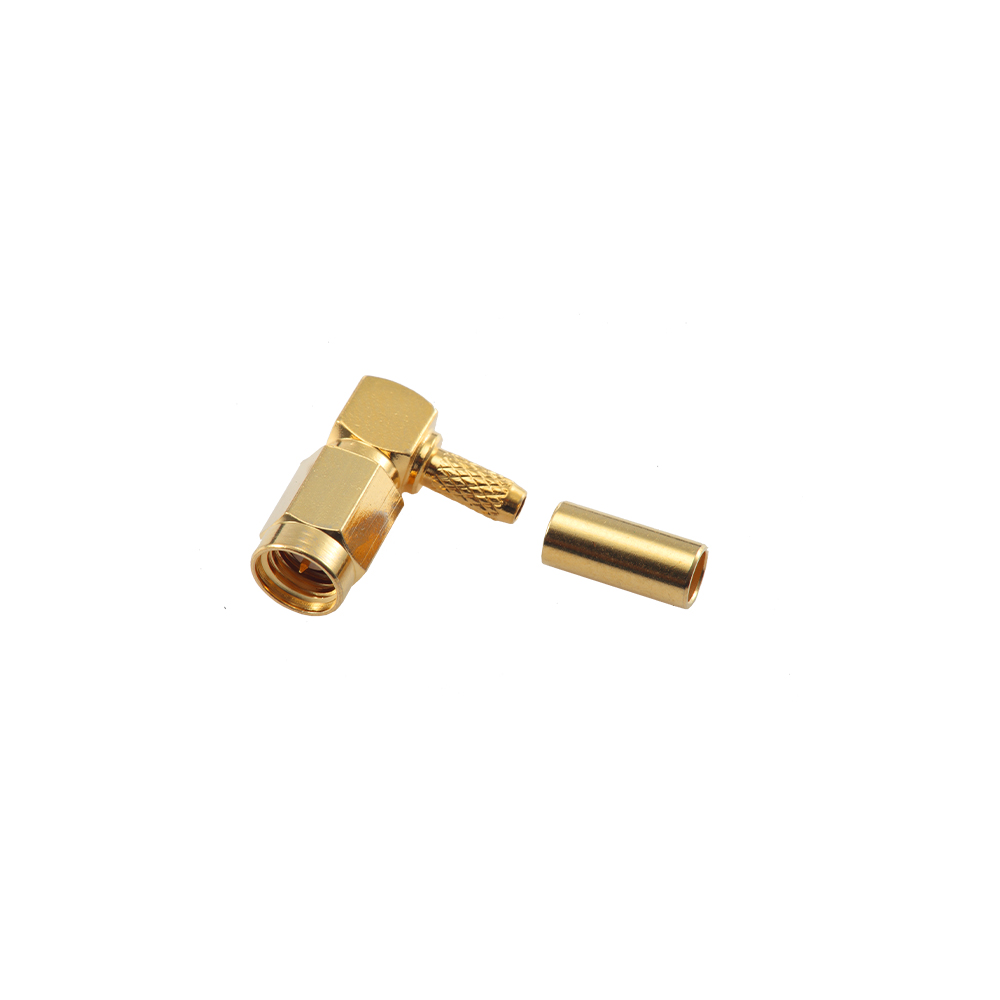
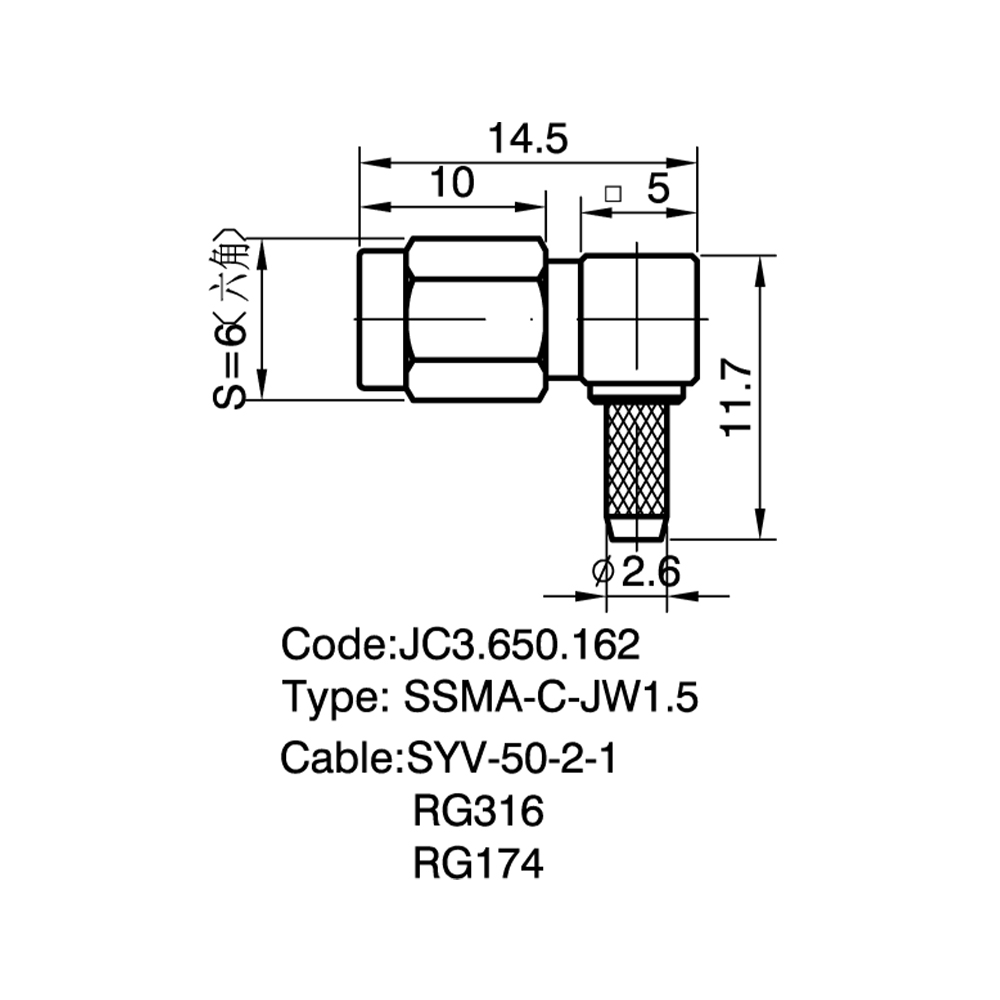
Right-Angle

90° body orientation for constrained enclosures or where cable routing space is limited without exceeding bend radius limits.

Non-Magnetic Series

Fully non-magnetic construction for use adjacent to ferrite devices, NMR/MRI-related equipment, and other magnetically sensitive assemblies.

SSMA vs. SMA vs. SMP: Interface Comparison

Attribute SSMA SMA SMP
Coupling method 1/4-36 UNS threaded 1/4-36 UNS threaded Push-on, no thread
Typical frequency range DC – 26.5 GHz (up to 34 GHz+ in precision designs) DC – 18 GHz DC – 40 GHz
Dimensional tolerance Tighter than standard SMA Standard commercial tolerance Precision, blind-mate optimized
Mechanical interchangeability Mates with SMA-interface hardware Mates with SSMA-interface hardware Not thread-compatible with SSMA/SMA
Typical use case Test instrumentation, aerospace/defense, high-frequency modules General RF/microwave, commercial wireless High-density board-to-board, blind-mate assemblies

Application Scenarios and Selection Guide

SSMA connectors are used across test and measurement instruments, satellite communication modules, aerospace and defense electronics, high-speed data links, and microwave subassemblies where connector-induced insertion loss and reflection must stay within tight margins across a wide frequency band.

Selection Points

  • Frequency requirement: confirm the rated bandwidth of the specific SSMA design against the system's operating frequency, including margin above the highest signal component.
  • Mounting method: match PCB launch style (edge or end), bulkhead fixing, or cable termination to the physical layout of the assembly.
  • Magnetic sensitivity: specify non-magnetic SSMA variants where the connector sits near circulators, isolators, or other magnetically sensitive components.
  • Cable compatibility: verify the connector's termination geometry against semi-rigid, conformable, or flexible cable diameter and dielectric.
  • Mating cycle and torque: account for expected connect/disconnect frequency in lab, field, or fixed-installation use when selecting body material and plating.
  • Environmental exposure: review plating and sealing options where the assembly is exposed to humidity, vibration, or temperature cycling.

Frequently Asked Questions

What frequency range do SSMA connectors support?

Most SSMA connectors are rated from DC to 26.5 GHz, with precision-machined designs extending to 34 GHz or beyond, depending on the specific series and dielectric configuration.

Are SSMA and SMA connectors mechanically interchangeable?

SSMA connectors share the same 1/4-36 UNS thread as SMA connectors and can mate with SMA-interface hardware. Electrical performance at higher frequencies still depends on the tighter tolerances of the SSMA design.

When is a non-magnetic SSMA connector required?

Non-magnetic SSMA connectors are specified when the assembly includes circulators, isolators, or other components sensitive to magnetic interference, where standard plated brass or steel bodies could affect performance.

What cable types can be used with SSMA connectors?

SSMA cable-mount connectors are available for semi-rigid, conformable, and flexible coaxial cable, with solder or crimp termination options sized to the corresponding cable diameter.

How is an SSMA connector chosen for a PCB design?

Edge-launch or end-launch SSMA footprints are selected based on trace layout and board thickness, with attention to the launch transition to keep impedance discontinuity within the design margin.

Manufacturing background: Yangzhou Jingcheng Electronics Co., Ltd. has produced RF coaxial connectors, including SSMA, SMA, 2.92, 2.4, and related series, since 1999. Production is supported by CNC machining and network analyzer testing equipment, with design, manufacturing, and inspection carried out under ISO9001, ISO14001, and RoHS-aligned processes, referencing standards including GB, JS, GY, MIL-C, and IEC.