TNC Connectors Protective Cap Custom

Home / Products / Coaxial Connectors / TNC RF Coaxial Connectors / TNC Connectors Protective Cap

TNC Connectors Protective Cap Manufacturer

Product Overview
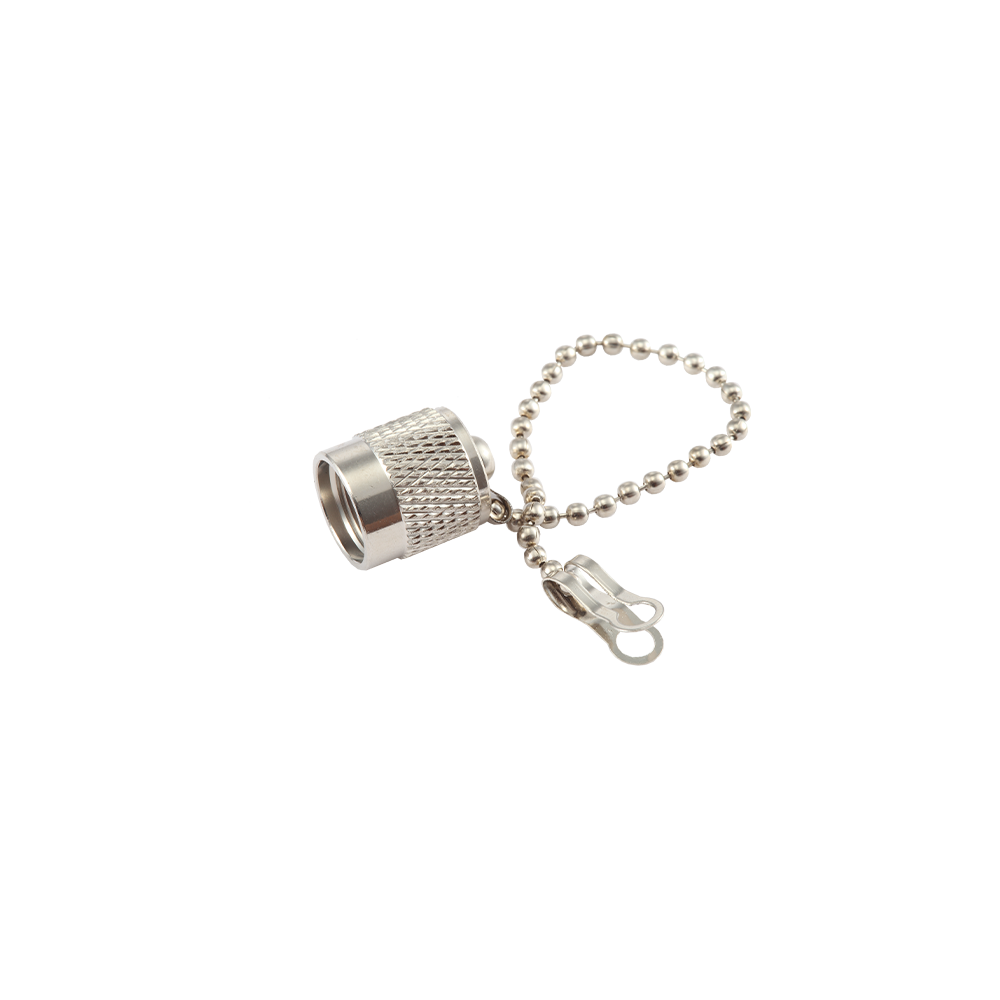
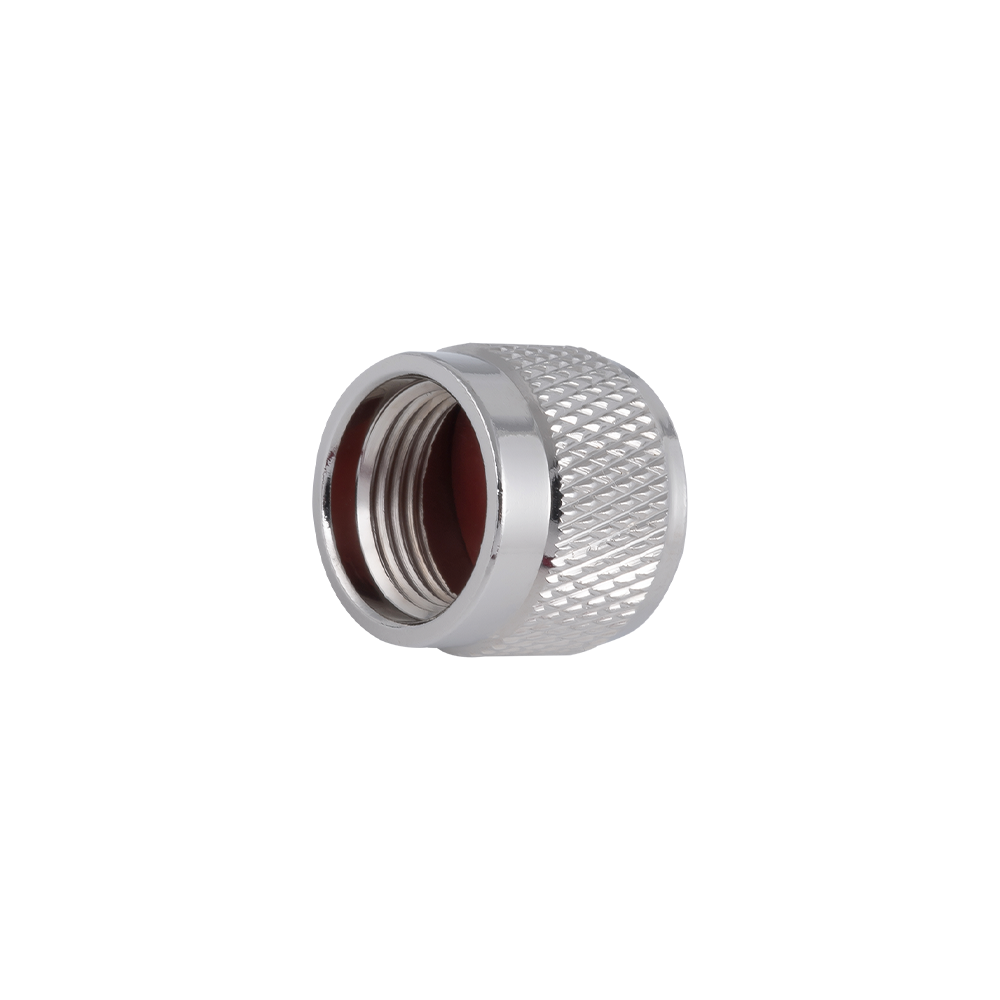
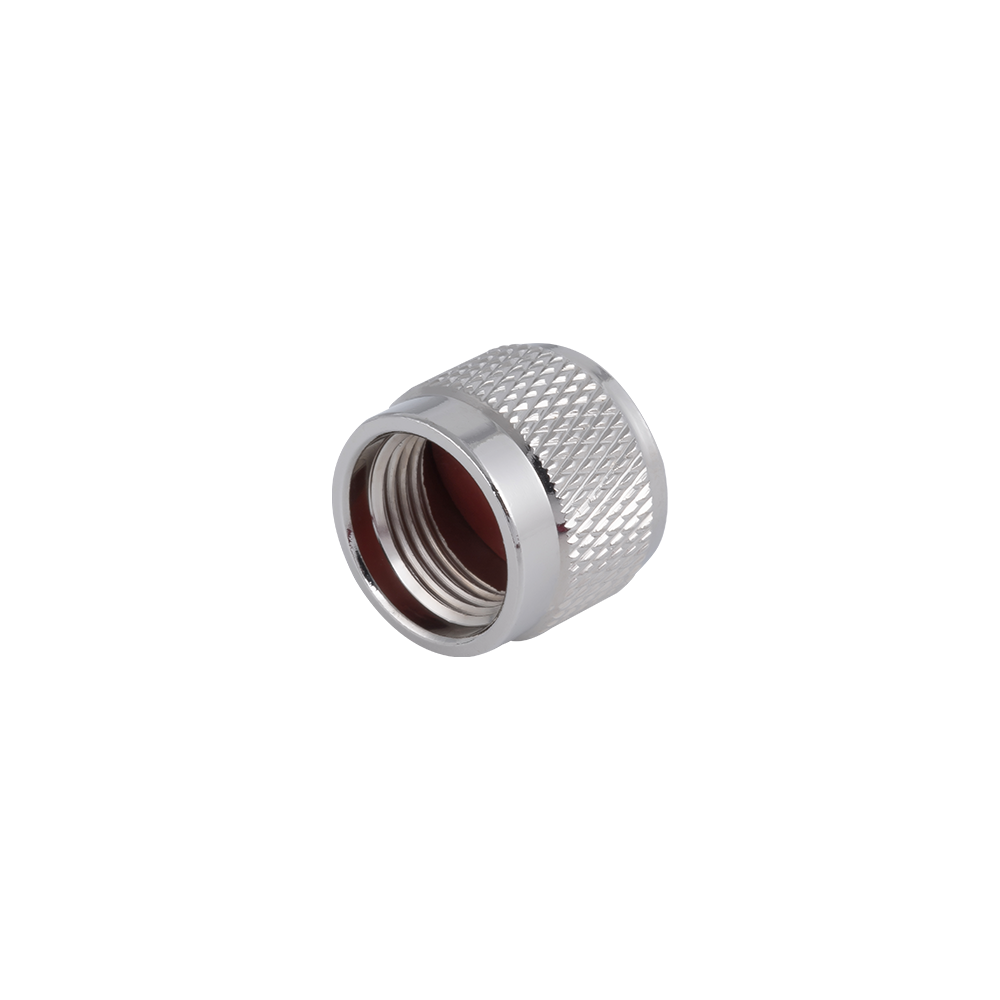
TNC Protective Caps are purpose-engineered interface covers for TNC plug and jack (receptacle) connectors. While visually similar to BNC protective caps, TNC caps are dimensionally distinct: they must accommodate the TNC connector's larger outer diameter and threaded outer coupling nut, requiring a different retention geometry to avoid stripping or deforming the thread during routine cap installation and removal.

Beyond basic contamination prevention, TNC protective caps for high-value microwave assemblies serve an additional function: they protect the precision-machined thread of the coupling nut from corrosion and mechanical damage during storage and transit. A damaged TNC thread is an expensive failure mode—thread repair is not feasible in the field and connector replacement in a pre-assembled cable harness is time-consuming. Proper cap protection during logistics and storage is therefore a cost-avoidance measure, not merely a housekeeping item.

Key Features
Thread-engaging retention mechanism: unlike snap-fit BNC caps, TNC caps use a short-turn thread or interference fit that positively retains the cap on the coupling nut, preventing loss during transport over rough terrain or in high-vibration storage environments.
Cap interior geometry protects the center contact (pin or socket) from deformation; center contact protection geometry is gender-specific—plug caps and jack caps are not interchangeable.
Material options: glass-filled polyamide (PA66-GF) for mechanical robustness; PTFE-compounded caps for chemical-resistance applications; aluminum or brass machined caps for environments exceeding polymer temperature limits (>120°C continuous).
Color coding available in red, blue, black, yellow, and orange; color identity systems help field technicians quickly distinguish TNC ports from co-located BNC, SMA, or N-type ports on dense panels.
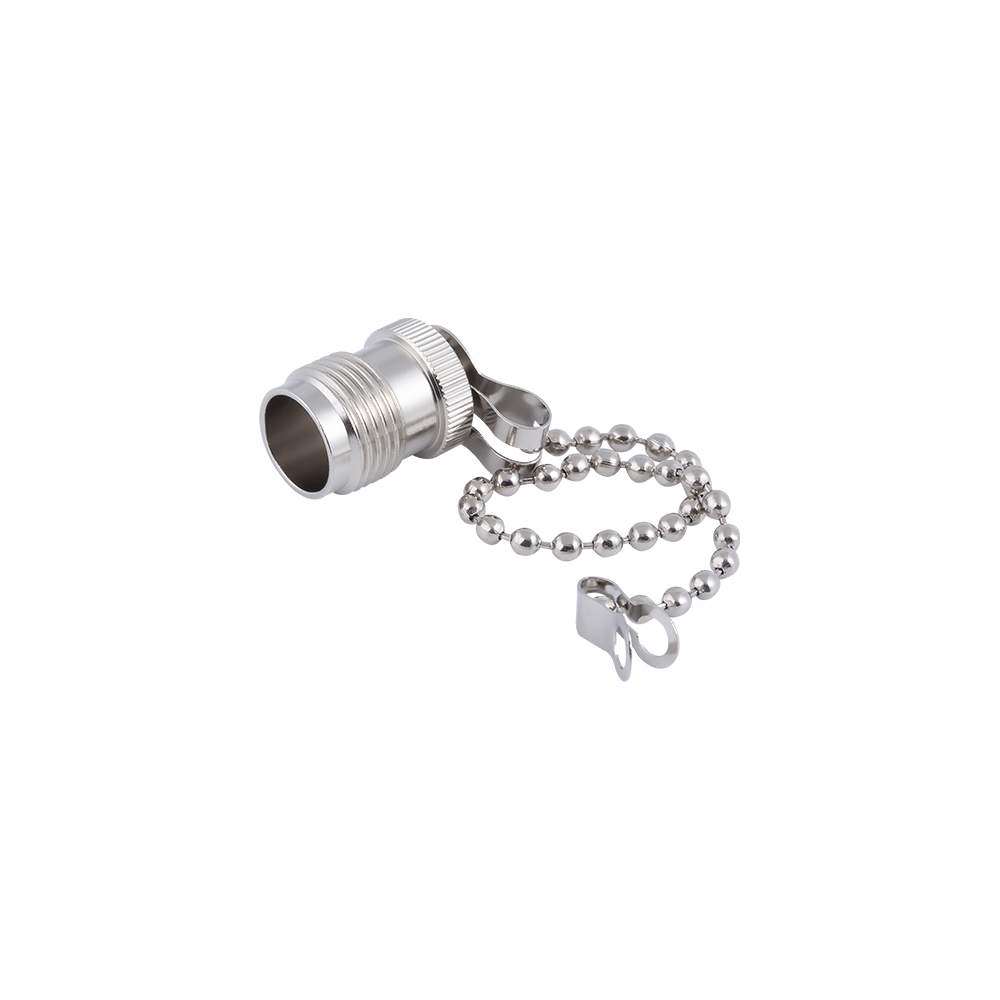
Captive (tethered) cap variant with stainless steel lanyard for field maintenance kits and mobile platforms where individual cap loss would compromise mission readiness.
ESD-dissipative cap variants available for connector protection in electrostatic-sensitive assembly cleanrooms and board-level RF assembly.

Competitive Advantages
Ordering caps and connectors from the same source factory eliminates the common problem of caps that fit loosely (from a generic cap supplier with relaxed tolerances) or caps that are impossible to install without tools (from a supplier using a different dimensional standard). Jingcheng's caps are dimensioned to its own connector production tooling.
Low minimum order quantities for standard cap variants allow customers to order caps alongside a connector order without reaching separate MOQ thresholds, streamlining procurement.
Custom laser marking or hot-stamping of part numbers, port labels, or customer logos available on the cap outer surface for OEM kitting and product branding.

Typical Applications
Transit and long-term storage protection for TNC cable assemblies in military and aerospace logistics
Panel port caps for unused TNC jacks on base station, radar, and test equipment front and rear panels
Protective caps in cable assembly kits shipped to end-user installation sites
Cleanroom and ESD-controlled assembly area connector protection

FAQ
Q: Are TNC caps interchangeable with BNC or N-type caps?
A: No. Each connector series uses a distinct interface geometry. TNC caps are specific to the TNC interface. Using a BNC cap on a TNC connector (or vice versa) risks leaving the center contact unprotected or damaging the outer coupling nut thread. Always specify the connector type when ordering protective caps.
Q: What temperature range do the standard polymer caps support?
A: PA66-GF caps are rated for continuous use from -40°C to +120°C, covering the vast majority of storage and operating environments. For higher-temperature applications (up to +200°C), PTFE-compound or aluminum caps are recommended. Please specify the storage or operating temperature requirement in your inquiry.
Q: Can caps be supplied pre-installed on connectors as part of a packaged assembly?
A: Yes. Jingcheng can supply connectors with protective caps pre-installed as part of a kitted shipment configuration. This service is commonly used by customers who integrate connectors into cable harnesses or equipment and require interface protection immediately after assembly.

Temperature Range

-55~+155℃

Impedance

50Ω

Frequency Range

DC~11GHz

Insulation resistance

≥5000MΩ

Insertion loss

≤0.20 dB/1GHz

VSWR

Straight ≤1.22/3GHz

Right angle

≤1.30/3GHz

Durability(mating)

≥500 (cycles)

About
Yangzhou Jingcheng Electronics Co., Ltd.

Yangzhou Jingcheng Electronics Co., Ltd., a premier China TNC Connectors Protective Cap Manufacturer and TNC Connectors Protective Cap Supplier, was founded in 1999. It is a high-tech enterprise specializing in the R&D and manufacturing of RF coaxial connectors, cable assemblies, and passive microwave components.
Equipped with a comprehensive R&D and production system, the company has obtained international certifications including ISO9001. Adhering strictly to standards such as MIL, IEC and GB, we offer over 30 product series with more than 2,000 specifications, covering SMA, BNC, N-type and other mainstream models. Our products are widely applied in the fields of communications, aerospace, automotive electronics and beyond, and exported to many countries and regions across Europe, America and Asia.
We uphold the tenet of "Quality as the Foundation, Customers as the Core", committed to providing reliable interconnection solutions and professional services for global clients.

TNC Connectors Protective Cap Industry knowledge

TNC Connectors Protective Cap products are companion accessories used with TNC series RF coaxial connectors to shield the threaded coupling nut, center contact, and mating face from dust, moisture, and mechanical contact when the connector is not in use. Because TNC connectors use a screw-on threaded interface rather than a bayonet mating system, TNC Connectors Protective Cap designs are generally built with an internal thread that engages the connector's coupling nut, providing a more positive mechanical retention on the connector compared with a simple push-fit cover. This category is commonly used on vehicle-mounted equipment, outdoor antenna ports, and test instrument panels where TNC connectors are already selected for vibration-resistant connections.

Structural Features and Core Functions

  • Threaded engagement: Many TNC protective caps use an internal thread that screws directly onto the connector's coupling nut, matching the threaded mating principle of the TNC interface itself.
  • Vibration retention: The screw-on design reduces the likelihood of the cap loosening or detaching under vibration, which is relevant given that TNC connectors are frequently used in vehicle-mounted or mobile settings.
  • Material options: Available in plastic (PE, PP), rubber, and metal, selected according to mechanical protection needs and environmental exposure.
  • Sealing function: Certain designs incorporate an internal gasket or O-ring to provide a degree of moisture resistance at the threaded interface when the cap is fully engaged.
  • Lanyard or tether options: Some caps include a retaining cord to prevent loss during repeated removal and reinstallation on panel-mounted TNC ports.

Common Types and Characteristics

TNC Connectors Protective Cap products are generally categorized by engagement method and target connector gender.

Common types of TNC protective caps and their characteristics
Type Engagement Method Main Characteristics Typical Application
Screw-On Male Connector Cap Internal thread engaging the male coupling nut Secure retention under vibration Vehicle-mounted and mobile equipment ports
Screw-On Female Connector Cap External thread engaging the female body Covers the internal contact and threads Panel-mounted jack protection
Push-Fit Dust Cover Friction-fit over the mating face Lower retention, faster removal Short-term indoor storage
Sealed Threaded Cap Threaded with internal gasket Additional moisture resistance Outdoor antenna and base station ports

Application Scenarios

  • Idle TNC antenna ports on vehicle-mounted radios and mobile communication equipment;
  • Outdoor base station and remote radio unit ports during equipment installation or maintenance;
  • Spare TNC connectors kept in storage or transported as part of cable assembly kits;
  • Test and measurement instrument panels with TNC ports not in continuous use;
  • Military and field-deployed equipment where connector protection during transport is a practical requirement.

Selection Guidelines

  1. Connector gender match: Confirm whether the cap is intended for a male or female TNC connector, since the thread direction and internal geometry differ between the two.
  2. Engagement method: For vibration-exposed installations, a screw-on cap is generally considered over a push-fit cover to reduce the chance of the cap becoming dislodged.
  3. Sealing needs: For outdoor ports, check whether the cap includes an internal gasket to provide additional moisture resistance at the threaded interface.
  4. Material selection: Choose plastic caps for general indoor use or rubber and metal caps for applications requiring greater mechanical durability.
  5. Retention accessory: Where the cap will be removed and reinstalled frequently, a lanyard or tether option helps prevent the cap from being misplaced.

Threaded Cap vs Push-Fit Cap Comparison

Comparison between threaded and push-fit TNC protective caps
Comparison Item Threaded Cap Push-Fit Cap
Retention under vibration Higher Lower
Removal speed Slower, requires unscrewing Faster, pulls off directly
Sealing potential Higher, can incorporate a gasket Lower
Typical use Vehicle-mounted, outdoor, vibration-exposed ports Short-term indoor storage or transport

Frequently Asked Questions

Q1: Why do TNC protective caps often use a threaded design instead of a simple push-fit cover?

Since the TNC connector interface itself uses a threaded coupling nut, a matching threaded cap engages the same mechanism, providing more secure retention than a push-fit cover, particularly in applications where the equipment is exposed to vibration.

Q2: Can a TNC protective cap be used on a BNC connector?

TNC and BNC connectors have different coupling mechanisms and thread dimensions, so a TNC Connectors Protective Cap is generally not directly compatible with a BNC connector interface.

Q3: Does the protective cap provide a complete waterproof seal?

A standard cap primarily provides dust protection and a degree of moisture resistance. For a specific water-resistance rating, a sealed threaded cap with an internal gasket should be selected and fully engaged onto the connector.

Q4: How often should a protective cap be replaced?

Replacement is generally based on visible wear, cracking, or thread damage rather than a fixed schedule; caps used outdoors or in vibration-exposed locations should be inspected more frequently for material degradation.

Manufacturing Note

Yangzhou Jingcheng Electronics Co., Ltd was founded in 1999 and specializes in the design, development, production, and sales of RF coaxial connectors, including BNC, TNC, N, SMA, 2.92, 2.4, 1.85, and other series, along with related Adapters and protective accessories. For TNC Connectors Protective Cap products, thread pitch consistency between the cap and the connector coupling nut is a relevant factor in fit and retention, supported by the company's manufacturing equipment and testing processes.