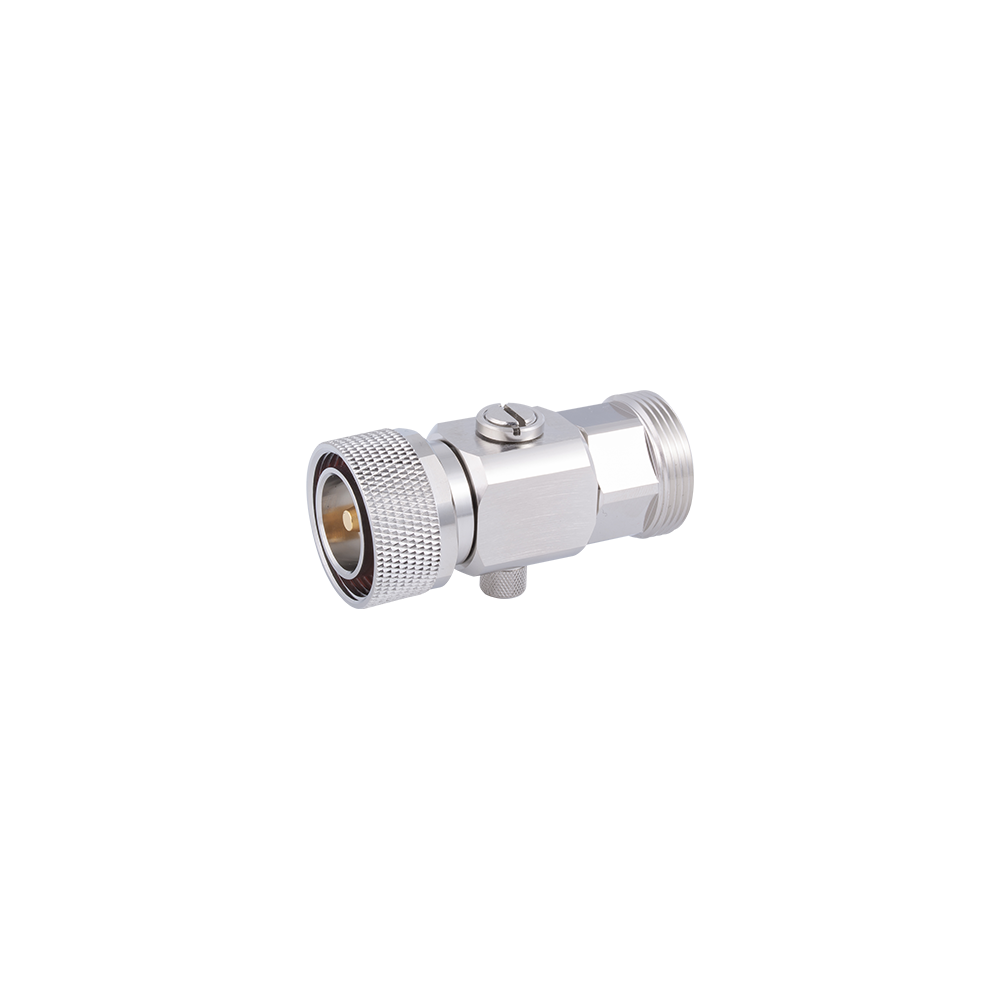
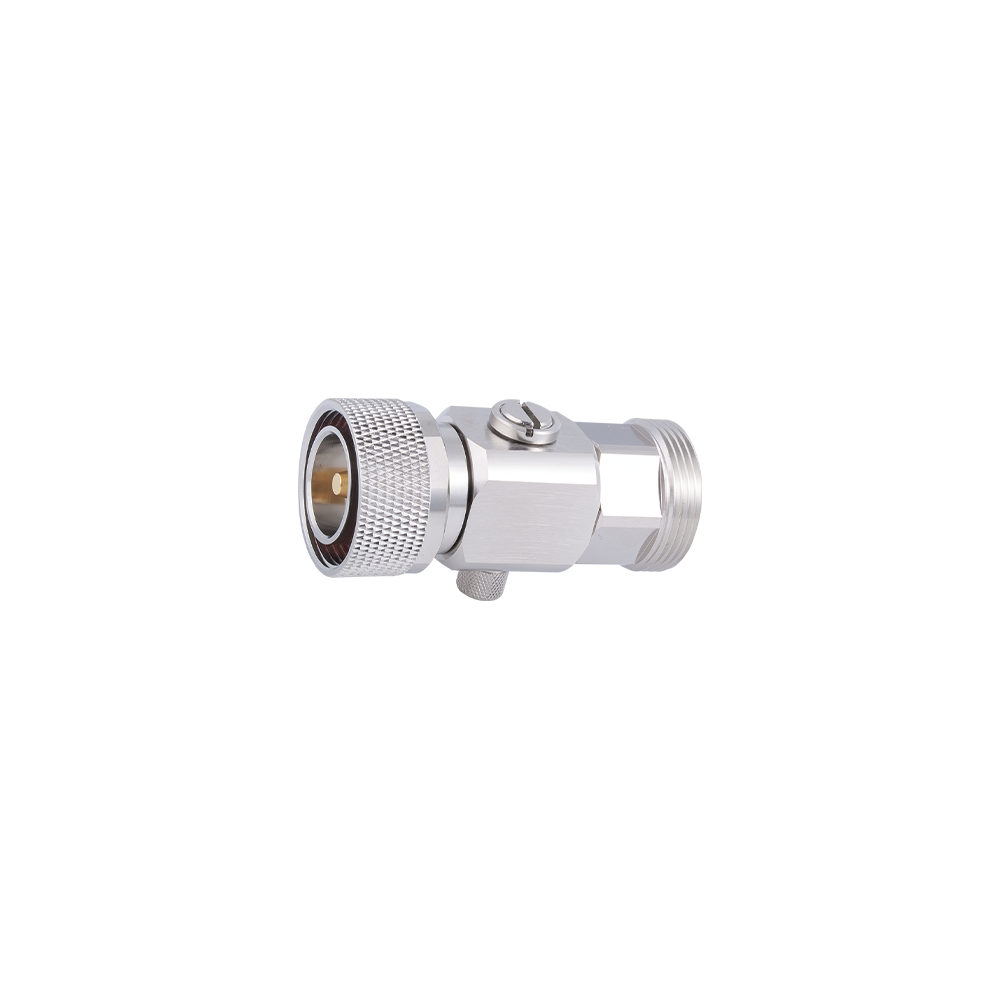
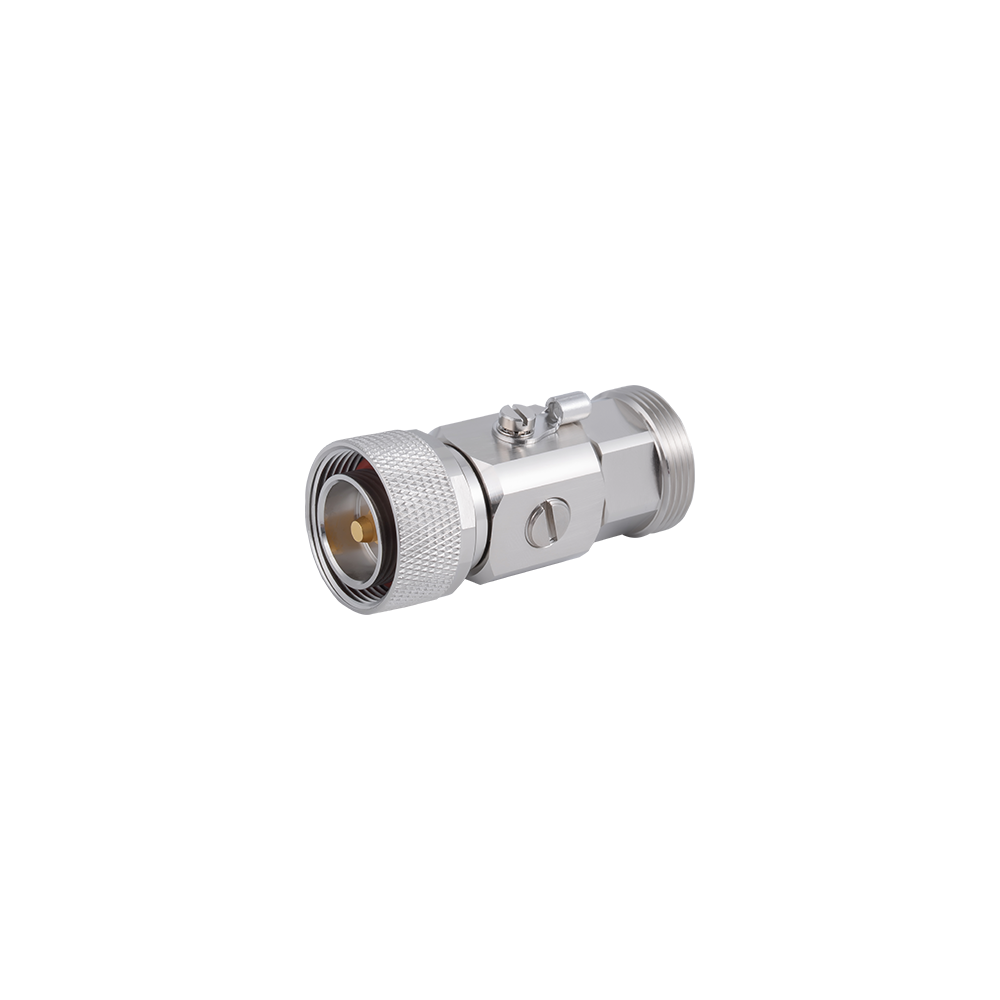
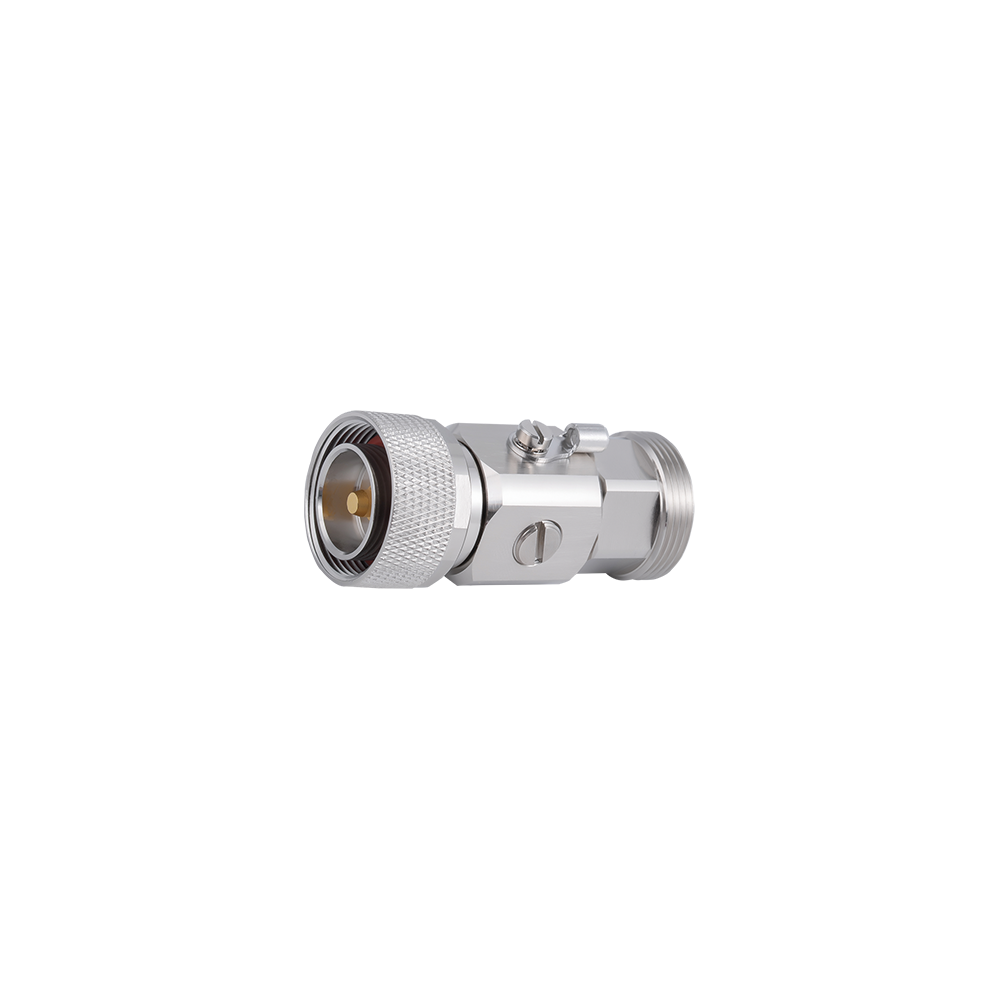
Product Overview The 7/16 DIN Coaxial Lightning Protector from Yangzhou Jingcheng Electronics is purpose-built for base station feeders, broadcast transmission lines, and high-power RF trunk systems where robust surge immunity is non-negotiable. Leveraging the rugged 7/16 DIN interface—the industry benchmark for low-PIM, high-power coaxial connectivity—this protector integrates a gas-discharge tube (GDT) core with a high-conductivity grounding path to divert transient energy safely to earth before it reaches sensitive downstream equipment. Manufactured in our ISO 9001 / ISO 14001 / GJB9001A certified facility in Yangzhou, China, every unit undergoes full electrical and mechanical inspection prior to shipment.
Key Features 7/16 DIN male-to-female or female-to-female configuration available for flexible installation Gas-discharge tube (GDT) primary protection element with low capacitance for minimal insertion loss DC to 3 GHz operating frequency range, suited to sub-3 GHz cellular, broadcast, and land-mobile radio High peak surge current handling to safeguard transmitters, amplifiers, and antenna distribution networks Robust all-brass body with silver or nickel plating for corrosion resistance in outdoor tower environments Weatherproof construction compliant with IP67 sealing for exposed antenna mast and rooftop installations Low insertion loss and high return loss to preserve RF system efficiency across the full operating band Ground lug integrated into body for direct bonding to station earthing system
Typical Applications Macro cell base station antenna feed lines (2G/3G/4G/5G) FM and digital radio broadcast transmission towers Land-mobile radio (LMR) repeater sites and dispatch centers High-power VHF/UHF government and public-safety communication infrastructure Distributed antenna systems (DAS) main trunk ports
FAQ Q: What is the maximum continuous operating power for this protector? A: Operating power depends on the specific variant selected; please contact our sales team with your frequency band and average/peak power requirements for a matched recommendation. Q: Is it compatible with third-party 7/16 DIN connectors from other manufacturers? A: Yes. The protector conforms to IEC 61169-4 dimensional standards for 7/16 DIN interfaces, ensuring mechanical and electrical compatibility with all compliant connectors. Q: How is the unit grounded? A: A dedicated ground lug on the body accepts a grounding conductor for direct bonding to the site earthing bar, providing the lowest-impedance surge current path. Q: Can you supply this with customized surge rating or frequency coverage? A: Yes—OEM and custom engineering services are available; please provide your specification sheet for a formal quotation.
Yangzhou Jingcheng Electronics Co., Ltd., a premier China 7/16 DIN Coaxial Lightning Protector Manufacturer and 7/16 DIN Coaxial Lightning Protector Factory, was founded in 1999. It is a high-tech enterprise specializing in the R&D and manufacturing of RF coaxial connectors, cable assemblies, and passive microwave components.
Equipped with a comprehensive R&D and production system, the company has obtained international certifications including ISO9001. Adhering strictly to standards such as MIL, IEC and GB, we offer over 30 product series with more than 2,000 specifications, covering SMA, BNC, N-type and other mainstream models. Our products are widely applied in the fields of communications, aerospace, automotive electronics and beyond, and exported to many countries and regions across Europe, America and Asia.
We uphold the tenet of "Quality as the Foundation, Customers as the Core", committed to providing reliable interconnection solutions and professional services for global clients.
7/16 DIN Coaxial Lightning Protector Industry knowledge
1. What Is A 7/16 DIN Coaxial Lightning Protector
A 7/16 DIN Coaxial Lightning Protector is an inline surge protection component built around the 7/16 DIN interface, a connector standard widely recognized for low passive intermodulation and high-power handling in base station feeders, broadcast transmission lines, and high-power RF trunk systems. Positioned between an antenna feed line and connected radio equipment, a 7/16 DIN Coaxial Lightning Protector diverts transient surge energy to ground through a dedicated discharge path while allowing normal RF signal transmission to continue with minimal impact. Because the 7/16 DIN interface is already the standard connector choice for many high-power macro cell, broadcast, and land-mobile radio installations, a matching 7/16 DIN Coaxial Lightning Protector allows surge protection to be added without introducing a connector mismatch elsewhere in the feeder line. This article covers the working principle, common configurations, application scenarios, comparative performance factors, and maintenance guidance relevant to this protector category.
2. Working Principle And Core Construction
The primary protection element inside this protector is a gas-discharge tube, which remains electrically inactive under normal operating voltage and ionizes rapidly once surge voltage crosses a defined threshold, opening a low-impedance path to ground. This gas-discharge tube is selected for low capacitance, which keeps insertion loss minimal across the unit's DC to 3 GHz operating frequency range, a band that covers sub-3 GHz cellular, broadcast, and land-mobile radio use. A high-conductivity grounding path connects the discharge element to an integrated ground lug on the body, allowing direct bonding to a station earthing system so surge current reaches ground through the shortest, lowest-impedance route available. The body itself is constructed from brass with silver or nickel plating, chosen for corrosion resistance in outdoor tower environments, and the unit is built to IP67 weatherproof sealing standards suited to exposed antenna mast and rooftop installations.
3. Common Configurations And Features
(1) Male-to-Female Configuration
This configuration allows the protector to sit inline within an existing 7/16 DIN feeder run without requiring an additional gender-changing adaptor.
(2) Female-to-Female Configuration
Used where two male-ended cable assemblies need to be joined through the protector body, this configuration is common at junction points within a feeder system.
(3) Custom Surge Rating And Frequency Coverage
Engineering customization is available for specific surge current ratings or frequency coverage requirements, supporting OEM projects with defined technical specifications.
4. 7/16 DIN Coaxial Lightning Protector Compared With A Standard 7/16 DIN Adaptor
The table below summarizes the core differences between a 7/16 DIN Coaxial Lightning Protector and a standard 7/16 DIN adaptor without surge protection.
Comparison between a 7/16 DIN Coaxial Lightning Protector and a standard 7/16 DIN adaptor
Attribute
7/16 DIN Coaxial Lightning Protector
Standard 7/16 DIN Adaptor
Surge discharge path
Integrated gas-discharge tube to ground
None available
Grounding provision
Integrated ground lug
Not applicable
Operating frequency range
DC to 3 GHz
Depends on adaptor design
Weatherproof sealing
IP67 rated construction
Varies by product
5. Application Scenarios And Frequency Coverage
Before viewing the area chart below, it is useful to understand how the DC to 3 GHz operating range of a 7/16 DIN Coaxial Lightning Protector aligns with common application bands. Macro cell base station feed lines across 2G, 3G, 4G, and 5G sub-3 GHz bands make up a large portion of typical deployments, alongside FM and digital radio broadcast towers, land-mobile radio repeater sites, high-power VHF and UHF public-safety infrastructure, and distributed antenna system trunk ports. The chart below presents an illustrative view of relative frequency band usage across these application categories rather than a measured industry-wide statistic.
The area under this curve rises sharply toward the cellular and broadcast portion of the chart, reflecting the concentrated frequency demand of macro cell base station feeders and FM or digital broadcast towers, both of which represent common deployment points for a 7/16 DIN Coaxial Lightning Protector. The curve tapers somewhat across land-mobile radio and public-safety segments, which still fall well within the DC to 3 GHz operating range but generally involve a narrower allocated band per installation. The distributed antenna system segment at the far right reflects trunk port applications, where the protector is installed at a central point serving multiple downstream antenna branches. Because the protector's frequency coverage spans this entire range without requiring a separate variant for each band, a single 7/16 DIN Coaxial Lightning Protector configuration can generally serve multiple application categories, simplifying inventory and installation planning for operators managing mixed-technology sites. This is particularly relevant for public-safety and land-mobile radio operators who may need to support several different frequency allocations across a single tower structure. As with the other chart in this article, this area chart is illustrative and intended to convey general relative frequency demand rather than a precise measured deployment survey.
6. Surge Current Handling Versus Insertion Loss
Before viewing the scatter plot below, it helps to understand the general relationship between surge current handling capacity and insertion loss across different gas-discharge tube protection ratings. A gas-discharge tube rated for higher peak surge current generally requires a slightly larger internal gap and electrode design, which can introduce marginally higher capacitance and, in turn, a small increase in insertion loss compared with a lower-rated tube. This tradeoff is a normal engineering consideration rather than a defect, and it is one of the reasons protector selection should be matched to the expected surge exposure at a given installation rather than defaulting to the highest available rating in every case. The scatter plot below is an illustrative representation of this general tradeoff across a range of gas-discharge tube ratings.
Each point in this scatter plot represents a gas-discharge tube rating, and the overall pattern trends upward from left to right, showing that as peak surge current rating increases, insertion loss also tends to rise modestly across the range shown. This trend reflects the underlying physical tradeoff between electrode gap size, which supports higher current handling, and capacitance, which affects how much the element interacts with the passing RF signal. For most sub-3 GHz cellular, broadcast, and land-mobile applications, this increase in insertion loss remains small in absolute terms and is generally considered an acceptable tradeoff for the added surge protection margin at high-exposure sites such as elevated towers. Selecting a protector rating that matches the expected surge exposure at a specific site, rather than assuming a single rating is appropriate everywhere, allows an installer to balance surge protection margin against RF performance more precisely. Sites with a documented history of frequent lightning activity, or with particularly exposed antenna positioning, generally justify a higher current rating even with the associated modest increase in insertion loss. As with the area chart above, this scatter plot is illustrative and intended to represent a general engineering relationship rather than measured values for one specific part number, and buyers should confirm exact ratings against the relevant technical specification sheet for a given configuration.
7. Maintenance Guidance
Confirm the ground lug is securely bonded to the site earthing system, since discharge performance depends on a low-impedance ground path.
Inspect the IP67 weatherproof seal periodically, particularly at exposed antenna mast and rooftop installation points.
After a known significant surge event, inspect or test the unit to confirm it remains within normal operating parameters.
Check the 7/16 DIN interface for corrosion or contamination before each connection, especially in coastal or high-humidity environments.
Maintain installation and inspection records to support planned maintenance intervals across the tower or rooftop site.
8. Manufacturing Background
Yangzhou Jingcheng Electronics Co., Ltd., founded in 1999, specializes in the research, development, and manufacturing of RF coaxial connectors, cable assemblies, and passive microwave components, including the 7/16 DIN Coaxial Lightning Protector across male-to-female, female-to-female, and custom OEM configurations. Manufactured in an ISO9001, ISO14001, and GJB9001A certified facility in Yangzhou, China, and produced in line with standards such as MIL, IEC, and GB, every unit undergoes electrical and mechanical inspection prior to shipment. The company's broader product range covers SMA, BNC, N-type, 7/16 DIN, and other mainstream series, applied across communications, aerospace, and automotive electronics fields, with distribution across multiple regions internationally.
9. Frequently Asked Questions
Q1: What frequency range does the 7/16 DIN Coaxial Lightning Protector cover?
The unit generally covers DC to 3 GHz, suiting sub-3 GHz cellular, broadcast, and land-mobile radio applications.
Q2: Is it compatible with 7/16 DIN connectors from other manufacturers?
Yes, the protector conforms to IEC 61169-4 dimensional standards for 7/16 DIN interfaces, supporting mechanical and electrical compatibility with compliant connectors.
Q3: How is the unit grounded on site?
An integrated ground lug on the body accepts a grounding conductor for direct bonding to the site earthing bar, supporting a low-impedance surge discharge path.
Q4: Can surge rating or frequency coverage be customized?
Yes, OEM and custom engineering options are available for specific surge current ratings or frequency coverage requirements based on a provided specification.


 English
 中文简体
中文简体