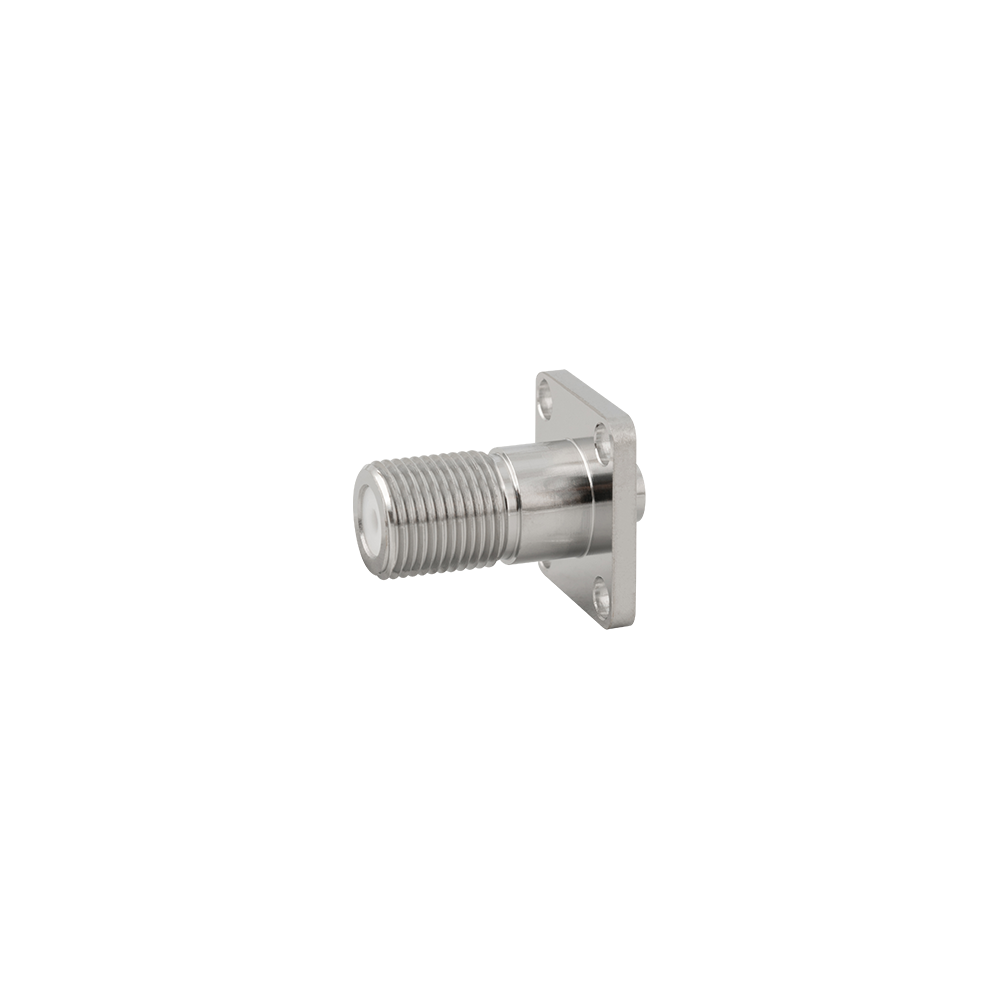
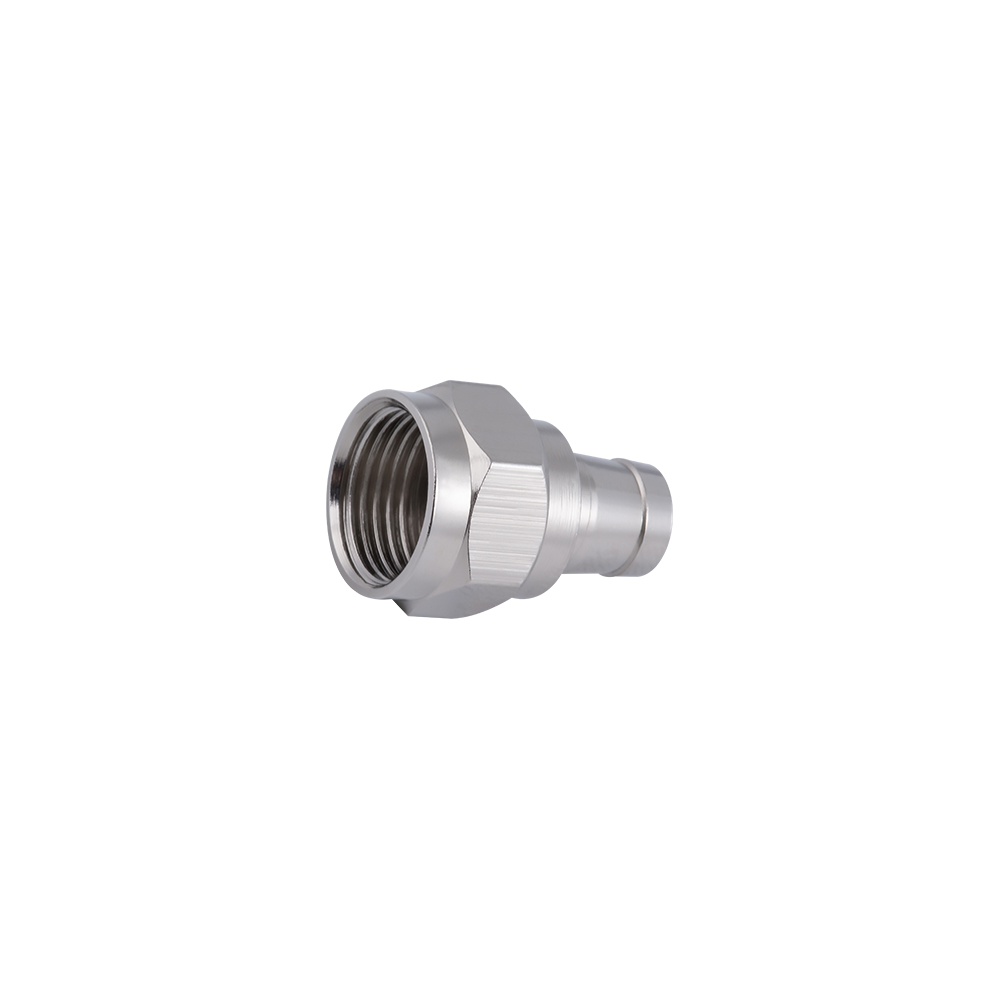
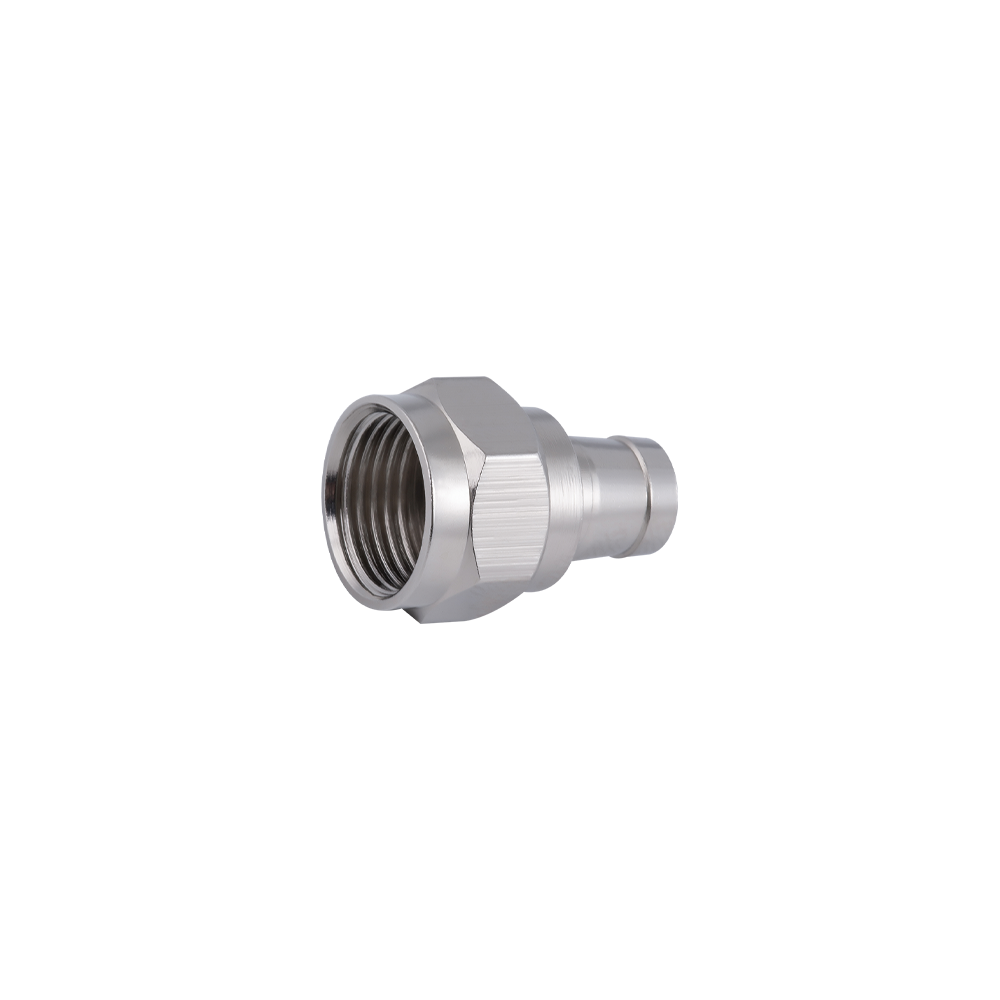
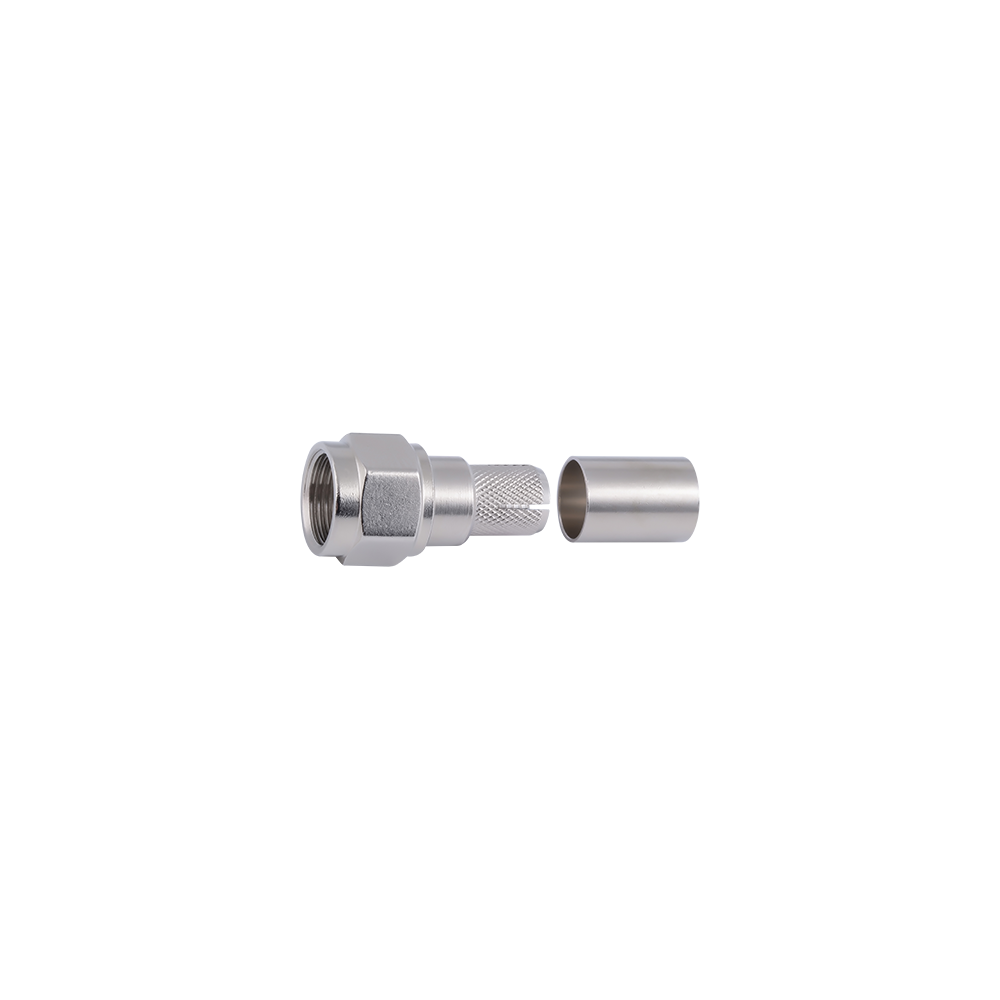
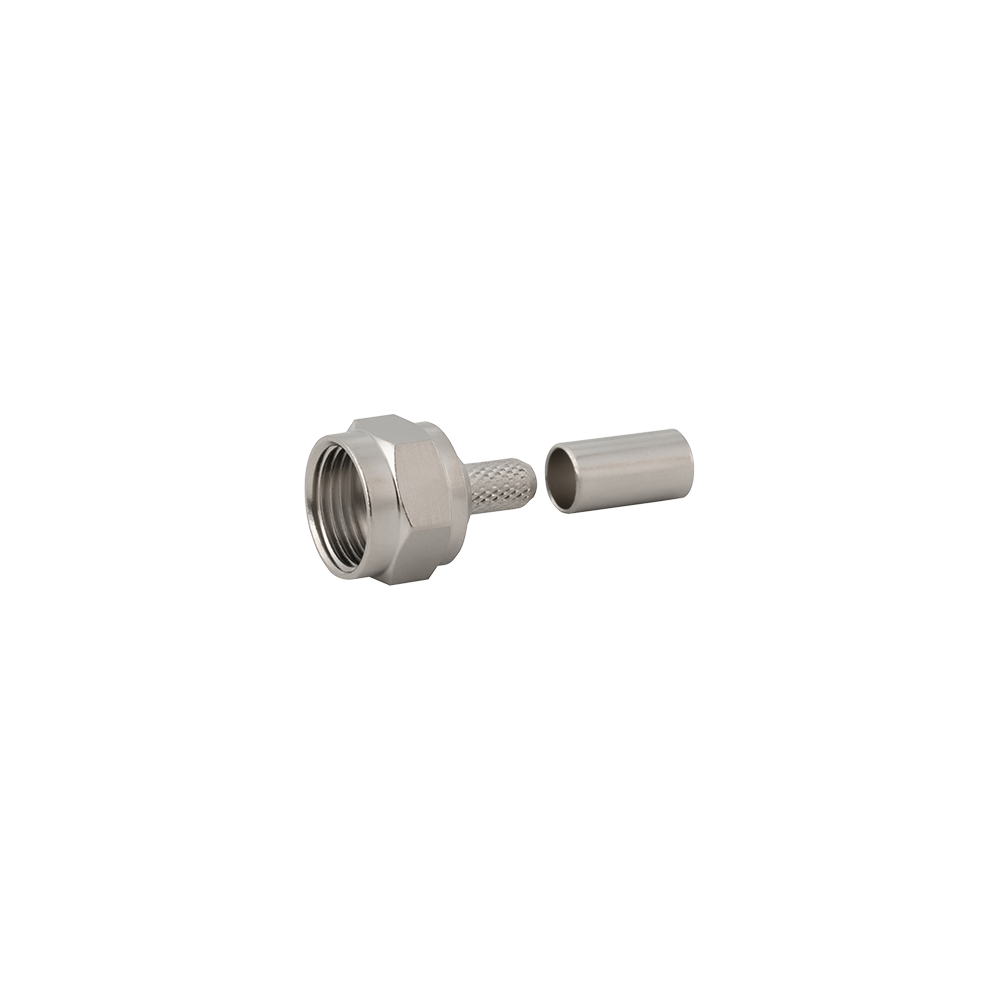
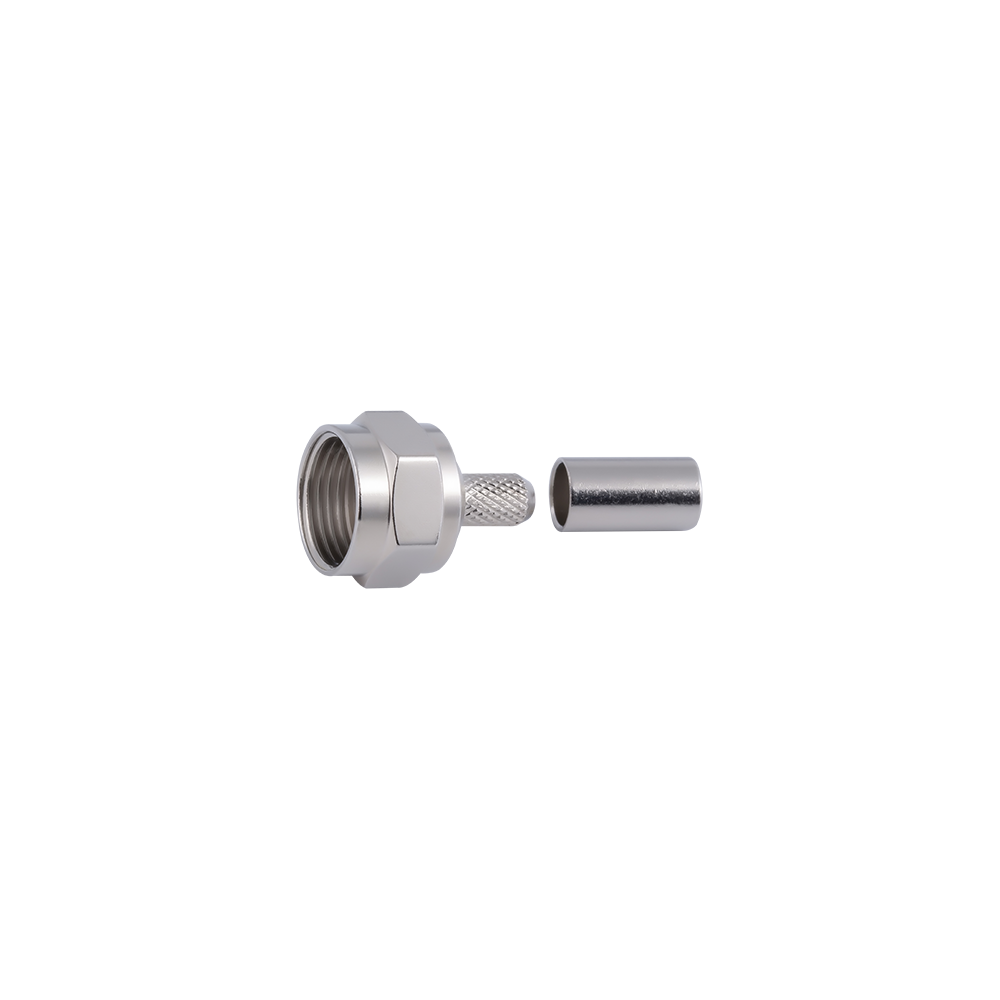
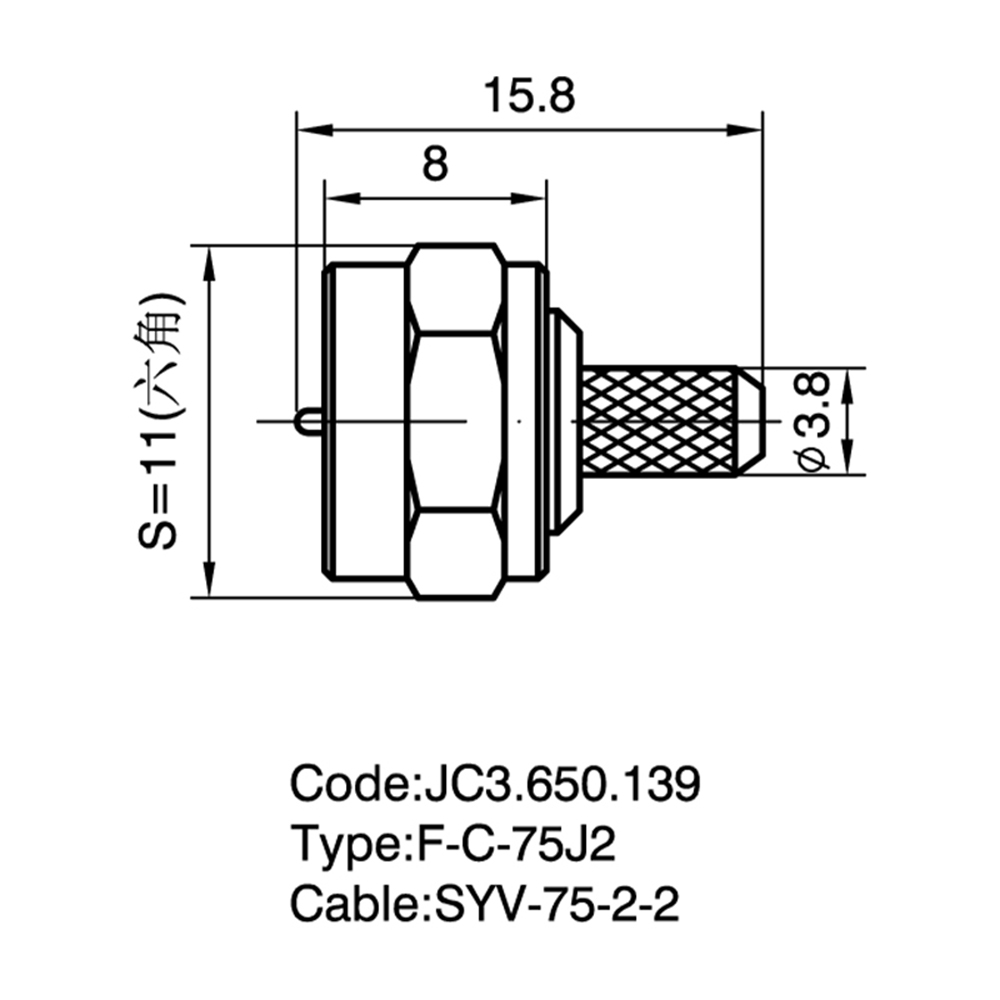
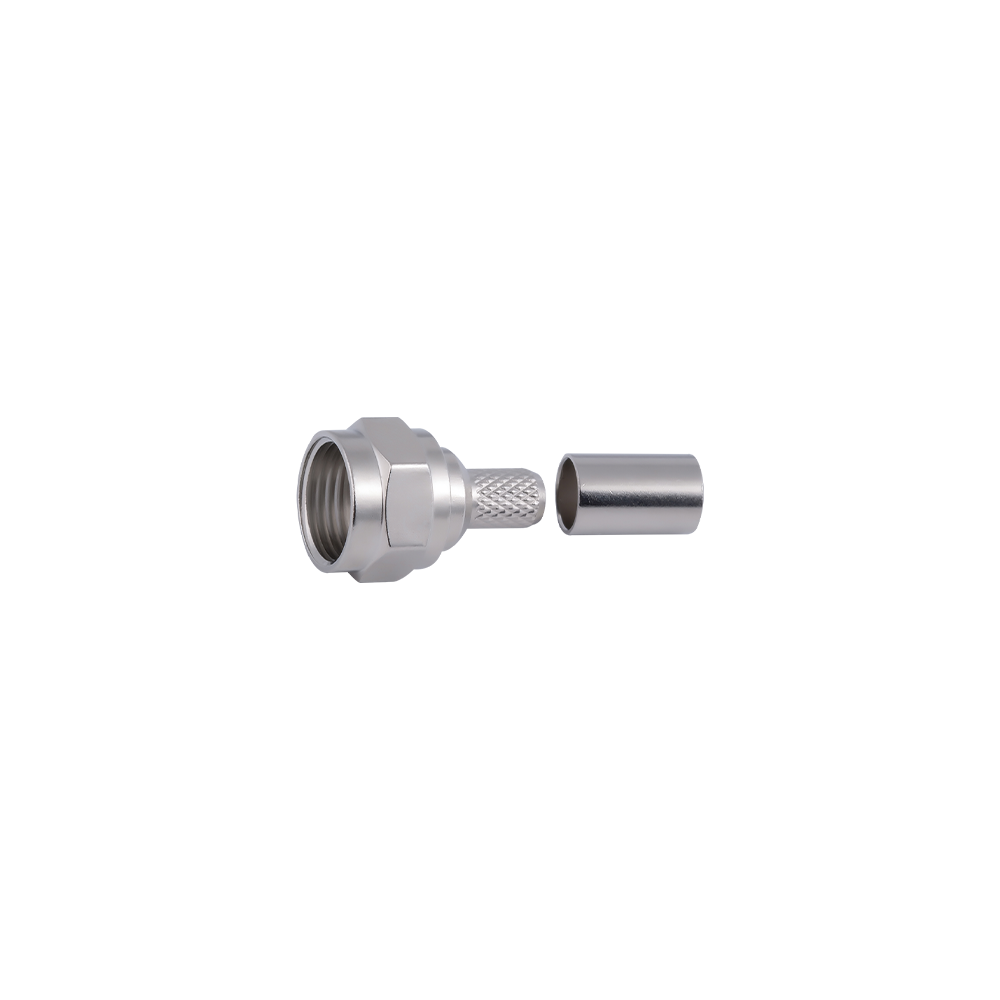
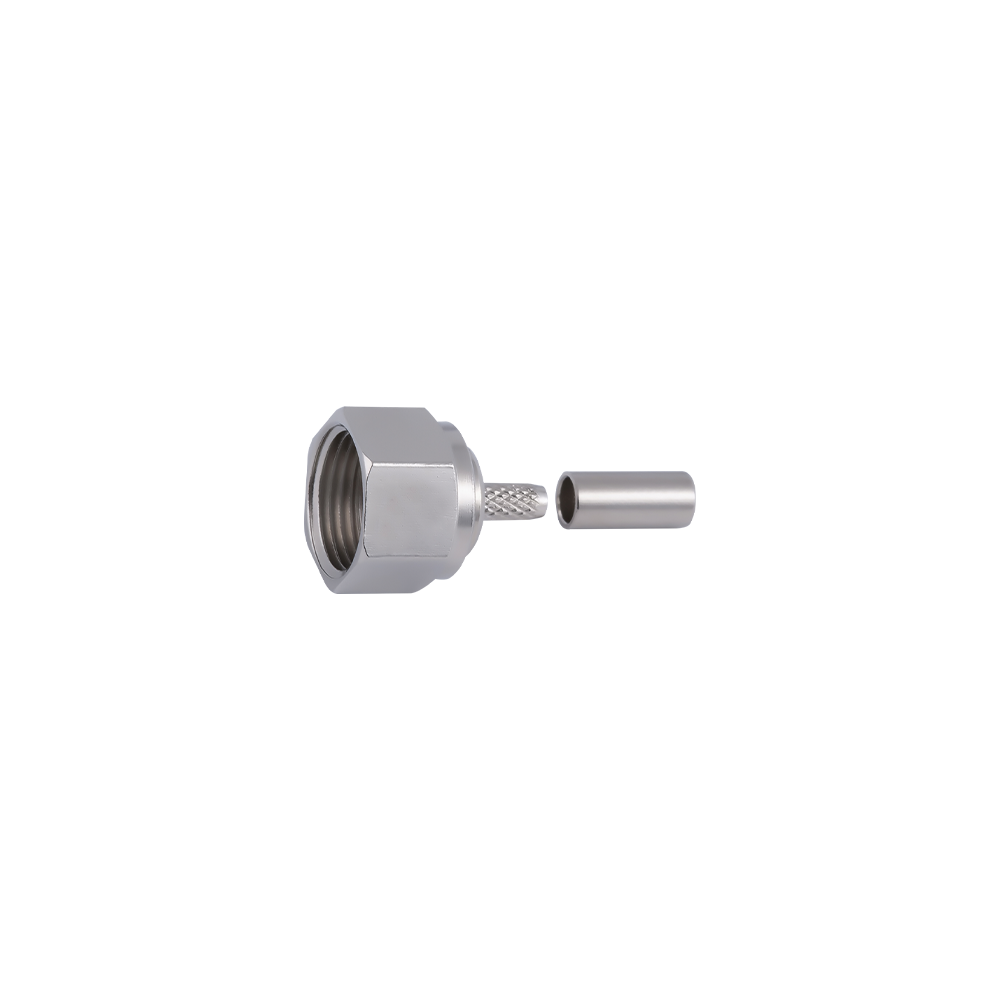
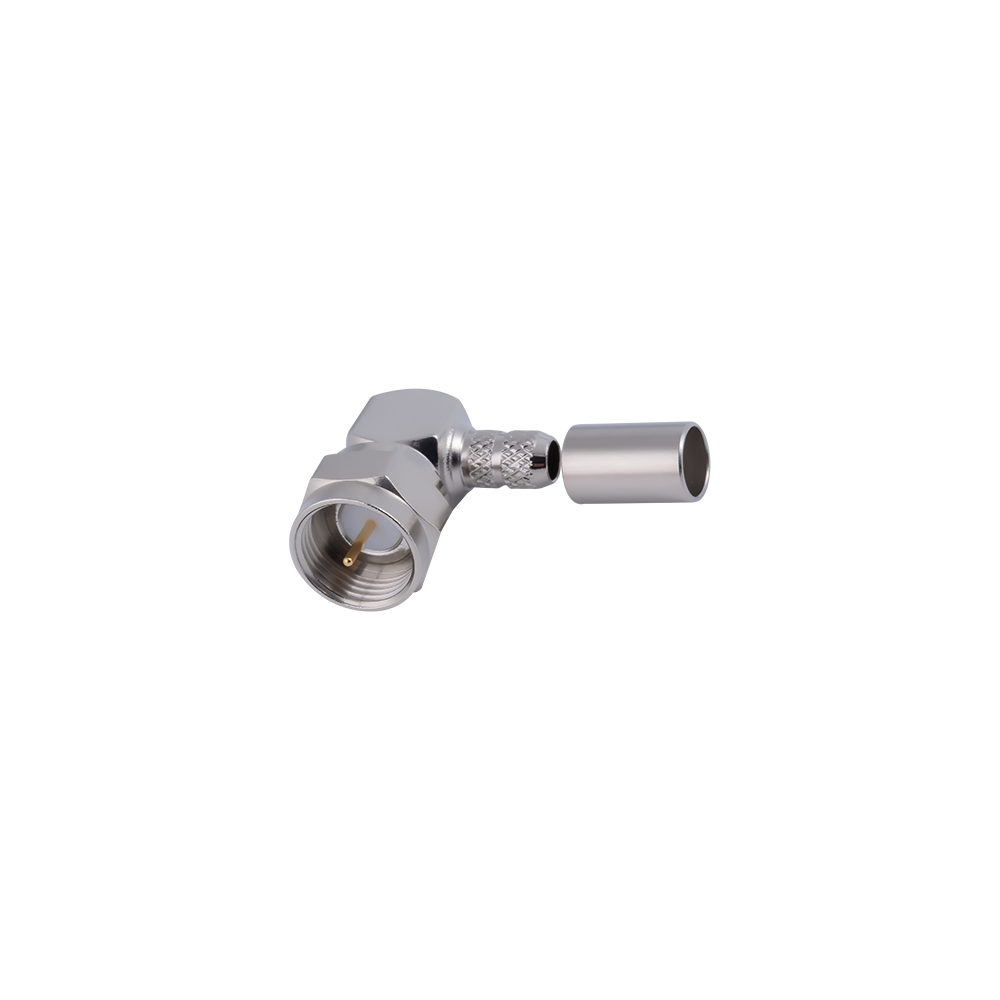
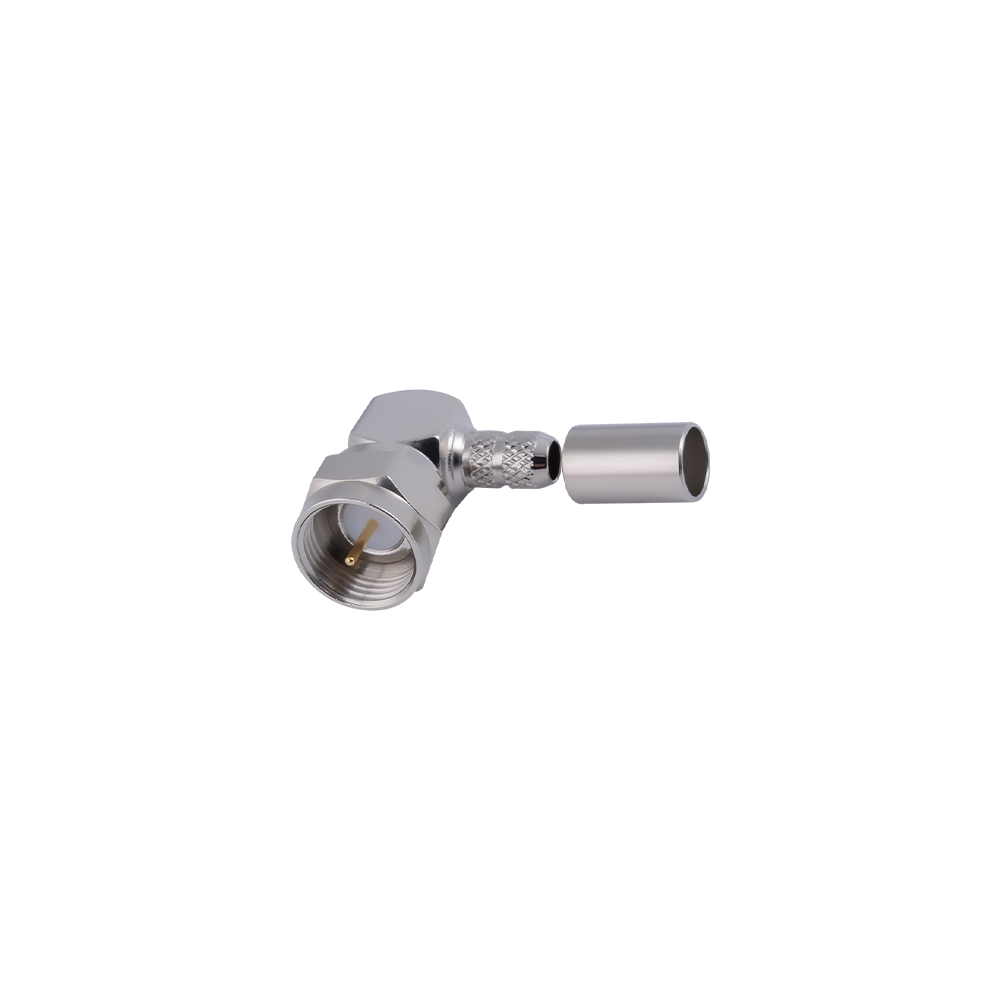
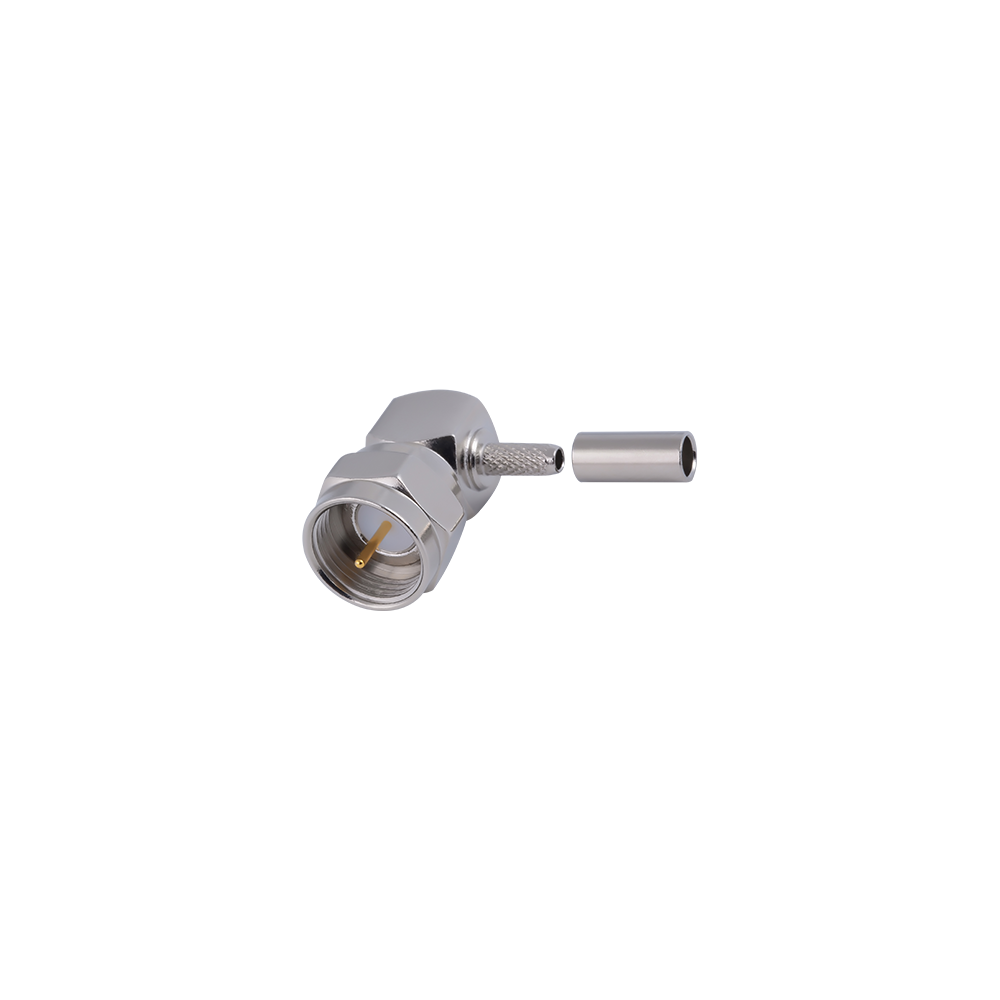
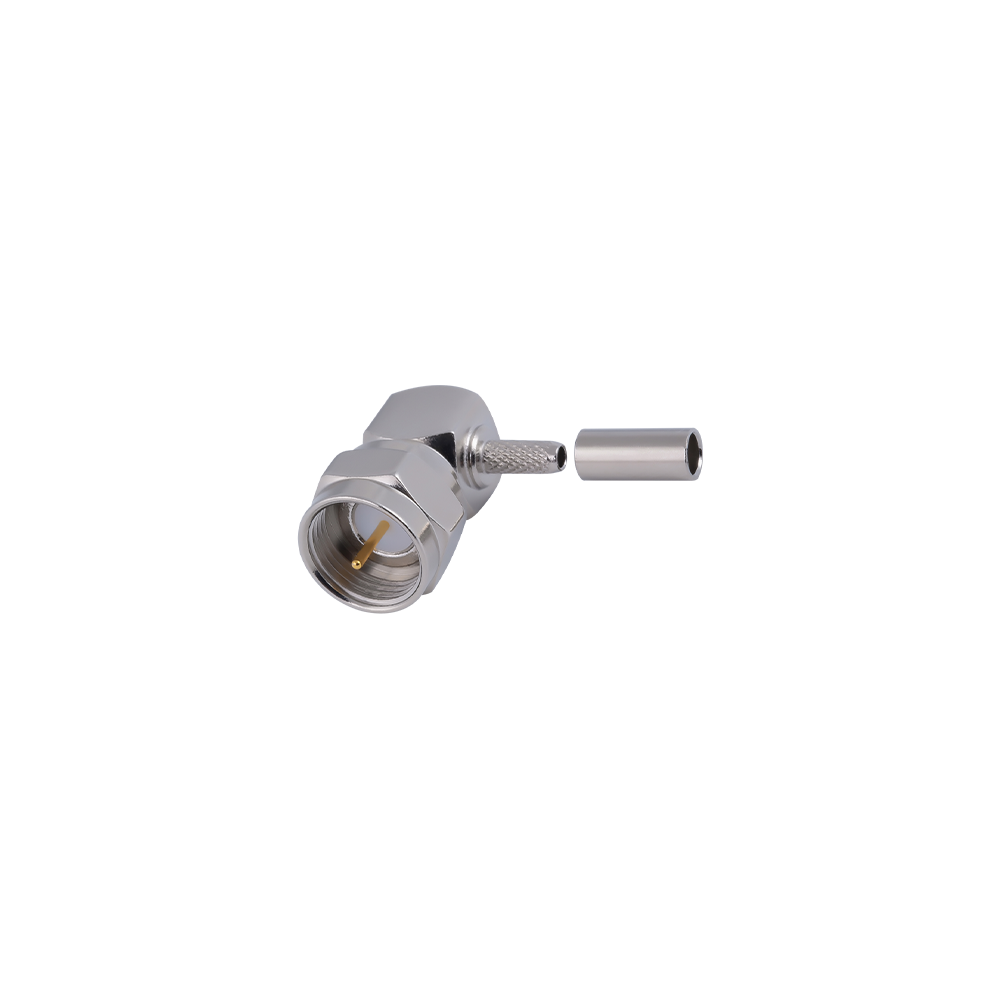
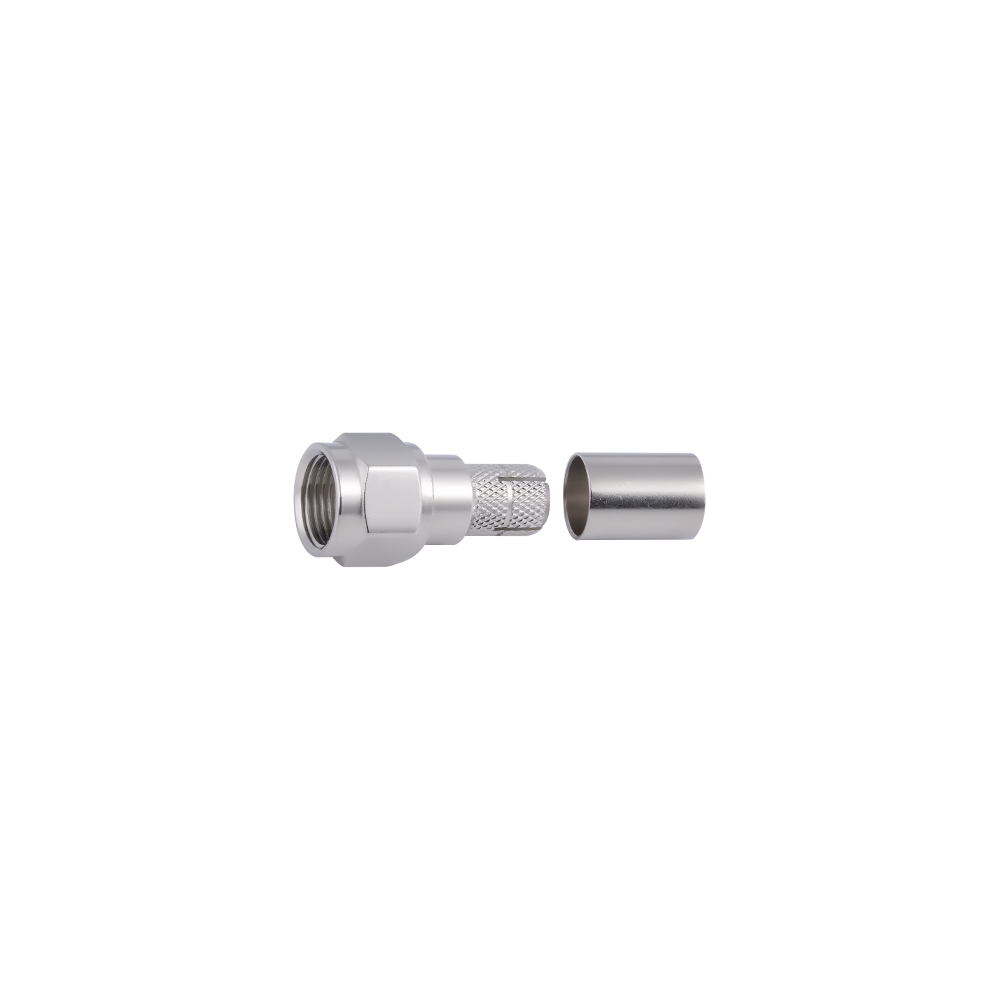
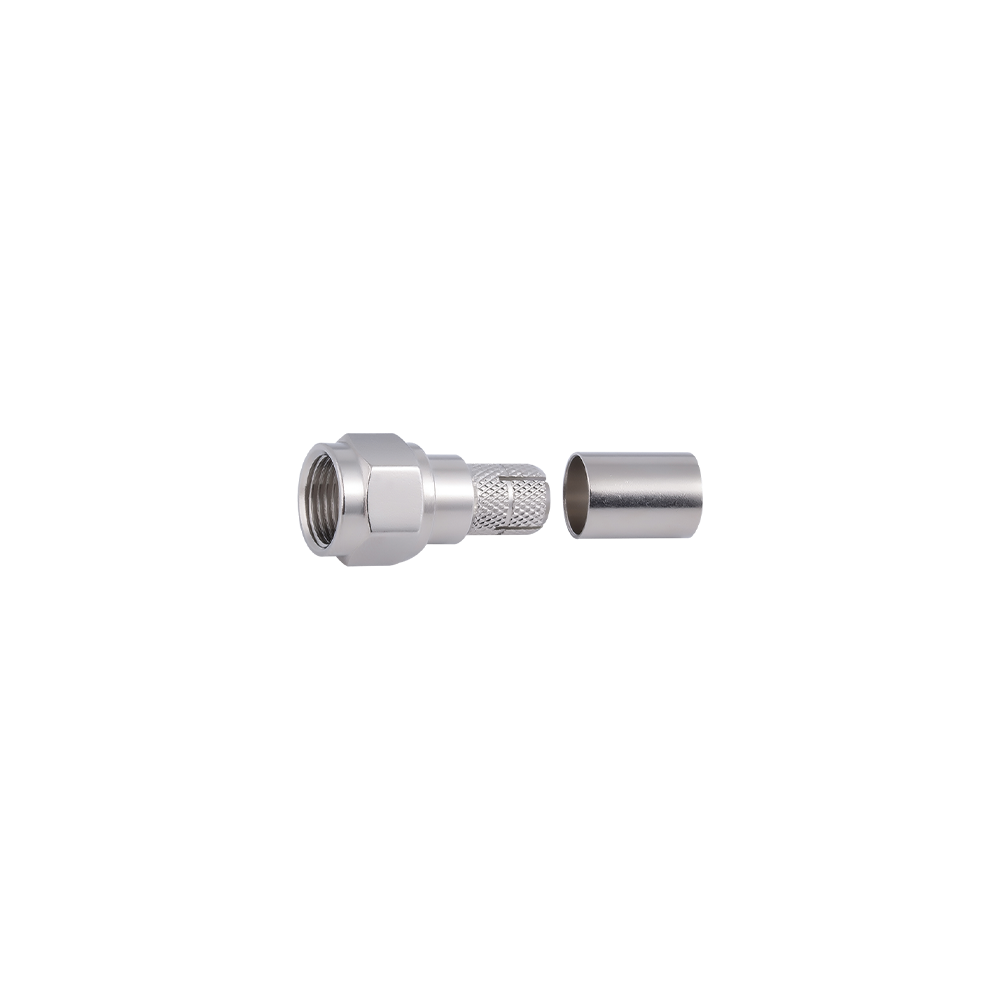
F RF coaxial connectors are threaded, screw-on connectors originally developed for residential and commercial coaxial video distribution. Unlike many RF connector families that rely on a separate center pin, the F connector typically uses the center conductor of the coaxial cable itself as the mating pin, with a threaded outer shell providing mechanical coupling and shielding continuity to the mating jack.
This construction keeps connector cost low and assembly straightforward, since no separate center contact needs to be crimped or soldered to the cable core. F RF coaxial connectors are standardized around a 75 Ω system impedance, which matches the cable types commonly used for video and broadband signal distribution.
Common Types and Characteristics
- Crimp F connectors — attached with a crimping tool and metal ferrule, offering a permanent, low-cost termination for indoor cable runs.
- Compression F connectors — installed with a compression tool that forms a sealed ring around the cable jacket, providing higher pull-out strength and better moisture resistance for outdoor use.
- Twist-on F connectors — screwed directly onto the cable without a separate tool, used for temporary or low-cost connections where reliability requirements are lower.
- F-type adapters and feed-through connectors — used to join two cable segments, convert between F and other interface types, or pass a connection through a wall plate or panel.
Core Performance Parameters
Typical electrical and mechanical specifications for F RF coaxial connectors
| Parameter |
Typical Value |
| Impedance |
75 Ω |
| Frequency Range |
DC – 3 GHz |
| Coupling Type |
Threaded, screw-on |
| Compatible Cable Sizes |
RG6, RG59, RG11 and equivalent |
| Mating Cycles |
≥ 500 |
Typical Applications
Because the connector family aligns with 75 Ω video and broadband cable, F RF coaxial connectors are widely used across residential, commercial, and outdoor signal distribution systems.
- Cable television (CATV) drop cable and set-top box connections
- Satellite receiver and low-noise block downconverter (LNB) cabling
- Digital terrestrial antenna (DVB-T) and broadband cable modem installations
- Video distribution amplifiers, splitters, and wall-plate outlets
Comparison with Other Coaxial Interfaces
Compared with 50 Ω threaded connectors used in general RF signal wiring, F RF coaxial connectors are built around a 75 Ω impedance matched to video and broadband cable, and their center pin is formed by the cable core rather than a separate machined contact, which lowers per-unit connector cost for high-volume cable runs.
Comparison of impedance, center contact and typical use across coaxial connector families
| Connector Family |
Impedance |
Center Contact |
Typical Use |
| F connector |
75 Ω |
Cable core as pin |
CATV, satellite, video distribution |
| Threaded 50 Ω connector |
50 Ω |
Separate machined pin |
General RF and instrumentation wiring |
| Bayonet 75 Ω connector |
75 Ω |
Separate machined pin |
Broadcast and legacy video equipment |
Selection Guide
- Match the connector bore size to the cable type (RG6, RG59, or RG11) to ensure a proper mechanical fit with the center conductor.
- Select compression style connectors for outdoor or long-term installations, and crimp or twist-on style for indoor or temporary runs.
- Confirm the frequency range required by the application, since higher digital broadband frequencies require closer attention to shielding continuity than legacy analog video signals.
- Check plating material on the shell and pin for corrosion resistance in outdoor, marine, or high-humidity environments.
- Use weatherproofing boots or sealing tape at outdoor connection points, even with compression-type connectors.
Frequently Asked Questions
Why do F RF coaxial connectors use 75 Ω instead of 50 Ω?
The 75 Ω value matches the impedance of coaxial cable historically standardized for video and broadband signal transmission, minimizing reflection loss in those systems.
Can compression and crimp F connectors be used interchangeably?
Both mate with the same female interface, but compression connectors provide higher pull-out strength and moisture resistance, making them preferable for outdoor or long-term installations.
Is the cable center conductor itself part of the connector?
Yes, in most F connector designs the exposed cable core serves directly as the mating pin, which is a key difference from connector families that use a separate crimped or soldered contact.
Manufacturing Background
Yangzhou Jingcheng Electronics Co., Ltd. produces F RF coaxial connectors along with a broad range of RF connector series including SMA, BNC, TNC, N-type, and reverse polarity variants, together with cable assemblies covering 0 to 50 GHz. Manufacturing follows ISO9001 quality management and MIL, IEC, and GB reference standards, supporting communications, broadcast, and consumer electronics applications.


 English
 中文简体
中文简体