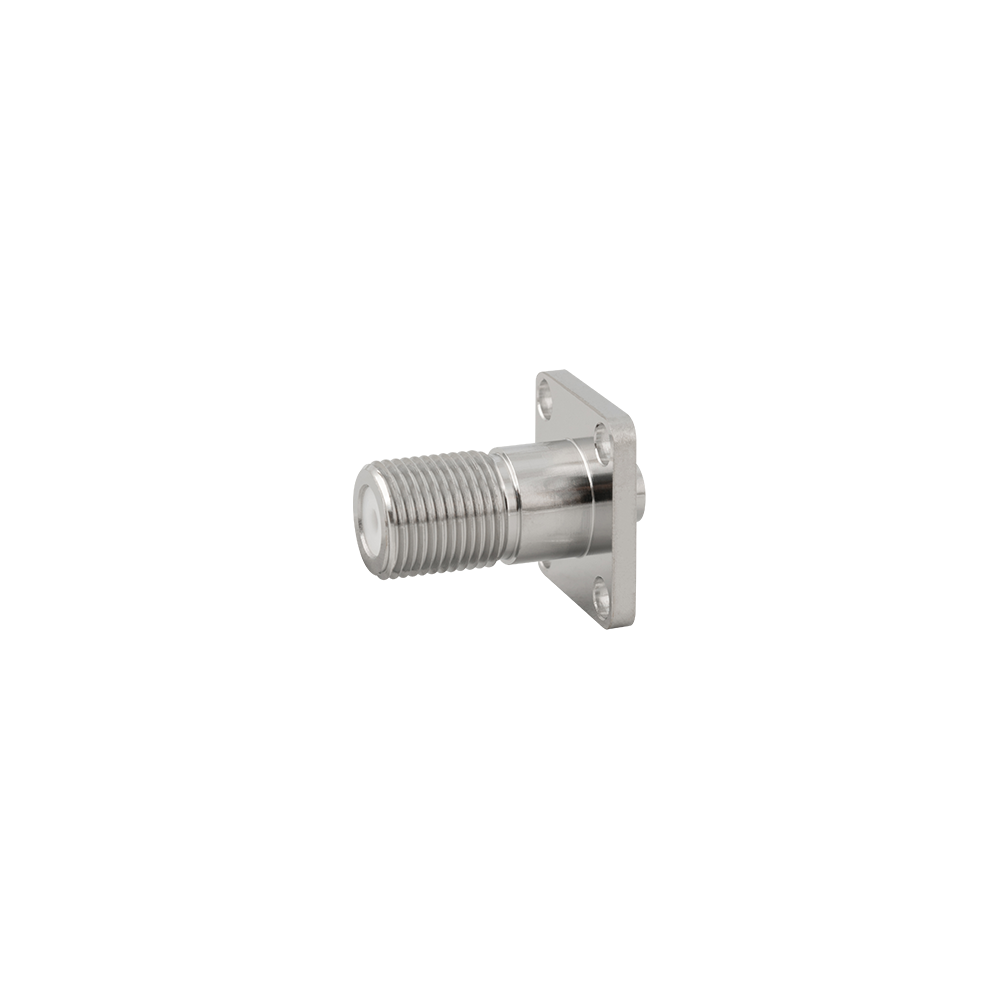
F connectors for semi-rigid & semi-flexible cable are threaded, screw-on RF connectors terminated onto semi-rigid or semi-flexible coaxial cable through soldering or clamping, rather than crimping or compression fitting used on standard flexible drop cable. The connector body is machined to grip the solid or corrugated outer conductor of the cable directly, and the center pin is soldered to the cable core to maintain a stable, low-loss electrical path.
Because semi-rigid cable holds its bent shape and semi-flexible cable allows limited repeated flexing, F connectors for semi-rigid & semi-flexible cable are used where a fixed cable route and consistent electrical performance are required, rather than in general household or drop-cable wiring.
Common Types and Characteristics
- Straight solder-type connectors — the most common configuration, with the center pin soldered in line with the cable axis for direct feed-through connections.
- Right-angle connectors — used where the cable must turn 90 degrees at the termination point, reducing bend stress on semi-rigid cable near the connector.
- Clamp-type connectors — secure the outer conductor mechanically without soldering, simplifying assembly on corrugated semi-flexible cable.
- Bulkhead and jack receptacle versions — provide a fixed panel interface for equipment enclosures while maintaining the same cable termination method.
Core Performance Parameters
Typical electrical and mechanical specifications
| Parameter |
Typical Value |
| Impedance |
75 Ω |
| Frequency Range |
DC – 3 GHz |
| Coupling Type |
Threaded, screw-on |
| Termination Method |
Solder or mechanical clamp |
| Mating Cycles |
≥ 500 |
Typical Applications
The fixed routing and stable termination of F connectors for semi-rigid & semi-flexible cable support applications where cable position and electrical consistency must be maintained over time.
- Satellite receiver and LNB feed lines requiring stable routing inside dish assemblies
- Head-end and distribution equipment internal RF wiring
- Test cable assemblies where repeatable electrical length is required
- Fixed installation broadband and CATV trunk connections
Comparison with F Connectors for Flexible Cable
Compared with crimp or compression F connectors used on flexible drop cable, F connectors for semi-rigid & semi-flexible cable rely on soldering or clamping to the outer conductor, which improves termination consistency but requires more preparation time and is less suited to field installation without proper tooling.
Comparison of cable type, termination method and installation use
| Cable Type |
Termination Method |
Bend Behavior |
Typical Use |
| Semi-rigid cable |
Solder or clamp |
Holds a formed bend, not for repeated flexing |
Fixed internal routing, test assemblies |
| Semi-flexible cable |
Solder or clamp |
Limited repeated flexing |
Dish feed lines, equipment interconnection |
| Standard flexible drop cable |
Crimp or compression |
Fully flexible, field-routed |
CATV drop wiring, general installation |
Selection Guide
- Confirm whether the cable is semi-rigid or semi-flexible, since bend radius and handling tools differ between the two.
- Choose a straight connector for in-line runs and a right-angle version where space constraints require a 90-degree turn near the termination.
- Select solder-type termination where the lowest possible contact resistance is required, and clamp-type where faster assembly is preferred.
- Verify the connector bore matches the outer diameter of the semi-rigid or semi-flexible cable being used.
- Confirm operating frequency and required return loss against the connector and cable combination before finalizing the design.
Frequently Asked Questions
What is the difference between semi-rigid and semi-flexible cable?
Semi-rigid cable has a solid outer conductor that holds a formed bend and is not intended for repeated flexing, while semi-flexible cable uses a corrugated or braided outer conductor that allows limited repeated movement.
Can these connectors be re-terminated after initial soldering?
Solder-type terminations can generally be reworked with proper desoldering equipment, though repeated rework can stress the cable core and connector pin.
Are these connectors suitable for field installation without special tools?
Solder and clamp terminations generally require a soldering iron or clamping tool and cable-forming care, so they are better suited to controlled assembly than quick field-only installation.
Manufacturing Background
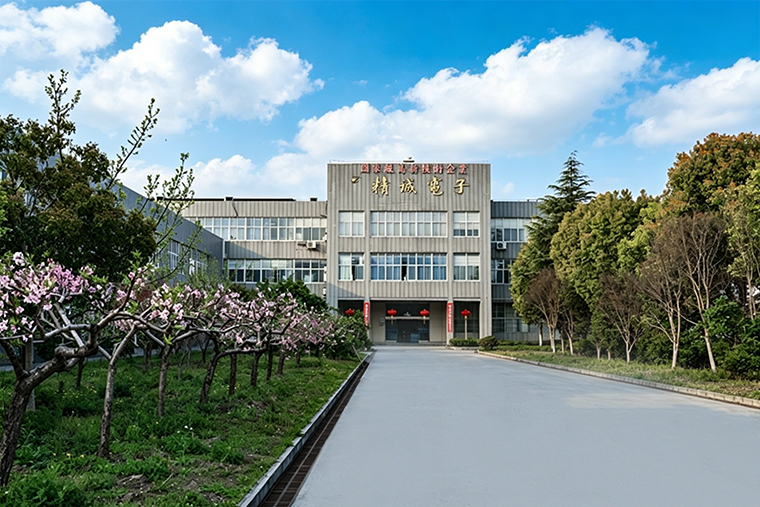
Yangzhou Jingcheng Electronics Co., Ltd. produces F connectors for semi-rigid & semi-flexible cable along with a broad range of RF connector series including SMA, BNC, TNC, N-type, and reverse polarity variants, together with high-frequency cable assemblies covering 0 to 50 GHz. Manufacturing follows ISO9001 quality management and MIL, IEC, and GB reference standards, supporting satellite, broadcast, and communications equipment applications.


 English
 中文简体
中文简体