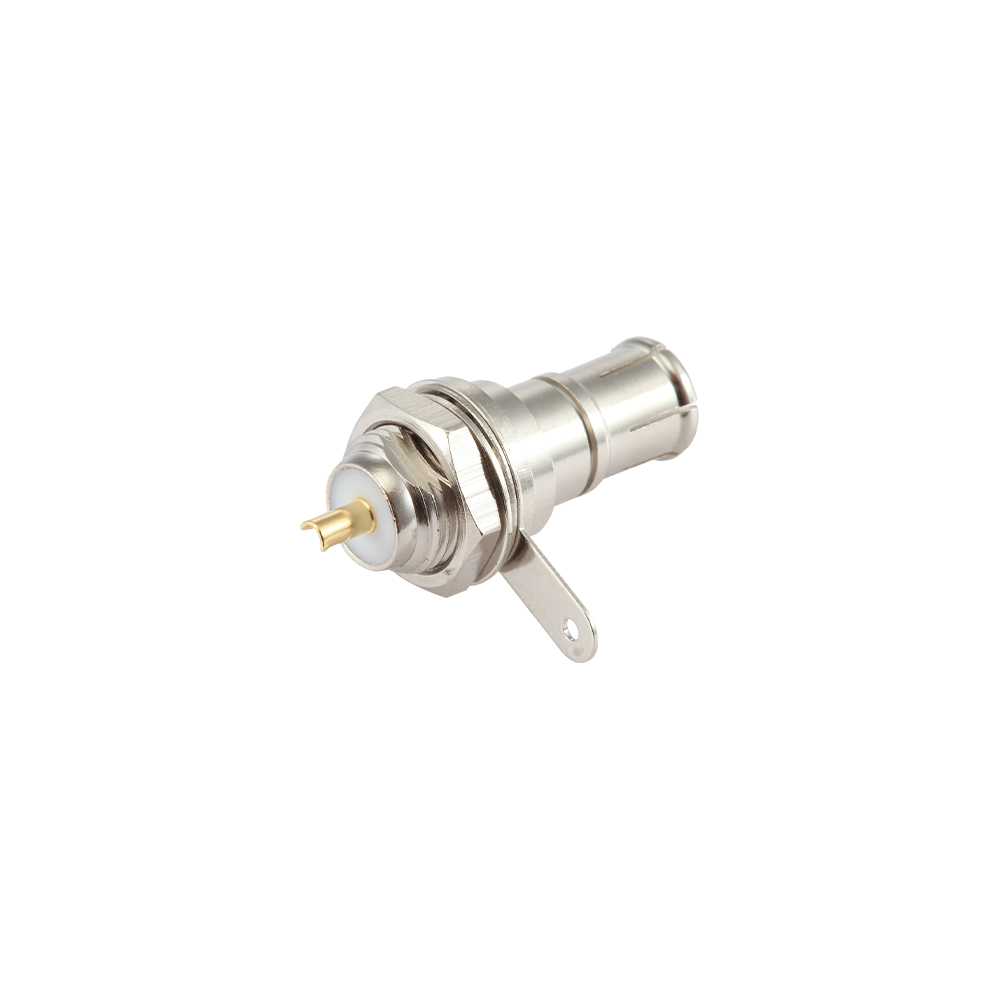
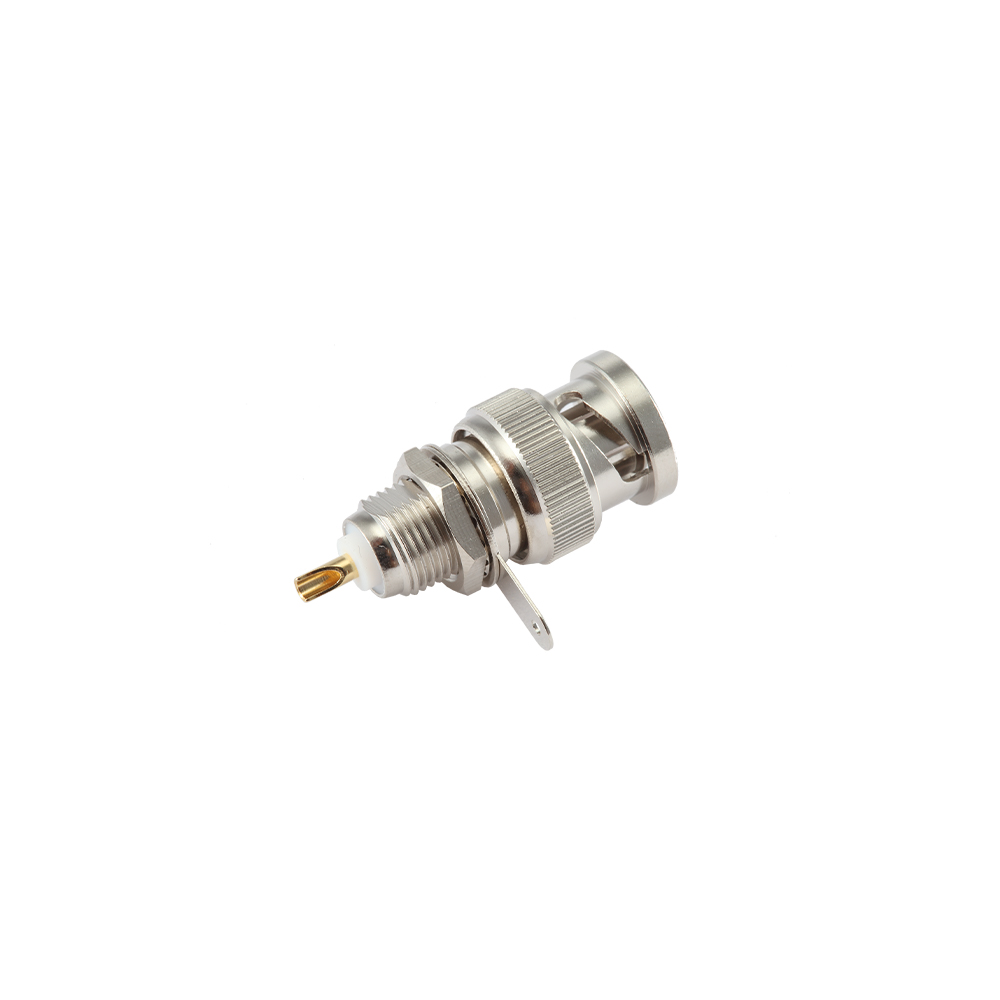
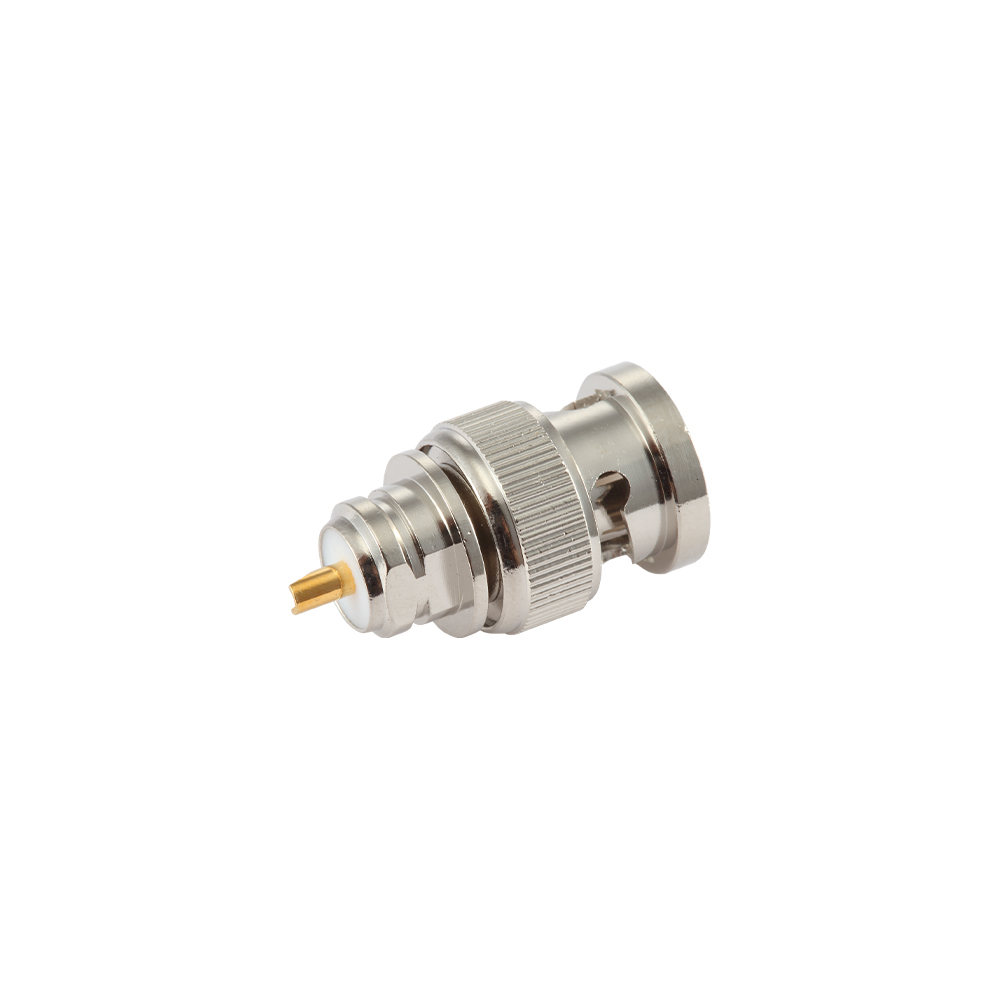
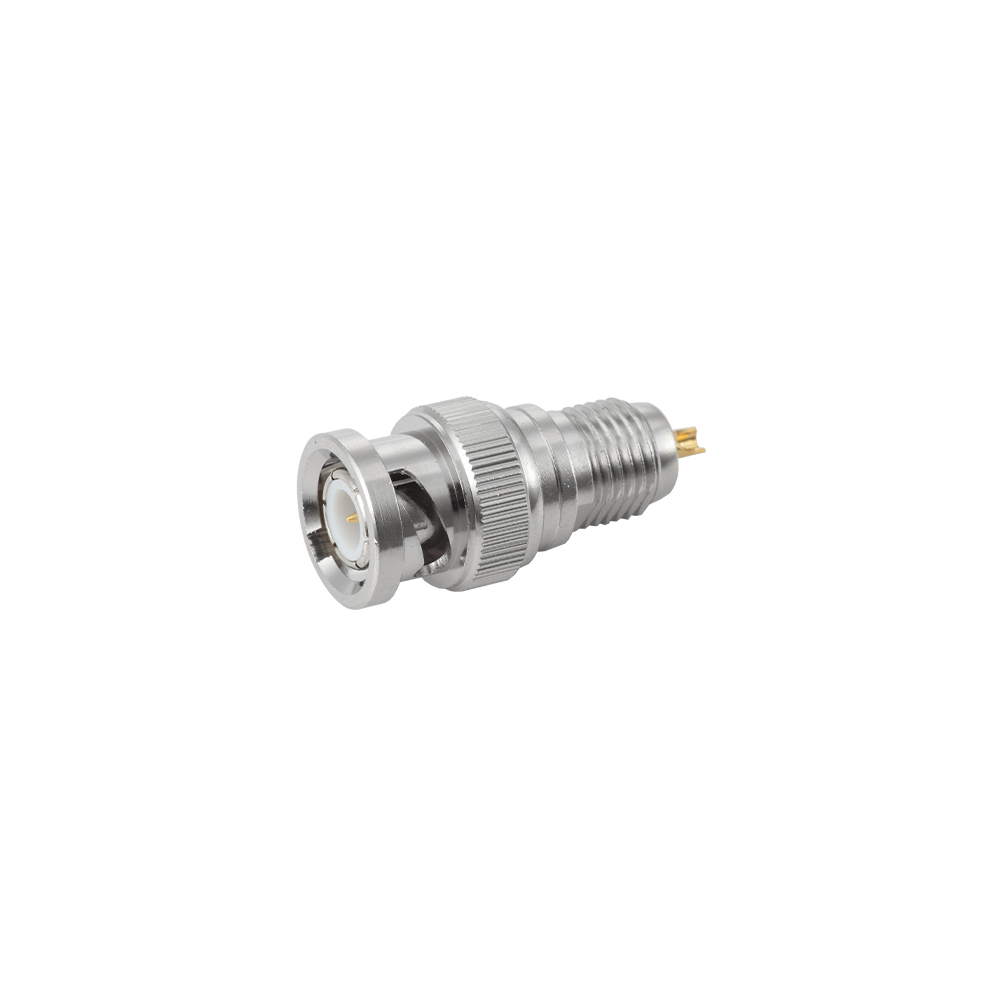
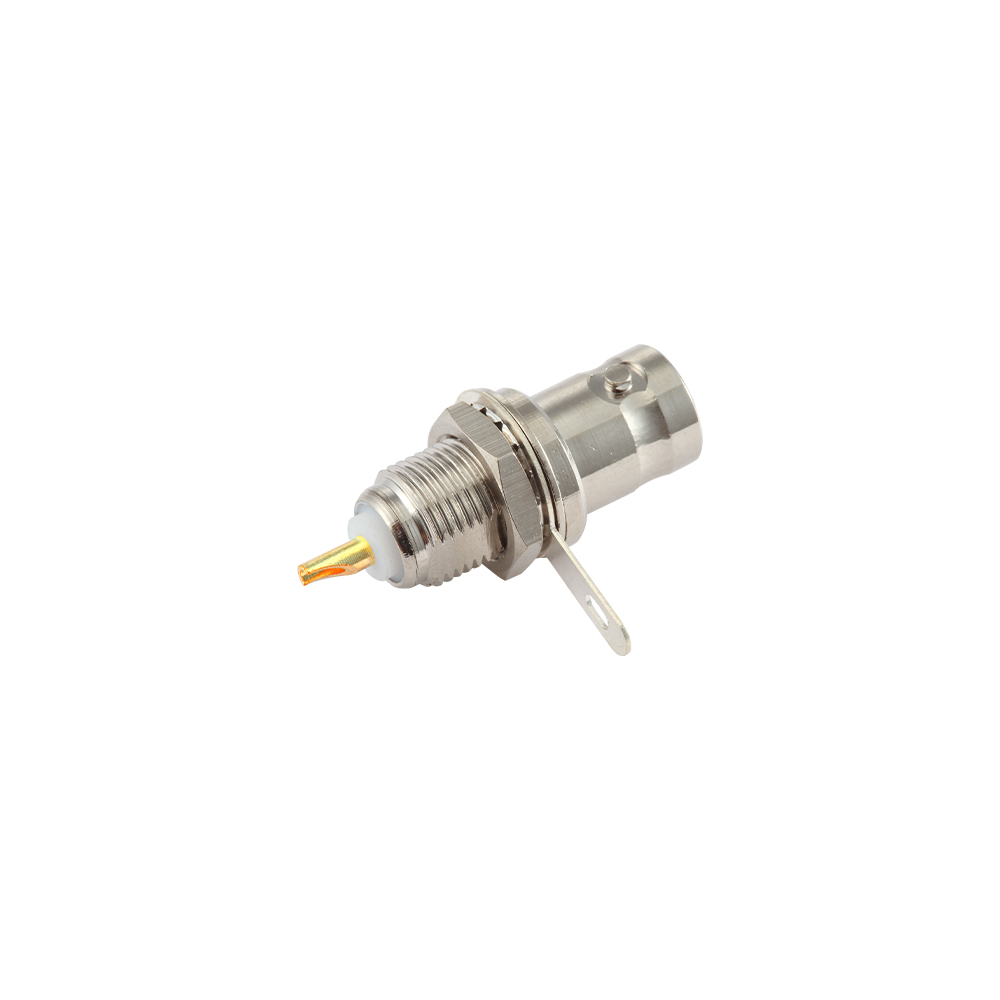
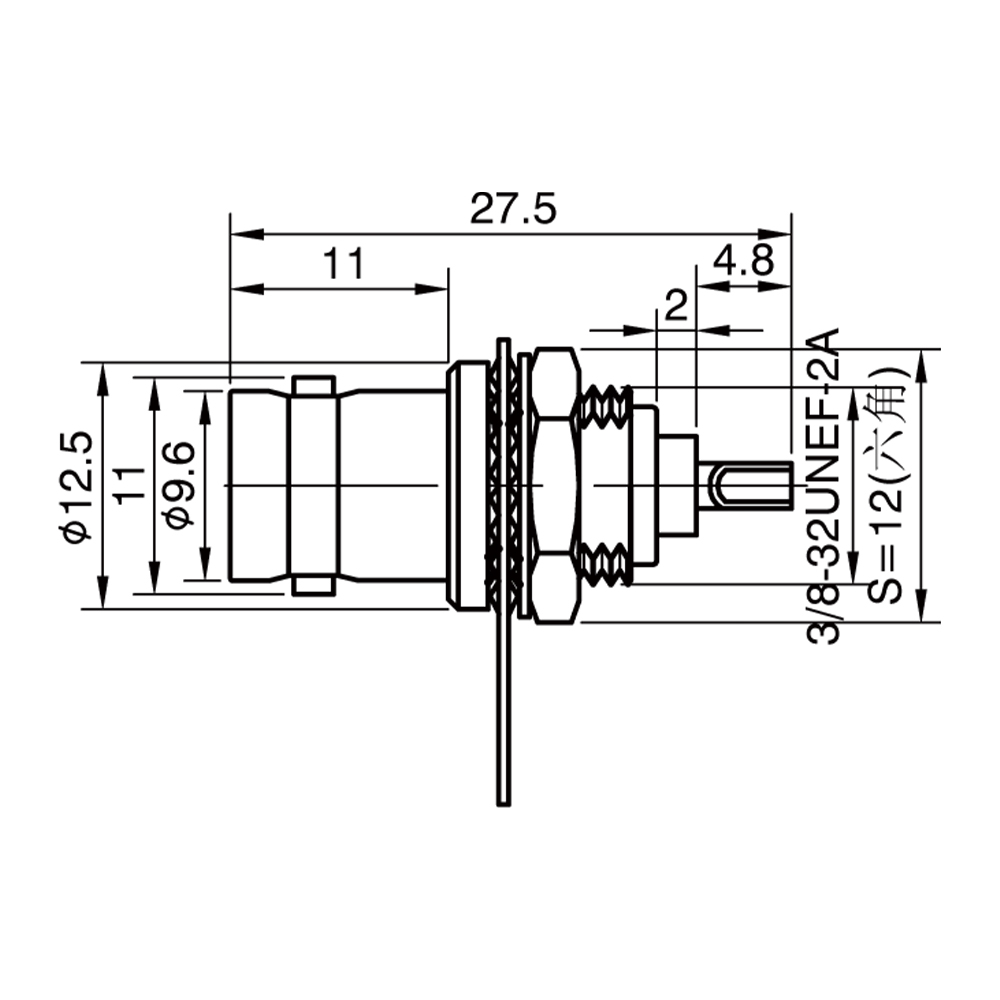
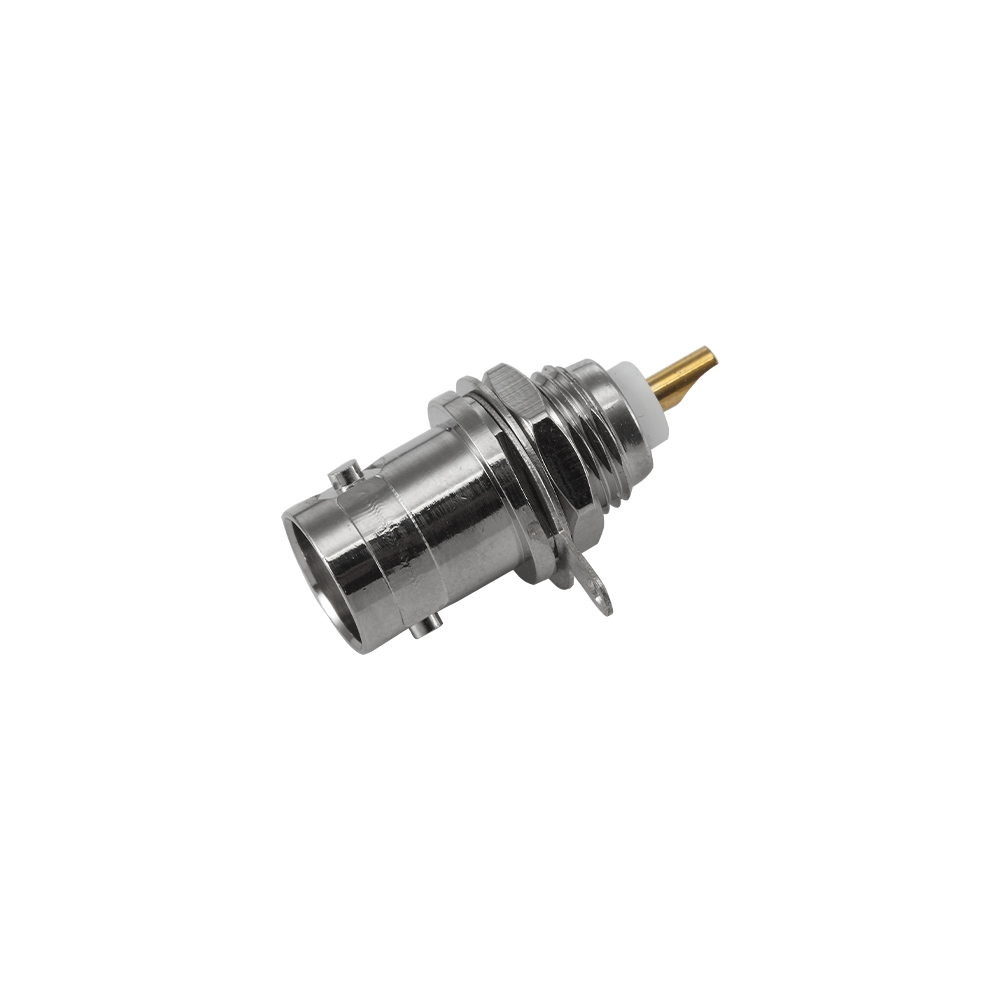
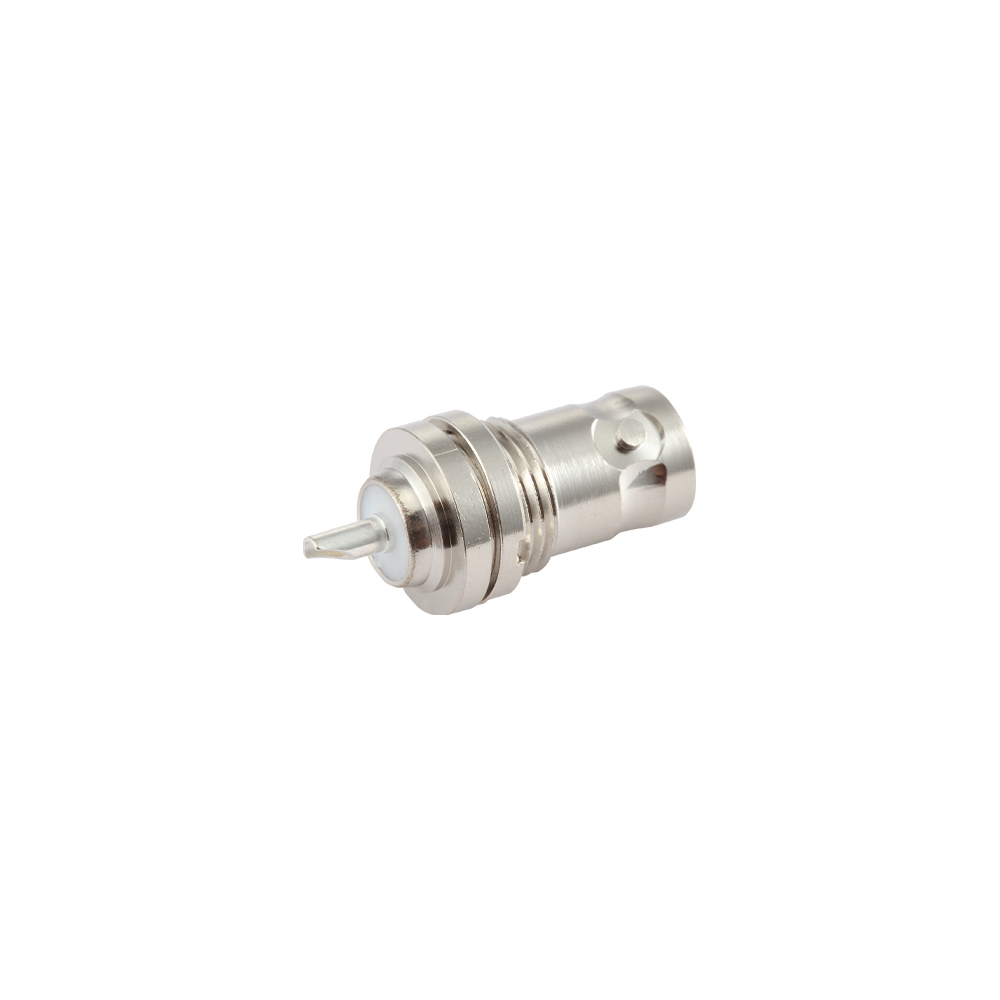
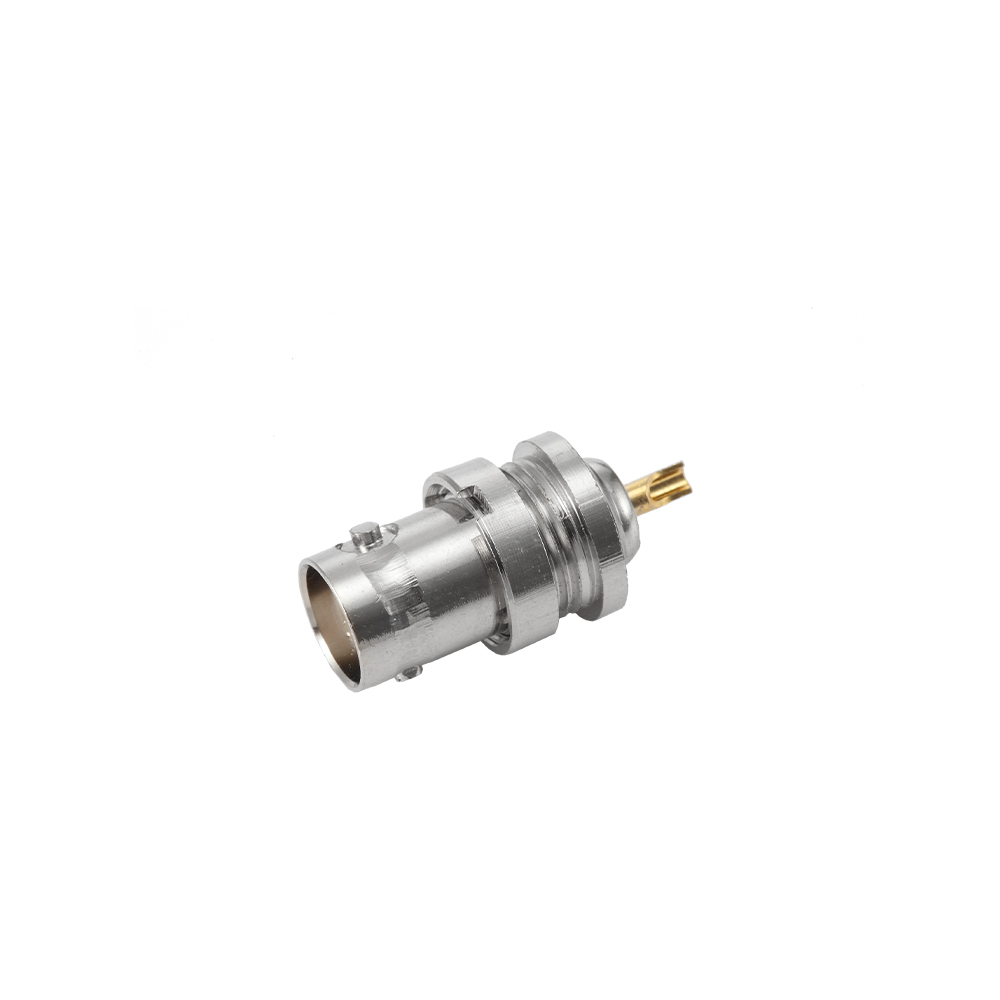
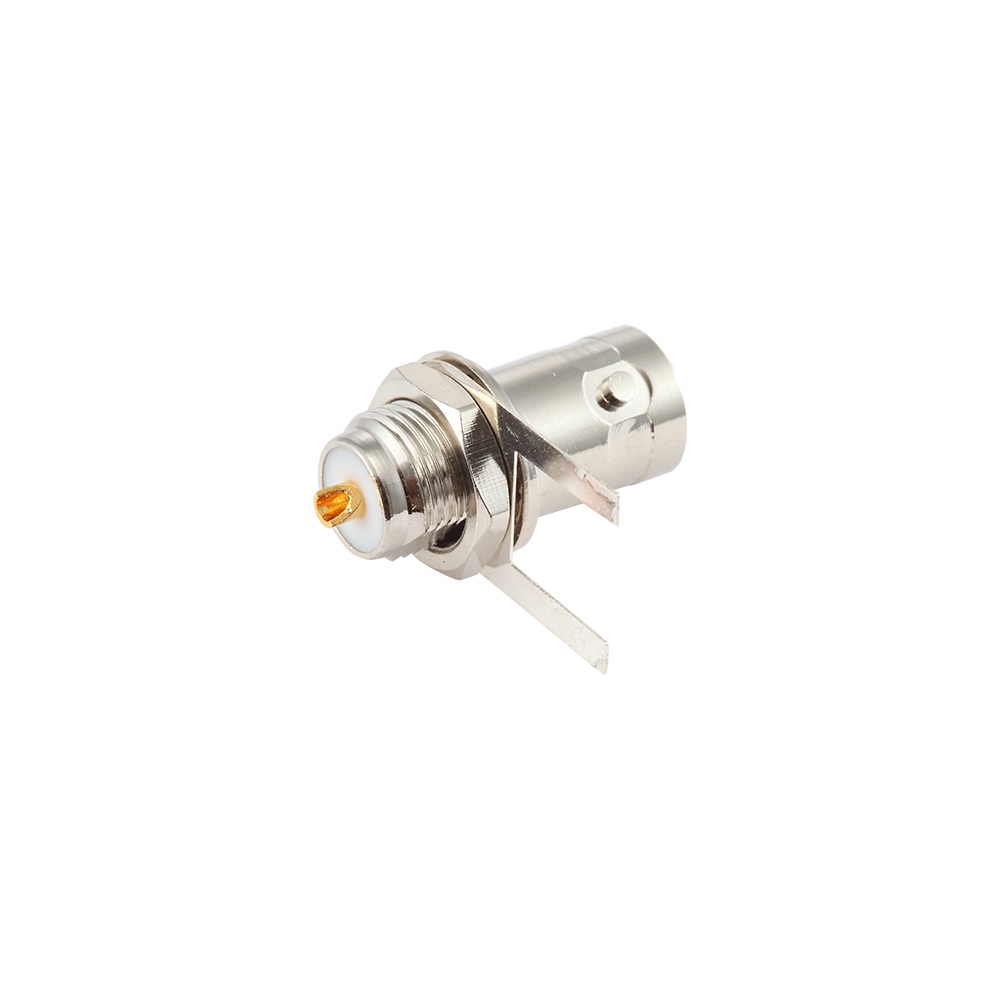
BNC Bulkhead Mount RF Coaxial Connectors Custom

Home / Products / Coaxial Connectors / BNC RF Coaxial Connectors / BNC Bulkhead Mount RF Coaxial Connectors

BNC Bulkhead Mount RF Coaxial Connectors Manufacturer

Product Overview
The NC Bulkhead Mount (Nut Mount) Connectors provide a compact, single-hole panel-mounting solution for chassis walls, enclosure panels, and partition barriers. A hex nut on the rear of the connector body pulls against the panel face from the interior, clamping the connector flange securely without the additional hardware required by multi-hole flange styles.

This mounting method is universally favored in instrument design for its minimal panel real estate consumption—critical on densely populated front and rear panels where every square centimeter of space has been allocated. The bulkhead feedthrough design electrically isolates the cable on each side of the barrier while maintaining impedance continuity across the panel interface.

Key Features
Single-hole panel installation with a standard panel cutout; compatible with off-the-shelf chassis punching tools, reducing enclosure fabrication complexity.
Hex nut (and optional lock washer) clamping provides consistent panel grip across panel thickness variations from 1mm to 6mm, widely covering sheet metal, PCB, and composite panel applications.
Solder cup, PC tail, crimp, and clamp termination rear interface options allow direct integration into PCB assemblies or cable harnesses without intermediate adapters.
50Ω and 75Ω impedance versions available in both straight and isolated (DC block) configurations.
Extended body (long-thread) variants for thick panels or applications requiring standoff height.
UL-recognized and RoHS-compliant materials used throughout, supporting global product certification efforts.

Competitive Advantages
Jingcheng's single-hole bulkhead connectors are manufactured on the same CNC production lines certified to GJB9001A military quality standards as the defense-grade products in the catalogue, ensuring the same dimensional discipline at commercial price points.
With GB, GJB, JS, GY national and industry standards referenced alongside MIL-C, IEC, and DIN international standards, our products are designed for global market access without re-qualification delays.
Large inventory of standard variants minimizes lead time for sample and initial production orders, supporting fast-moving OEM design-in cycles.

Typical Applications
Test and measurement instrument front/rear panel BNC jacks (signal inputs, trigger inputs, calibration outputs)
CCTV and security system camera housings (75Ω video signal interfaces)
Wireless access point and antenna panel ports
Industrial HMI and control panel RF signal feedthroughs
Automotive test benches and vehicle communication system enclosures

FAQ
Q: What is the maximum panel thickness this bulkhead connector can accommodate?
A: Standard versions accommodate panel thicknesses up to approximately 6mm. Extended-thread versions are available for thicker panels; specify the exact panel thickness (in mm) when ordering to receive the appropriate variant.
Q: Is a DC-blocking (isolated) bulkhead version available?
A: Yes. DC-isolated (DC-block) bulkhead versions are available in both 50Ω and 75Ω. These are useful when galvanic isolation between cable grounds is needed at the panel feedthrough point. Please specify the isolation requirement in your inquiry.
Q: Can you supply the matching jam nut and lock washer hardware with the connector?
A: Standard hardware (hex nut and flat/split washer sets) is included with connectors in our standard packaging. If installation kits with additional hardware are required, please specify the kit configuration and panel thickness.

Temperature Range
-55~+155℃ (PE Cable -40~+85℃)
Impedance
50Ω, 75Ω
Frequency Range
DC~4GHz
Insulation Resistance
≥5000MΩ
Insertion Loss
≤0.20 dB/1GHz
VSWR
Straight ≤1.22/3GHz Right angle ≤1.30/3GHz
Durability(mating)
≥500 (cycles)

About
Yangzhou Jingcheng Electronics Co., Ltd.

Yangzhou Jingcheng Electronics Co., Ltd., a premier China BNC Bulkhead Mount RF Coaxial Connectors Manufacturer and BNC Bulkhead Mount RF Coaxial Connectors Supplier, was founded in 1999. It is a high-tech enterprise specializing in the R&D and manufacturing of RF coaxial connectors, cable assemblies, and passive microwave components.
Equipped with a comprehensive R&D and production system, the company has obtained international certifications including ISO9001. Adhering strictly to standards such as MIL, IEC and GB, we offer over 30 product series with more than 2,000 specifications, covering SMA, BNC, N-type and other mainstream models. Our products are widely applied in the fields of communications, aerospace, automotive electronics and beyond, and exported to many countries and regions across Europe, America and Asia.
We uphold the tenet of "Quality as the Foundation, Customers as the Core", committed to providing reliable interconnection solutions and professional services for global clients.

BNC Bulkhead Mount RF Coaxial Connectors Industry knowledge

BNC Bulkhead Mount RF Coaxial Connectors are designed to pass an RF signal through a metal panel, chassis wall, or enclosure surface while forming a fixed, sealed penetration point between the outside and inside of the equipment housing. A BNC Bulkhead Mount RF Coaxial Connector typically combines a threaded or nut-fastened body with a front-facing BNC interface, allowing an external cable to mate directly at the enclosure surface while the rear side connects to internal wiring or cable. This connector type is commonly specified wherever an RF signal needs to cross a sealed or grounded enclosure boundary without an intermediate cable run inside the housing.

Functional Highlights

  • Panel feedthrough design: Allows an RF signal path to pass directly through the wall of an enclosure without additional internal cabling between the outer and inner connection points.
  • Grounding continuity: The metal body provides an electrical bond between the connector shell and the panel, which supports shielding continuity across the enclosure surface.
  • Nut or threaded fastening: Secured to the panel using a mounting nut or threaded bushing, rather than the screw-hole flange pattern used on flange-style panel connectors.
  • Sealing capability: Many designs accept an O-ring or gasket at the panel interface, reducing dust and moisture ingress at the penetration point.
  • Rear termination options: Solder cup, solder post, crimp, or cable pigtail termination on the internal side to connect with internal wiring or a short internal cable segment.

Common Types and Characteristics

Within the BNC Bulkhead Mount RF Coaxial Connectors category, variations are generally organized by fastening method, sealing level, and rear termination style.

Common types of bulkhead mount BNC connectors and their characteristics
Type Fastening Method Sealing Feature Typical Use
Standard Nut-Mount Bulkhead Single hex or knurled nut Basic gasket, optional Indoor enclosures, test equipment
Sealed Bulkhead with O-Ring Threaded body with locking nut Front and rear O-ring seal Outdoor cabinets, weather-exposed panels
Bulkhead with Cable Pigtail Nut-mount, rear cable tail Panel-side gasket only Short internal signal jumpers
Isolated Bulkhead (Insulated) Nut-mount with insulating bushing Depends on design Circuits requiring shell isolation from chassis ground

Typical Application Scenarios

  • Signal feedthrough points on outdoor communication cabinets and remote radio units;
  • Enclosure penetration ports on test and measurement instrument housings;
  • Grounded chassis connections in broadcast, monitoring, and video transmission systems;
  • Sealed panel penetrations on shipboard, vehicle-mounted, or field-deployed equipment;
  • Rear-panel RF input/output ports on rack-mounted electronic instruments.

Key Selection Factors

  1. Panel cutout and thickness: Confirm the mounting hole diameter and panel thickness range supported by the connector's threaded body and nut length.
  2. Grounding requirement: Determine whether the application requires the connector shell to bond directly to the panel for grounding, or whether an isolated design is needed to keep the shell separated from chassis ground.
  3. Sealing level: For outdoor or exposed installations, check whether front and rear O-ring or gasket sealing is available at the panel penetration point.
  4. Rear termination: Select solder cup, solder post, crimp, or pigtail termination based on how the connector will interface with internal cabling.
  5. Frequency and impedance matching: Verify that the connector's frequency range and impedance value align with the RF signal path requirements of the system.

Type Comparison

Comparison between standard, sealed, and isolated bulkhead mount BNC connectors
Comparison Item Standard Nut-Mount Sealed with O-Ring Isolated (Insulated)
Grounding path Direct to panel Direct to panel Separated from panel ground
Environmental sealing Basic or none Front and rear sealed Depends on design
Installation complexity Simple Moderate Moderate to higher
Typical application Indoor instrument panels Outdoor or weather-exposed enclosures Circuits requiring shell-to-ground isolation

Frequently Asked Questions

Q1: What distinguishes a bulkhead mount BNC connector from a flange mount BNC connector?

A bulkhead mount BNC connector is generally secured to the panel with a single mounting nut around a threaded body, while a flange mount BNC connector uses a flat flange base with multiple screw holes. The nut-mount design is typically associated with round panel cutouts, whereas flange designs use a rectangular or square cutout pattern.

Q2: Does a bulkhead mount connector automatically ground the connector shell to the panel?

In a standard nut-mount design, the metal body typically bonds to the panel, providing a grounded connection. Isolated or insulated versions are available when the application requires the connector shell to remain electrically separated from the panel.

Q3: Is additional sealing needed for outdoor bulkhead installations?

For outdoor or weather-exposed panels, a bulkhead connector with front and rear O-ring or gasket sealing is generally recommended to reduce moisture and dust entry at the panel penetration point.

Q4: How is the rear termination style selected for a bulkhead connector?

The rear termination is chosen according to how the connector interfaces internally: solder cup or solder post for direct wire connection, crimp termination for cable assemblies, or a pigtail design when a short internal cable segment is required.

Production Note

Yangzhou Jingcheng Electronics Co., Ltd was founded in 1999 and specializes in the design, development, production, and sales of RF coaxial connectors, covering BNC, N, TNC, SMA, 2.92, 2.4, 1.85, and other series, together with related Adapters and 0~50GHz high-frequency cable assemblies. For BNC Bulkhead Mount RF Coaxial Connectors, dimensional consistency of the threaded body, nut, and sealing components is a relevant factor in panel-mount reliability, and the company's testing equipment supports verification across different fastening, sealing, and termination configurations.