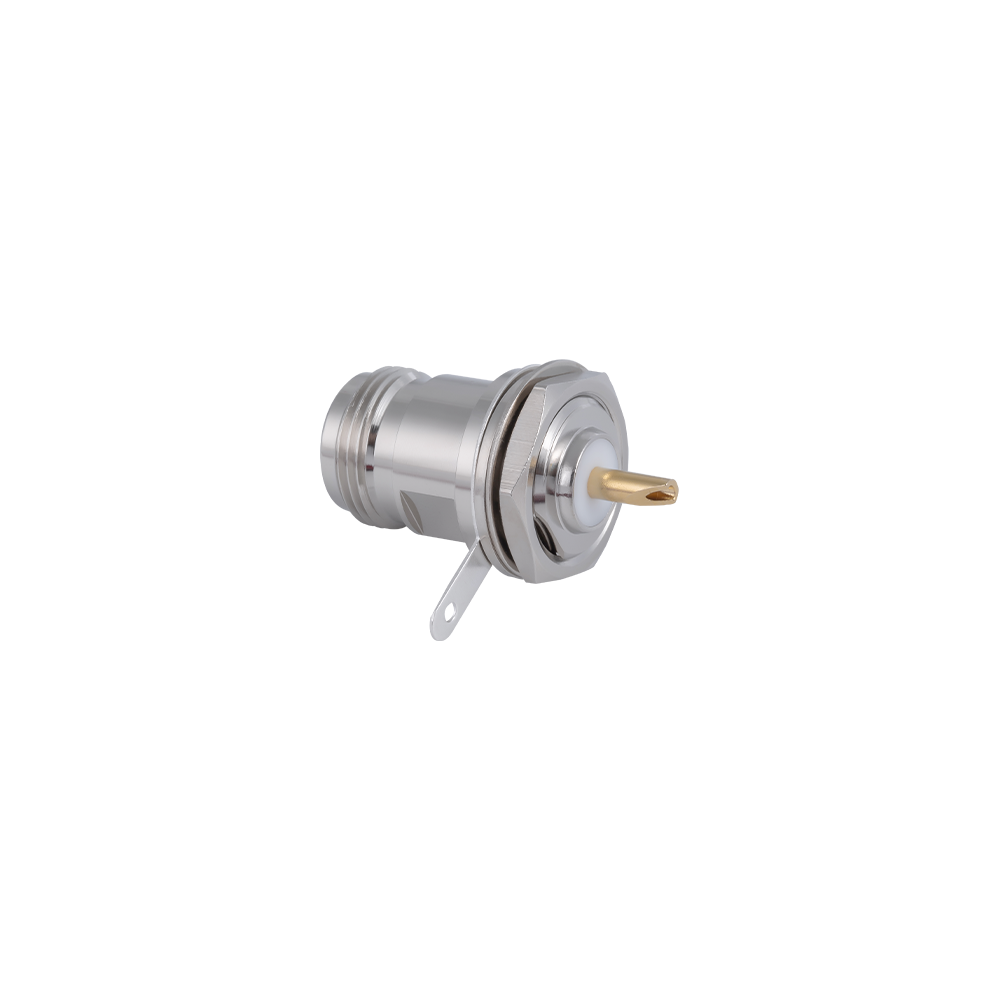
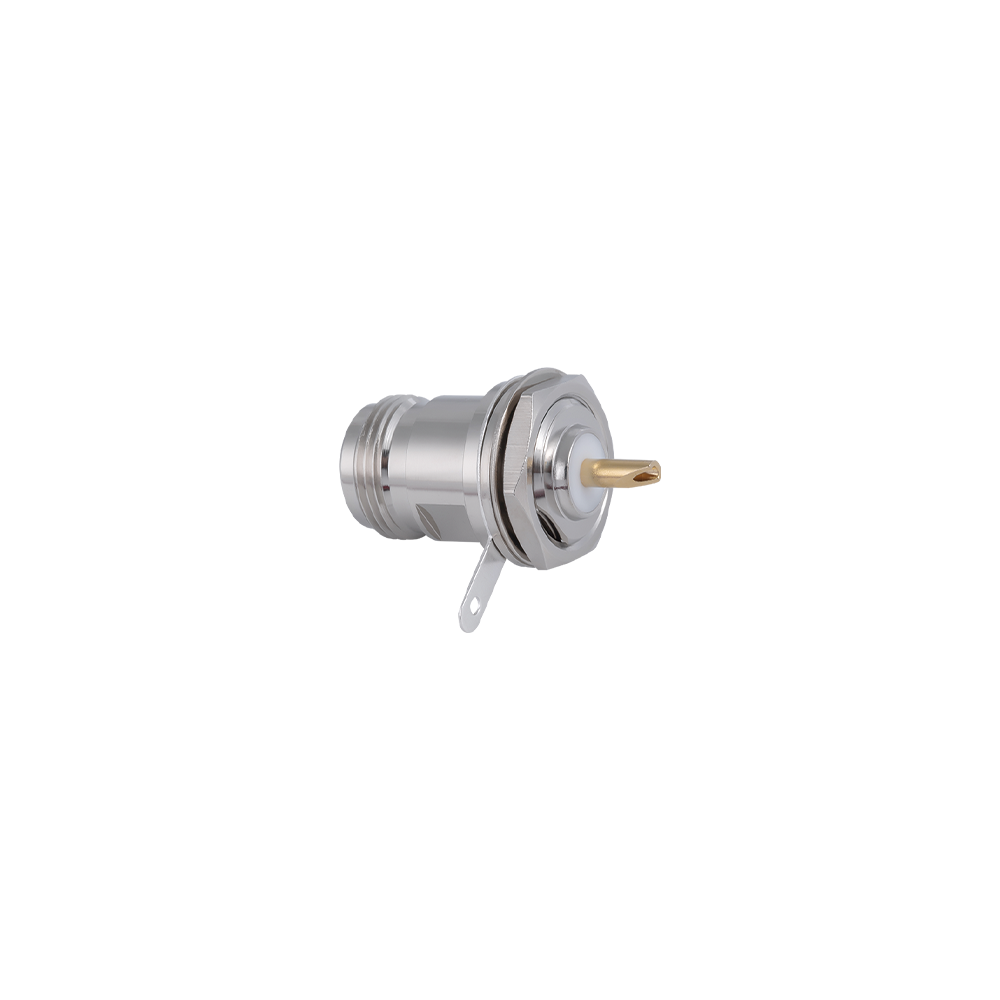
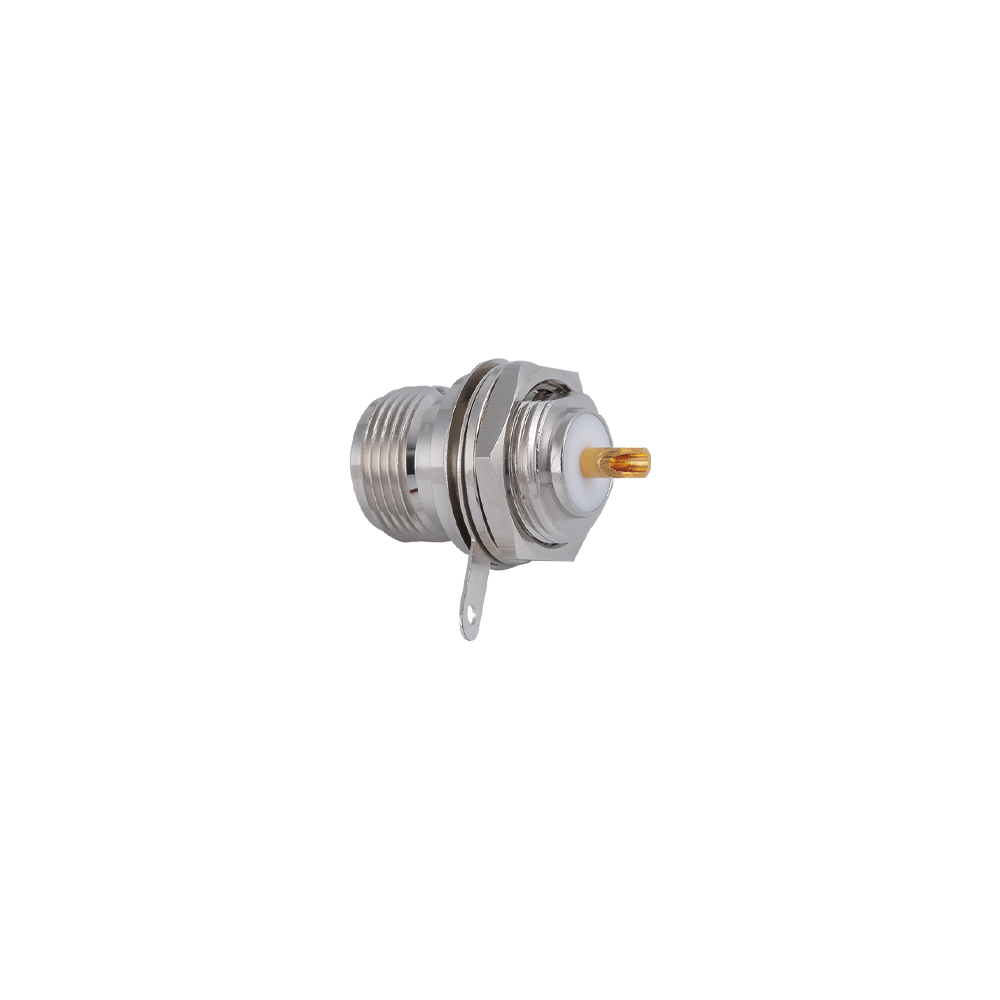
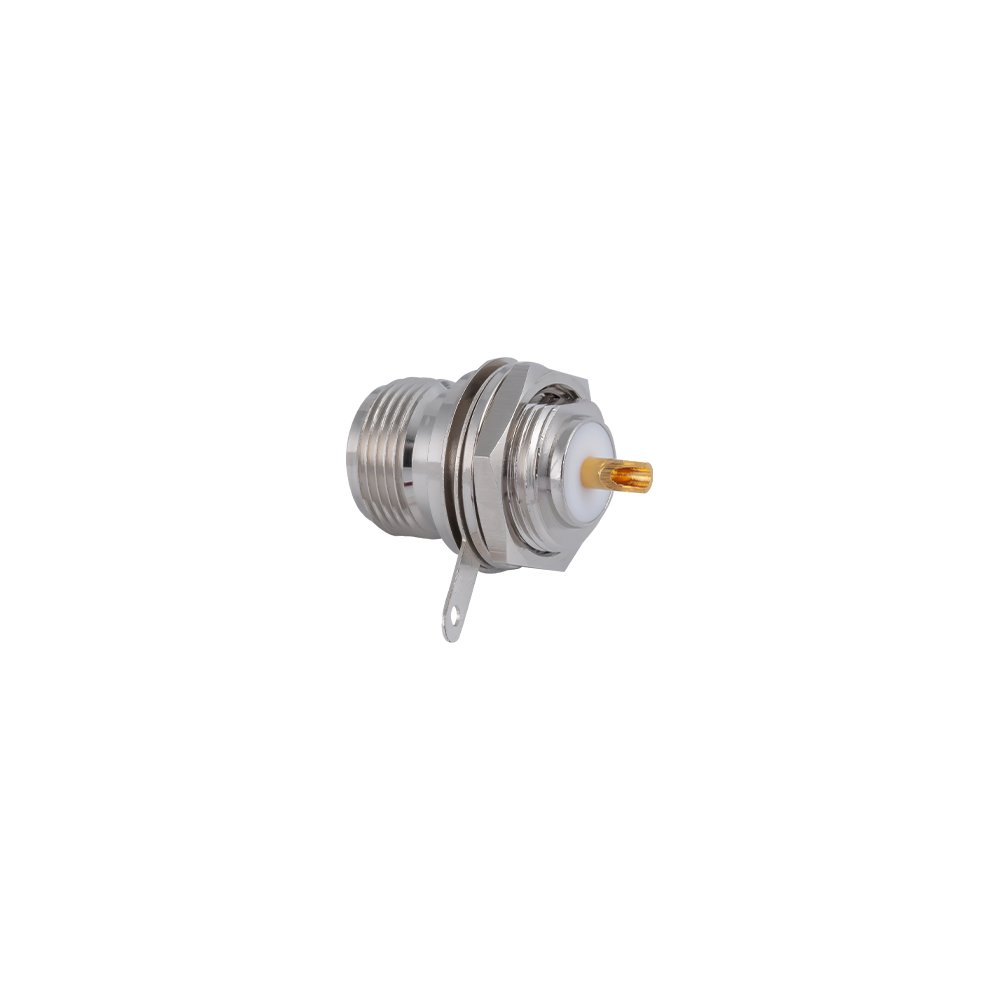
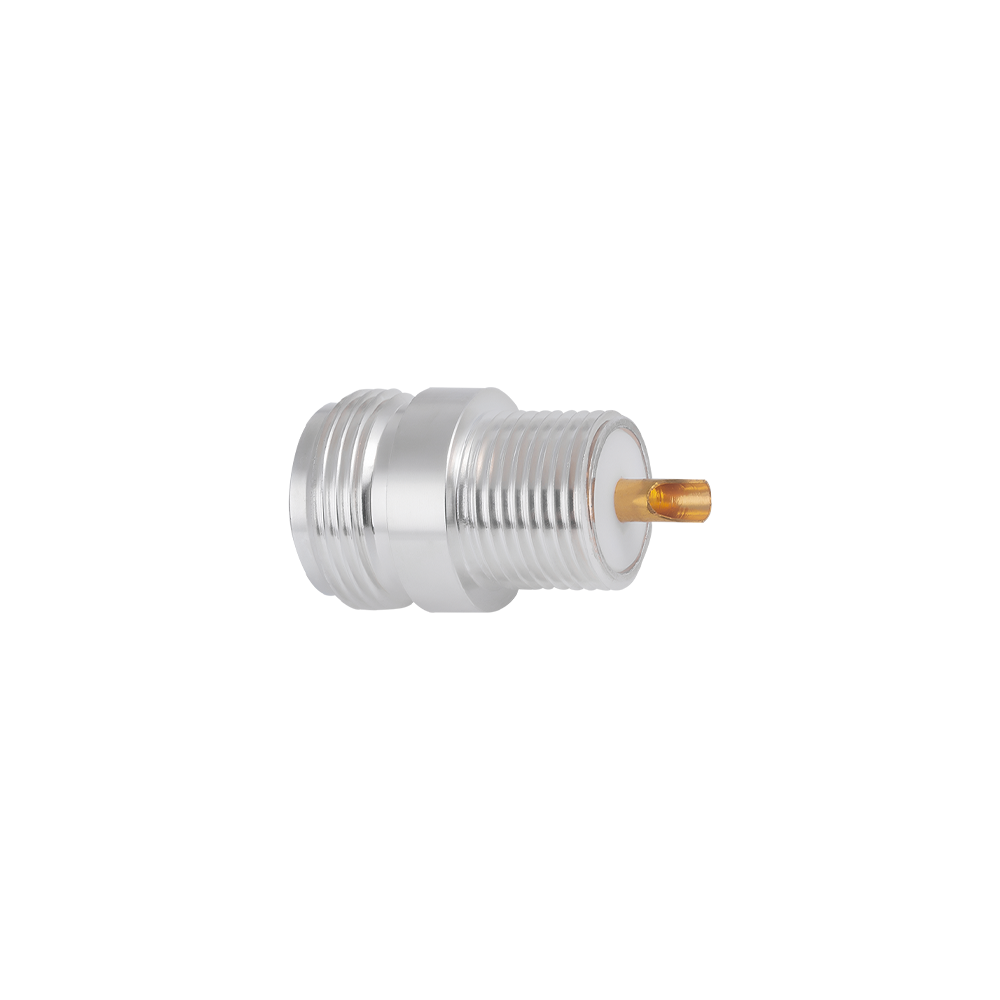
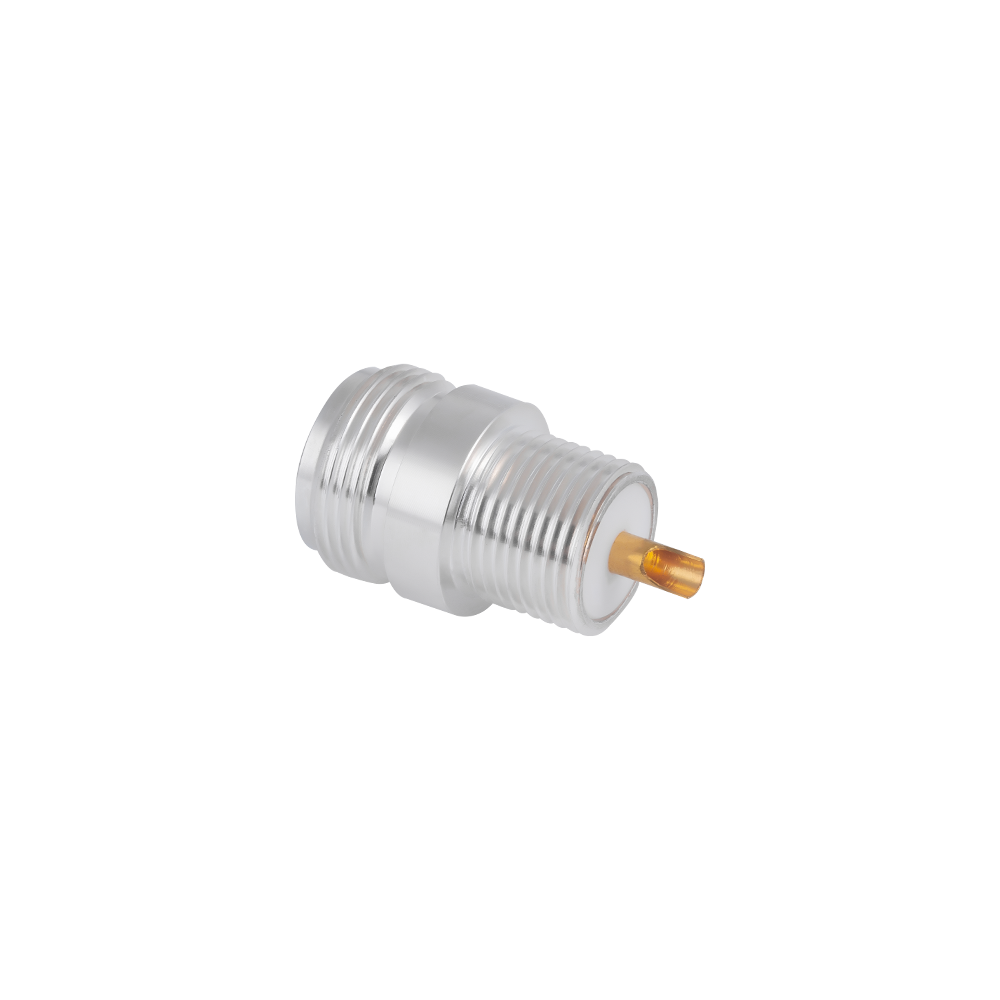
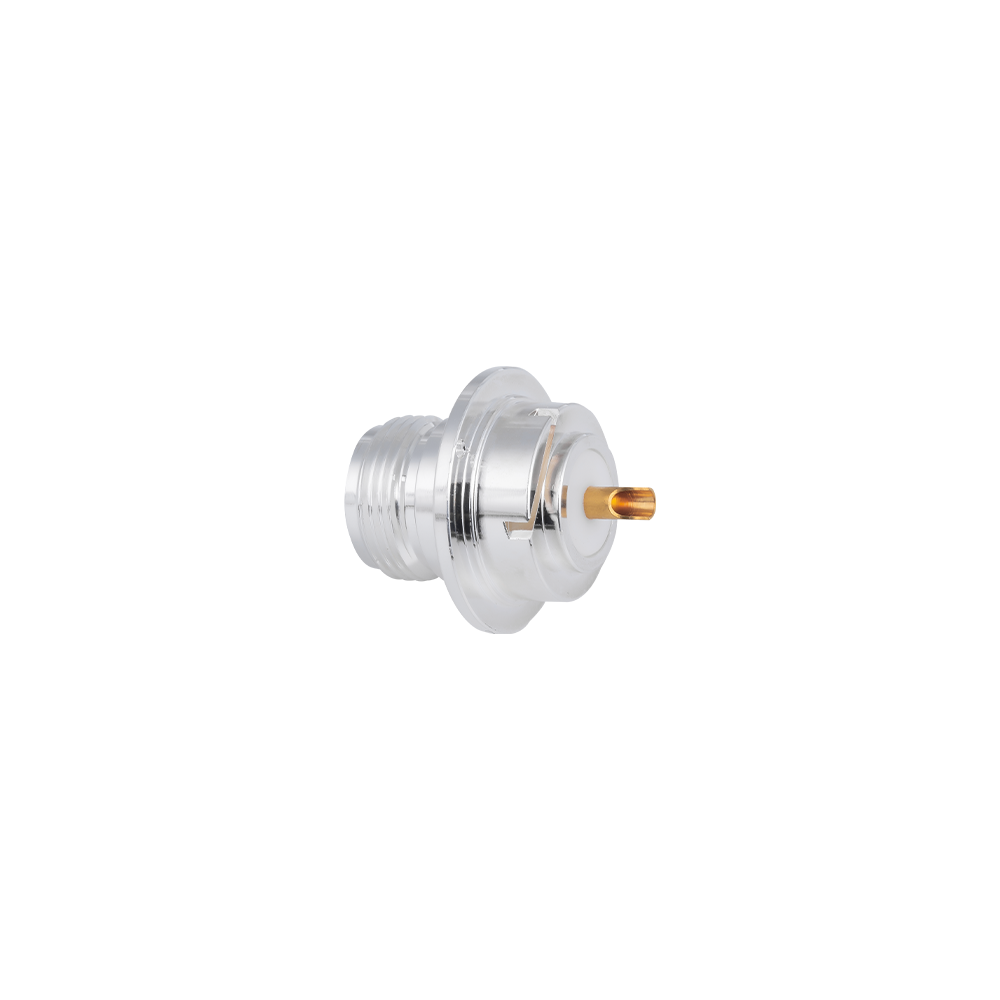
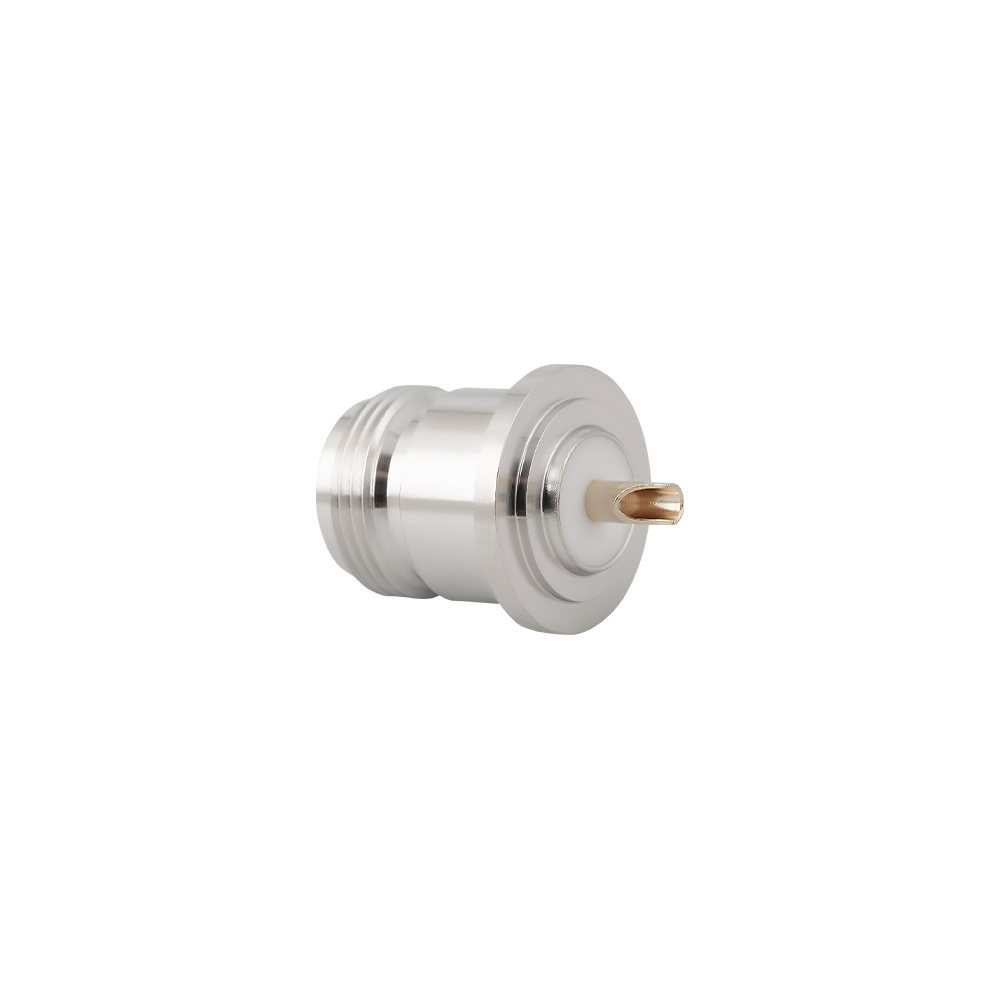
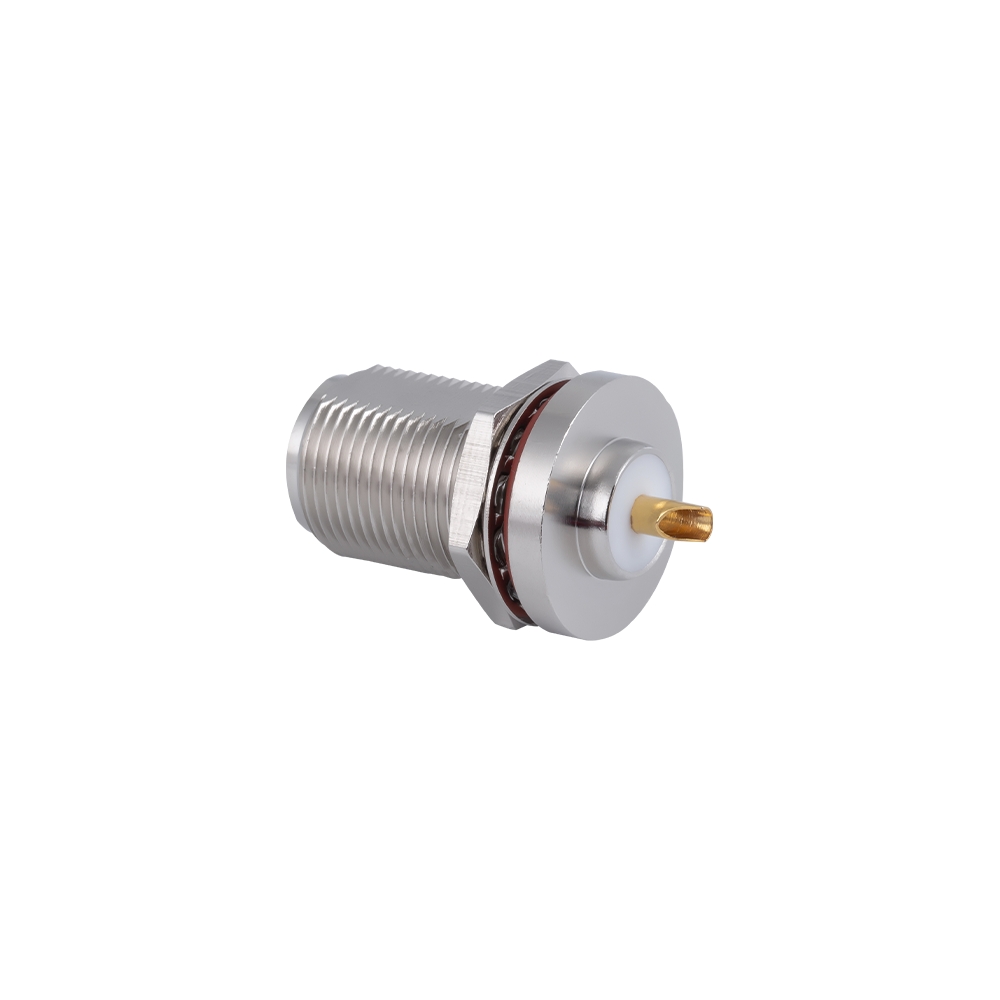
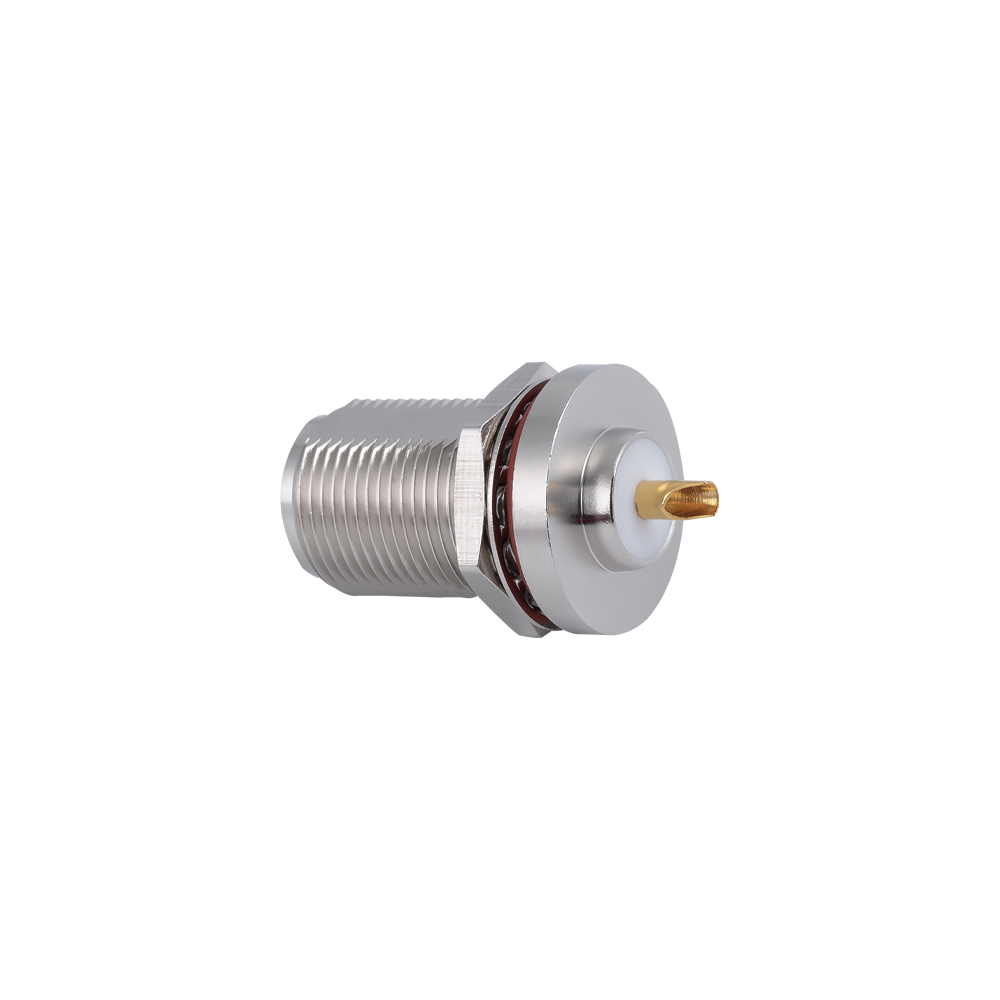
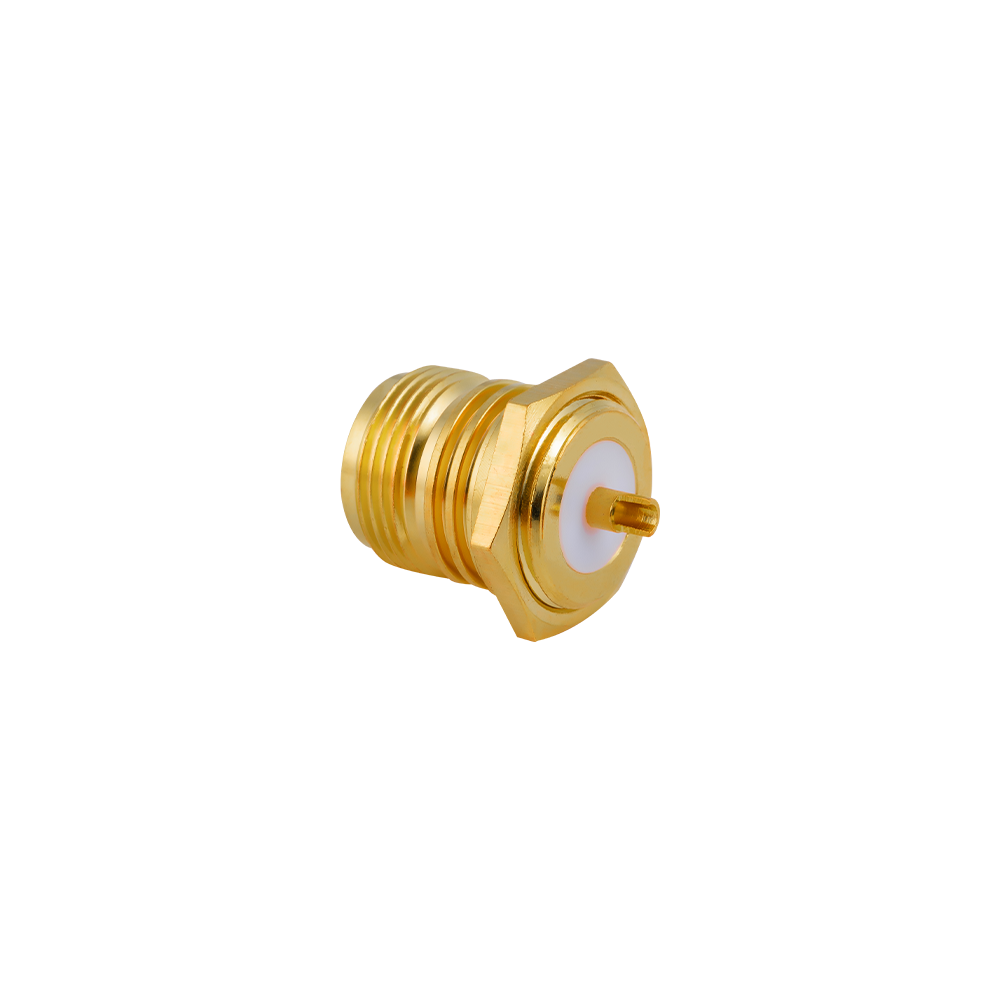
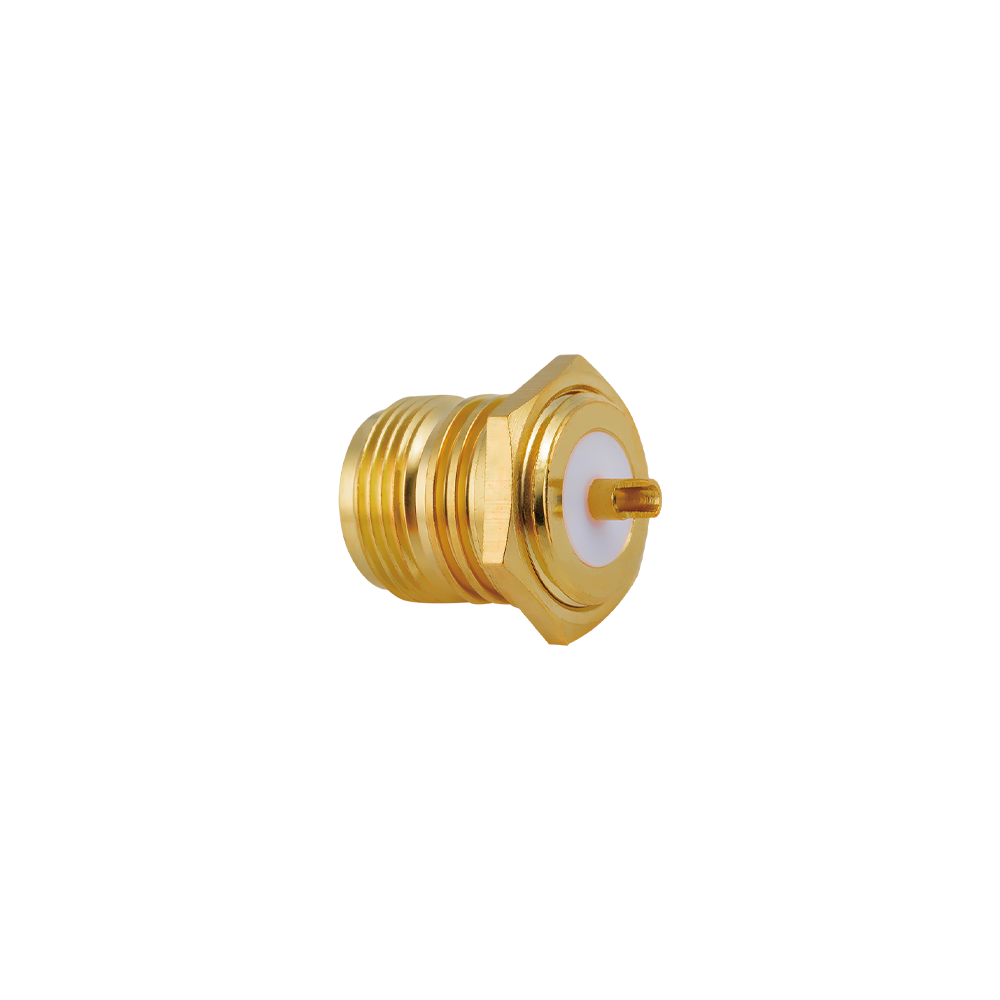
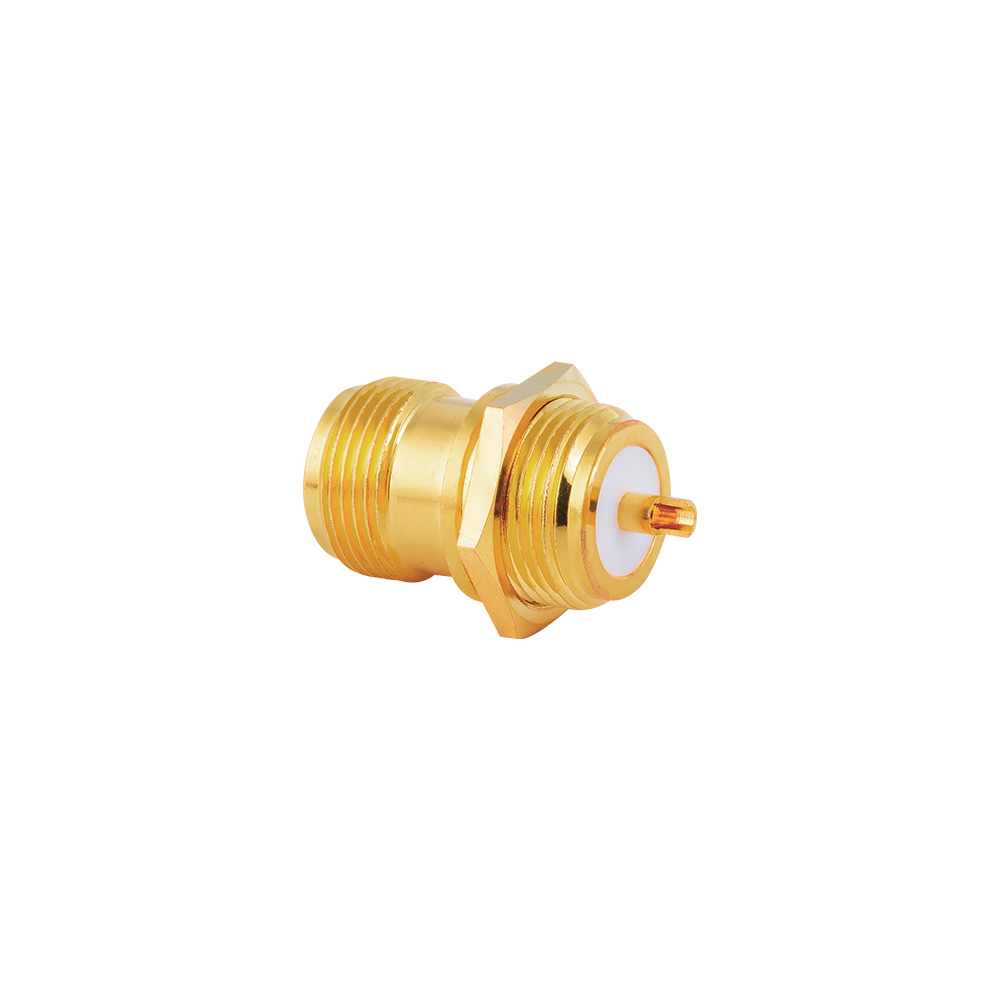
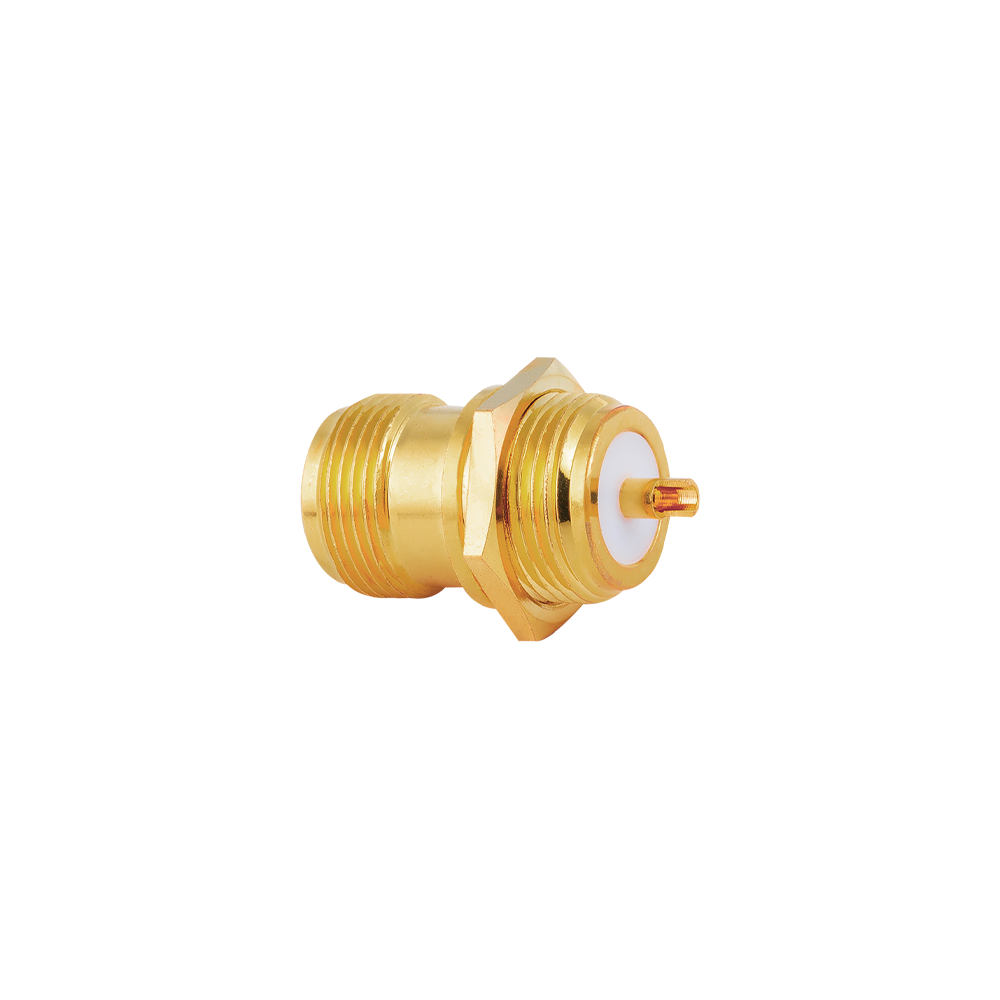
N Bulkhead Mount RF Coaxial Connectors Custom

Home / Products / Coaxial Connectors / N RF Coaxial Connectors / N Bulkhead Mount RF Coaxial Connectors

N Bulkhead Mount RF Coaxial Connectors Manufacturer

Product Overview
N-type Bulkhead Mount (Nut Mount) Connectors deliver the N-type series' full performance capability—DC to 11 GHz, 50Ω or 75Ω, VSWR ≤ 1.15 straight at 6 GHz—in the most space-efficient panel-mount format. A single threaded hole and hex nut installation concentrates the connector footprint to the minimum necessary panel area while providing mechanical integrity sufficient for most outdoor and semi-outdoor equipment enclosures.

The N-type bulkhead connector is the standard RF feedthrough in outdoor base station housings, CATV amplifier enclosures, and equipment racks worldwide—a status earned through decades of field-proven reliability in harsh environmental conditions. At Jingcheng, bulkhead connectors for the N series are one of the most-produced items in the factory, with mature tooling and process parameters that deliver consistent electrical and mechanical performance in every production batch.

Key Features
Standard panel cutout diameter (19.05 mm / 0.750" for N-type) compatible with universal N-type chassis punch tools; no custom tooling required for standard panel fabrication.
50Ω and 75Ω versions share identical body outer geometry—same panel hole, same nut—enabling system redesign between impedances without mechanical panel changes.
Rear termination options: solder cup (cable), crimp sleeve (cable assembly production), solder-post (PCB through-hole), and clamp (field repair).
Panel thickness accommodation: standard 1.0–6.0 mm; extended-thread versions for panels up to 10 mm; custom thread lengths available.
DC-isolated (DC-block) body version integrates a capacitive blocking element for applications requiring galvanic isolation at the panel feedthrough without an external adapter.
Body plating: nickel over brass, gold over nickel, and stainless steel passivated; all versions meet IEC 60512-11-10 salt spray testing.

Competitive Advantages
As one of the highest-volume production items in Jingcheng's factory, N-type bulkhead connectors benefit from the most mature tooling and the tightest process control in the facility. Customers ordering N-type bulkhead connectors are drawing on a production capability refined continuously since the company's founding in 1999.
Both 50Ω and 75Ω in the same mechanical platform enable customers managing mixed-impedance product lines to qualify a single connector design file and inspect both impedances against the same mechanical drawing—simplifying incoming QC procedures.
N-type bulkhead connectors are produced with reference to IEC 169-16, MIL-C-39012, and DIN 47223 (75Ω N-type) to ensure conformance with the widest possible range of system-level interface specifications across global markets.

Typical Applications
Outdoor base station RRU and BBU housing N-type antenna cable feedthroughs
CATV outdoor amplifier node housing RF input and output ports
Marine navigation and communication equipment RF panel jacks
Test equipment fixed installation RF panel ports (spectrum analyzers, signal sources)
Solar and wind power monitoring system wireless communication module RF ports

FAQ
Q: What is the recommended tool for N-type bulkhead connector installation?
A: A 25 mm (1") open-end or box wrench is used for the standard N-type hex nut. A torque wrench set to 1.4–2.0 N·m is recommended to avoid over-tightening, which can deform the panel or connector flange face. Anti-rotation of the connector body during tightening is required to prevent twisting the internal wiring.
Q: Can the N-type bulkhead connector be installed in a fiberglass (GRP) panel?
A: Yes. Fiberglass panels are common in outdoor communication enclosures. Use a backing nut or large-area washer behind the panel to distribute the clamping load and prevent the panel material from creeping under the nut over time. Stainless steel hardware is recommended for outdoor fiberglass installations.
Q: Is a right-angle bulkhead version available?
A: A right-angle (elbow) version with bulkhead mount flange is available as a configured special for applications where a 90° cable exit direction is needed at the panel and the standard bulkhead body with a separate right-angle cable connector would create too much panel projection. Please contact sales with your application details. 

Temperature Range

-55~+155℃(PE Cable   -40~+85℃)

Impedance

50Ω, 75Ω

Frequency Range

DC~11GHz

Insulation resistance

≥5000MΩ

Insertion loss

≤0.2dB(6GHz)

VSWR

Straight ≤1.15/6GHz

Right angle

≤1.25/6GHz

Durability(mating)

≥500 (cycles)

About
Yangzhou Jingcheng Electronics Co., Ltd.

Yangzhou Jingcheng Electronics Co., Ltd., a premier China N Bulkhead Mount RF Coaxial Connectors Manufacturer and N Bulkhead Mount RF Coaxial Connectors Supplier, was founded in 1999. It is a high-tech enterprise specializing in the R&D and manufacturing of RF coaxial connectors, cable assemblies, and passive microwave components.
Equipped with a comprehensive R&D and production system, the company has obtained international certifications including ISO9001. Adhering strictly to standards such as MIL, IEC and GB, we offer over 30 product series with more than 2,000 specifications, covering SMA, BNC, N-type and other mainstream models. Our products are widely applied in the fields of communications, aerospace, automotive electronics and beyond, and exported to many countries and regions across Europe, America and Asia.
We uphold the tenet of "Quality as the Foundation, Customers as the Core", committed to providing reliable interconnection solutions and professional services for global clients.

N Bulkhead Mount RF Coaxial Connectors Industry knowledge

N Bulkhead Mount RF Coaxial Connectors are designed to pass an RF signal through a panel or enclosure wall using a single mounting nut around a threaded body, forming a fixed feedthrough point commonly found on outdoor communication cabinets, antenna feed enclosures, and tower-mounted equipment housings. Because N connectors are already sized to support higher power levels, N Bulkhead Mount RF Coaxial Connectors are frequently installed at penetration points where the panel also carries a grounding or surge-protection function, linking the connector shell to the enclosure's chassis ground alongside other grounding hardware. This connector type is typically selected for outdoor feedthrough locations where power capacity, grounding continuity, and environmental sealing are all relevant at the same panel penetration point.

Structural Features and Core Performance

  • Single nut panel fixing: A hex or knurled mounting nut secures the connector body through a round panel cutout, requiring less panel space than a multi-hole flange pattern.
  • Grounding continuity for surge paths: The metal body typically bonds to the panel at the mounting point, which is relevant where the enclosure grounding system also connects to lightning protection or surge arrester hardware nearby.
  • Power feedthrough capacity: The larger center contact of the N interface supports the power levels typically present at antenna feed penetration points on outdoor towers and base stations.
  • Sealing capability: An O-ring or gasket at the panel interface, combined with a weatherproofed mating connection at the front, supports a more complete moisture barrier at outdoor penetration points.
  • Rear termination options: Solder cup, solder post, crimp, or cable pigtail termination on the internal side connects to internal wiring or a short internal cable segment.

Common Types and Characteristics

N Bulkhead Mount RF Coaxial Connectors are generally grouped by grounding configuration and rear termination method.

Common types of N bulkhead mount connectors and their characteristics
Type Grounding Configuration Rear Termination Typical Use
Standard Grounded Bulkhead Shell bonded to panel Solder cup / solder post General outdoor cabinet feedthrough ports
Isolated (Insulated) Bulkhead Shell separated from panel ground Solder cup / solder post Circuits requiring shell-to-ground isolation
Sealed Bulkhead with O-Ring Shell bonded to panel, sealed Solder cup with rear seal option Outdoor towers, weather-exposed cabinets
Bulkhead with Cable Pigtail Shell bonded to panel Rear cable tail Short internal jumpers to amplifier modules

Application Scenarios

  • Antenna feed penetration points on outdoor base station and tower-mounted cabinets;
  • Enclosure feedthrough ports adjacent to grounding bars or surge protection hardware;
  • Broadcast and transmission equipment cabinets requiring a sealed, high-power panel port;
  • Rear-panel RF input/output points on rack-mounted amplifiers and repeater systems;
  • Marine, aerospace, and field-deployed equipment requiring a sealed round panel penetration.

Selection Guidelines

  1. Panel cutout and thickness: Confirm the round mounting hole diameter and panel thickness range supported by the connector's threaded body and nut length.
  2. Grounding requirement: Determine whether the connector shell should bond directly to the panel for grounding continuity with nearby surge protection hardware, or whether an isolated design is required.
  3. Power handling: Verify the connector's power rating is adequate for the signal levels present at the feedthrough point, particularly in transmission or antenna feed applications.
  4. Sealing level: For outdoor, tower-mounted, or marine installations, check whether O-ring or gasket sealing is available at the panel penetration point.
  5. Rear termination: Select solder cup, solder post, crimp, or pigtail termination based on how the connector interfaces with internal cabling or amplifier modules.

Grounded vs Isolated Bulkhead Comparison

Comparison between grounded and isolated N bulkhead mount connectors
Comparison Item Grounded Bulkhead Isolated Bulkhead
Shell-to-panel connection Direct electrical bond Electrically separated
Compatibility with surge grounding paths Generally compatible Requires separate grounding consideration
Installation complexity Simple Moderate
Typical application Standard outdoor cabinet feedthrough Circuits requiring shell-to-ground isolation

Frequently Asked Questions

Q1: Why is grounding continuity relevant for N bulkhead mount connectors on outdoor towers?

Outdoor enclosures often incorporate a grounding system that may also connect to surge protection hardware. A bulkhead connector whose shell bonds to the panel supports a consistent grounding path at the feedthrough point, which is a relevant consideration alongside other grounding hardware in the enclosure.

Q2: When is an isolated bulkhead connector needed instead of a standard grounded version?

An isolated bulkhead connector is used where the specific circuit requires the connector shell to remain electrically separated from the panel, rather than bonded directly to chassis ground.

Q3: Does the panel thickness affect the sealing performance of the bulkhead connector?

The connector's nut length and O-ring position are generally matched to a defined panel thickness range; using a panel outside this range may affect how evenly the gasket compresses at the mounting interface.

Q4: Can the same bulkhead connector be used for both indoor and outdoor feedthrough points?

A connector without additional sealing features may be adequate for indoor use but is generally not recommended for outdoor feedthrough points; a sealed version with O-ring or gasket protection is typically selected for outdoor or weather-exposed installations.

Manufacturing Note

Yangzhou Jingcheng Electronics Co., Ltd was founded in 1999 and specializes in the design, development, production, and sales of RF coaxial connectors, covering N, BNC, TNC, SMA, 2.92, 2.4, 1.85, and other series, together with related Adapters, Lightning Arresters, and 0~50GHz high-frequency cable assemblies. For N Bulkhead Mount RF Coaxial Connectors, dimensional consistency of the mounting nut, threaded body, and sealing components is a relevant factor in panel-mount reliability, and the company's testing equipment supports verification across different grounding and sealing configurations.