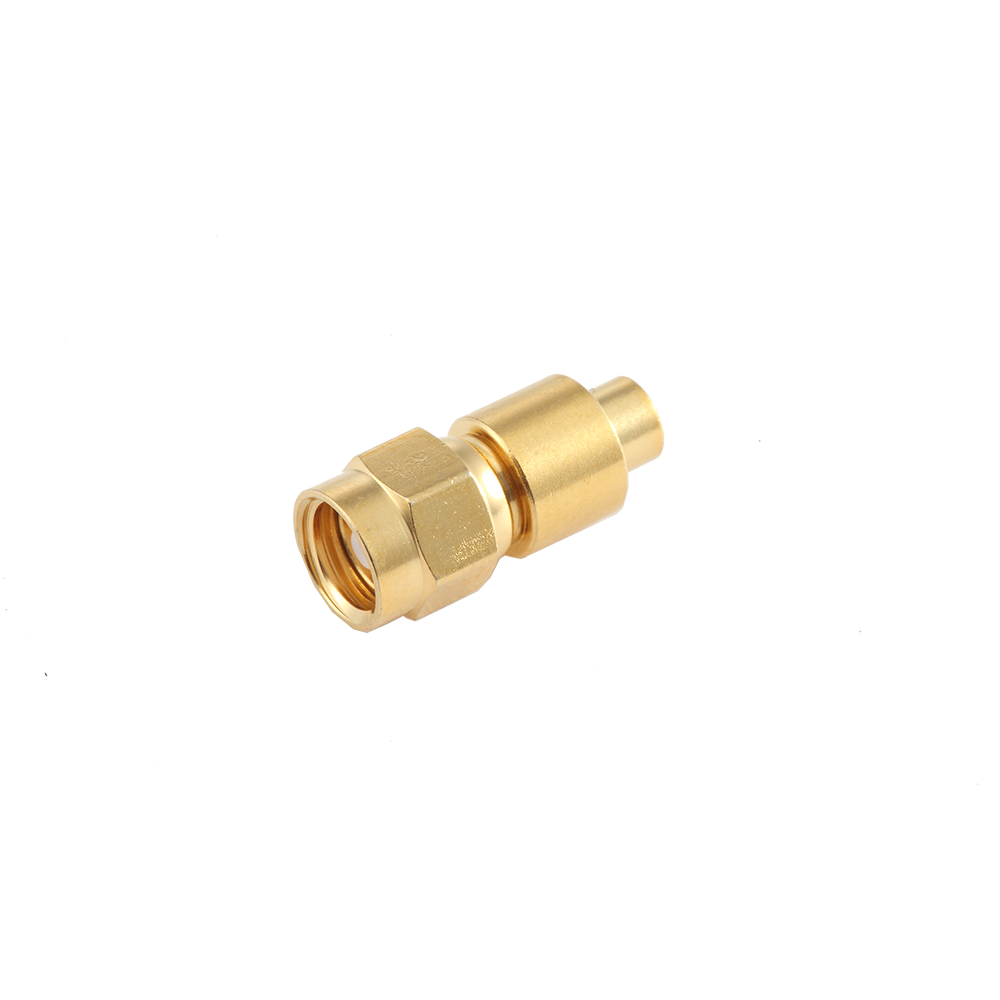
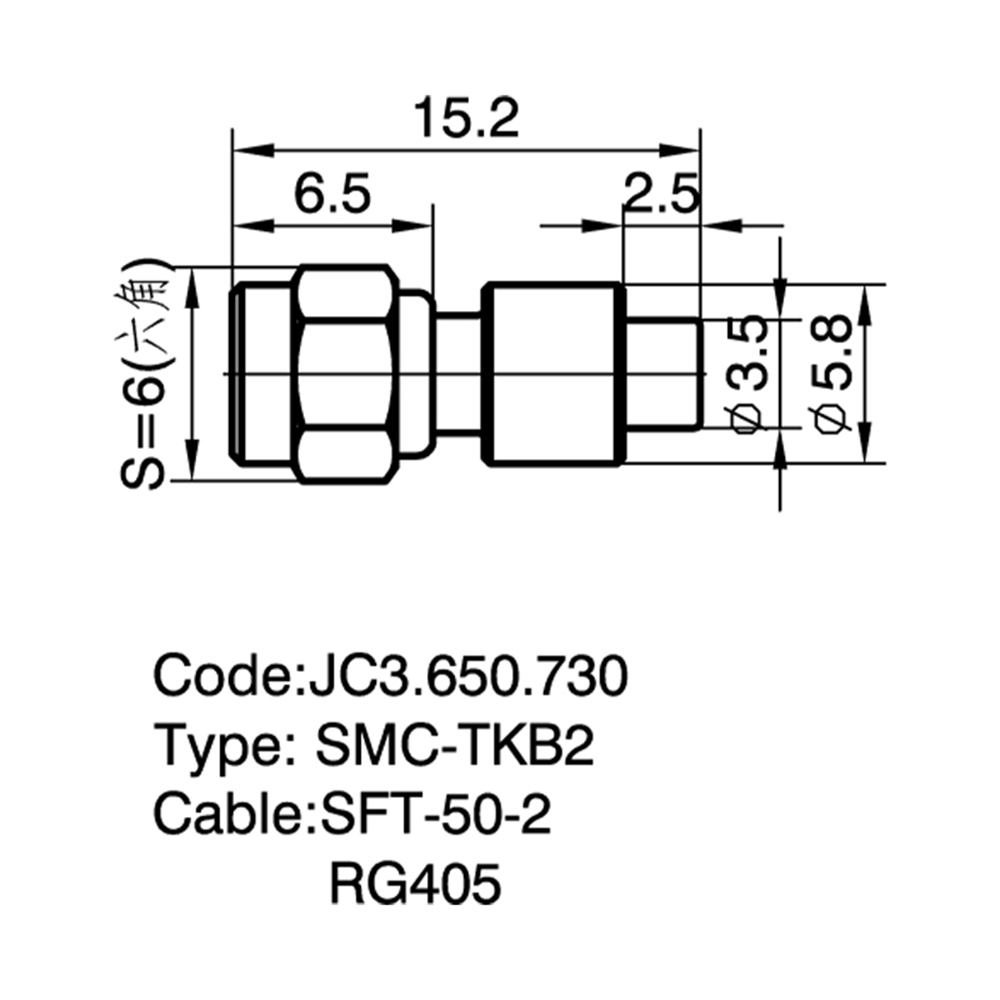
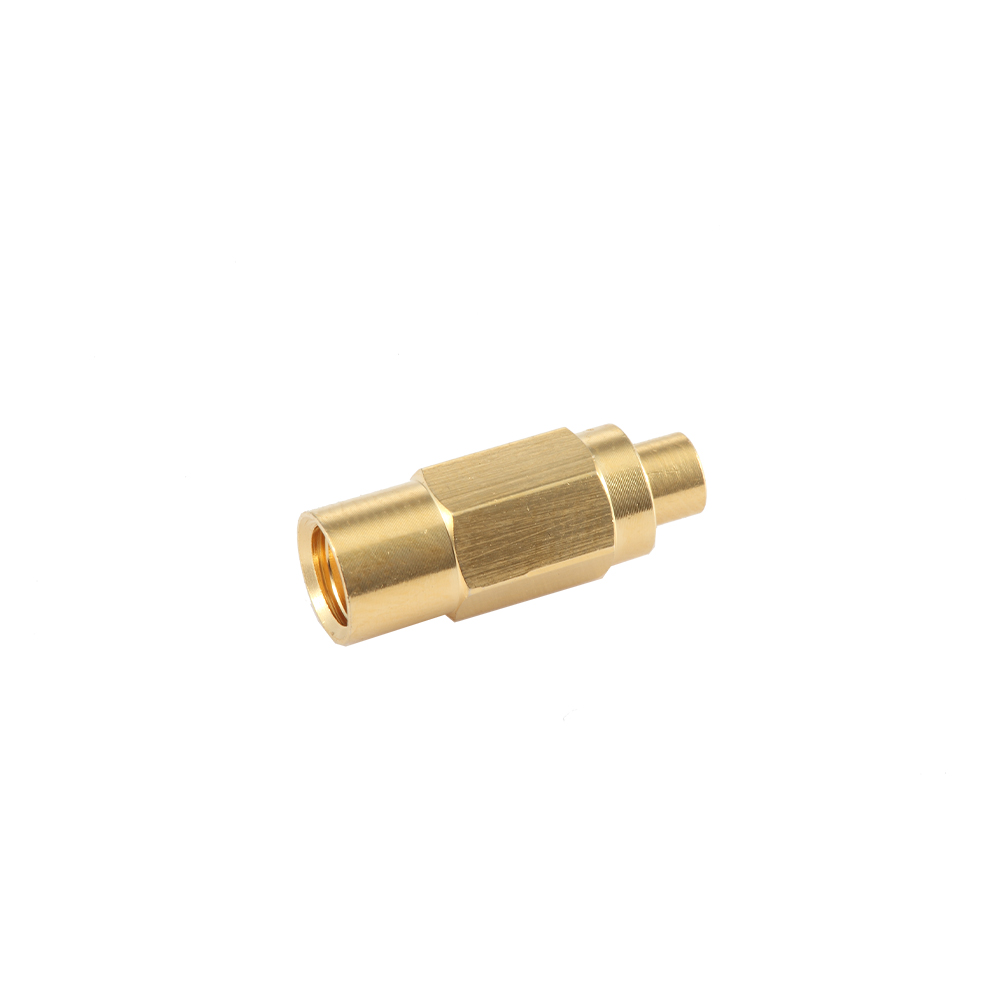
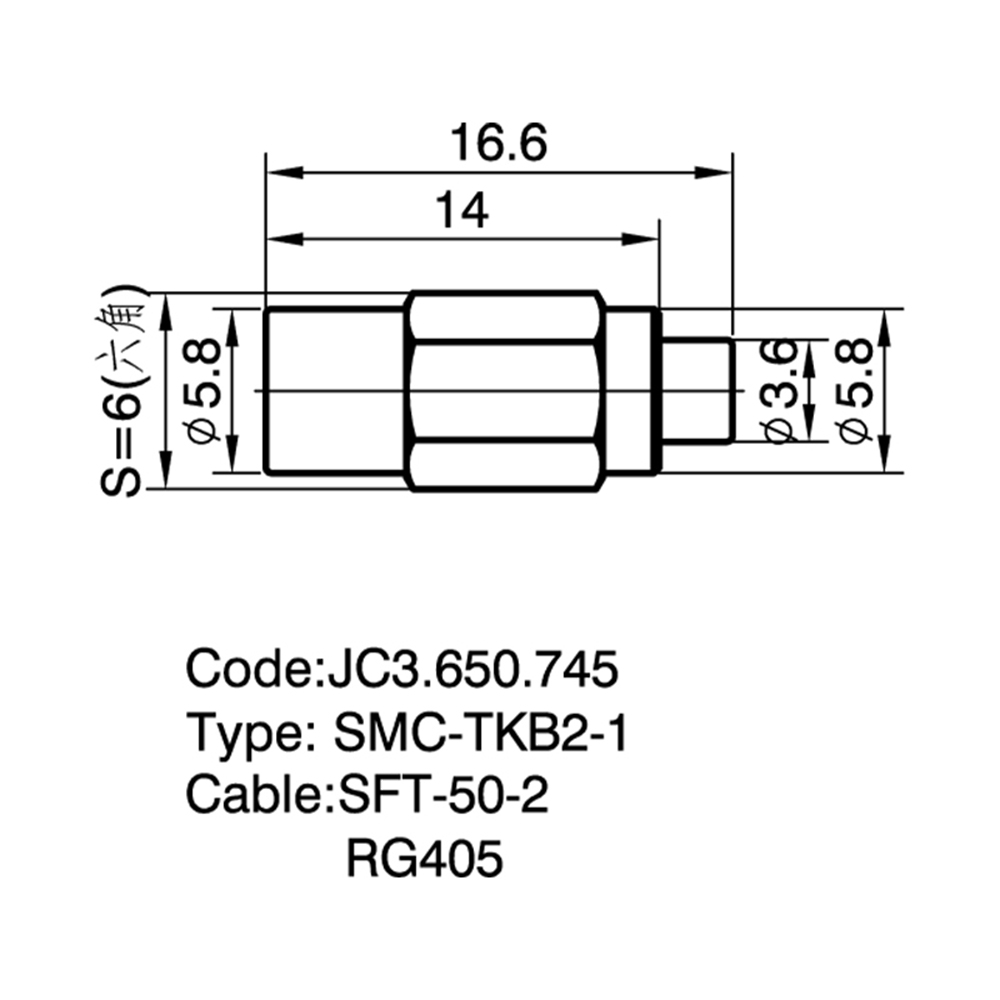
SMC RF coaxial connectors are threaded, sub-miniature interconnects designed for semi-flexible and semi-rigid coaxial cable. The coupling nut uses a 10-32 UNF thread, which keeps the mating interface compact while providing a stable, vibration-resistant connection between two mating halves. Because SMC RF coaxial connectors are engineered around a fixed-mount, threaded coupling rather than a snap-on interface, they are typically selected for permanent or semi-permanent installations inside enclosures, test modules, and cable assemblies where repeated mating is not required but connection reliability under shock and vibration is.
Core Function and Structure
The primary function of an SMC connector is to maintain a controlled 50-ohm transmission path between semi-rigid or semi-flexible cable and a circuit board, module, or another cable assembly, while minimizing signal loss and reflection at the interface. The connector body is machined from brass or beryllium copper with gold, silver, or nickel plating, and the dielectric is typically PTFE, which supports stable electrical performance across a wide temperature range. The threaded coupling mechanism distinguishes SMC connectors from snap-on formats such as SMB or MCX, trading mating speed for a more secure, torque-controlled connection that resists loosening from mechanical vibration.
Common Types and Characteristics
Within the SMC RF coaxial connector category, several configurations are produced to match different mounting and cable requirements:
| Type |
Configuration |
Typical Characteristic |
| SMC Straight Plug/Jack |
Cable-mount, straight body |
Standard in-line termination for semi-rigid or semi-flexible cable runs |
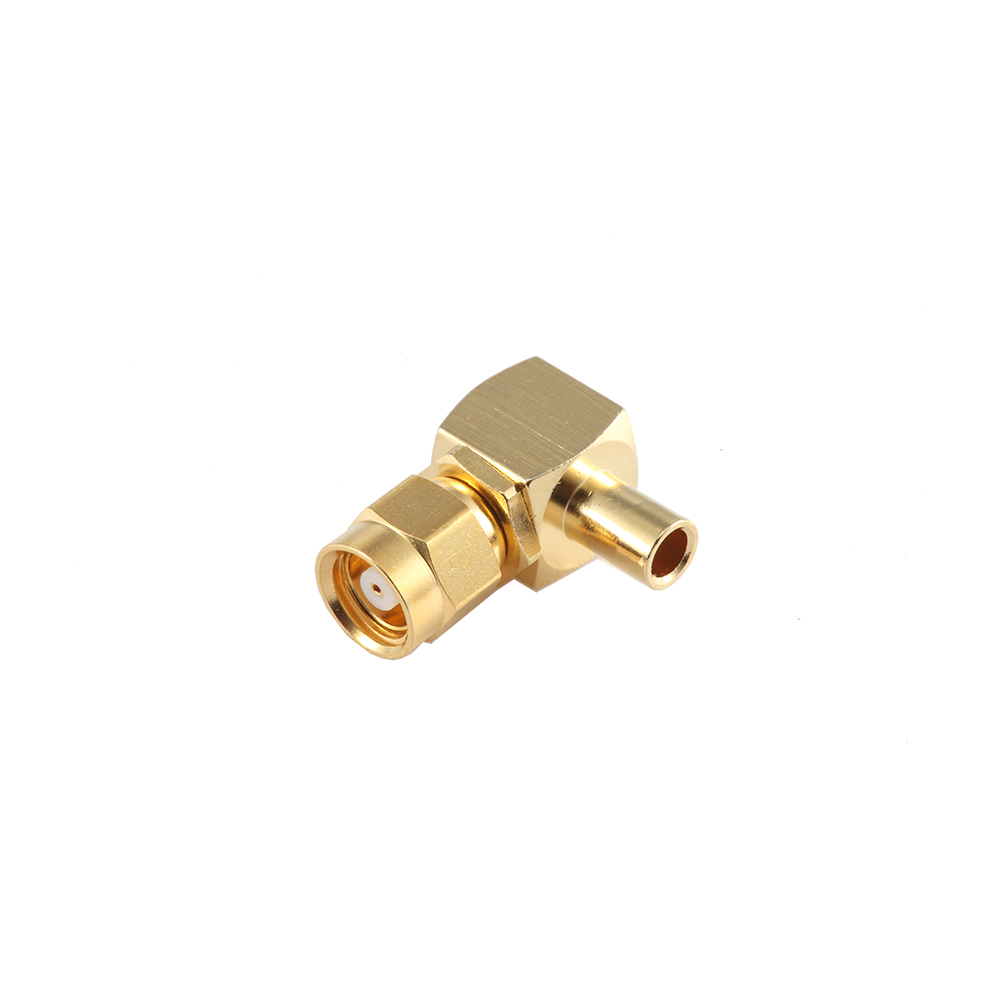
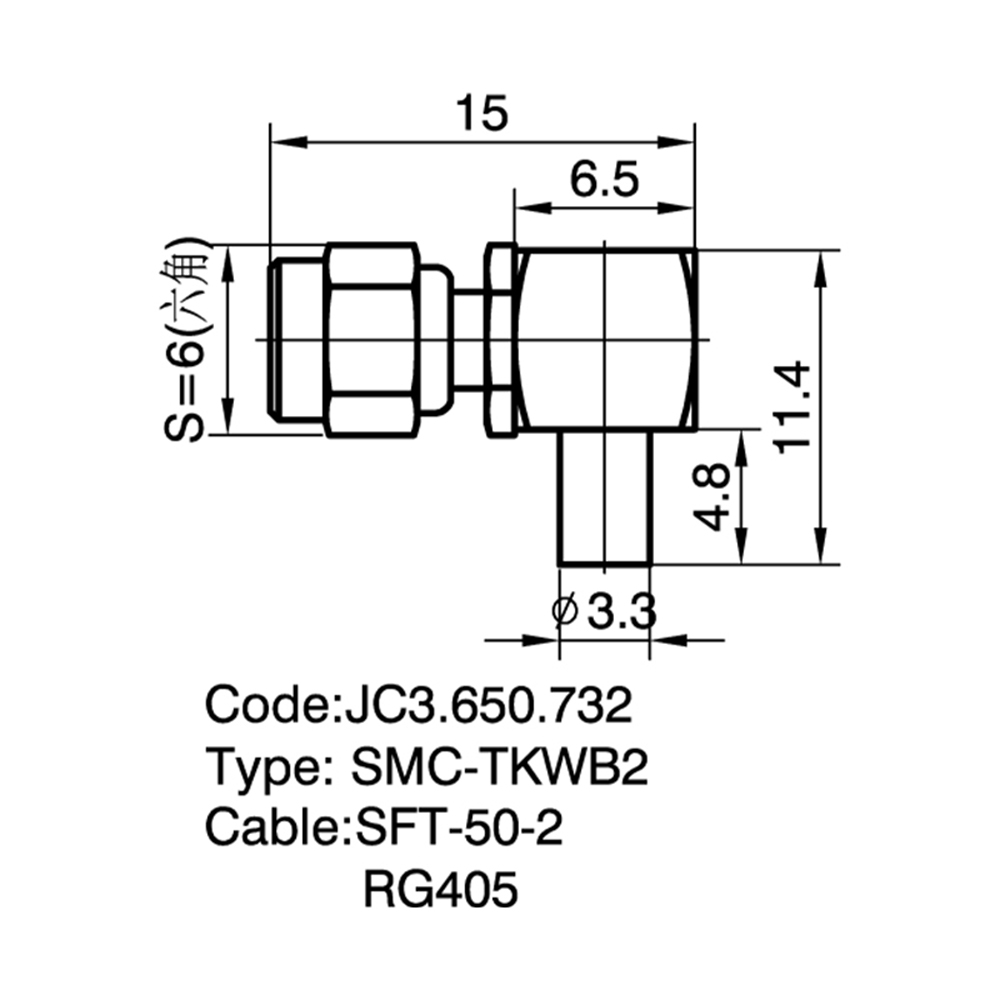
| SMC Right Angle |
90° cable exit |
Used where space above the mounting plane is restricted |
| SMC Bulkhead / Panel Mount |
Flange or threaded bulkhead jack |
Feed-through mounting on chassis or enclosure walls |
| SMC PCB Mount |
Edge or vertical board launch |
Direct connection to circuit boards inside RF modules |
| SMC Limited Detent |
Coupling nut with retention detent |
Allows finger-tight mating without a torque wrench, for lower-vibration applications |
Application Scenarios
SMC RF coaxial connectors are commonly specified in equipment where board space is limited and connections are exposed to mechanical stress, including:
- RF and microwave test instrumentation, where compact, threaded interfaces reduce panel footprint
- Avionics and defense electronics, where the threaded coupling withstands shock and vibration during operation
- Telecommunications base station modules and RF subsystems requiring stable board-to-cable transitions
- Medical and industrial instrumentation using semi-rigid cable assemblies inside sealed enclosures
- Satellite and antenna feed systems where connector reliability over long service life is a design requirement
Selection Points
When specifying SMC RF coaxial connectors for a semi-flexible or semi-rigid cable assembly, the following parameters typically guide selection:
- Cable compatibility: confirm the connector's inner and outer conductor dimensions match the semi-rigid or semi-flexible cable diameter (e.g., .085", .141", .047")
- Impedance: most SMC connectors are rated at 50 ohms; impedance mismatch increases insertion loss and VSWR
- Frequency range: standard SMC connectors typically support DC to 10 GHz; frequency requirements should be checked against the specific series
- Mounting style: straight, right angle, bulkhead, or PCB mount should match the physical layout of the assembly or enclosure
- Plating: gold plating is generally used for signal-critical, low-loss applications; nickel plating is used where cost and durability are prioritized over lowest insertion loss
- Mating cycles and torque rating: the threaded coupling nut should be tightened to the specified torque to maintain consistent electrical contact over the connector's service life
SMC vs. Other Sub-Miniature RF Connectors
| Connector |
Coupling Type |
Typical Frequency |
Best Suited For |
| SMC |
Threaded (10-32 UNF) |
DC–10 GHz |
Applications requiring vibration resistance and a secure locking connection |
| SMB |
Snap-on |
DC–4 GHz |
Frequent mating/unmating, moderate space constraints |
| MCX |
Snap-on |
DC–6 GHz |
Very limited board space, lightweight assemblies |
| SMA |
Threaded (1/4-36 UNF) |
DC–18 GHz |
Higher-frequency applications requiring precision performance |
Frequently Asked Questions
What cable types are SMC RF coaxial connectors designed for?
SMC connectors in this category are manufactured for semi-rigid and semi-flexible coaxial cable, with connector dimensions matched to standard cable outer diameters used in RF and microwave assemblies.
How does SMC differ from SMA in terms of coupling?
Both use a threaded coupling nut, but SMC uses a 10-32 UNF thread while SMA uses a 1/4-36 UNF thread. SMC connectors are generally smaller and rated to a lower maximum frequency than SMA.
Are SMC connectors suitable for high-vibration environments?
Yes. The threaded coupling nut is the primary reason SMC RF coaxial connectors are specified in avionics, defense, and industrial equipment where snap-on connectors may loosen under sustained vibration.
Can SMC connectors be customized for specific mounting requirements?
Standard configurations include straight, right angle, bulkhead, and PCB mount versions. Custom lengths, plating, and cable terminations can be produced to match specific enclosure or board layouts.
What plating options affect SMC connector performance?
Gold-plated contacts are typically used where lower insertion loss and corrosion resistance are required, while nickel-plated bodies are common for general-purpose or cost-sensitive applications.
Yangzhou Jingcheng Electronics Co., Ltd. manufactures SMC RF coaxial connectors alongside a broader range of RF interconnect series, using CNC machining and network analyzer testing to control dimensional and electrical consistency across standard and custom configurations for semi-rigid and semi-flexible cable applications.


 English
 中文简体
中文简体