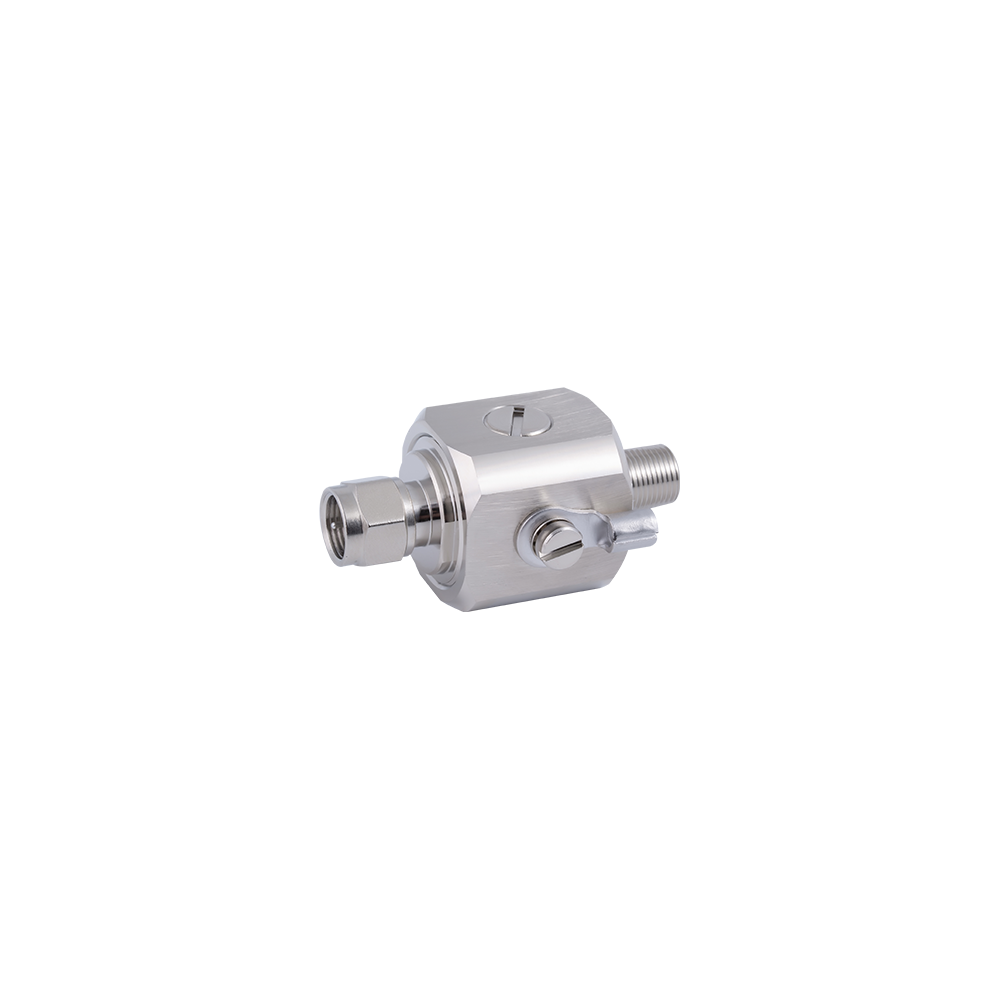
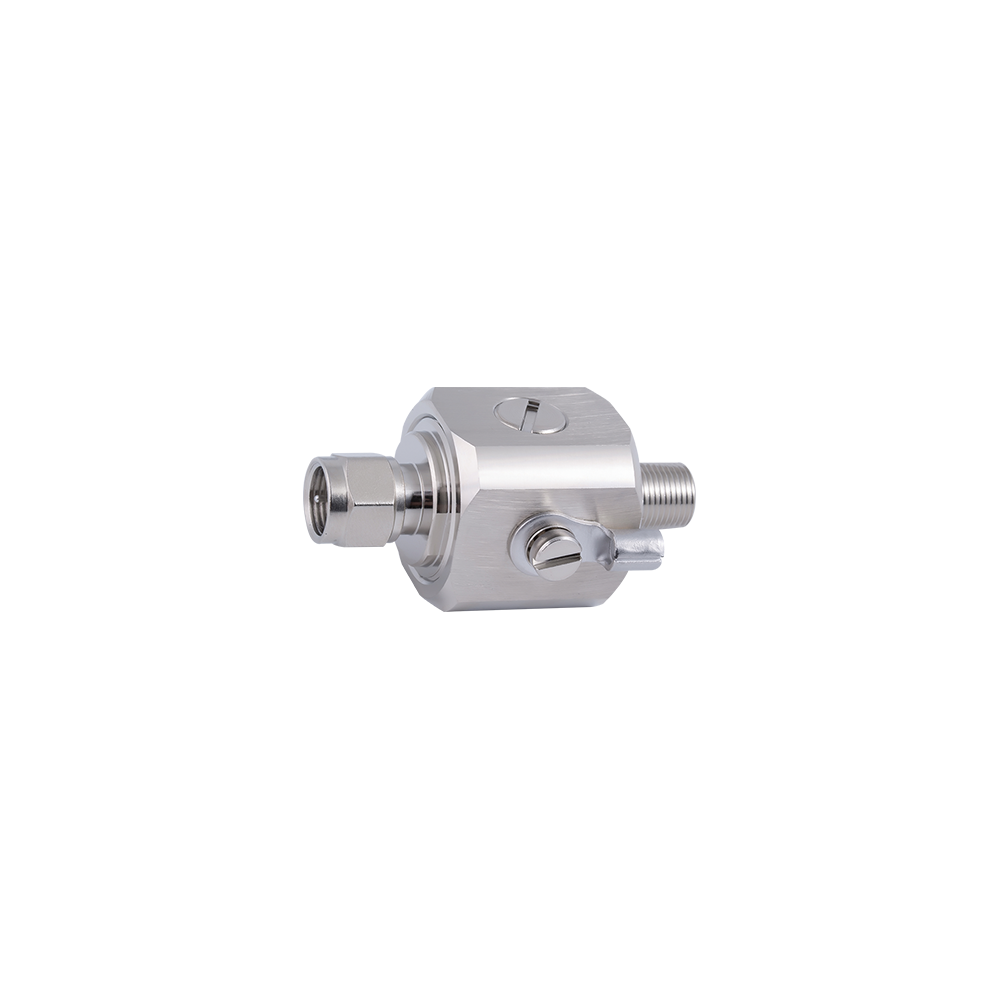
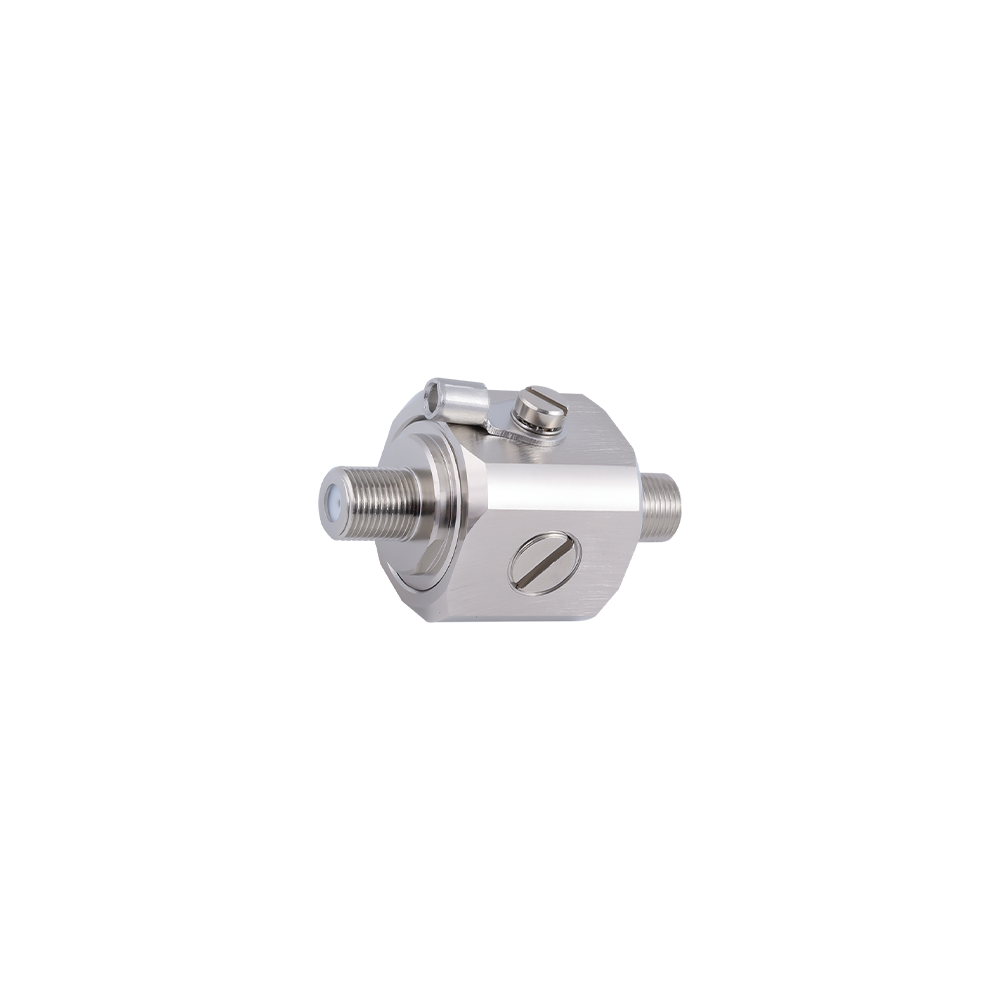
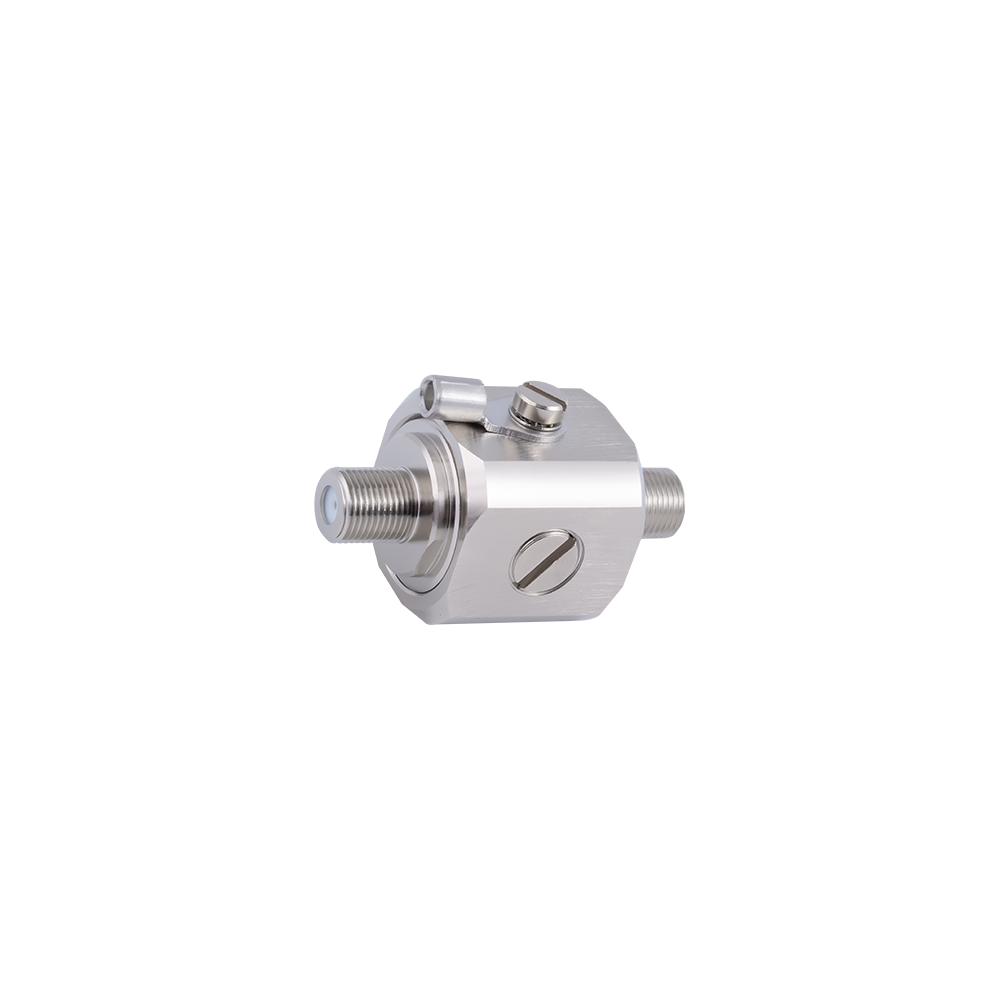
Product Overview The F-Type Coaxial Lightning Protector from Yangzhou Jingcheng Electronics provides cost-effective surge suppression at the ubiquitous F connector interface used throughout cable television (CATV), satellite dish, and DOCSIS broadband distribution networks. Designed to be inserted between the outdoor drop cable and indoor equipment, the unit intercepts lightning-induced surges before they reach set-top boxes, cable modems, and distribution amplifiers. Its threaded F interface ensures secure connections on both RG-6 and RG-11 cable plant, while gas-discharge tube protection technology maintains the broadband transparency required by modern downstream and return-path signals.
Key Features F female-to-female inline protector compatible with RG-6 and RG-11 CATV and satellite drop cable GDT protection core with DC-pass capability to support satellite LNB power and DOCSIS ranging signals Operating frequency range from 5 MHz to 2.4 GHz covering full CATV forward and return spectrum plus Ka/Ku-band Weatherproof housing with UV-resistant materials for outdoor pedestal, ground block, and entrance-point mounting Grounding lug compatible with NEC Article 820 and IEC coaxial antenna installation grounding requirements Low insertion loss across the full DOCSIS 3.1 downstream spectrum to maintain MER and BER performance Compact form factor suitable for standard CATV pedestal and splice-closure mounting hardware Threaded coupling ensures vibration-resistant connection in outdoor environments
Typical Applications Residential CATV service entrance grounding blocks Satellite dish coaxial cable protection at building entry point DOCSIS cable modem and CMTS node surge protection MDU (multi-dwelling unit) head-end and amplifier input protection Outdoor IPTV and MATV distribution system nodes
FAQ Q: Does the protector pass DC for satellite LNB power? A: Yes, the DC-pass version supports LNB powering voltage; please specify DC-pass or DC-block requirement when ordering. Q: Is it compatible with DOCSIS 3.1 (full-duplex) systems? A: The 5 MHz–2.4 GHz model covers DOCSIS 3.1 downstream; for extended spectrum (ESD) or full-duplex DOCSIS requirements please contact us for specification confirmation. Q: What grounding conductor size is recommended? A: We recommend following NEC 820.100 or local equivalent standards; the ground lug accepts conductors per those code requirements. Q: Can I get this with compression-style connectors pre-installed? A: Custom cable assembly with pre-installed connectors is available as an OEM service; minimum order quantities apply.
Yangzhou Jingcheng Electronics Co., Ltd., a premier China F-Type Coaxial Lightning Protector Manufacturer and F-Type Coaxial Lightning Protector Factory, was founded in 1999. It is a high-tech enterprise specializing in the R&D and manufacturing of RF coaxial connectors, cable assemblies, and passive microwave components.
Equipped with a comprehensive R&D and production system, the company has obtained international certifications including ISO9001. Adhering strictly to standards such as MIL, IEC and GB, we offer over 30 product series with more than 2,000 specifications, covering SMA, BNC, N-type and other mainstream models. Our products are widely applied in the fields of communications, aerospace, automotive electronics and beyond, and exported to many countries and regions across Europe, America and Asia.
We uphold the tenet of "Quality as the Foundation, Customers as the Core", committed to providing reliable interconnection solutions and professional services for global clients.
F-Type Coaxial Lightning Protector Industry knowledge
1. F-Type Coaxial Lightning Protector Overview
The F-Type Coaxial Lightning Protector is a specialized surge protective device (SPD) designed to safeguard RF transmission lines and sensitive electronic equipment from transient overvoltages induced by lightning strikes, electrostatic discharge, and power line faults[reference:0]. Installed in-line within coaxial cable systems, this device allows normal RF signals to pass with minimal attenuation while diverting dangerous surge energy safely to ground[reference:1].
Yangzhou Jingcheng Electronics Co., Ltd., a premier China Inter-Type Adaptors Manufacturer and Inter-Type Adaptors Supplier founded in 1999, offers a comprehensive range of F-Type Coaxial Lightning Protectors engineered to meet rigorous international standards including MIL, IEC, and GB. With over 30 product series and more than 2,000 specifications covering SMA, BNC, N-type, and F-Type configurations, the company delivers reliable interconnection solutions for communications, aerospace, and automotive electronics applications worldwide.
The F-Type Coaxial Lightning Protector typically operates across a frequency range from DC to 3 GHz, with impedance options of 50 ohms or 75 ohms depending on the application[reference:2][reference:3]. Key electrical characteristics include low insertion loss (typically below 0.2 dB), voltage standing wave ratio (VSWR) under 1.2:1, and maximum discharge current ratings up to 20 kA (8/20 μs waveform)[reference:4][reference:5]. These performance parameters ensure that signal integrity is preserved while providing robust protection against surge events.
Core Functions of F-Type Coaxial Lightning Protector:
Divert transient surge currents to ground before they reach sensitive equipment
Maintain RF signal integrity with low insertion loss and return loss
Protect against lightning-induced overvoltages in antenna feeder systems
Provide bi-directional protection for both transmission and reception paths
Comply with IEC 61643-21 standards for surge protective devices[reference:6]
2. Working Principle and Protection Technologies
The F-Type Coaxial Lightning Protector operates on the principle of transient voltage suppression. Under normal operating conditions, the device remains transparent to RF signals, allowing unimpeded transmission[reference:7]. When a surge voltage exceeds the protection threshold—typically between 90 V and 1,100 V depending on the model—the internal protection element activates and creates a low-impedance path to ground, redirecting the surge current away from the protected equipment[reference:8][reference:9].
(1) Gas Discharge Tube (GDT) Technology
GDT-based F-Type Coaxial Lightning Protectors utilize a sealed gas-filled chamber that ionizes when a voltage surge exceeds the spark-over threshold[reference:10]. Once ionized, the gas becomes conductive, creating a momentary short circuit that diverts surge current to ground. GDT technology offers wide bandwidth capability (DC to 2.5 GHz), DC pass-through functionality, and compact dimensions[reference:11]. These protectors require periodic maintenance, as the gas tube may degrade after multiple surge events[reference:12].
(2) Quarter-Wave Stub Technology
Quarter-wave stub protectors function as a frequency-selective filter. The stub is precisely tuned to a quarter-wavelength of the operating frequency, creating a virtual short circuit at that frequency for surge currents while passing the desired RF signal[reference:13]. This technology is maintenance-free, offers low residual voltage, and exhibits low intermodulation distortion[reference:14]. However, quarter-wave protectors are inherently narrowband and do not pass DC signals, limiting their use in applications requiring DC power injection over the coaxial line[reference:15].
(3) Hybrid Protection Technology
Hybrid F-Type Coaxial Lightning Protectors combine multiple protection elements—such as GDTs, metal oxide varistors (MOVs), and transient voltage suppression (TVS) diodes—to achieve superior surge absorption across a broader range of transient conditions[reference:16]. These multi-stage designs provide faster response times, lower let-through voltages, and enhanced reliability for mission-critical applications[reference:17].
The radar chart above illustrates the comparative performance of three primary protection technologies used in F-Type Coaxial Lightning Protectors. Gas Discharge Tube (GDT) technology offers wide bandwidth and DC pass capability but requires maintenance and exhibits moderate residual voltage. Quarter-wave stub technology is maintenance-free with low residual voltage but lacks DC pass capability and is narrowband. Hybrid technology combines the advantages of both, offering wide bandwidth, DC pass, low residual voltage, and the fastest response speed, though at a higher cost. Yangzhou Jingcheng Electronics Co., Ltd. manufactures all three types, enabling customers to select the optimal protection technology for their specific application requirements.
3. Common Types and Characteristics
F-Type Coaxial Lightning Protectors are available in several configurations to accommodate different system requirements. The primary classification is based on impedance, connector gender, and protection technology.
Table 1: Common F-Type Coaxial Lightning Protector Types and Specifications
Type
Impedance
Frequency Range
Max Discharge Current
Insertion Loss
VSWR
F Male to F Female (GDT)
75 Ω
DC - 2.5 GHz
10 - 20 kA
≤ 0.2 dB
≤ 1.2:1
F Female to F Female (Quarter-Wave)
75 Ω
0.8 - 2.5 GHz
5 - 10 kA
≤ 0.1 dB
≤ 1.1:1
F Male to F Male (Hybrid)
50 Ω / 75 Ω
DC - 3 GHz
20 kA
≤ 0.15 dB
≤ 1.15:1
The selection among these types depends on the specific application. GDT-based F-Type Coaxial Lightning Protectors are ideal for broadband applications requiring DC pass-through. Quarter-wave types excel in narrowband, high-power applications where maintenance access is limited. Hybrid types offer the best overall performance for mission-critical systems where both wide bandwidth and low residual voltage are required[reference:18].
4. Key Performance Specifications
The performance of an F-Type Coaxial Lightning Protector is defined by several critical electrical parameters that directly impact system reliability and signal quality.
The horizontal bar chart above presents the typical performance range for F-Type Coaxial Lightning Protectors manufactured by Yangzhou Jingcheng Electronics Co., Ltd. Insertion loss values below 0.2 dB ensure that signal attenuation remains negligible, preserving the integrity of transmitted RF signals. VSWR values below 1.2:1 indicate excellent impedance matching, minimizing signal reflections that could degrade system performance[reference:19]. Maximum discharge current ratings from 5 kA to 20 kA (8/20 μs waveform) provide robust protection against both direct and induced lightning strikes[reference:20]. The wide operating temperature range of -40°C to +90°C ensures reliable operation in diverse environmental conditions[reference:21]. Impulse life ratings of 400 surges at 500 A demonstrate the durability and long-term reliability of these protection devices[reference:22].
5. Application Scenarios
F-Type Coaxial Lightning Protectors are deployed across a wide spectrum of industries and applications where coaxial transmission lines are exposed to lightning risks. The device is typically installed at the boundary between lightning protection zones (LPZ 0A-1 and subsequent zones)[reference:23][reference:24].
(1) Telecommunications and Broadcasting
In cellular base stations, satellite communication systems, and broadcast television facilities, F-Type Coaxial Lightning Protectors protect transceivers, amplifiers, and antenna feeder systems from lightning-induced surges[reference:25]. These installations often feature outdoor antennas mounted on towers or rooftops, where exposure to lightning strikes is significant[reference:26].
(2) Cable Television and Satellite Systems
CATV networks, direct broadcast satellite (DBS) installations, and cable modems utilize 75-ohm F-Type Coaxial Lightning Protectors to safeguard set-top boxes, receivers, and distribution amplifiers[reference:27][reference:28]. The protectors are typically installed at the point of entry into the building or immediately before the protected equipment.
(3) Aerospace and Defense
In aerospace and defense applications, F-Type Coaxial Lightning Protectors are employed in airborne communication systems, radar installations, and ground-based antenna arrays[reference:29]. These applications often require hybrid or multi-stage protection to meet stringent reliability and performance requirements[reference:30].
(4) Industrial and Security Systems
Closed-circuit television (CCTV) systems, wireless industrial sensors, and security monitoring networks rely on F-Type Coaxial Lightning Protectors to prevent surge-related damage to cameras, recorders, and transmission equipment[reference:31][reference:32]. These protectors are particularly important in outdoor surveillance installations where cameras are exposed to environmental hazards.
The bar chart above illustrates the estimated application distribution of F-Type Coaxial Lightning Protectors across major industry sectors. Telecommunications and broadcasting represent the largest segment at 35%, driven by the extensive deployment of cellular networks and broadcast infrastructure. Cable television and satellite systems account for 30% of deployments, reflecting the widespread use of F-Type connectors in consumer and commercial video distribution. Aerospace and defense applications represent 20%, with industrial and security systems comprising the remaining 15%. Yangzhou Jingcheng Electronics Co., Ltd. serves all these sectors with tailored product solutions that meet the specific requirements of each application environment.
6. Selection Guide and Installation Considerations
Selecting the appropriate F-Type Coaxial Lightning Protector requires careful evaluation of several system parameters and installation factors.
(1) Impedance Matching
The protector impedance must match the system impedance—typically 50 ohms for telecommunications and broadcast applications, or 75 ohms for CATV and satellite systems[reference:33][reference:34]. Mismatched impedance results in signal reflections, increased VSWR, and degraded system performance.
(2) Frequency Range and Bandwidth
The protector's operating frequency range must encompass all system frequencies. Most F-Type Coaxial Lightning Protectors offer coverage from DC to 2.5 GHz or 3 GHz[reference:35][reference:36]. For systems operating above 3 GHz, specialized protectors with extended frequency response may be required.
(3) Surge Current Rating
Select a protector with a maximum discharge current rating that exceeds the anticipated surge exposure. For most outdoor installations, a rating of 10 kA to 20 kA (8/20 μs waveform) provides adequate protection[reference:37]. High-risk installations in lightning-prone regions may require higher ratings.
(4) Installation Best Practices
Proper installation is essential for effective surge protection. The F-Type Coaxial Lightning Protector should be installed as close as possible to the protected equipment, with the grounding terminal connected to a low-impedance ground path using a conductor of at least 2.5 mm² cross-sectional area[reference:38]. The grounding resistance should not exceed 4 ohms[reference:39]. For outdoor installations, weatherproofing measures should be implemented to prevent moisture ingress[reference:40]. The protector should be mounted with F connectors oriented downward to minimize water accumulation[reference:41].
7. Maintenance and Inspection
Regular maintenance ensures the continued effectiveness of F-Type Coaxial Lightning Protectors. While these devices are designed for long-term reliability, periodic inspection is recommended to verify proper operation[reference:42].
(1) Visual Inspection
Inspect the protector housing for signs of physical damage, corrosion, or moisture ingress. Check all coaxial connections to ensure they are tight and properly seated[reference:43]. Examine the grounding connection for tightness and corrosion.
(2) Functional Testing
After a significant surge event, the F-Type Coaxial Lightning Protector should be tested to verify continued functionality. This can be accomplished by removing the protector from the circuit and testing with a surge protection tester or by checking system performance with and without the protector in place[reference:44]. If system operation returns to normal after removing the protector, the device has been damaged and requires replacement[reference:45].
(3) Gas Discharge Tube Replacement
For GDT-based F-Type Coaxial Lightning Protectors, the gas discharge tube may need replacement after multiple surge events or at scheduled maintenance intervals[reference:46]. Replacement should only be performed when the system is not transmitting RF power[reference:47]. Always use replacement tubes specified by the manufacturer to ensure proper performance.
(4) Maintenance Schedule
Yangzhou Jingcheng Electronics Co., Ltd. recommends that F-Type Coaxial Lightning Protectors be inspected at least annually, with more frequent inspections for installations in high-risk lightning areas. After any known lightning event in the vicinity, an immediate inspection and functional test should be performed.
8. Frequently Asked Questions
(1) What is the difference between 50-ohm and 75-ohm F-Type Coaxial Lightning Protectors?
The impedance rating must match the system impedance. 50-ohm F-Type Coaxial Lightning Protectors are used in telecommunications, broadcast, and general RF applications. 75-ohm protectors are specifically designed for CATV, satellite, and cable modem systems[reference:48]. Using the wrong impedance protector will cause signal reflections and increased VSWR.
(2) Can an F-Type Coaxial Lightning Protector pass DC power?
GDT-based and hybrid F-Type Coaxial Lightning Protectors typically pass DC, making them suitable for applications where DC power is injected over the coaxial cable, such as powering tower-mounted amplifiers or low-noise block downconverters (LNBs)[reference:49][reference:50]. Quarter-wave stub protectors do not pass DC[reference:51].
(3) How often should an F-Type Coaxial Lightning Protector be replaced?
Replacement frequency depends on exposure to surge events. GDT-based protectors may require tube replacement after 400 surges at 500 A[reference:52]. If the protector shows signs of damage, increased insertion loss, or degraded VSWR, replacement is recommended[reference:53]. Yangzhou Jingcheng Electronics Co., Ltd. products are engineered for long service life under normal operating conditions.
(4) Where should the F-Type Coaxial Lightning Protector be installed?
The protector should be installed at the point where the coaxial cable enters the building or facility, and as close as possible to the protected equipment[reference:54][reference:55]. This placement limits the penetration of lightning currents into the facility and provides the most effective protection for sensitive electronics.
(5) Are F-Type Coaxial Lightning Protectors bi-directional?
Most F-Type Coaxial Lightning Protectors are bi-directional, meaning they provide protection regardless of the direction of signal flow[reference:56][reference:57]. This feature simplifies installation, as either port can be connected to the protected equipment.
9. Product Quality and Compliance
Yangzhou Jingcheng Electronics Co., Ltd. manufactures F-Type Coaxial Lightning Protectors in accordance with internationally recognized standards. The company holds ISO9001 certification and adheres to MIL, IEC, and GB specifications[reference:58]. Products are designed to meet the requirements of IEC 61643-21 for surge protective devices connected to telecommunications and signaling networks[reference:59].
The compliance chart above illustrates the key standards and certifications that govern the design and manufacture of F-Type Coaxial Lightning Protectors at Yangzhou Jingcheng Electronics Co., Ltd. ISO9001 certification ensures that quality management systems are in place throughout the production process. Compliance with MIL standards guarantees performance under demanding conditions. Adherence to IEC 61643-21 confirms that products meet international requirements for surge protective devices. GB standards ensure conformity with Chinese national specifications. This multi-standard approach reflects the company's commitment to delivering reliable interconnection solutions for global clients across diverse industries.


 English
 中文简体
中文简体