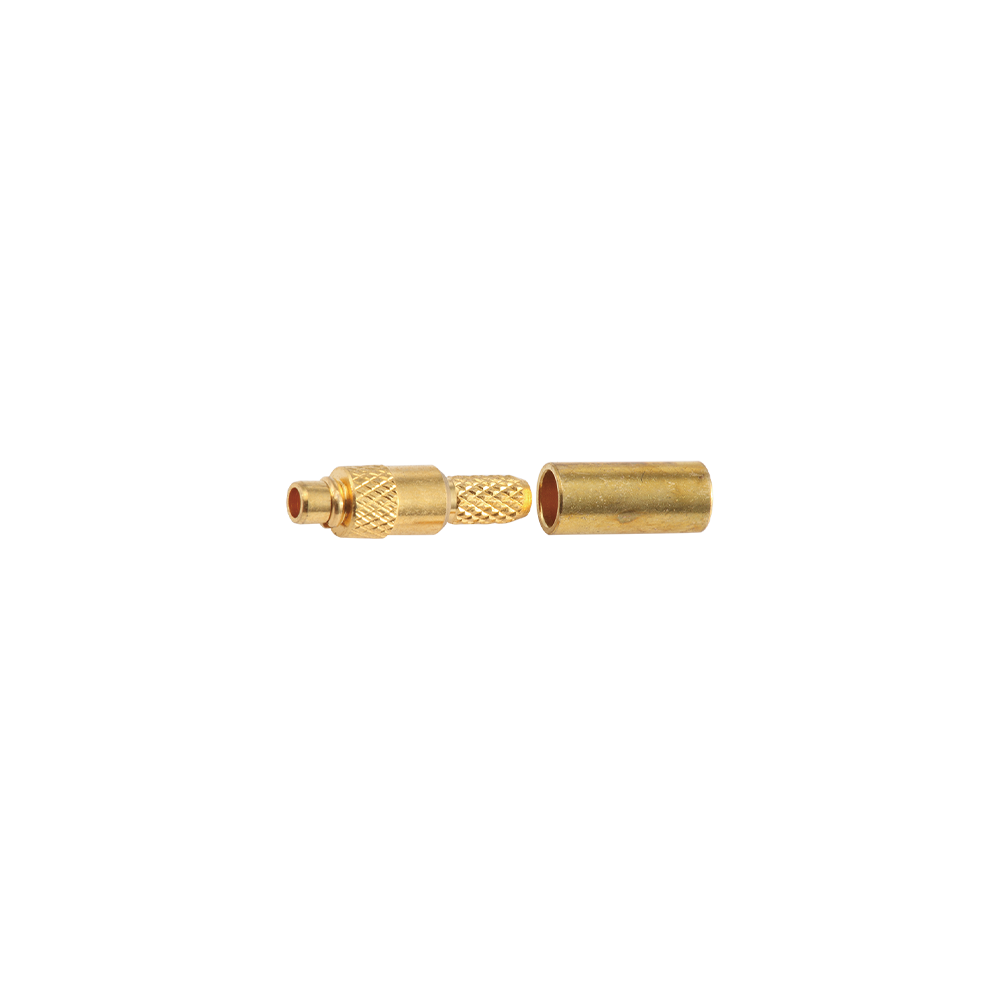
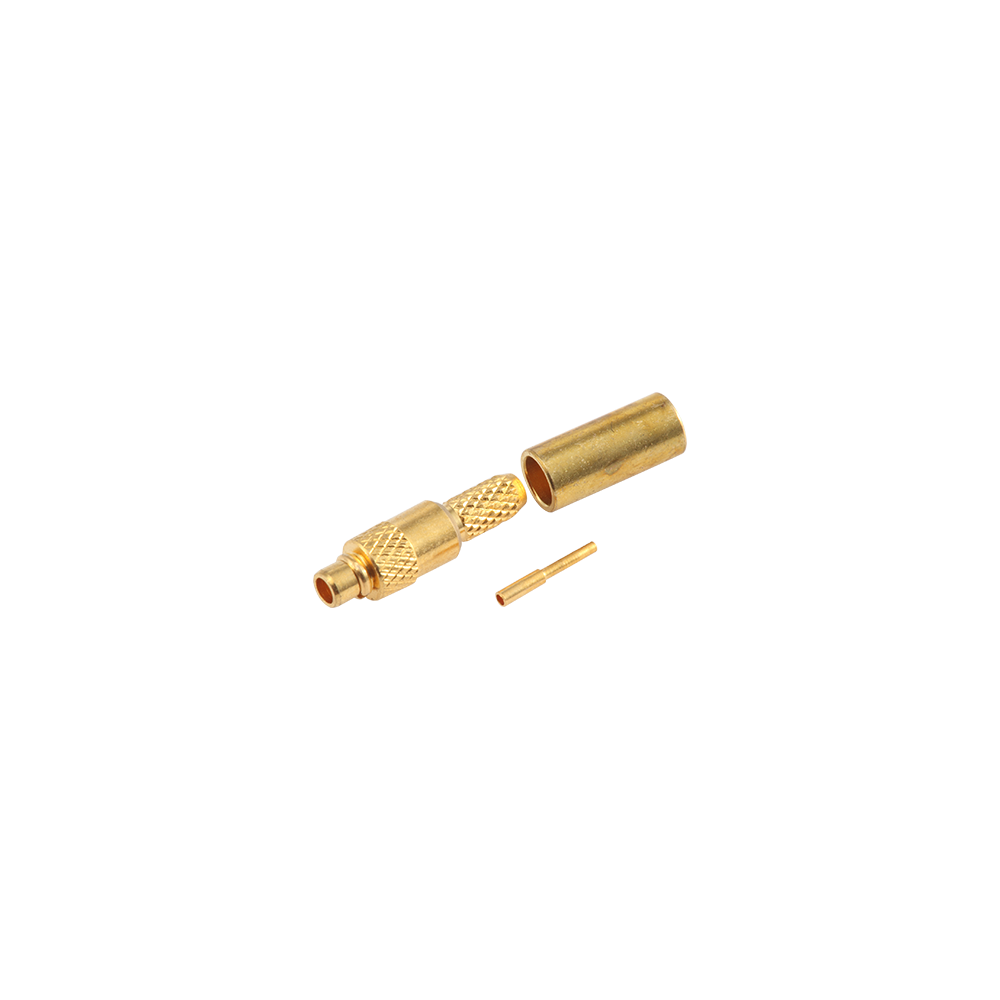
The RPMMCX (Reverse Polarity Micro-Miniature Coaxial) connector is a variant of the standard MMCX connector series, developed to prevent unintended mating with standard MMCX components. The reversal is achieved by switching the position of the center pin and center socket contacts, or by altering the coupling geometry, depending on the specific design convention applied by the manufacturer. As a company engaged in the design, development, and production of RF coaxial connectors since 1999, Yangzhou Jingcheng Electronics Co., Ltd (JC Company) manufactures MCX, MMCX, and related reverse polarity connector series for use with flexible coaxial cable assemblies.
RPMMCX connectors retain the same snap-on coupling mechanism, small physical footprint, and broadband frequency capability as standard MMCX connectors. Their primary function is compliance-related: many regulatory frameworks for wireless equipment, particularly in the 2.4 GHz and 5 GHz bands used by Wi-Fi and similar radio systems, require reverse polarity interfaces on external antenna connections to reduce the likelihood of unauthorized antenna substitution.
Core Technical Characteristics
The technical characteristics of RPMMCX connectors are generally consistent with the underlying MMCX platform, with the polarity reversal being the distinguishing feature. Typical parameters include the following.
| Parameter |
Typical Value |
| Impedance |
50 ohm |
| Frequency range |
DC to 6 GHz |
| Coupling type |
Snap-on, quick connect/disconnect |
| Outer diameter |
Approximately 2.4 mm at the interface |
| Mating cycles |
Rated for hundreds of mating cycles |
| Typical VSWR |
Low VSWR within specified frequency band |
Flexible Cable Compatibility
RPMMCX connectors are commonly terminated onto small-diameter flexible coaxial cables such as RG-174, RG-178, and micro-coaxial cables in the 1.13 mm to 1.37 mm diameter range. The choice of cable affects attenuation, flexibility, and bend radius, and is generally selected based on the physical routing requirements of the end application rather than the connector interface itself.
Common Cable Pairings
- RG-174: A widely used flexible cable offering a balance of flexibility and moderate attenuation, suitable for shorter interconnects.
- RG-178: A smaller diameter cable with higher attenuation, used where space constraints are more significant than loss requirements.
- 1.13 mm / 1.37 mm micro-coax: Very small diameter cables used in compact modules, internal antenna connections, and space-limited enclosures.
RPMMCX Compared with Related Connector Types
RPMMCX is one of several miniature connector types used in similar applications. The table below outlines general distinctions among related types produced within JC Company's MCX and MMCX product lines.
| Connector Type |
Size Reference |
Coupling |
Polarity Note |
| MMCX |
Smaller than MCX |
Snap-on, 360 degree rotation |
Standard polarity |
| RPMMCX |
Same as MMCX |
Snap-on |
Reversed pin/socket arrangement |
| MCX |
Larger than MMCX |
Snap-on |
Standard polarity, reverse polarity variant also available |
| SMA / RP-SMA |
Larger than MCX/MMCX |
Threaded coupling |
Reverse polarity variant widely used on external antennas |
Application Areas
RPMMCX connectors on flexible cable assemblies are applied across several categories of RF and wireless equipment.
- Wireless networking equipment: Wi-Fi routers, access points, and wireless modules that require external or detachable antennas.
- IoT and M2M devices: Compact wireless modules where internal cable routing space is limited.
- GPS and GNSS modules: Internal connections between receiver boards and antenna elements.
- Test and measurement equipment: Interconnects requiring frequent connect/disconnect cycles in a small form factor.
Manufacturing and Quality Considerations
Production of RPMMCX connector assemblies for flexible cable involves several process stages: cable stripping and preparation, contact termination (typically by soldering or crimping), connector body assembly, and outer shell attachment. Consistency in these stages affects electrical performance parameters such as insertion loss, return loss, and mechanical retention force.
Typical Quality Control Steps
- Dimensional inspection: Verification of connector interface dimensions against applicable specifications.
- Electrical testing: Measurement of insertion loss, return loss, and VSWR using network analyzers.
- Mechanical testing: Evaluation of mating force, retention force, and cable pull strength.
- Environmental testing: Where required, assessment of performance under temperature cycling and humidity conditions.
As a manufacturer with in-house design, tooling, and precision testing capability, JC Company supports these process stages for MCX, MMCX, and reverse polarity variants alongside its broader RF connector portfolio, which includes 2.92, 2.4, 1.85, SMP, SMA, SMZ, and N-type series, together with related cable assemblies.
Frequently Asked Questions
What distinguishes RPMMCX from standard MMCX
The distinguishing feature is the position of the center contact. In a standard MMCX plug, the center pin protrudes from the plug; in a reverse polarity plug, this arrangement is switched so that the mating geometry differs from the standard configuration, preventing cross-mating between the two types.
Why is reverse polarity required in some applications
Reverse polarity interfaces are specified in certain regulatory frameworks for radio equipment operating in unlicensed frequency bands, with the intent of limiting substitution of non-approved antennas on equipment with detachable antenna connections.
Can RPMMCX connectors be used with any flexible cable
Cable selection depends on the required cable outer diameter matching the connector's termination specification, along with the electrical and mechanical requirements of the application, including attenuation, flexibility, and bend radius.
What is the typical mating cycle rating
MMCX-family connectors, including reverse polarity variants, are generally rated for several hundred mating cycles under normal use conditions, consistent with their intended use in devices requiring periodic reconnection rather than continuous connect/disconnect cycling.