TNC Bulkhead Mount RF Coaxial Connectors Custom

Home / Products / Coaxial Connectors / TNC RF Coaxial Connectors / TNC Bulkhead Mount RF Coaxial Connectors

TNC Bulkhead Mount RF Coaxial Connectors Manufacturer

Product Overview
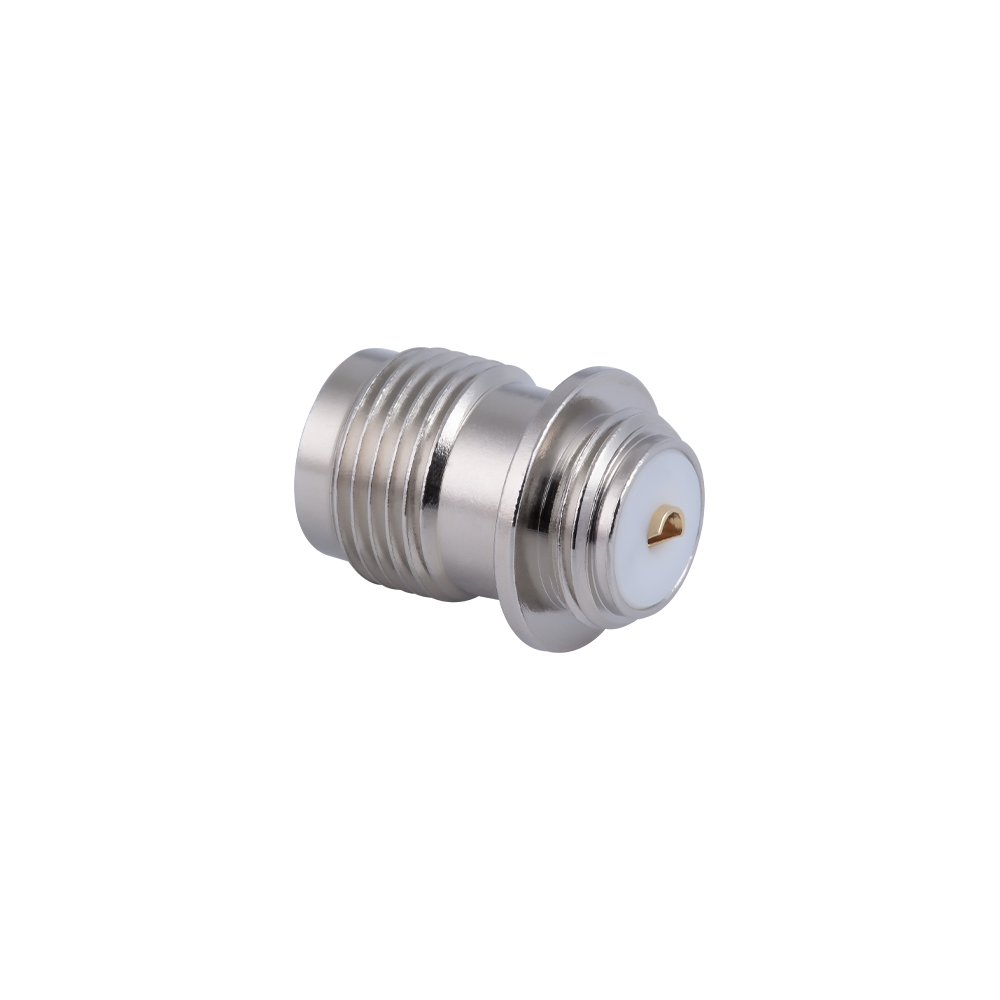
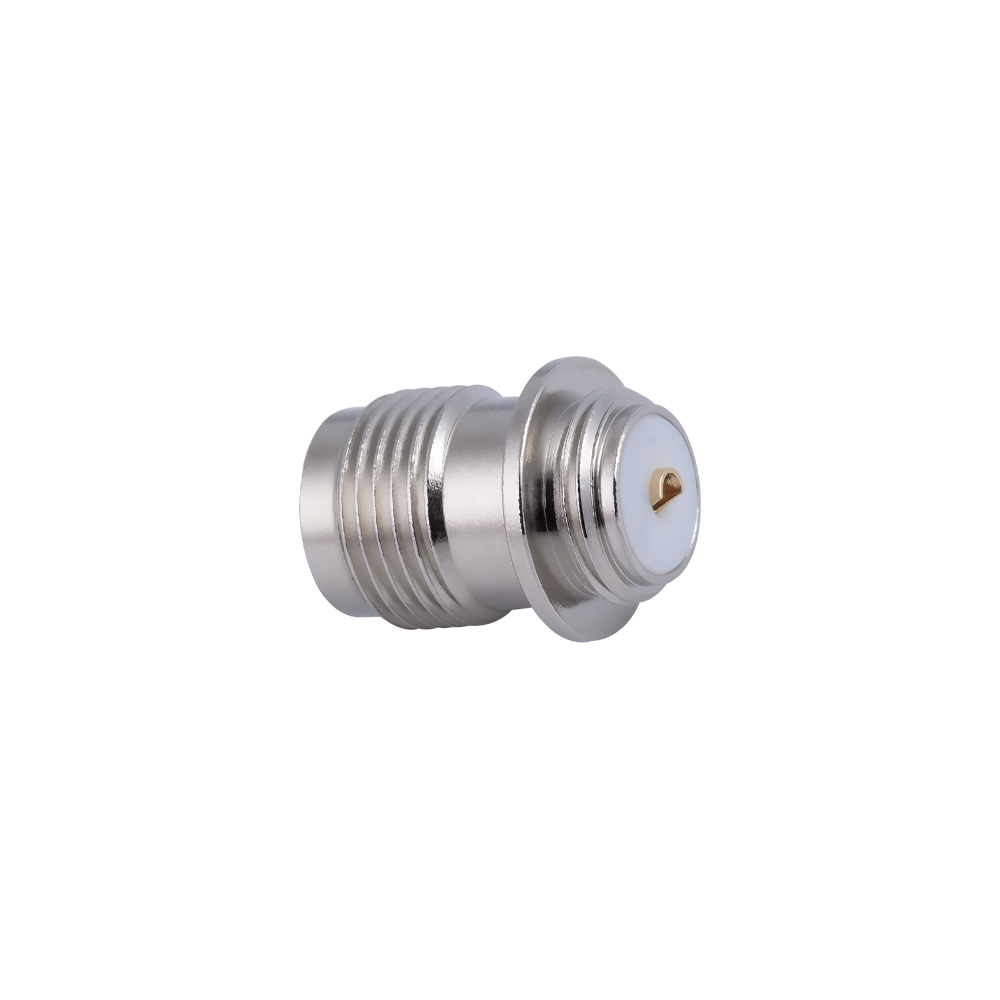
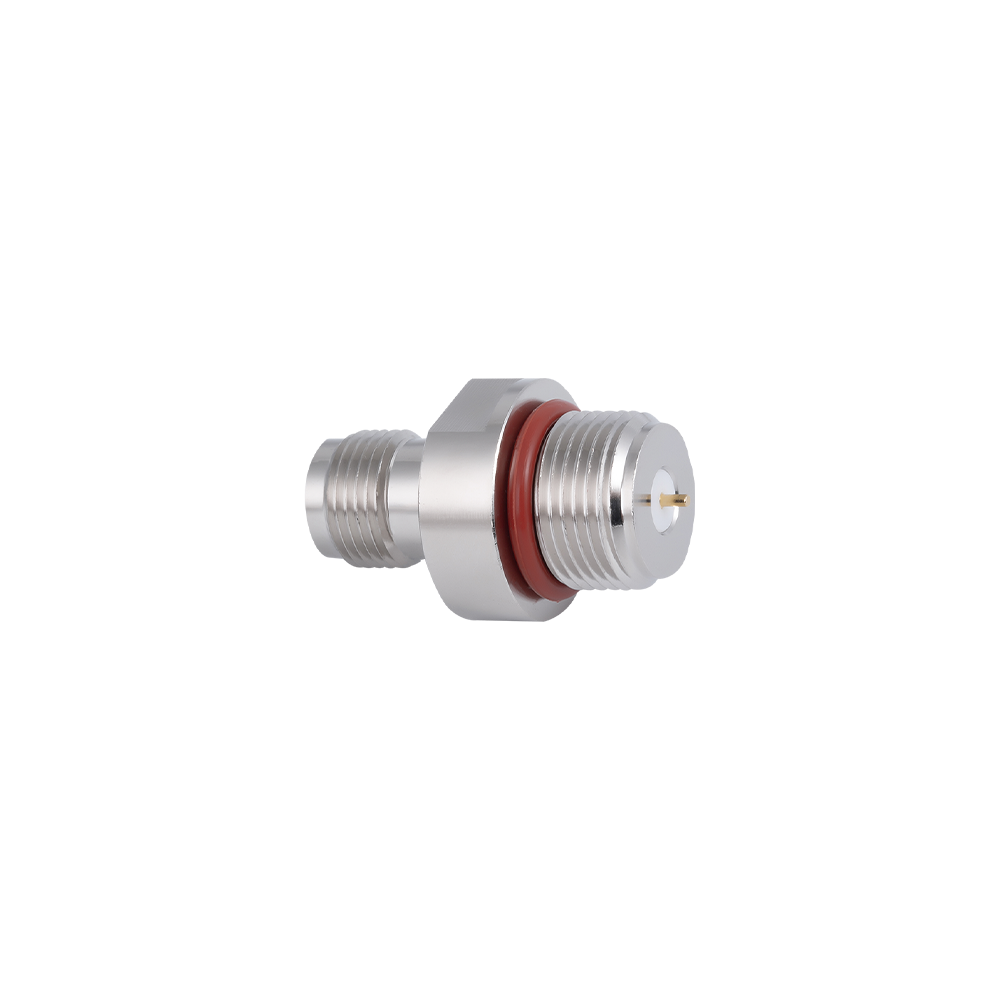
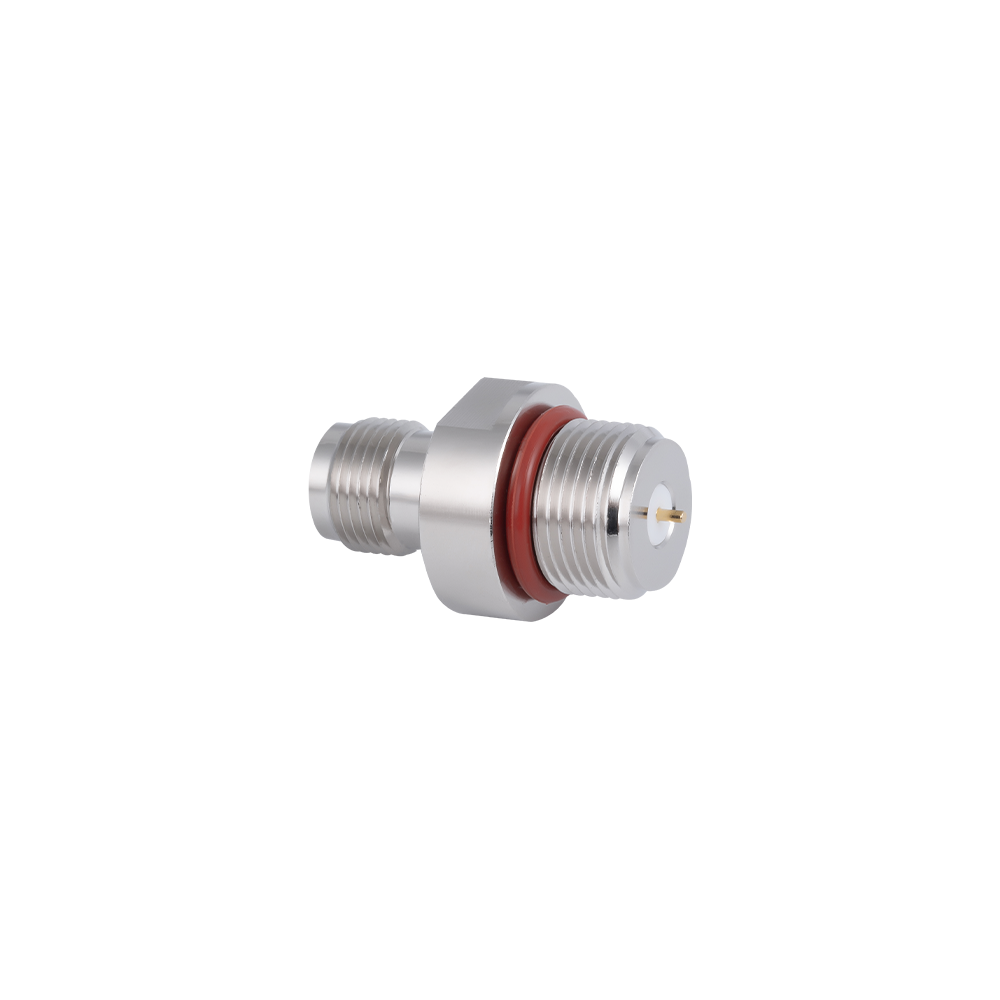
TNC Bulkhead Mount (Nut Mount) Connectors provide single-hole panel feedthrough with the TNC series' hallmark threaded-coupling and 11 GHz operating bandwidth. A single hex nut on the inner-panel side clamps the connector body against the panel face, making installation straightforward with a standard wrench and minimizing the panel area consumed per RF port.

The bulkhead architecture creates a controlled RF barrier at the panel plane: signals pass through the connector's precision dielectric without interruption while the panel itself isolates cable environments on each side. This is particularly important in rack-mount equipment, where cable management on the equipment interior must remain independent of the cable harness on the system wiring side. TNC bulkhead connectors support this partition cleanly up to 11 GHz, covering the full operating range of most microwave wireless and radar subsystems.

Key Features
Single 12.7 mm (0.500") panel hole installation compatible with standard TNC chassis punch tools; no secondary drilling or tapping required.
Hex nut clamping accommodates panel thicknesses from 1.0 mm to 6.0 mm in the standard version; extended-thread (long-body) variants available for panels up to 10 mm.
Rear interface options: solder cup for field cable assembly, straight and right-angle solder tails for PCB direct mount, and crimp sleeve for cable harness production.
50Ω impedance maintained across the panel feedthrough; DC-isolated (capacitive block) body version available as a configured option.
Body plating: nickel over brass (standard), gold over nickel (low-contact-resistance critical circuits), and black-chrome or passivated stainless (military and tactical equipment aesthetics and corrosion performance).
RoHS-compliant materials and lead-free solder-compatible termination as standard; full material declaration available per IPC-1752 Class C.

Competitive Advantages
Large stock inventory of standard TNC bulkhead configurations means sample delivery within days and production order fulfillment in 2–4 weeks, supporting OEM customers who cannot absorb long connector lead times into their assembly schedules.
Jingcheng's production reference to DIN EN 122930 (TNC connector standard) alongside MIL-C-39012 and IEC 169-16 ensures that connectors dimensionally qualify against both European and North American test lab acceptance criteria—reducing the frequency of connector re-qualification when a customer's target market changes.
As a direct manufacturer rather than a distributor, Jingcheng can accommodate non-standard thread-length, panel thickness, or rear-termination combinations as engineering specials without the extended lead times and high NRE costs typical of reseller-sourced customs.

Typical Applications
Portable and vehicle-mounted military radio equipment RF panel ports
Wireless base station outdoor unit (ODU) housing RF feedthroughs
Unmanned aerial vehicle (UAV) and drone control and telemetry systems
Industrial microwave sensor and process control equipment enclosures
Laboratory test bench fixed-installation RF panel jacks

FAQ
Q: What is the contact resistance specification for the TNC bulkhead connector?
A: Contact resistance (inner conductor) for standard gold-plated versions is typically ≤ 5 mΩ; nickel/silver-plated versions are ≤ 10 mΩ. These values are measured per IEC 60512-2. Specific contact resistance test data from production lots is available in the inspection report issued with each order.
Q: Is a waterproof (IP67) version available for outdoor enclosure applications?
A: Yes. An IP67-rated version with elastomer O-ring at the panel interface is available as a configured option. The O-ring is selected for the operating temperature range; silicone O-rings are standard, with EPDM available for hydrocarbon-exposure environments. Specify IP rating and temperature range when ordering.
Q: Can the same connector part number be used for both 50Ω and 75Ω system integration?
A: TNC connectors are standardized at 50Ω only—there is no 75Ω TNC series equivalent. For 75Ω system requirements, the BNC or F-series connectors are the appropriate alternatives. Please consult our sales team if you are evaluating impedance options for a new design.

Temperature Range

-55~+155℃

Impedance

50Ω

Frequency Range

DC~11GHz

Insulation resistance

≥5000MΩ

Insertion loss

≤0.20 dB/1GHz

VSWR

Straight ≤1.22/3GHz

Right angle

≤1.30/3GHz

Durability(mating)

≥500 (cycles)

About
Yangzhou Jingcheng Electronics Co., Ltd.

Yangzhou Jingcheng Electronics Co., Ltd., a premier China TNC Bulkhead Mount RF Coaxial Connectors Manufacturer and TNC Bulkhead Mount RF Coaxial Connectors Supplier, was founded in 1999. It is a high-tech enterprise specializing in the R&D and manufacturing of RF coaxial connectors, cable assemblies, and passive microwave components.
Equipped with a comprehensive R&D and production system, the company has obtained international certifications including ISO9001. Adhering strictly to standards such as MIL, IEC and GB, we offer over 30 product series with more than 2,000 specifications, covering SMA, BNC, N-type and other mainstream models. Our products are widely applied in the fields of communications, aerospace, automotive electronics and beyond, and exported to many countries and regions across Europe, America and Asia.
We uphold the tenet of "Quality as the Foundation, Customers as the Core", committed to providing reliable interconnection solutions and professional services for global clients.

TNC Bulkhead Mount RF Coaxial Connectors Industry knowledge

TNC Bulkhead Mount RF Coaxial Connectors are designed to pass an RF signal through a panel or enclosure wall using a single mounting nut around a threaded body, forming a fixed feedthrough point between the outside and inside of the equipment housing. Because the TNC series already uses a threaded coupling nut for cable mating, TNC Bulkhead Mount RF Coaxial Connectors combine a threaded panel-mounting nut at the rear with a threaded mating interface at the front, giving the entire connection path a consistent, torque-based fixing method from the panel through to the cable. This connector type is typically selected where a round panel penetration is preferred over a flange cutout and where the mounted equipment may be exposed to vibration or repeated handling.

Structural Features and Core Performance

  • Single nut panel fixing: A hex or knurled mounting nut secures the connector body through a round panel cutout, requiring less panel space than a multi-hole flange pattern.
  • Consistent threaded path: Both the panel-fixing nut and the front cable-mating coupling use a threaded engagement, which supports uniform torque-based security along the full signal path.
  • Grounding continuity: The metal body typically bonds to the panel at the mounting point, providing a defined shielding and grounding reference between the connector shell and the equipment chassis.
  • Sealing capability: An O-ring or gasket can be fitted at the panel interface, and combined with a sealed threaded mating connection at the front, supports a more complete moisture barrier across the penetration point.
  • Rear termination options: Solder cup, solder post, crimp, or cable pigtail termination on the internal side connects to internal wiring or a short internal cable segment.

Common Types and Characteristics

TNC Bulkhead Mount RF Coaxial Connectors are generally grouped by grounding configuration and rear termination method.

Common types of TNC bulkhead mount connectors and their characteristics
Type Grounding Configuration Rear Termination Typical Use
Standard Grounded Bulkhead Shell bonded to panel Solder cup / solder post General equipment feedthrough ports
Isolated (Insulated) Bulkhead Shell separated from panel ground Solder cup / solder post Circuits requiring shell-to-ground isolation
Sealed Bulkhead with O-Ring Shell bonded to panel, sealed Solder cup with rear seal option Outdoor or weather-exposed panels
Bulkhead with Cable Pigtail Shell bonded to panel Rear cable tail Short internal signal jumpers

Application Scenarios

  • Signal feedthrough points on vehicle-mounted radio and mobile communication enclosures;
  • Round panel penetrations on outdoor base stations and remote radio unit cabinets;
  • Shipboard, aerospace, and field-deployed equipment requiring a sealed, vibration-resistant panel port;
  • Rear-panel RF input/output ports on rack-mounted test and communication instruments;
  • Antenna feed connections on GSM, CDMA, and GPS antenna system enclosures.

Selection Guidelines

  1. Panel cutout and thickness: Confirm the round mounting hole diameter and panel thickness range supported by the connector's threaded body and nut length.
  2. Grounding requirement: Determine whether the connector shell should bond directly to the panel for grounding, or whether an isolated design is needed to keep the shell separated from chassis ground.
  3. Sealing level: For outdoor, vehicle-mounted, or marine installations, check whether O-ring or gasket sealing is available at the panel penetration point.
  4. Rear termination: Select solder cup, solder post, crimp, or pigtail termination based on how the connector interfaces with internal cabling.
  5. Vibration exposure: Where the panel port is subject to vibration, the threaded mounting nut and threaded front mating interface of TNC Bulkhead Mount RF Coaxial Connectors are relevant factors compared with a bayonet-style bulkhead connector.

TNC vs BNC Bulkhead Mount Comparison

Comparison between TNC and BNC bulkhead mount connector interfaces
Comparison Item TNC Bulkhead Mount BNC Bulkhead Mount
Front mating method Threaded coupling nut Bayonet quarter-turn coupling
Panel fixing method Threaded mounting nut Threaded mounting nut
Vibration resistance at mating point Higher Moderate
Typical application Vehicle-mounted, marine, and vibration-exposed panels Indoor instrument panels, frequent connect/disconnect use

Frequently Asked Questions

Q1: What distinguishes a TNC bulkhead mount connector from a TNC flange mount connector?

A bulkhead mount connector is secured to the panel through a round cutout using a single mounting nut, while a flange mount connector uses a flat flange base with multiple screw holes through a rectangular or square cutout. The bulkhead design generally requires less panel space for the same connector function.

Q2: Is the panel mounting nut the same thread as the front cable-mating coupling nut?

The panel mounting nut and the front mating coupling are separate threaded features on the connector body, each serving a different function; they are not the same thread and are not intended to be interchanged.

Q3: Does a TNC bulkhead connector need to be grounded to the panel?

A standard bulkhead design typically bonds the connector shell to the panel for grounding continuity. An isolated or insulated version is available where the application specifically requires the shell to remain electrically separated from the panel.

Q4: Is additional sealing needed for TNC bulkhead connectors used outdoors or in vehicles?

For outdoor, vehicle-mounted, or marine installations, a bulkhead connector with O-ring or gasket sealing at the panel interface, combined with a sealed mating cable assembly, is generally recommended to reduce moisture entry at the penetration point.

Manufacturing Note

Yangzhou Jingcheng Electronics Co., Ltd was founded in 1999 and specializes in the design, development, production, and sales of RF coaxial connectors, covering BNC, TNC, N, SMA, 2.92, 2.4, 1.85, and other series, together with related Adapters and 0~50GHz high-frequency cable assemblies. For TNC Bulkhead Mount RF Coaxial Connectors, dimensional consistency of the mounting nut, threaded body, and sealing components is a relevant factor in panel-mount reliability, and the company's testing equipment supports verification across different grounding and sealing configurations.