English
 中文简体
中文简体
A 12G BNC connector is a 75-ohm RF coaxial connector engineered to carry 12G-SDI signals up to 12 Gbps, supporting 4K and 8K video over a single cable. It is not merely a "standard BNC" with a different part number; its electrical performance, mechanical tolerances, and shielding design are optimized for the higher data rates of SMPTE ST 2082. Purchasing a 12G BNC connector without checking frequency range, return loss, and impedance consistency is a common cause of intermittent video errors in broadcast and Pro AV systems.
Content
- 1 What Is a 12G BNC Connector?
- 2 12G BNC vs Standard BNC: What Really Matters
- 3 Key Specifications to Check Before Buying
- 4 BNC Connector Types for 12G SDI
- 5 Procurement Considerations for 12G BNC Connectors
- 6 Real-World Application Scenarios and Installation Tips
- 7 Frequently Asked Questions About 12G BNC Connectors
- 7.1 Are 12G BNC connectors compatible with standard BNC connectors?
- 7.2 Can I use an ordinary 75-ohm BNC for 12G-SDI?
- 7.3 What is the difference between a 50-ohm and a 75-ohm BNC?
- 7.4 How do I confirm that a BNC connector is truly rated for 12G-SDI?
- 7.5 What termination tools are needed for 12G BNC connectors?
- 8 Final Takeaway
What Is a 12G BNC Connector?
The direct answer is this: a 12G BNC connector is a 75-ohm coaxial connector built for 12G-SDI digital video signals, which are defined by SMPTE ST 2082 and carry about 11.88 Gbps of payload data. It is used in applications where high-bandwidth video travels over coax, including camera outputs, video routers, monitors, and test equipment.
Although the bayonet coupling looks like every other BNC, 12G-rated connectors maintain a controlled 75-ohm characteristic impedance up to well beyond 4 GHz, typically 12 GHz. This stability is what keeps the eye diagram open, reduces jitter, and prevents reflections caused by impedance discontinuities.
12G BNC vs Standard BNC: What Really Matters
The decisive differences are impedance stability, bandwidth, return loss, and shielding effectiveness—not the mechanical bayonet coupling itself. A standard 50-ohm BNC or an older 75-ohm BNC can physically mate with a 12G BNC connector, but the electrical mismatch will degrade signal quality.
Here is the practical comparison:
| Parameter | Standard BNC | 12G BNC |
|---|---|---|
| Impedance | 50 or 75 ohm | 75 ohm only |
| Bandwidth | DC to 4 GHz typical | DC to 12 GHz or higher |
| Return loss | Often unspecified | Typically 15 dB or better at 12 GHz |
| Insertion loss | Less critical | Low and stable across the video band |
| Shielding | Adequate for low-frequency | Enhanced shielding for high-frequency isolation |
| Typical use | Legacy video, instrumentation | 12G-SDI, 4K/8K broadcast, Pro AV |
The real-world impact is straightforward. A poor connector on a 12G-SDI link can introduce signal reflections that cause visible artifacts, frame drops, or a complete loss of lock. In long cable runs, the difference between a true 12G BNC and a generic BNC becomes even more obvious.
Key Specifications to Check Before Buying
When selecting a 12G BNC connector, verify four specifications first: impedance, frequency range, return loss, and contact material. These values determine whether the connector will perform in a 12G-SDI path or create an invisible bottleneck.
- Impedance: Must be 75 ohm. A 50-ohm connector will cause an impedance discontinuity and increase reflections.
- Frequency range: Look for DC to at least 4.5 GHz for 12G-SDI, with 12 GHz rated designs offering the most headroom.
- Return loss: 15 dB or better at the frequency of interest is a good starting point; 20 dB is excellent.
- VSWR: Lower is better. A VSWR of 1.1 or less at 12 GHz is typical for high-quality parts.
- Contact plating: Gold or silver plating reduces contact resistance and improves durability.
- Body material: Brass with nickel plating or stainless steel for harsh environments.
Beyond electrical values, confirm that the connector's cable entry matches your cable diameter. If the ferrule is too loose or too tight for the coax cable, the end termination will be mechanically weak and susceptible to signal leakage.
BNC Connector Types for 12G SDI
Choose a connector style based on where it will live in the system: a cable, a PCB, or a panel. Each physical format has specific performance implications for 12G-SDI installation.
Flexible Cable BNC Connectors
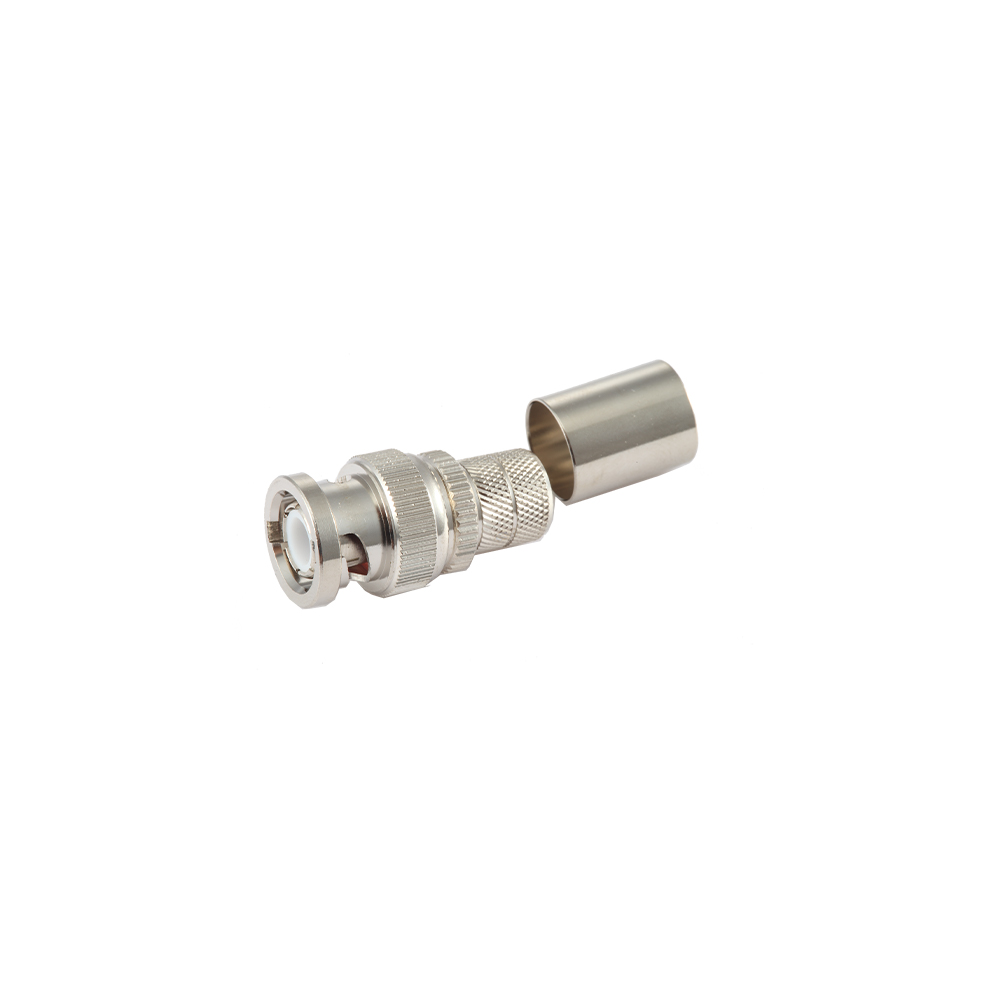 BNC Connectors for Flexible Cable with Multiple Termination OptionsThese connectors are designed for flexible 75-ohm broadcast cables, offering crimp, clamp, or solder terminations and strain relief to ensure reliable performance in frequently moved cable assemblies.View Product →
Flexible cable BNC connectors are the most common choice for camera cables, patch cords, and studio runs. They are meant to be terminated on flexible 75-ohm broadcast cables and must provide low insertion loss plus good strain relief, because these cables are frequently moved and re-connected.
In a 12G-SDI environment, a flexible cable connector needs to hold the center conductor and shield tightly. A loose ferrule can create a small impedance bump that is enough to degrade return loss at 12 GHz.
PCB Mount BNC Connectors
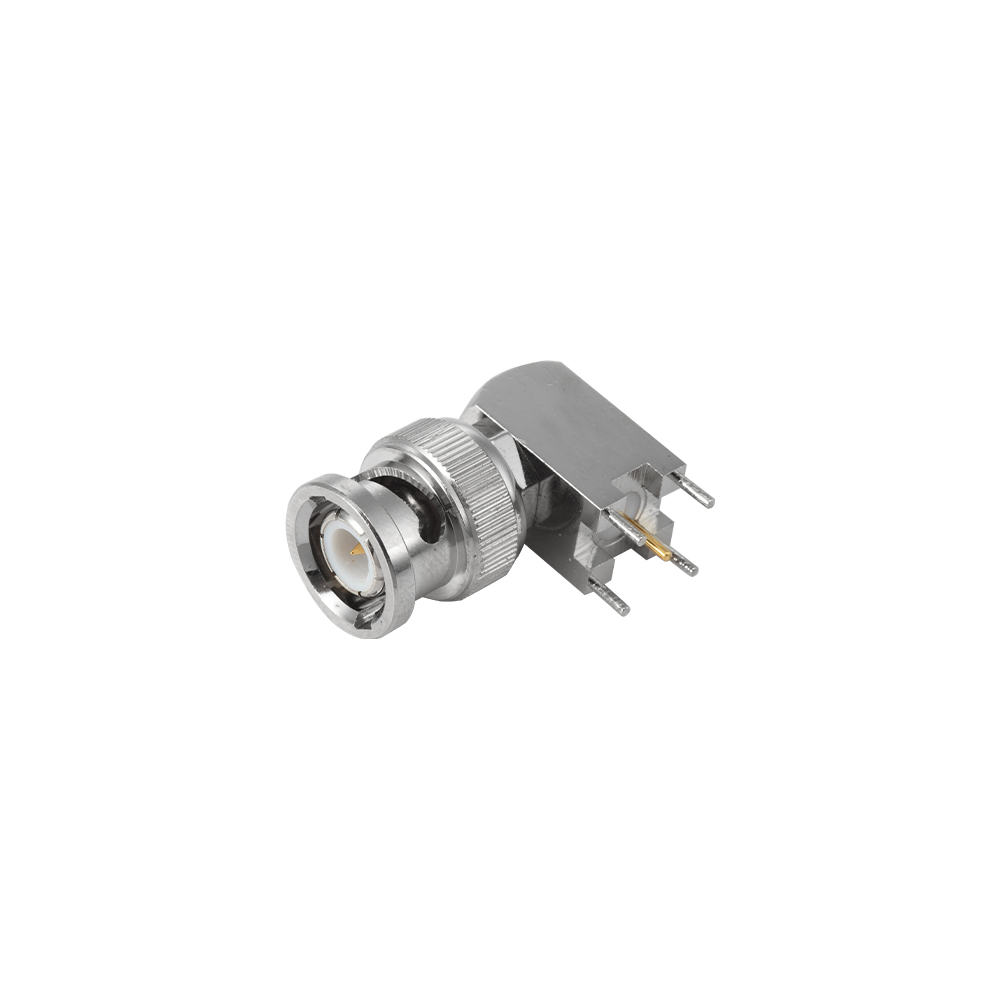 PCB Mount BNC Connectors for High-Speed Signal IntegrityDesigned for direct PCB mounting, these connectors maintain impedance integrity through the board transition, making them suitable for 12G-SDI equipment where parasitic effects must be minimized.View Product →
PCB mount BNC connectors are used on video switchers, monitors, transmitters, and other equipment where the connector must be soldered directly to a board. For 12G-SDI, the connector's pin length and ground plane connection should be optimized to minimize parasitic capacitance and inductance.
These connectors are also chosen for front-panel I/O ports. The best PCB-mount designs place the ground pins close to the center pin to reduce the loop area and improve high-frequency performance.
Bulkhead Mount BNC Connectors
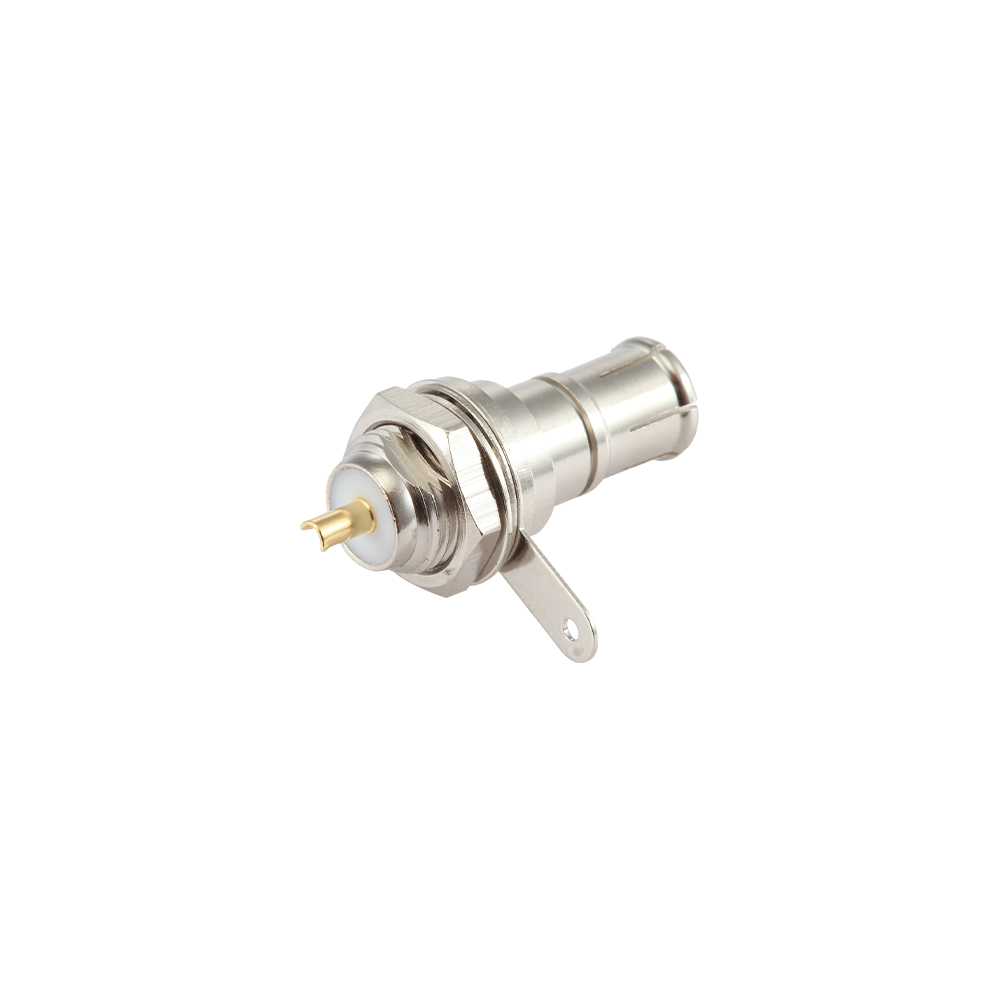 Bulkhead Mount BNC Connectors for Panel FeedthroughFeaturing single-hole nut mounting for compact panel installation, these connectors provide impedance continuity across barriers and support various rear terminations for versatile system integration.View Product →
Bulkhead mount BNC connectors are designed for wall plates, equipment chassis, and junction boxes. They allow a cable to pass through a panel while maintaining a solid ground connection to the enclosure.
In broadcast facilities, bulkhead connectors are often the transition point between studio cabling and a video router. Their flange and nut arrangement must be torqued consistently; even slight variation can affect the interface with the panel and alter return loss.
Procurement Considerations for 12G BNC Connectors
The biggest procurement risks are wrong impedance, insufficient frequency rating, and inconsistent mechanical tolerances. These problems do not show up at first inspection; they appear over time or at the signal integrity test stage.
- Ask for datasheets: The vendor should publish frequency range, return loss, insertion loss, and VSWR. If not available, treat the part as unverified.
- Check ferrule dimensions: The ferrule must match the cable jacket diameter. A mismatched ferrule can cause shielding leakage and make termination difficult.
- Consider plating thickness: Nickel is fine for indoor use; gold or silver is better for long-term corrosion resistance.
- Request batch consistency: In large installations, the center contact diameter variation between batches creates issues with insertion force and electrical stability.
- Use proper tools: A dedicated crimping tool for the center pin and ferrule is mandatory for repeatable performance.
Another practical factor is adaptation to existing infrastructure. If your current patch panel uses standard BNC connectors, the physical compatibility is not the problem; the electrical mismatch is. Upgrading to 12G-rated connectors often means reviewing the entire connector chain, from cable to panel to equipment port.
Real-World Application Scenarios and Installation Tips
In practice, 12G BNC connectors appear in three main places: the camera output, the patch panel, and the equipment's I/O port. How you terminate each one directly affects the signal path.
- Camera output to transmitter: Use a flexible cable connector with strong strain relief. The cable gets re-plugged constantly, so the center pin and ferrule must survive repeated flexing.
- Studio patch panel: Bulkhead connectors are the standard here. They need a solid flange nut torque and a clean ground path to the metal panel.
- Video router I/O: PCB mount connectors keep the performance tight. Pay attention to board footprint and keep the center pin's solder end well within the recommended length.
- Long runs: For runs over 100 meters, choose semi-rigid or high-performance flexible connectors that reduce insertion loss and improve return loss.
The general rule is to avoid in-line splicing unless absolutely necessary. Every additional interconnection adds reflection and loss. If a splice is unavoidable, use the same 12G-rated connector on both sides and test the link with a signal generator or waveform monitor.
Frequently Asked Questions About 12G BNC Connectors
Are 12G BNC connectors compatible with standard BNC connectors?
Yes, they use the same bayonet coupling and are physically interoperable. However, if you mate a 12G-rated connector with a low-grade 75-ohm or 50-ohm BNC, the overall link performance is limited by the weaker part. For a true 12G-SDI path, every connector in the chain should be 75-ohm and rated for the necessary bandwidth.
Can I use an ordinary 75-ohm BNC for 12G-SDI?
Only if the connector is specifically tested for 12G-SDI frequencies. Many legacy 75-ohm BNCs are rated to only 1 to 2 GHz and will cause signal reflections at 12G data rates. Check the datasheet for frequency range and return loss before making that assumption.
What is the difference between a 50-ohm and a 75-ohm BNC?
The center contact diameter and the dielectric material dimensions are different. A 50-ohm BNC has a larger center pin relative to the dielectric, while a 75-ohm BNC has a smaller center pin. Using a 50-ohm connector on a 75-ohm line creates an impedance mismatch that can cause reflections and errors.
How do I confirm that a BNC connector is truly rated for 12G-SDI?
Look at the manufacturer's published specifications: frequency range, return loss, VSWR, and impedance. A true 12G BNC will at least mention compatibility with SMPTE ST 2082 or a bandwidth to 12 GHz. "12G" in the product name is not enough; confirm the tables and test data.
What termination tools are needed for 12G BNC connectors?
Typically you need a crimp tool for the center pin, a separate crimp tool for the ferrule, and a cable cutter and strip tool. For semi-rigid cables, a specialized cable prep tool may be required. Follow the vendor's recommended strip dimensions for best results.
Final Takeaway
For 12G-SDI and 4K/8K video, the 75-ohm BNC connector is not a commodity part; it is an active component of the signal path. Choose connectors with verified impedance, bandwidth, and return loss, select the right mounting style for the application, and terminate them with proper tools. If you are still deciding between different RF connector families, reading our RF coaxial connectors guide can provide a broader view of types, specs, and selection criteria.