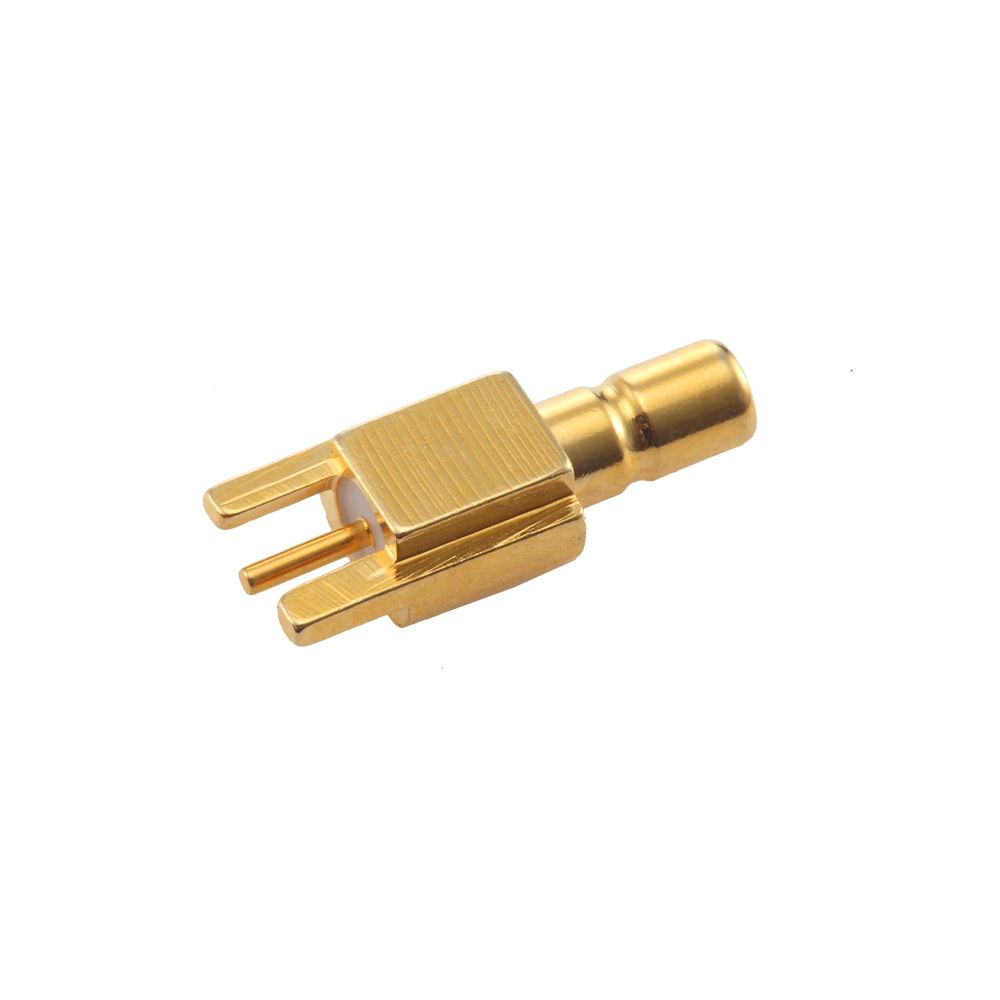
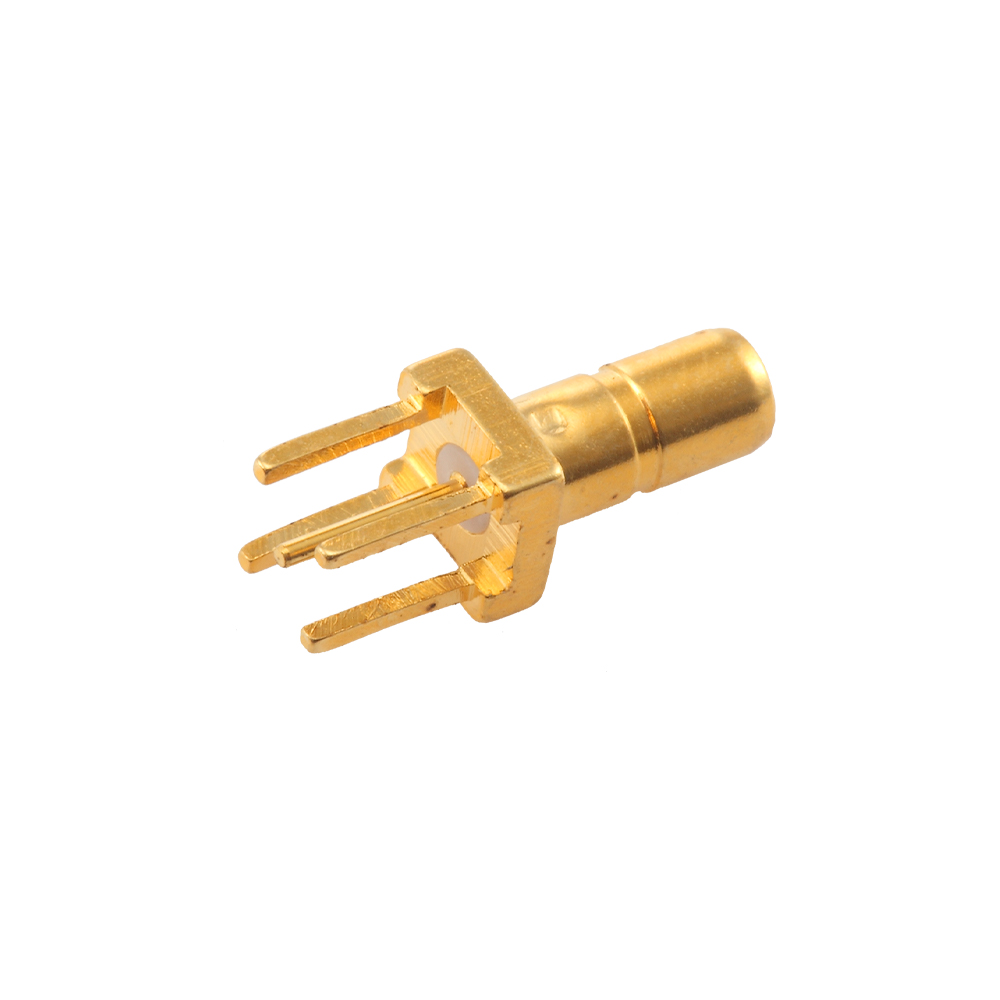
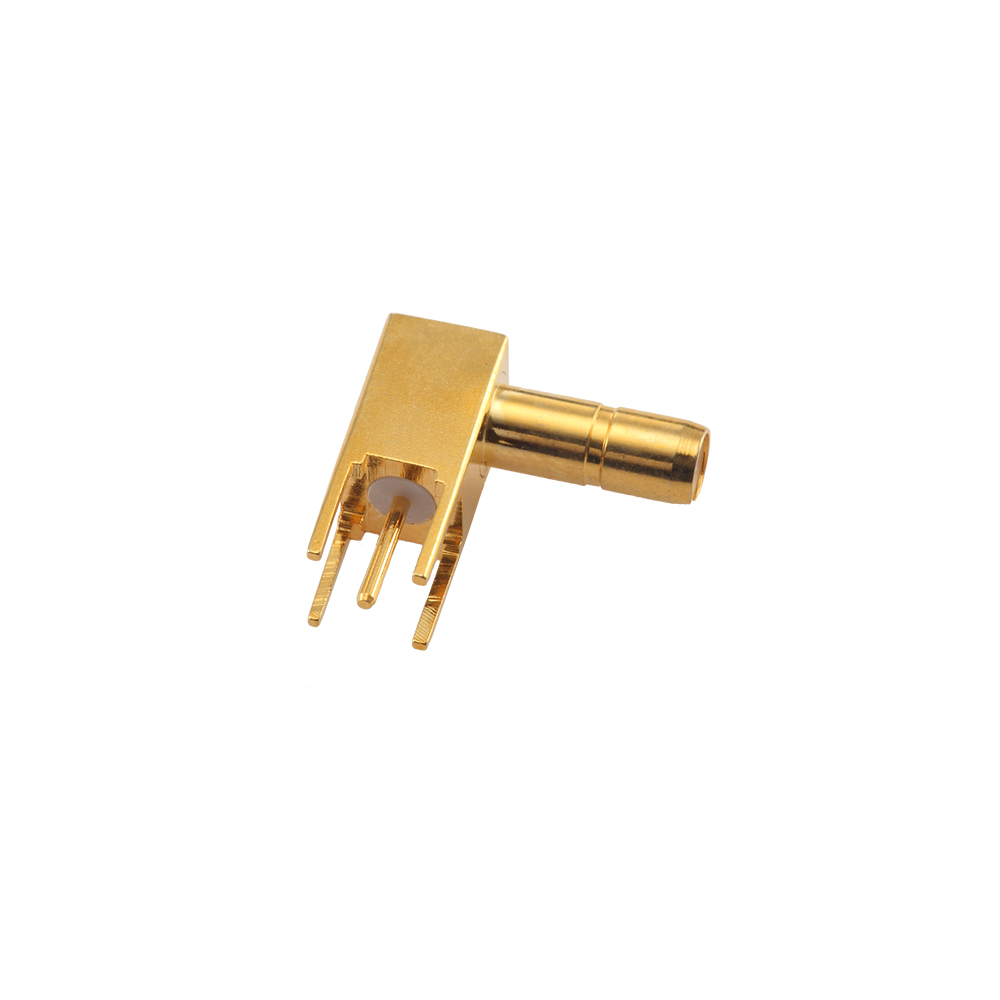
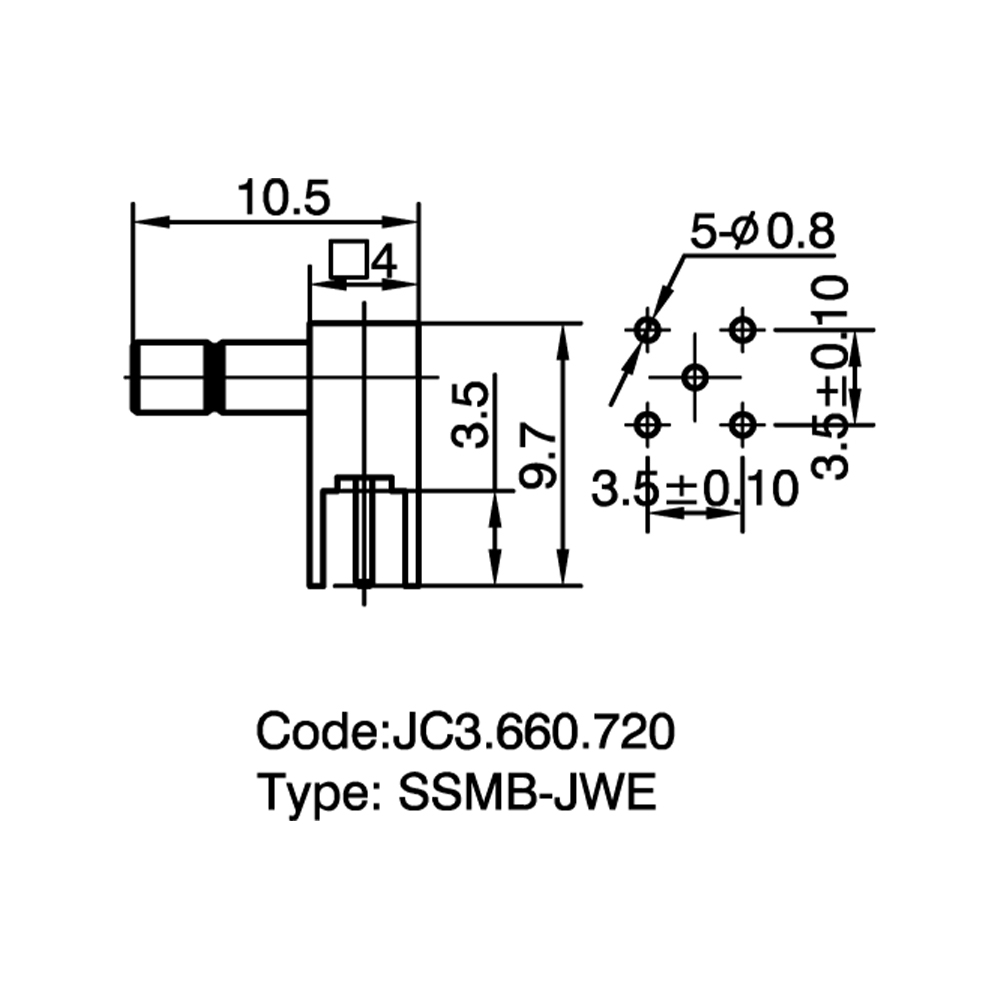
SSMB RF Coaxial Connectors are sub-miniature interface components designed for high-density RF and microwave signal transmission where board space and weight are limited. As a scaled-down variant derived from the SMB connector family, SSMB connectors use a snap-on coupling mechanism instead of threaded coupling, allowing faster mating and a smaller overall footprint. This category covers plug and jack configurations, straight and right-angle bodies, PCB mount and cable mount versions, supporting frequency ranges typically up to 4-10 GHz depending on the specific design and dielectric material used.
Within RF interconnect systems, SSMB connectors are commonly selected for applications requiring multiple connection points within a confined space, such as multi-channel test equipment, telecom base station modules, and compact RF assemblies. The reduced size of SSMB connectors compared to standard SMB or SMA types makes them suitable for high-density panel layouts, while the snap-on design supports repeated mating cycles without the need for torque tools.
Common Types and Characteristics
- SSMB Straight Plug/Jack: Standard axial configuration for direct board-to-board or cable-to-board connections.
- SSMB Right Angle Plug/Jack: Used where vertical clearance is restricted, allowing 90-degree cable routing.
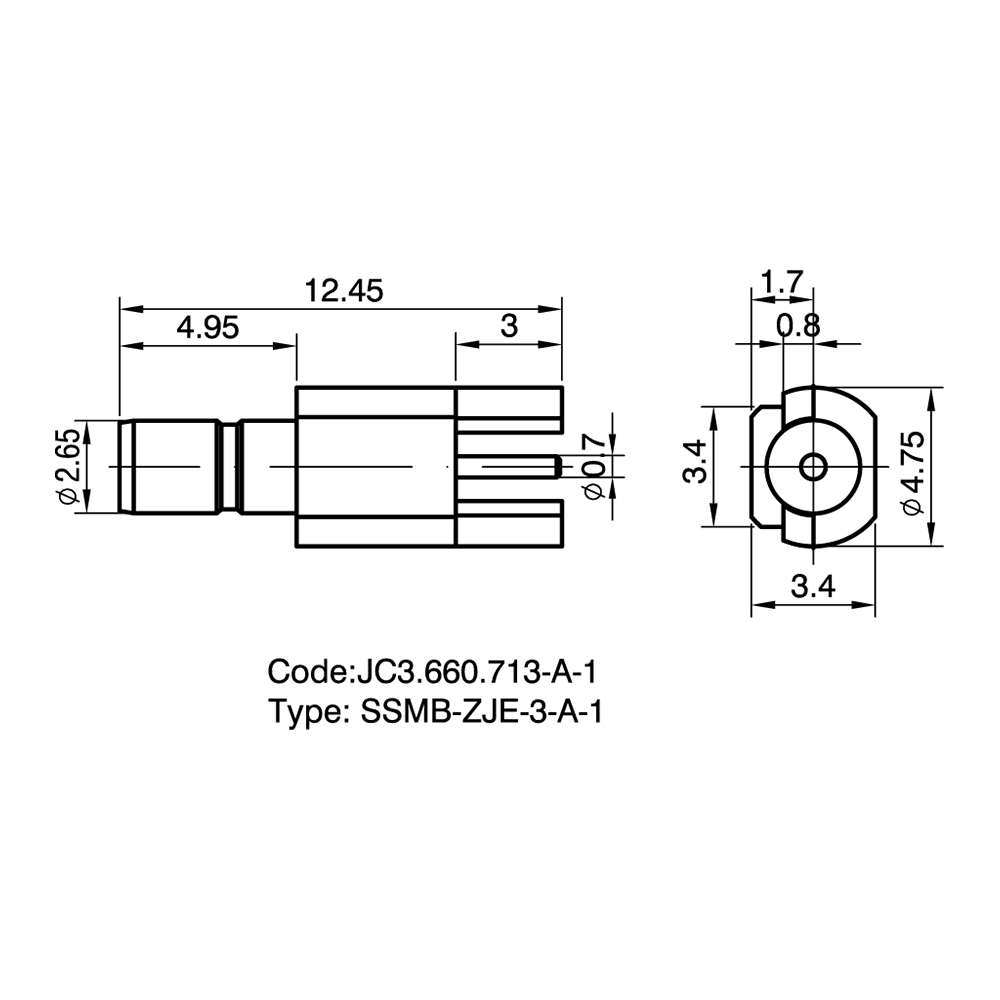
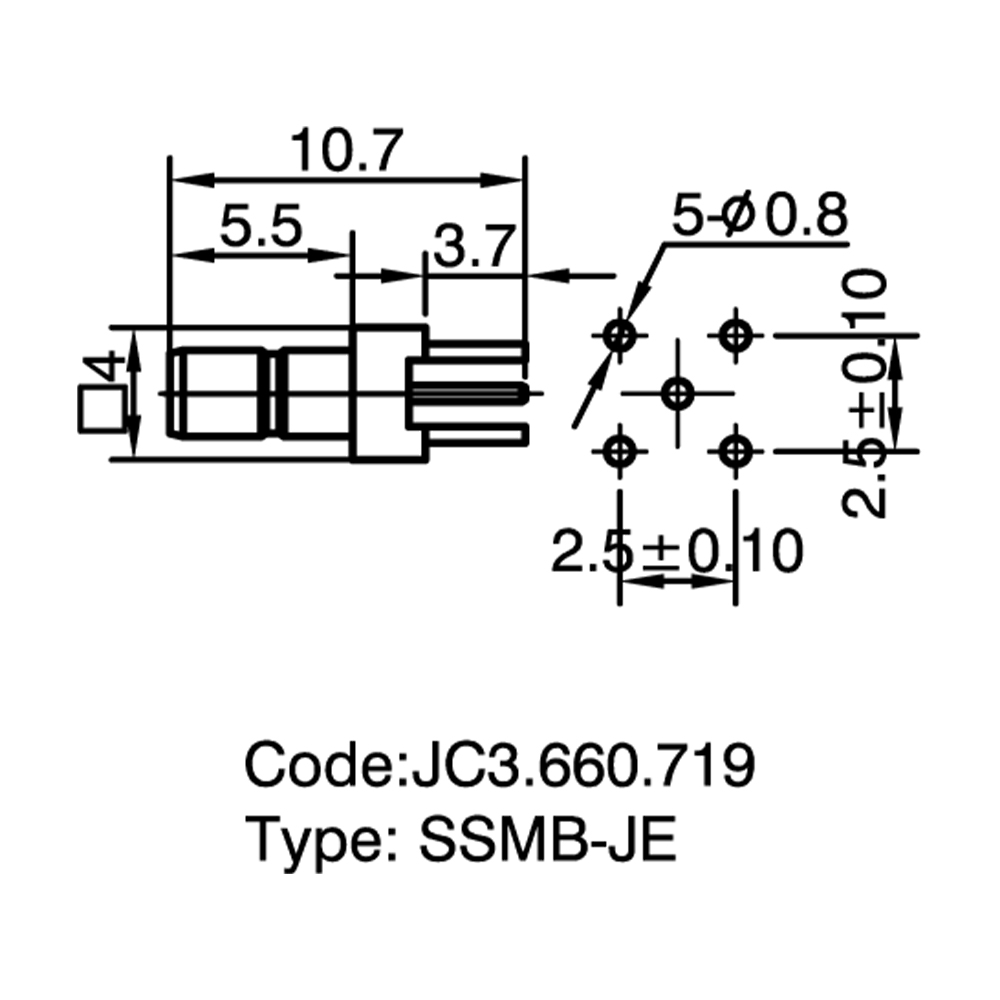
- SSMB PCB Mount (Edge/Vertical): Designed for direct soldering onto printed circuit boards, available in through-hole and surface mount styles.
- SSMB Cable Mount: Terminated to RG178, RG316, or similar miniature coaxial cables for internal wiring assemblies.
- SSMB Bulkhead/Panel Mount: Fitted with mounting flanges or nuts for enclosure panel installation.
Common characteristics across SSMB connector types include a compact shell diameter, gold- or nickel-plated contacts for stable conductivity, PTFE or similar low-loss dielectric insulation, and impedance typically maintained at 50 ohms across the product range.
Application Scenarios
- High-density RF test and measurement instrumentation
- Telecommunication base station internal modules
- Aerospace and defense electronics with strict size and weight constraints
- Medical RF equipment requiring compact internal wiring
- GPS, GSM, and CDMA module interconnections
Selection Points
| Selection Factor |
Consideration |
| Frequency Range |
Confirm the working frequency of the system matches the connector's rated bandwidth |
| Mounting Style |
Choose between PCB mount, cable mount, or panel mount based on assembly layout |
| Body Orientation |
Straight or right-angle body depending on available clearance |
| Cable Compatibility |
Match connector termination to the coaxial cable type and diameter used |
| Plating Material |
Gold plating for lower contact resistance, nickel plating for cost efficiency |
| Mating Cycles |
Snap-on coupling is suited to applications with frequent connect/disconnect needs |
SSMB vs Similar Sub-Miniature Connectors
| Connector Type |
Coupling Method |
Relative Size |
Typical Frequency Range |
| SSMB |
Snap-on |
Smaller than SMB |
Up to approx. 4-10 GHz |
| SMB |
Snap-on |
Standard sub-miniature |
Up to 4 GHz |
| MCX |
Snap-on |
Smaller than SMB, similar to SSMB |
Up to 6 GHz |
| MMCX |
Snap-on |
Micro-miniature |
Up to 6 GHz |
Frequently Asked Questions
Q: What distinguishes SSMB connectors from standard SMB connectors?
A: SSMB connectors have a reduced shell size compared to SMB connectors while retaining the snap-on coupling method, making them suitable for higher density board layouts.
Q: Can SSMB connectors be used with different cable types?
A: SSMB connectors are available in versions terminated for various miniature coaxial cables such as RG178 and RG316; cable compatibility should be confirmed against the connector's technical specification.
Q: Are SSMB connectors interchangeable with MCX connectors?
A: SSMB and MCX connectors have different dimensional standards and are not physically interchangeable, even though both use snap-on coupling.
Q: What plating options are available for SSMB connectors?
A: SSMB connectors are commonly offered with gold-plated or nickel-plated contacts, selected according to conductivity and cost requirements.
Manufacturing Background
Yangzhou Jingcheng Electronics Co., Ltd. produces SSMB connectors and related RF coaxial connector series using CNC precision machining and network analyzer testing to maintain dimensional accuracy and impedance consistency. Production and inspection processes follow standards including GB, MIL-C, and IEC, supporting both standard and customized SSMB connector configurations for OEM and project-based requirements.


 English
 中文简体
中文简体