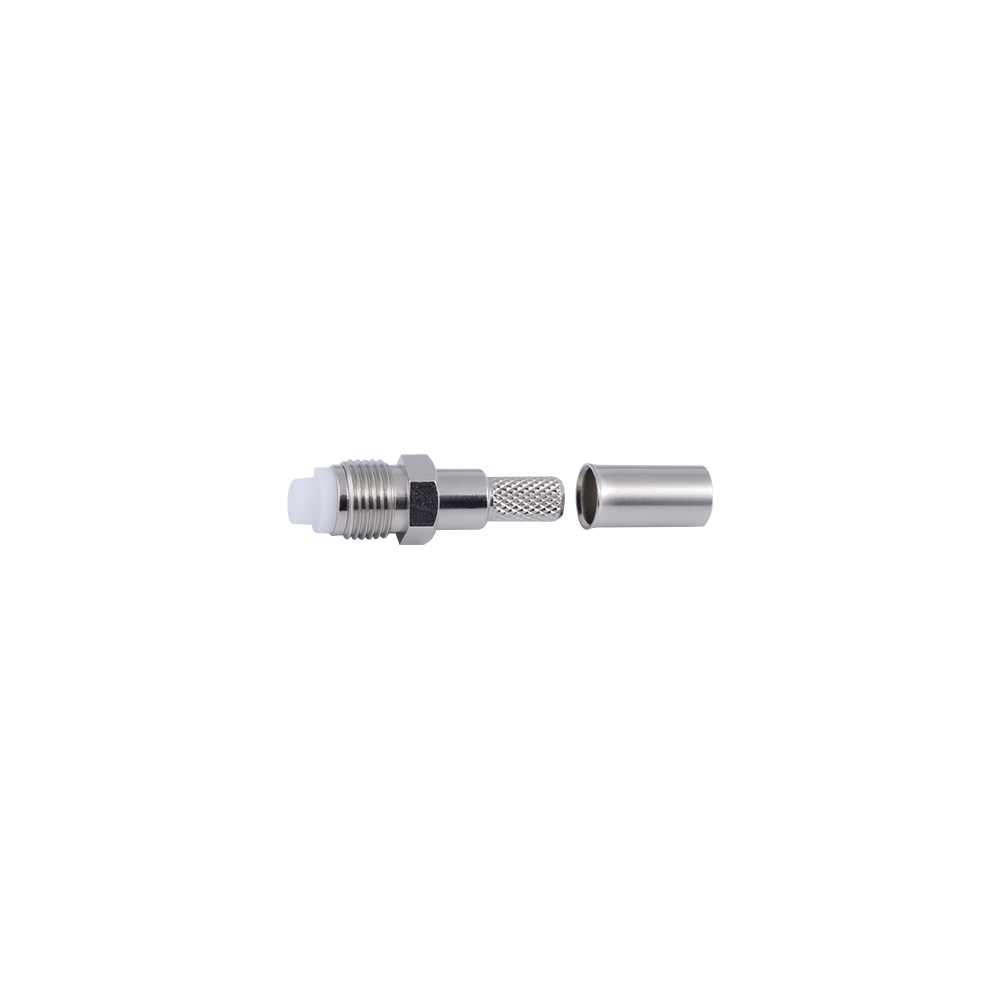
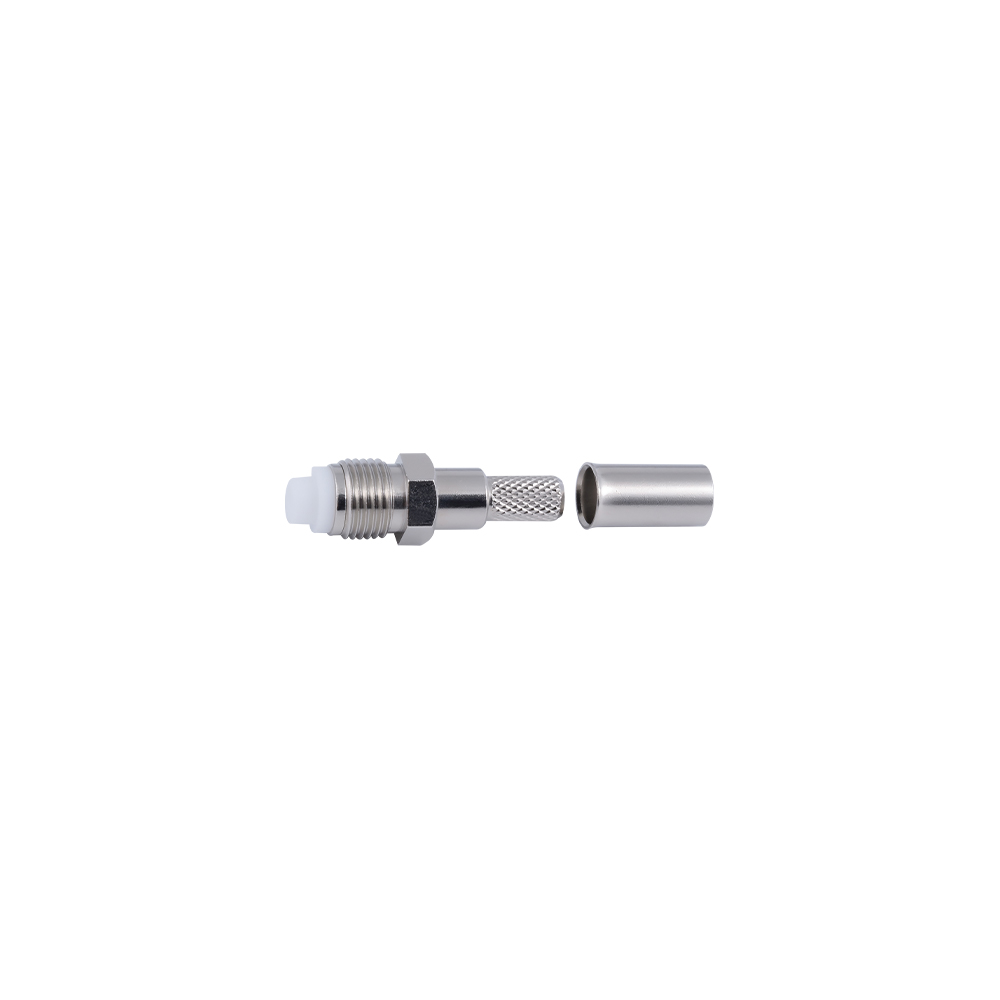
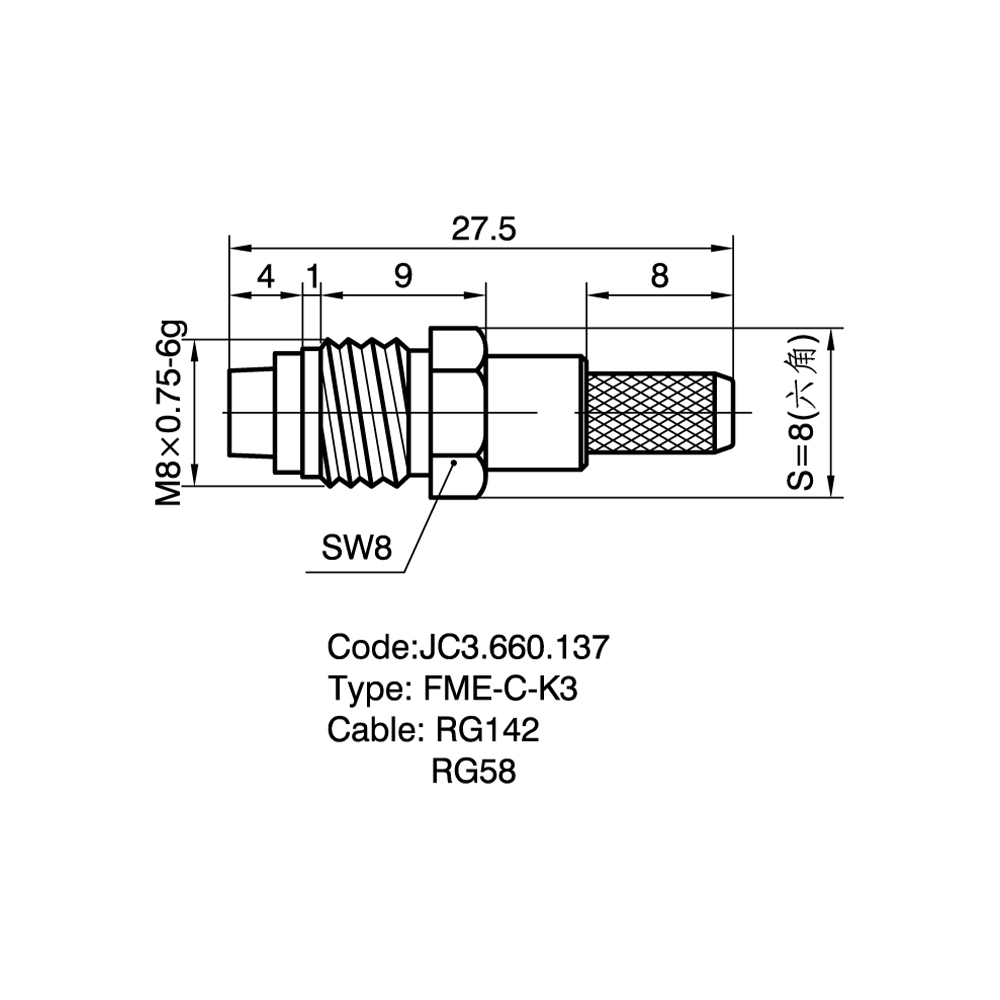
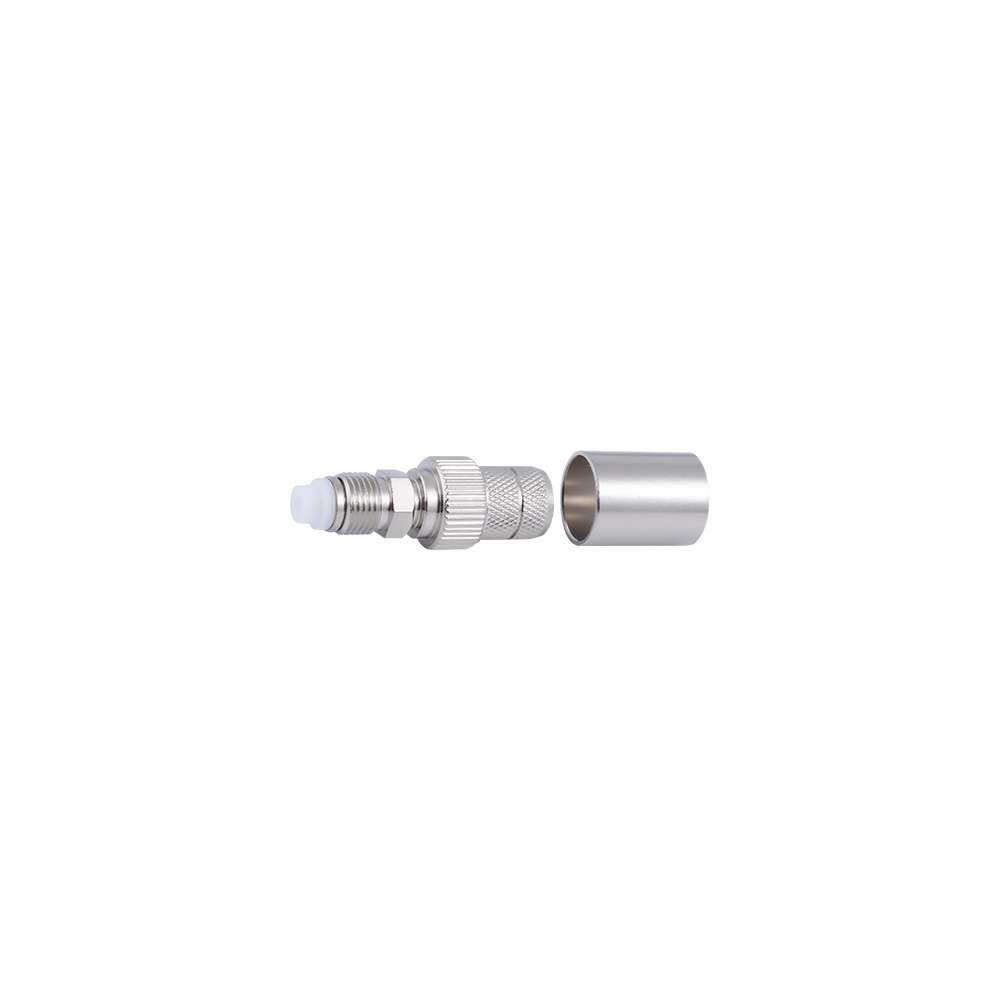
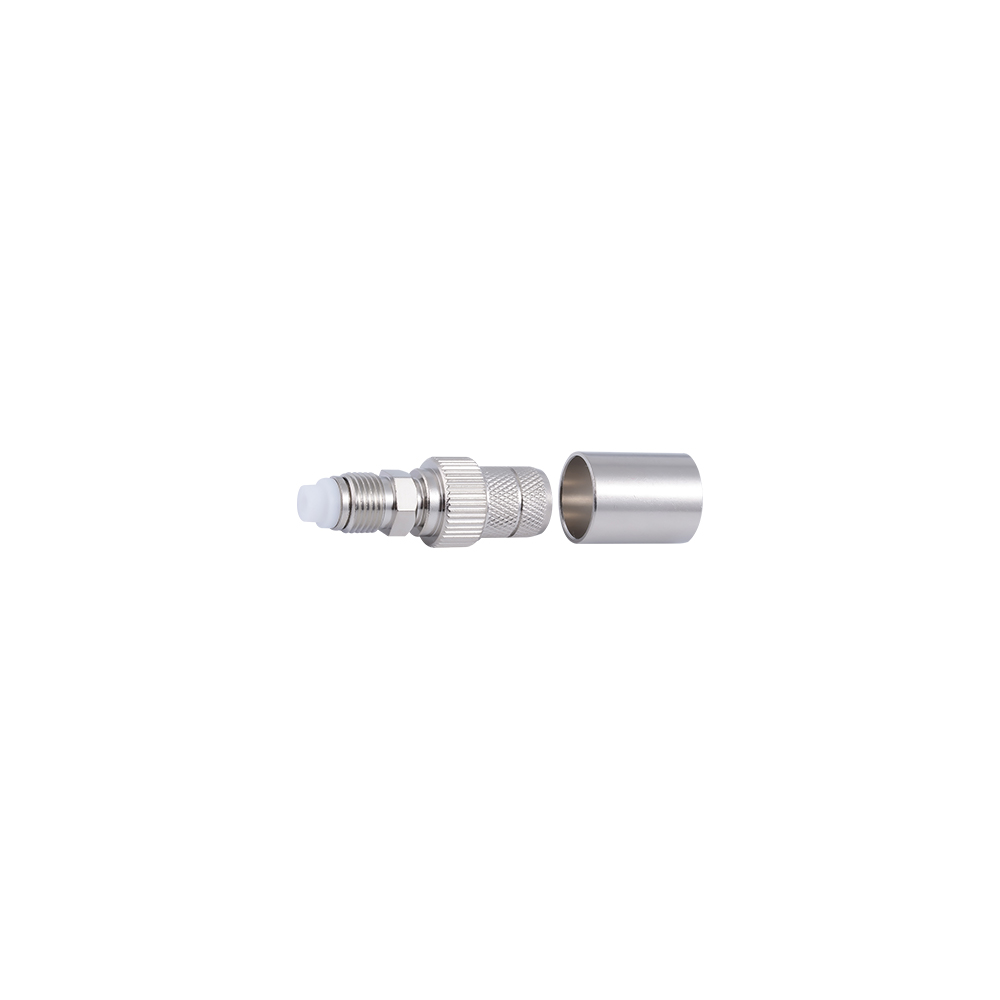
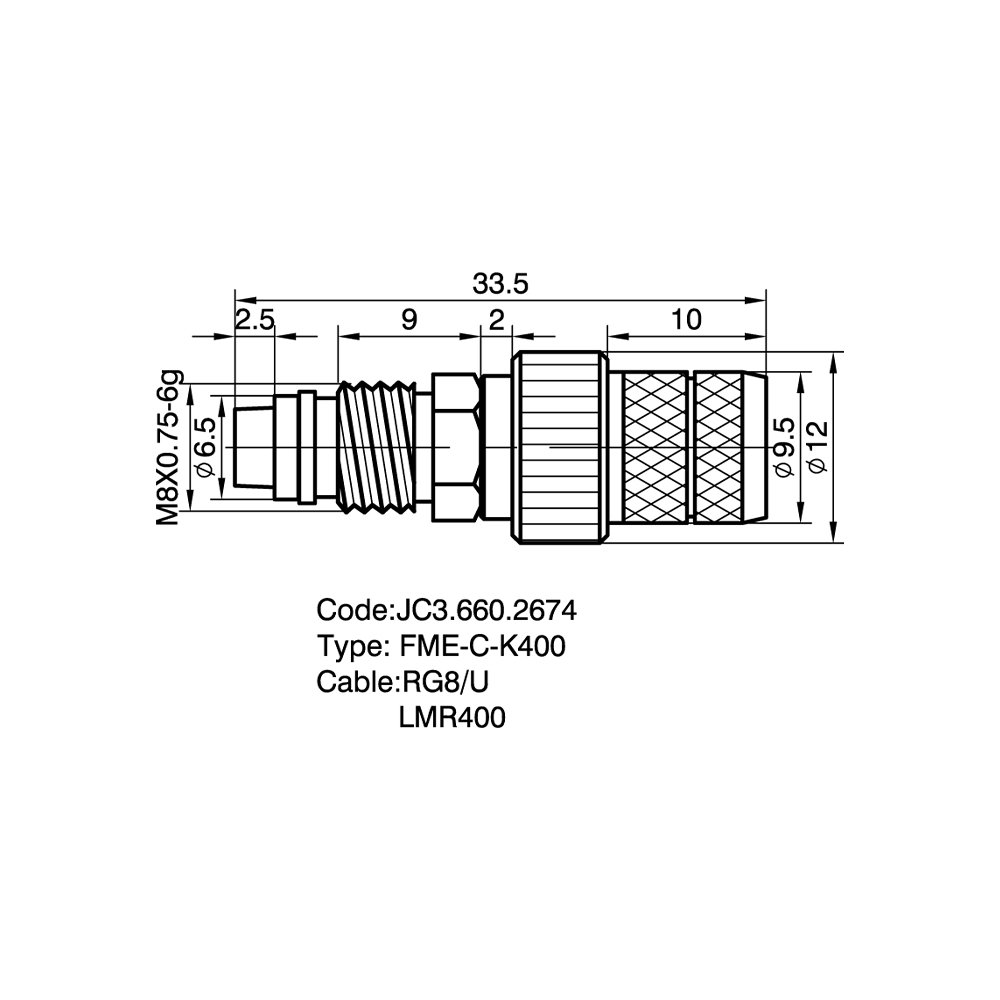
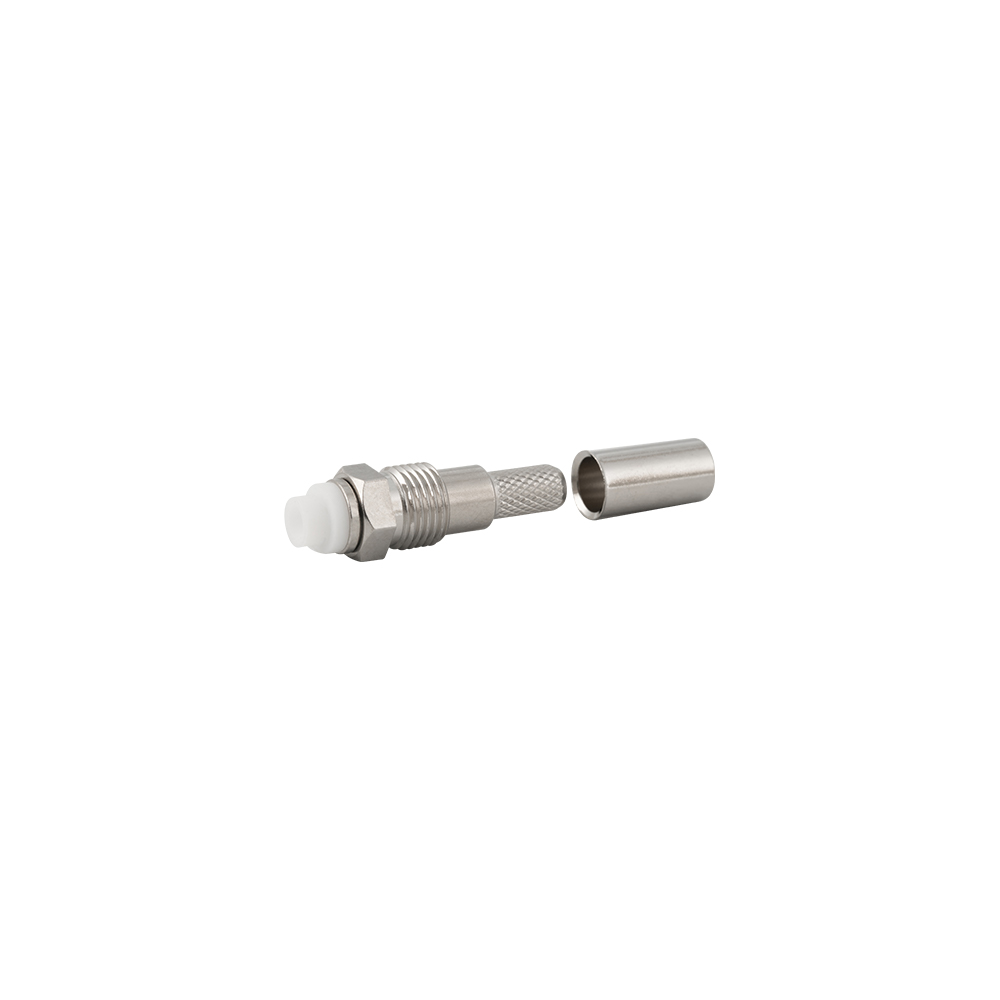
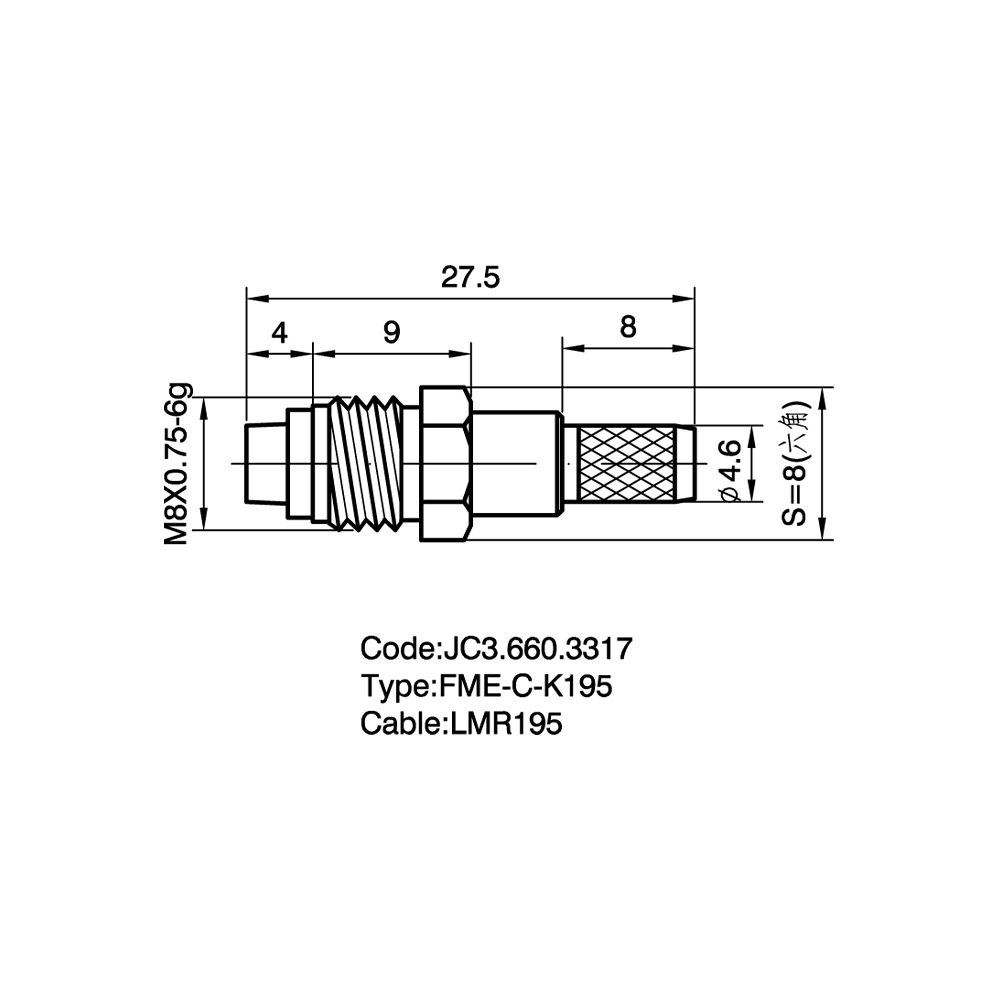
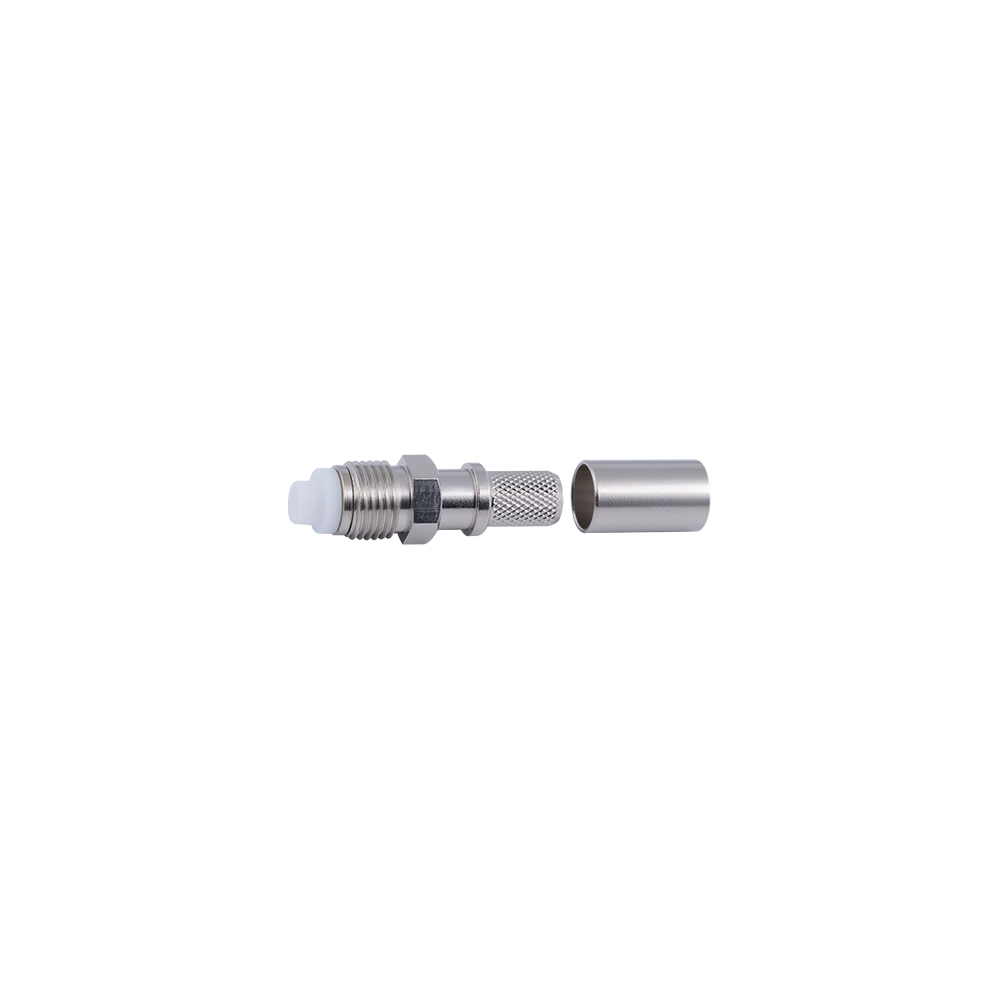
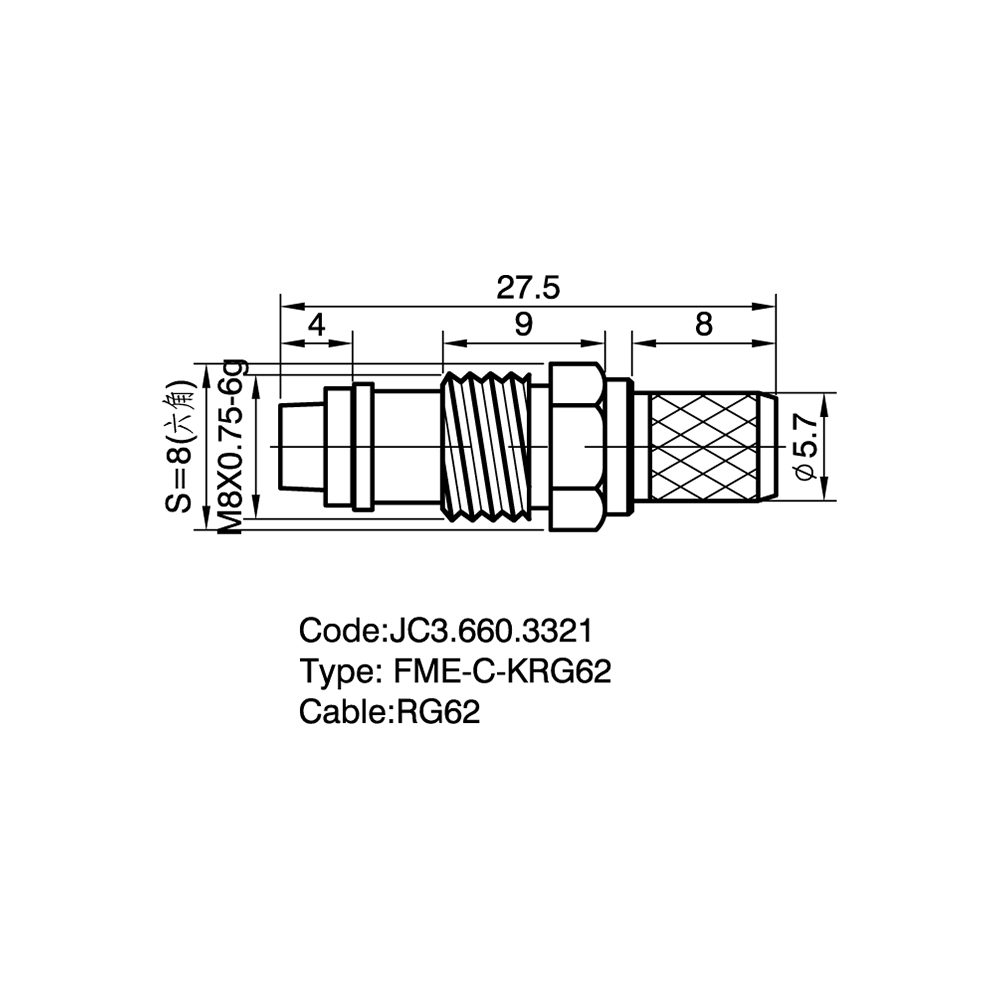
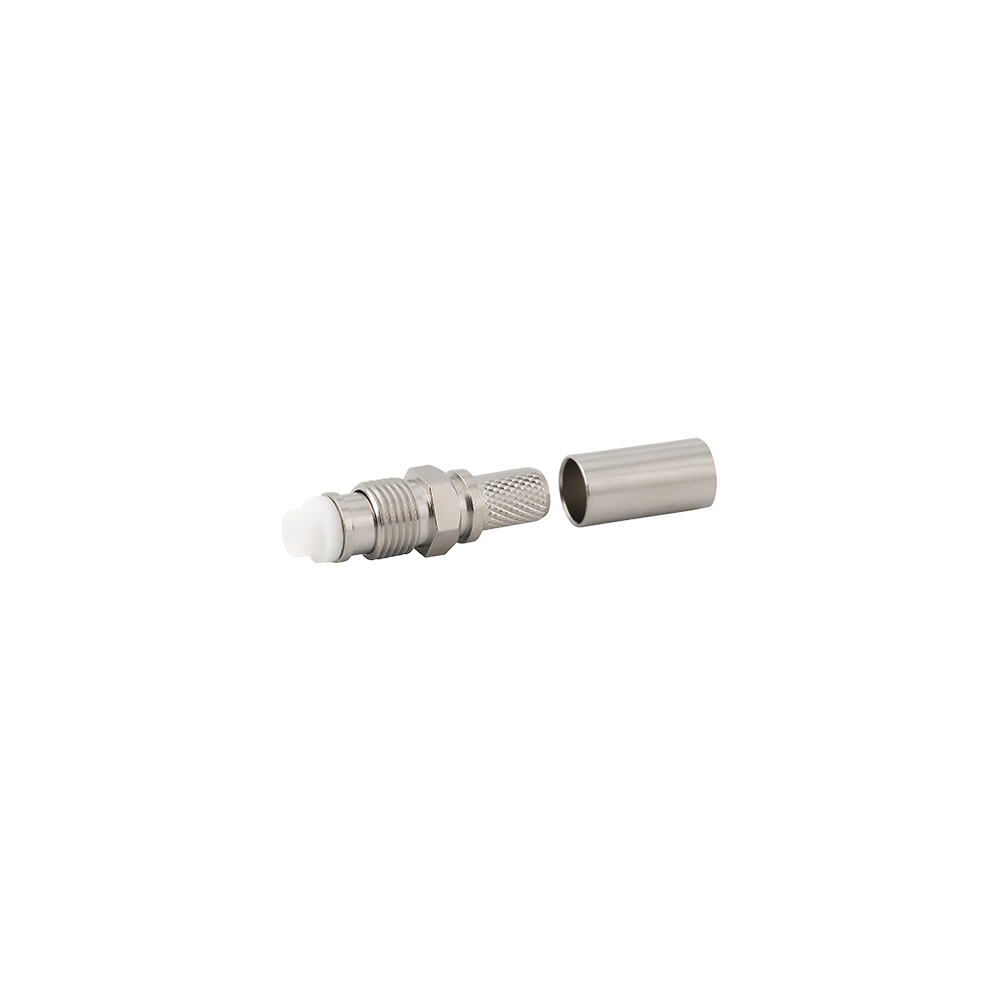
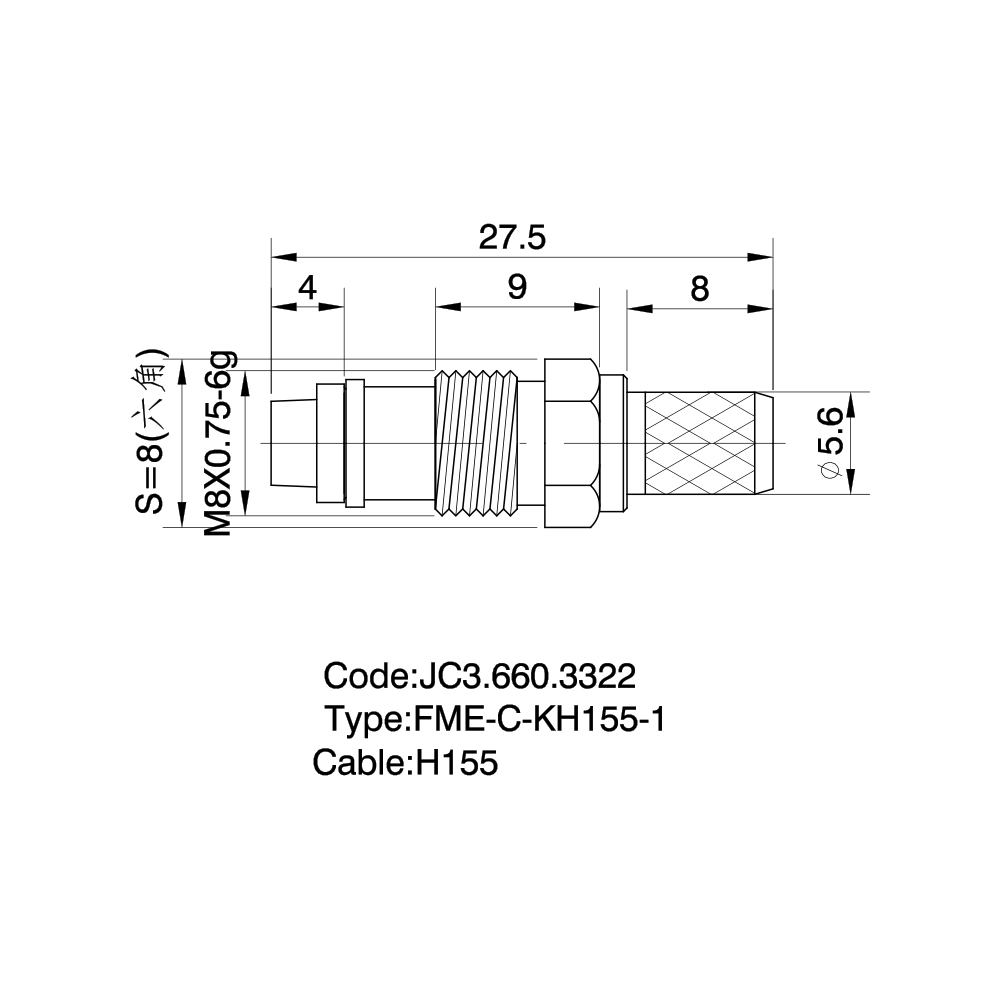
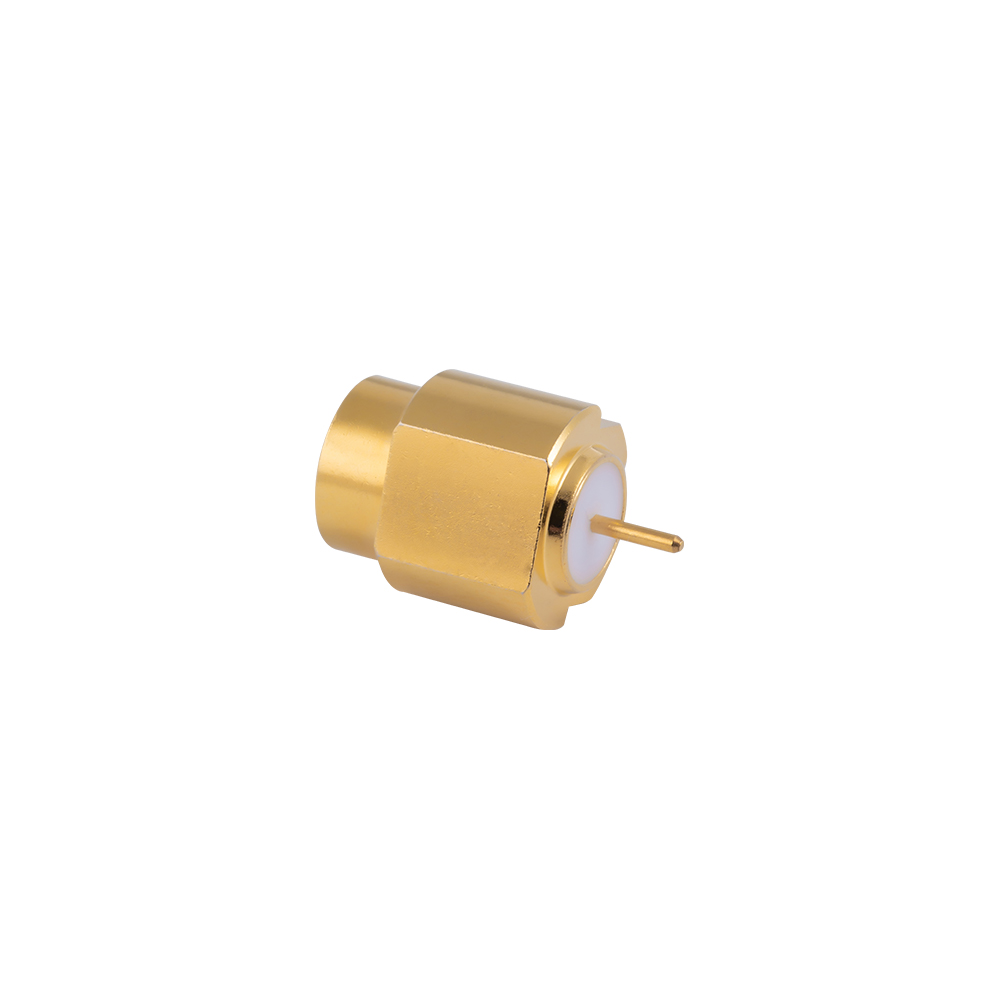
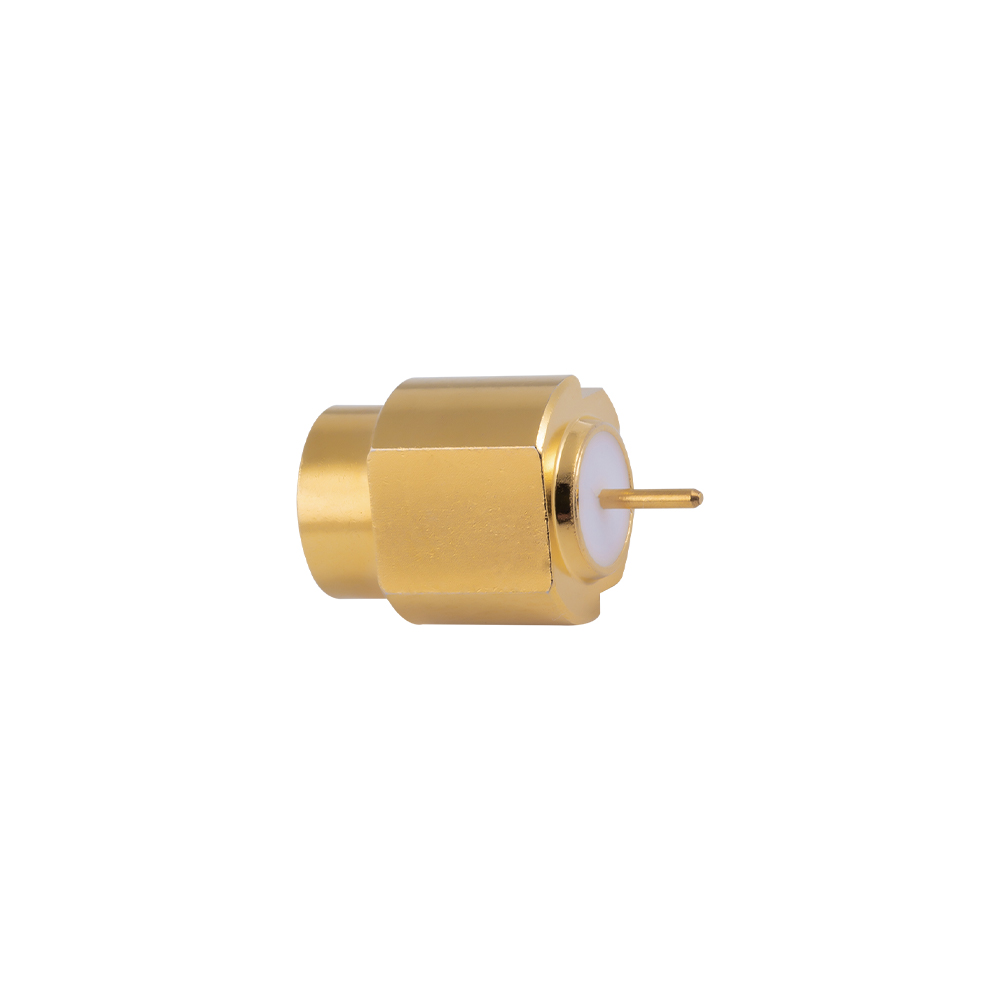
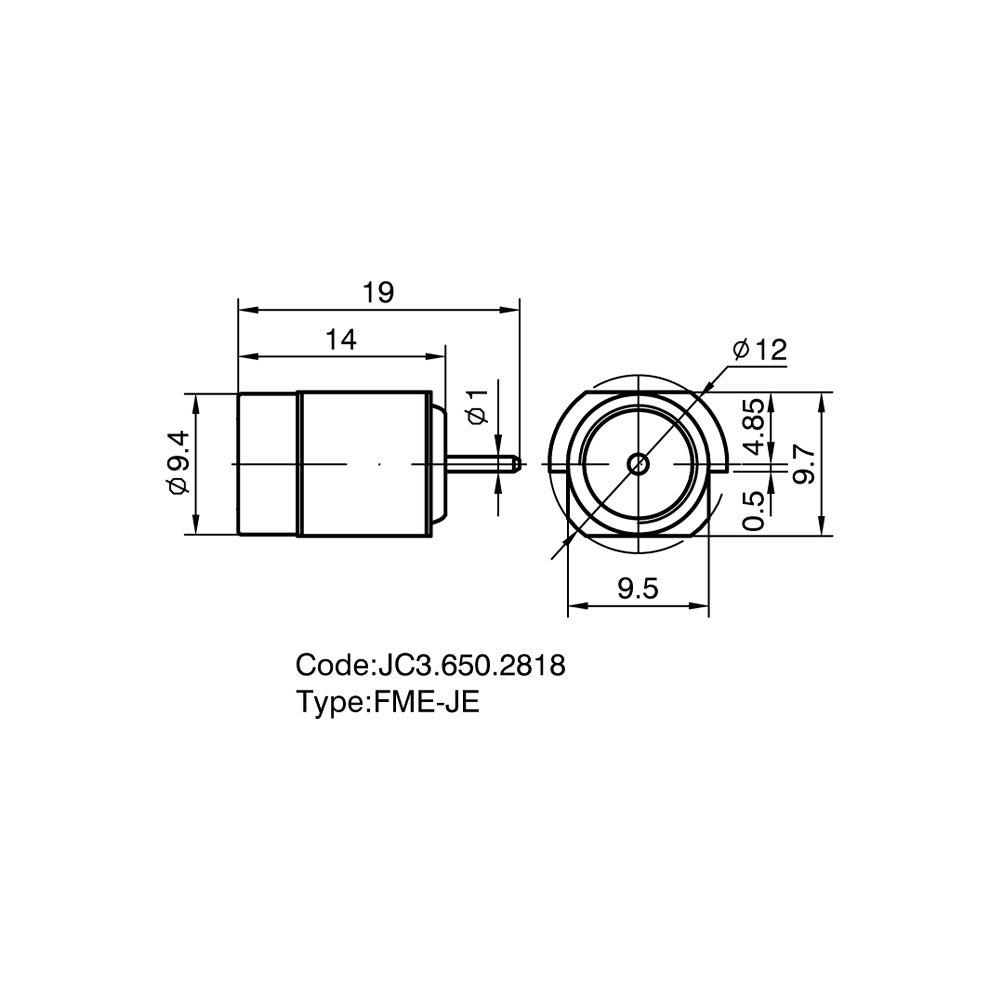
FME RF coaxial connectors are threaded, quick-installation connectors used to join flexible cable to mobile antennas, wireless modules, and vehicle-mounted communication equipment. Built around a 50Ω impedance and a frequency range extending to several gigahertz, FME RF coaxial connectors are sized for compact installation while keeping a stable, low-loss signal path. Their coupling nut allows tool-free connection and disconnection, which shortens installation time on antenna cable runs and field replacement work.
The category includes straight, right-angle, and bulkhead mounting styles, along with reverse-polarity variants, giving FME RF coaxial connectors flexibility across cellular, GPS, and short-range wireless equipment.
Because the coupling nut mates without a wrench, FME RF coaxial connectors are also favored in aftermarket and field-replacement scenarios, where technicians need to swap an antenna cable or module quickly without specialized tooling on hand.
Working Principle
The center pin and outer shell of an FME connector share a common axis, confining the RF field between them and setting the 50Ω characteristic impedance. A dielectric insert, typically PTFE, separates the two conductors and keeps this impedance constant along the signal path.
Coupling and Shielding
A knurled coupling nut threads onto the mating port, holding contact pressure steady under vibration without requiring a wrench. The outer shell forms a continuous shield with the cable braid, containing the RF field and limiting external interference at the connection point.
Crimp or solder terminations join the connector to the cable's center conductor, braid, and jacket, extending the same 50Ω path through the mechanical joint into the cable itself.
Application Cases
- Cellular and LTE antenna cable connections on vehicles and fixed installations
- GPS and GNSS antenna feed lines in navigation and tracking equipment
- Wireless data cards, routers, and mobile signal booster units
- Bulkhead feedthroughs on equipment enclosures requiring field-serviceable connections
Yangzhou Jingcheng Electronics Co., Ltd manufactures FME RF coaxial connectors and matched cable assemblies under MIL, IEC, and GB standards, supplying communication equipment producers across multiple regions.
Comparison with Related Connectors
Compared with SMA and TNC series, FME RF coaxial connectors trade upper frequency range for a smaller, tool-free coupling nut, which shortens installation time on antenna and cable assembly lines. This makes FME RF coaxial connectors a common choice where cable runs are replaced frequently in the field, while SMA and TNC remain preferred where higher frequency coverage or wrench-tightened retention is required.
Comparison of FME connectors with SMA and TNC series
| Parameter |
FME |
SMA |
TNC |
| Coupling |
Threaded, tool-free |
Threaded, hex nut |
Threaded, hex nut |
| Frequency range |
DC–3GHz |
DC–18GHz |
DC–11GHz |
| Installation |
Hand-tight |
Wrench required |
Wrench required |
| Typical use |
Mobile antennas, GPS |
Test equipment |
Outdoor base stations |
Maintenance Guidance
- Tighten the coupling nut hand-tight only; over-tightening with tools can deform the shell or thread.
- Seal outdoor or vehicle-mounted connections with heat-shrink tubing or weatherproof tape to prevent moisture ingress.
- Check insertion loss and return loss periodically with a network analyzer on connections exposed to vibration.
- Avoid bending the cable below its minimum bend radius near the connector base.
- Fit a dust cap on unused ports and clean contact surfaces with anhydrous ethanol only.
Frequently Asked Questions
What does FME stand for in connector naming?
FME refers to a threaded connector series originally developed for mobile equipment installations, now used broadly across cellular and GPS antenna connections.
Are reverse-polarity FME connectors interchangeable with standard versions?
No. Reverse-polarity FME connectors swap the pin and socket positions between male and female shells, and will not mate with standard-polarity connectors of the same gender.
Can custom cable assemblies be produced with FME connectors?
Cable assemblies can be configured to cable type, length, and connector combination at each end, based on the equipment interface requirement or an existing sample.
How should signal loss at an FME connection be diagnosed?
Check first that the coupling nut is fully seated and free of corrosion or debris, then measure insertion loss and return loss with a network analyzer to isolate the connector from the cable's crimp or solder joint.


 English
 中文简体
中文简体