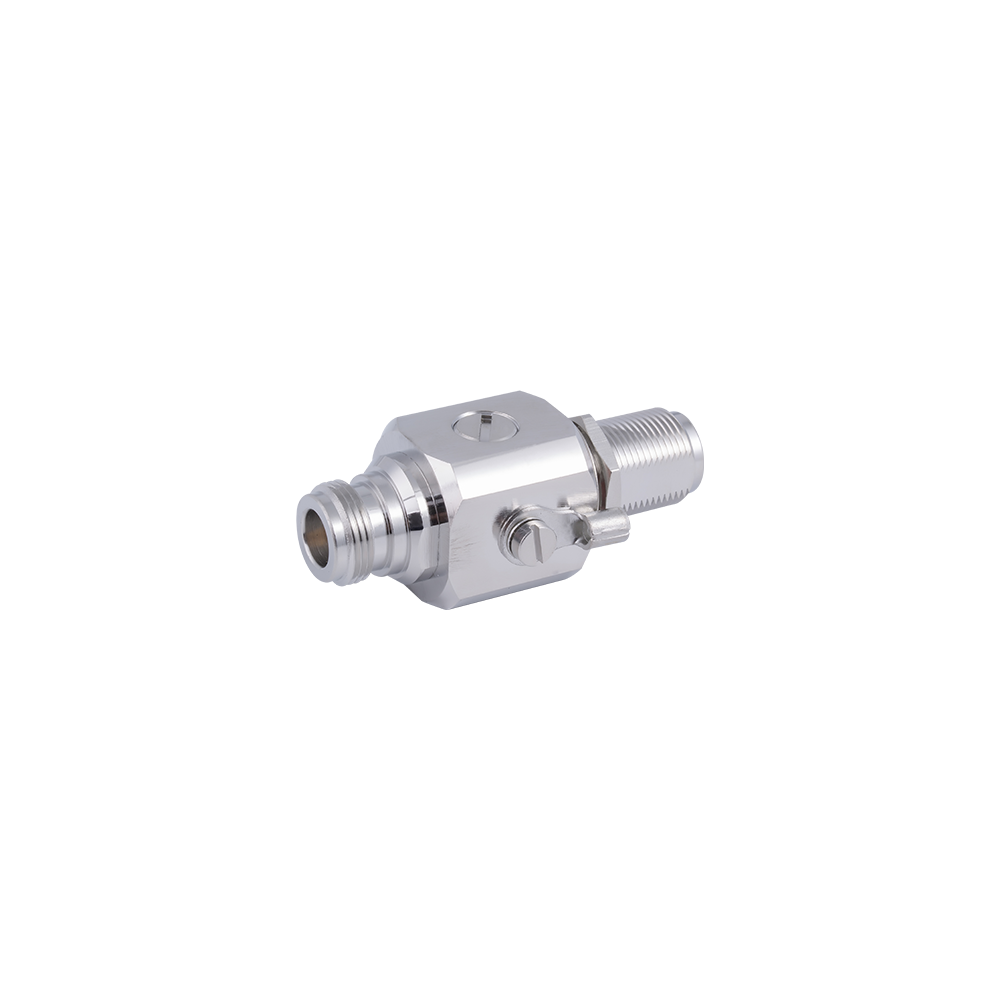
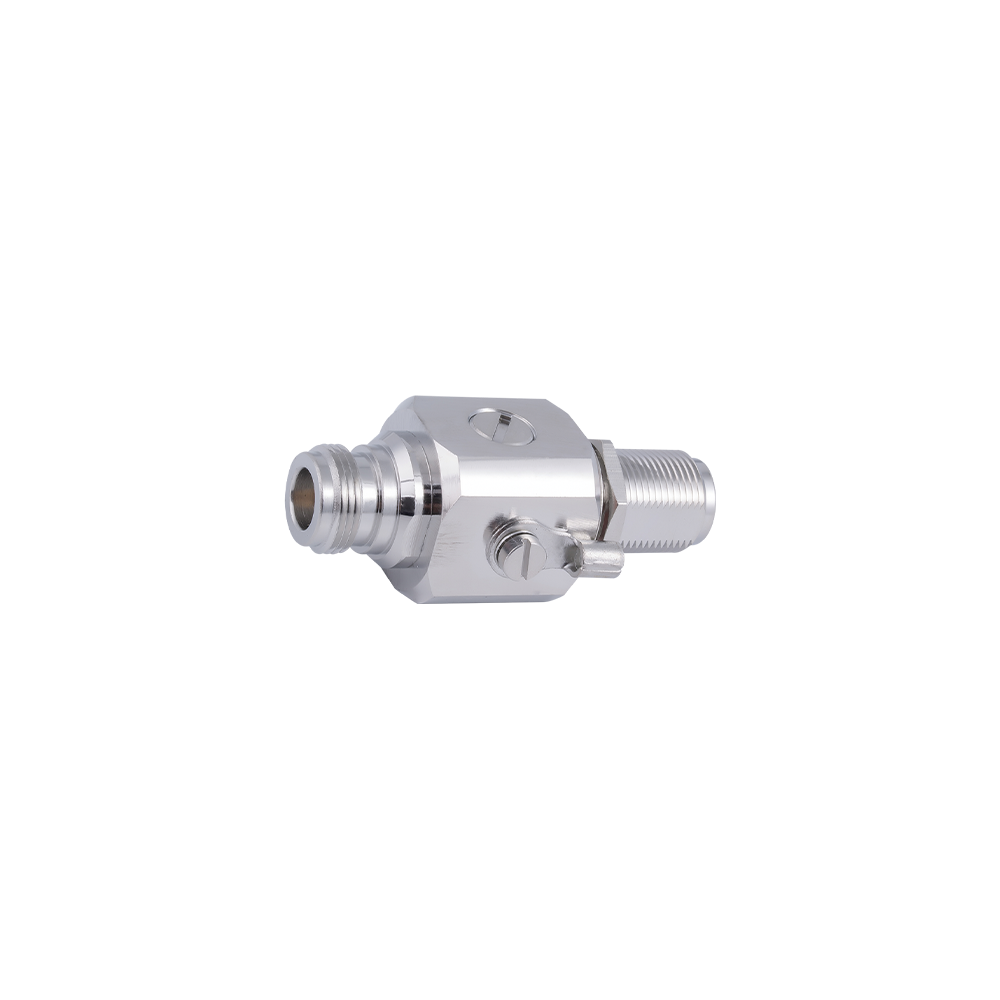
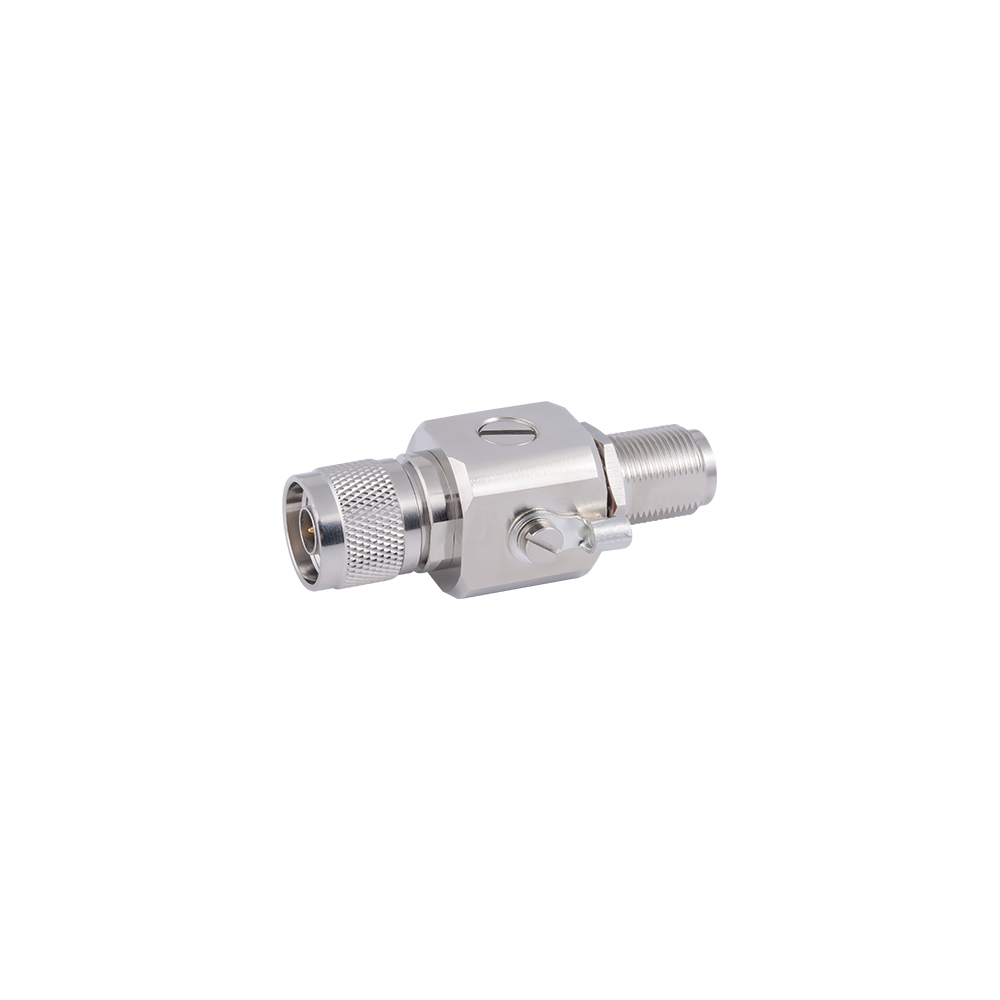
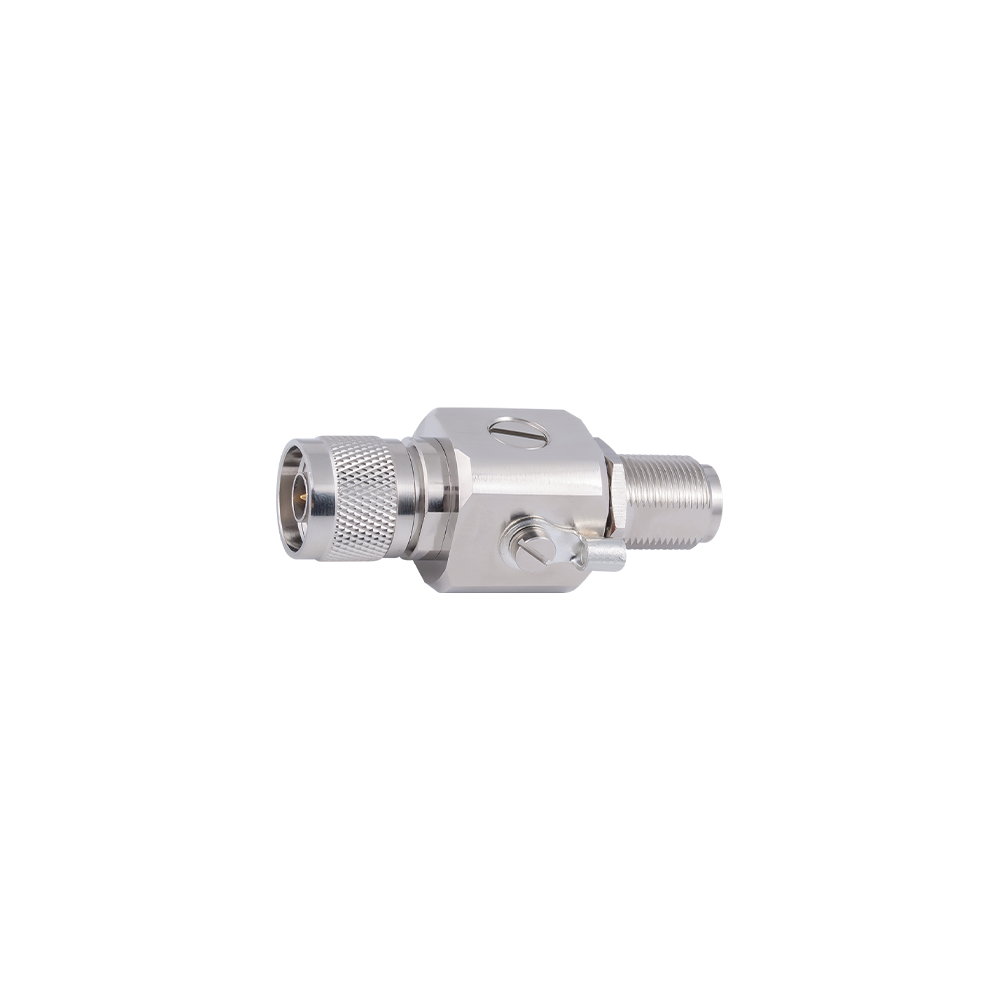
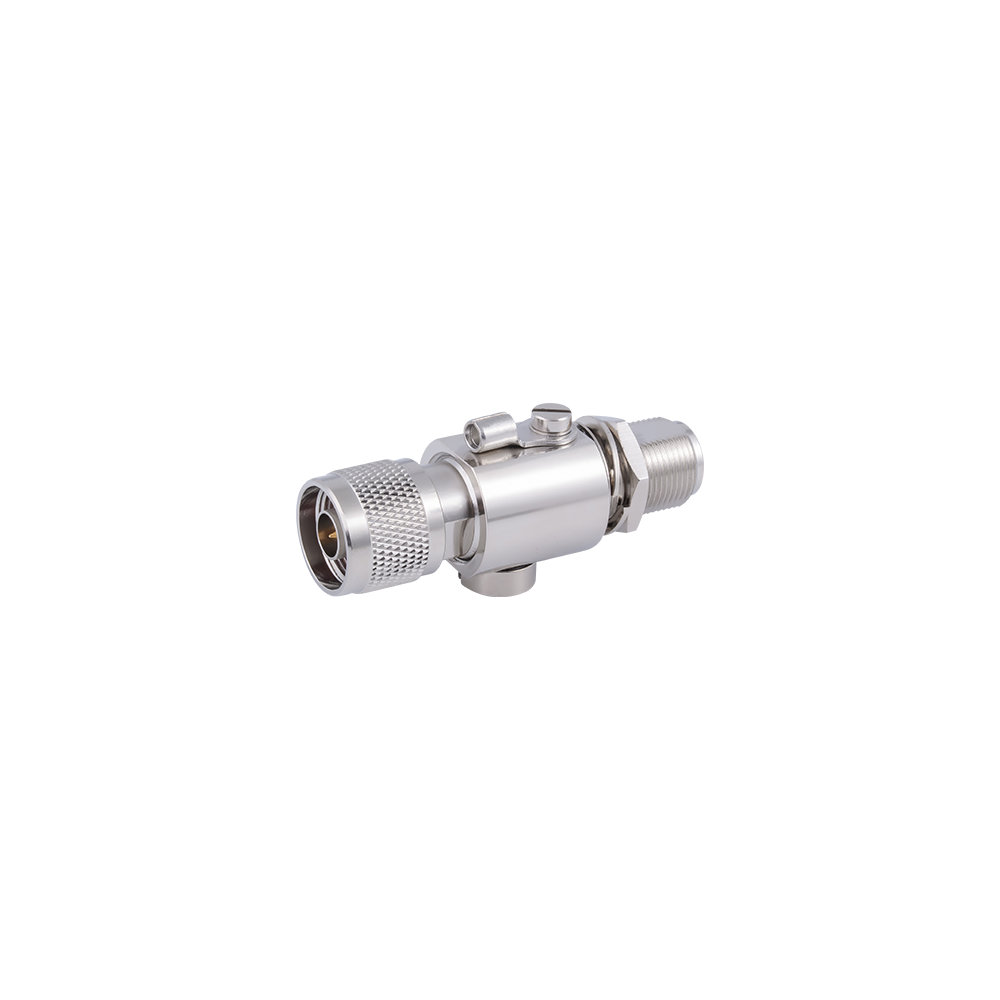
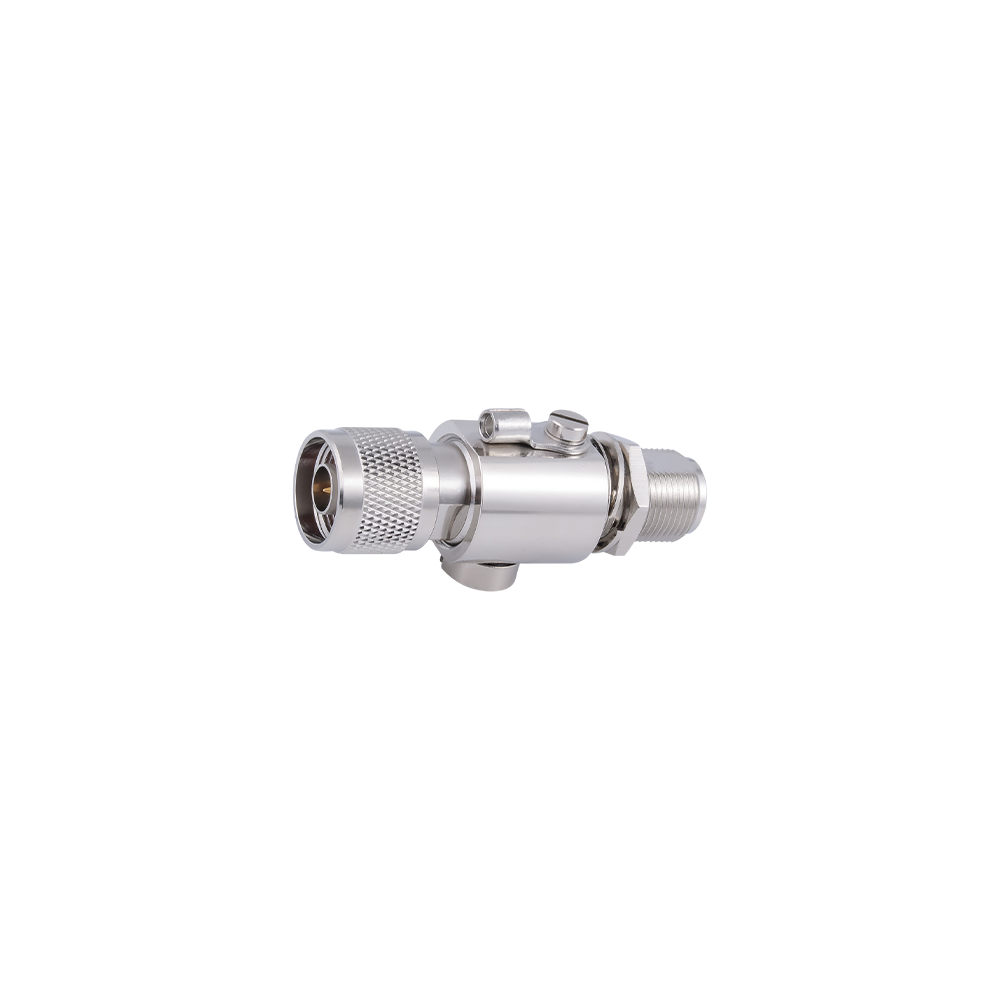
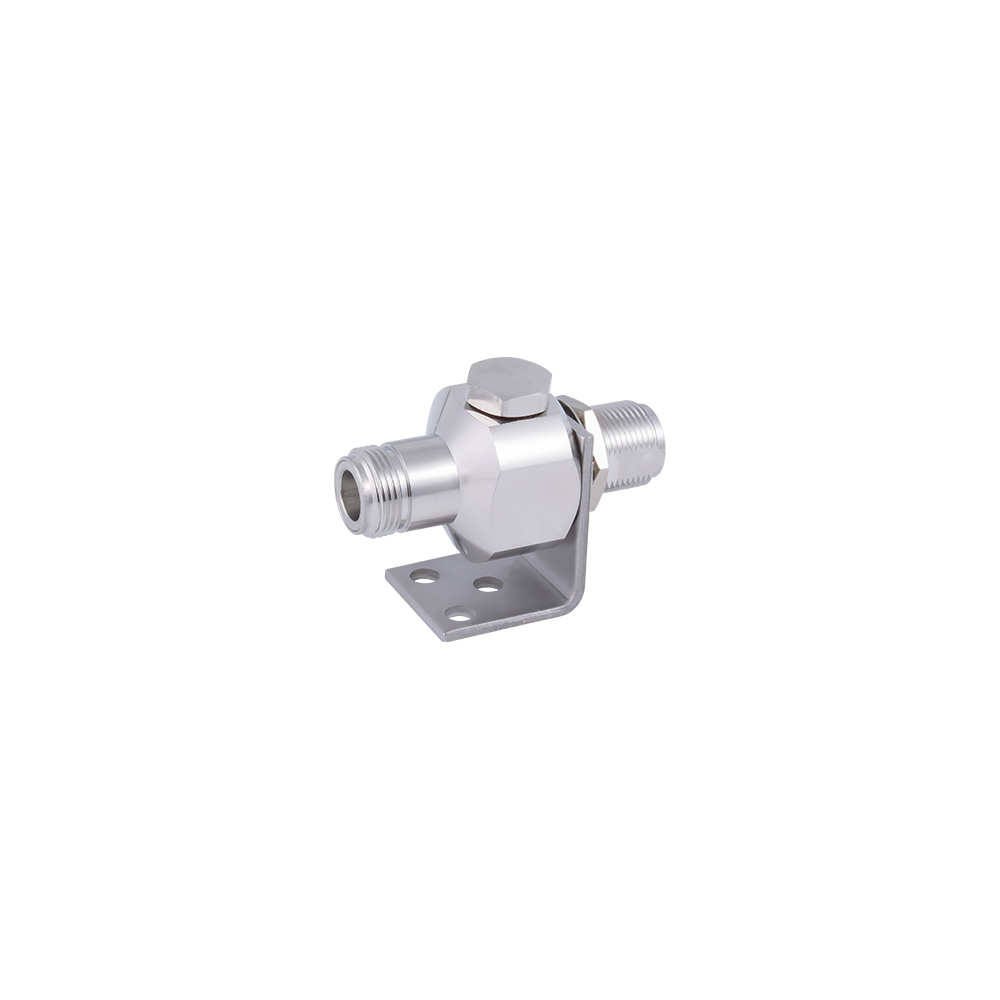
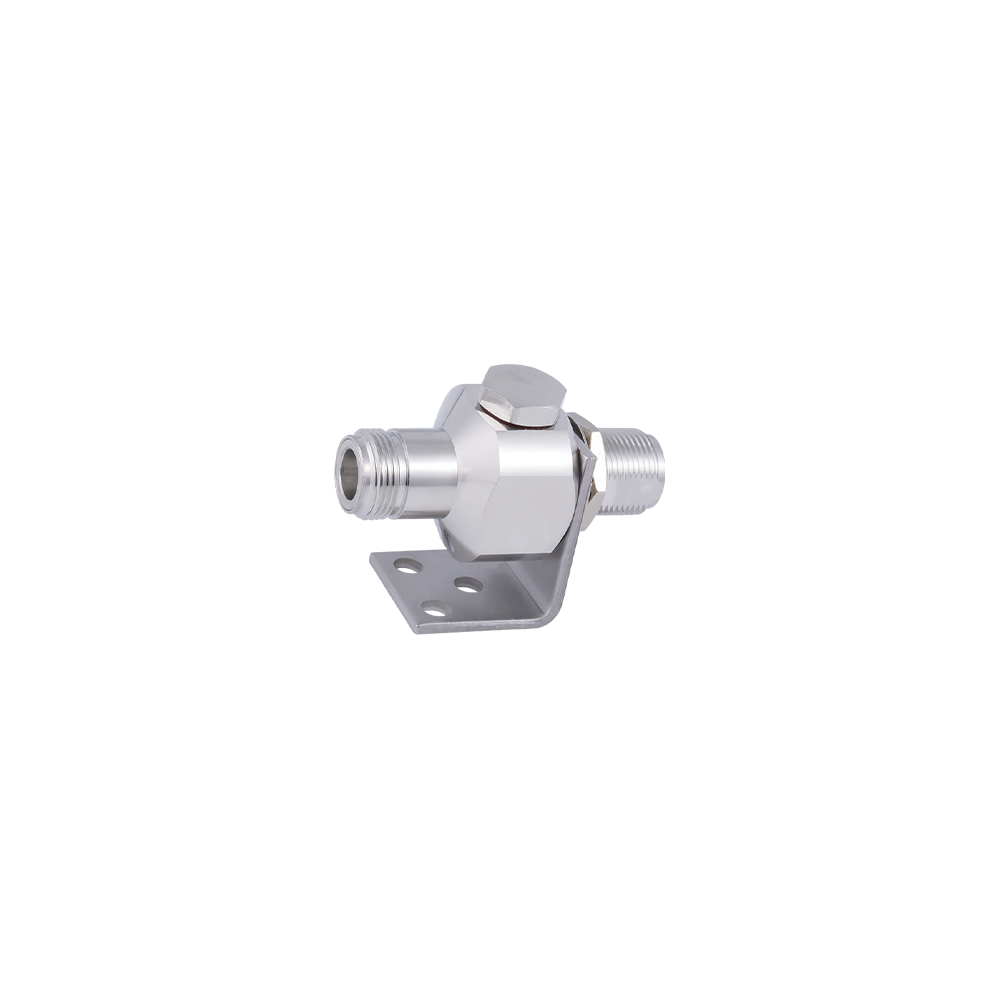
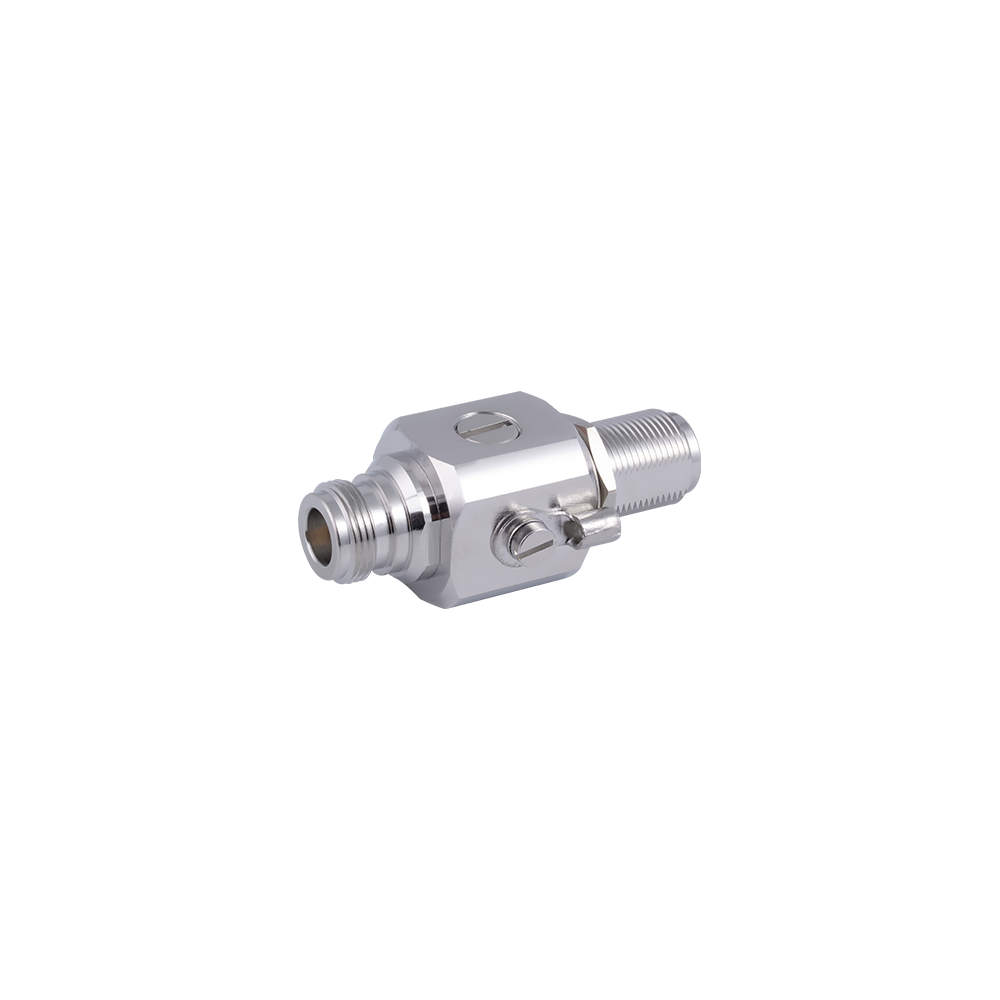
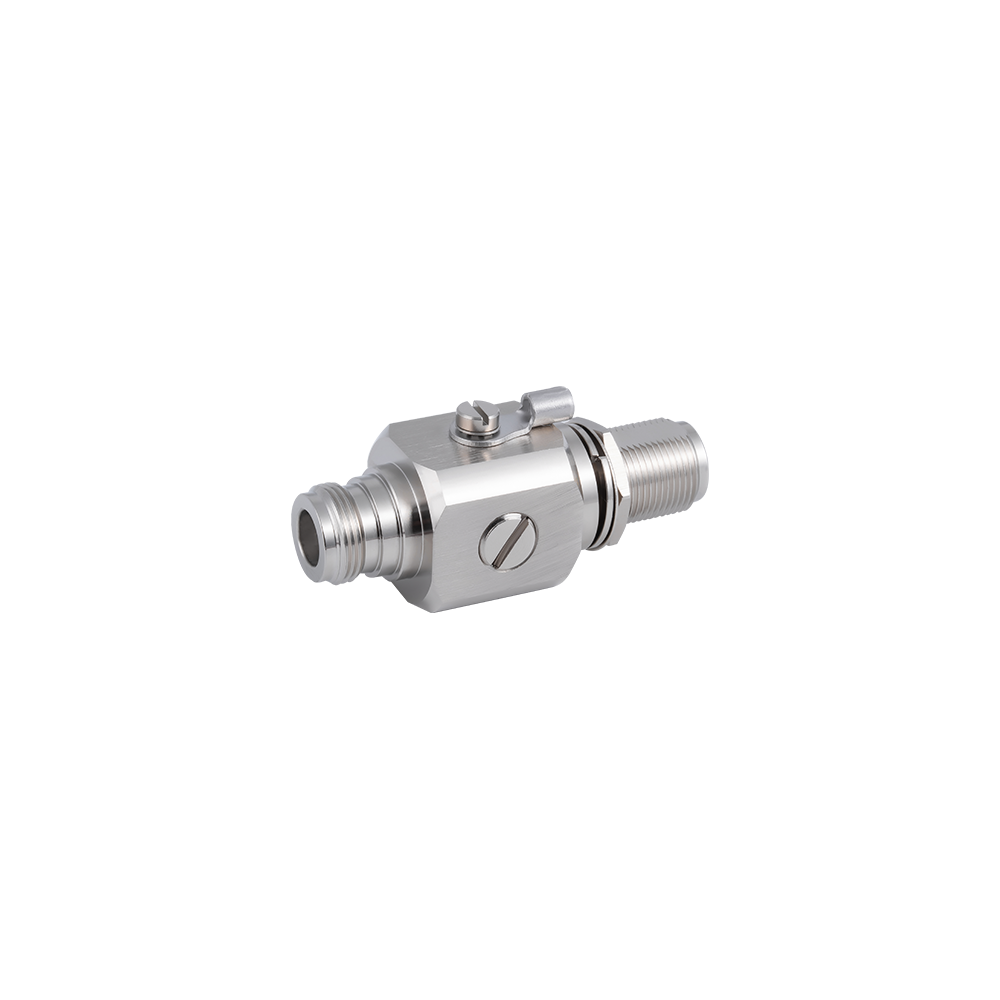
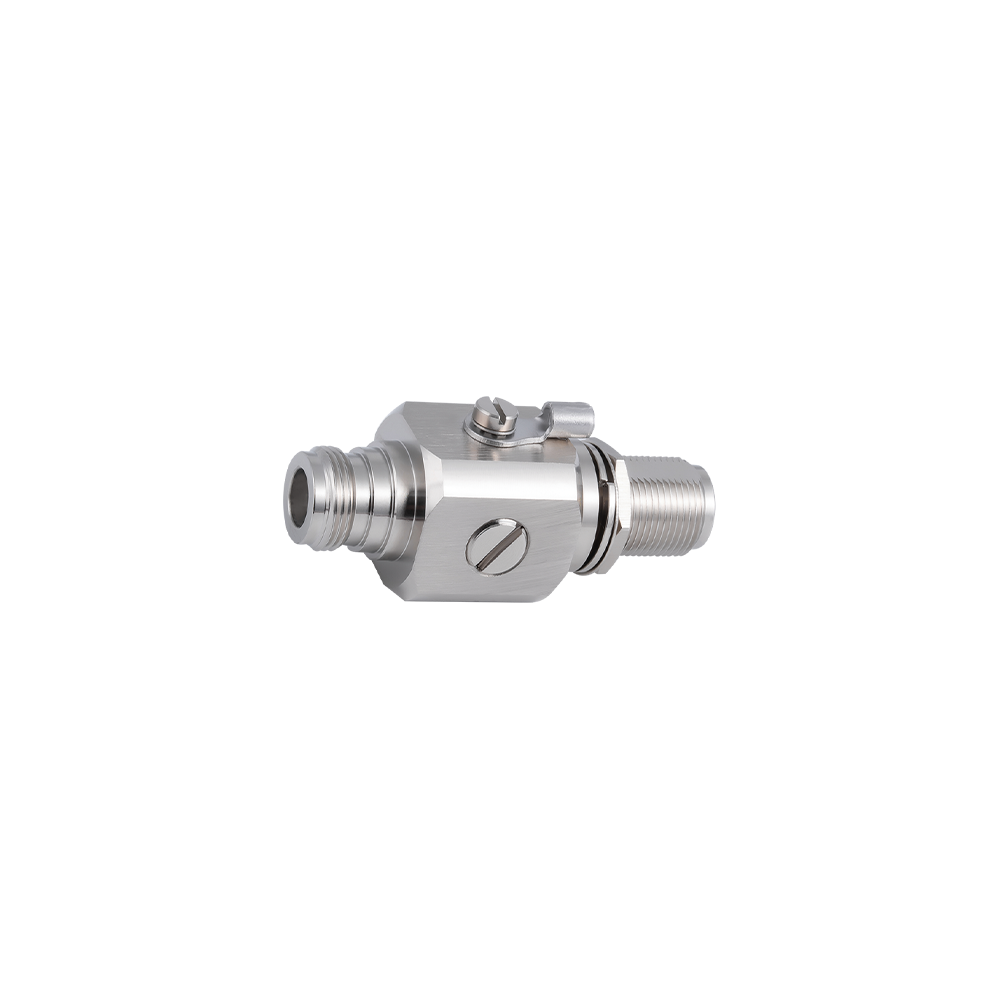
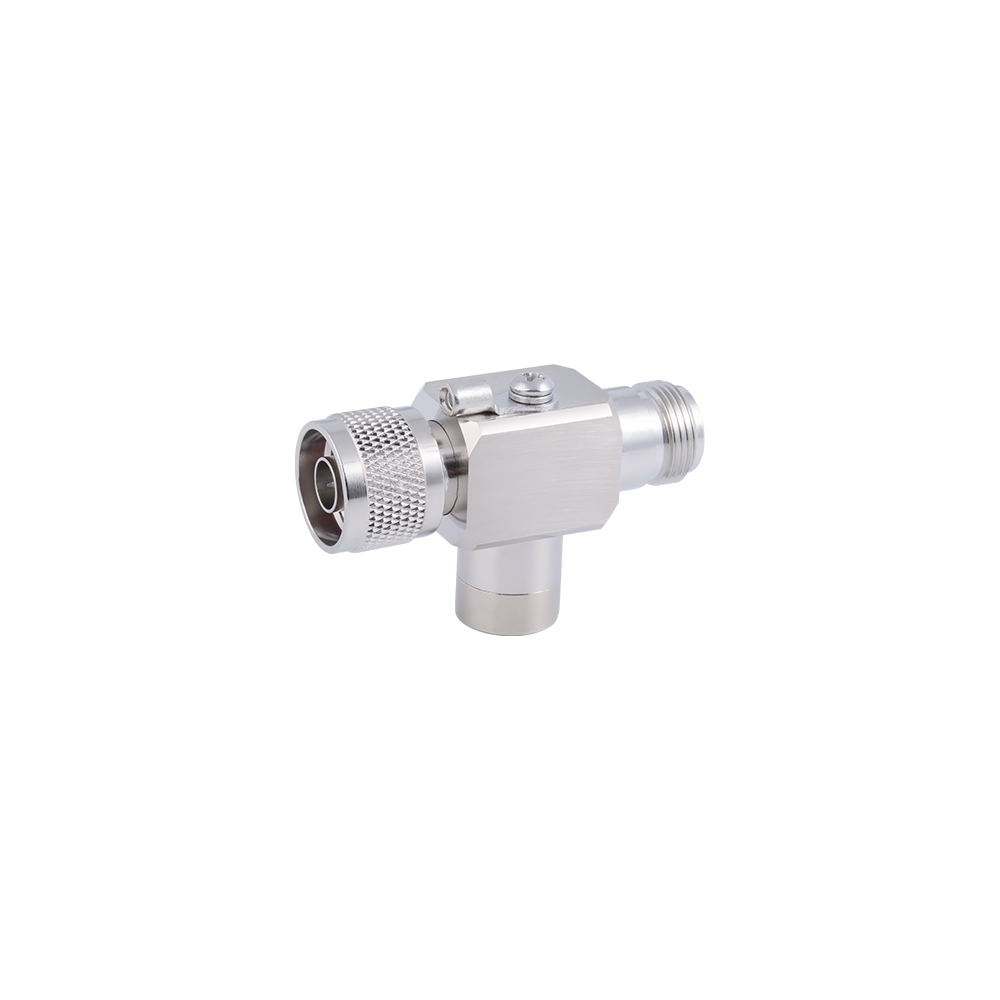
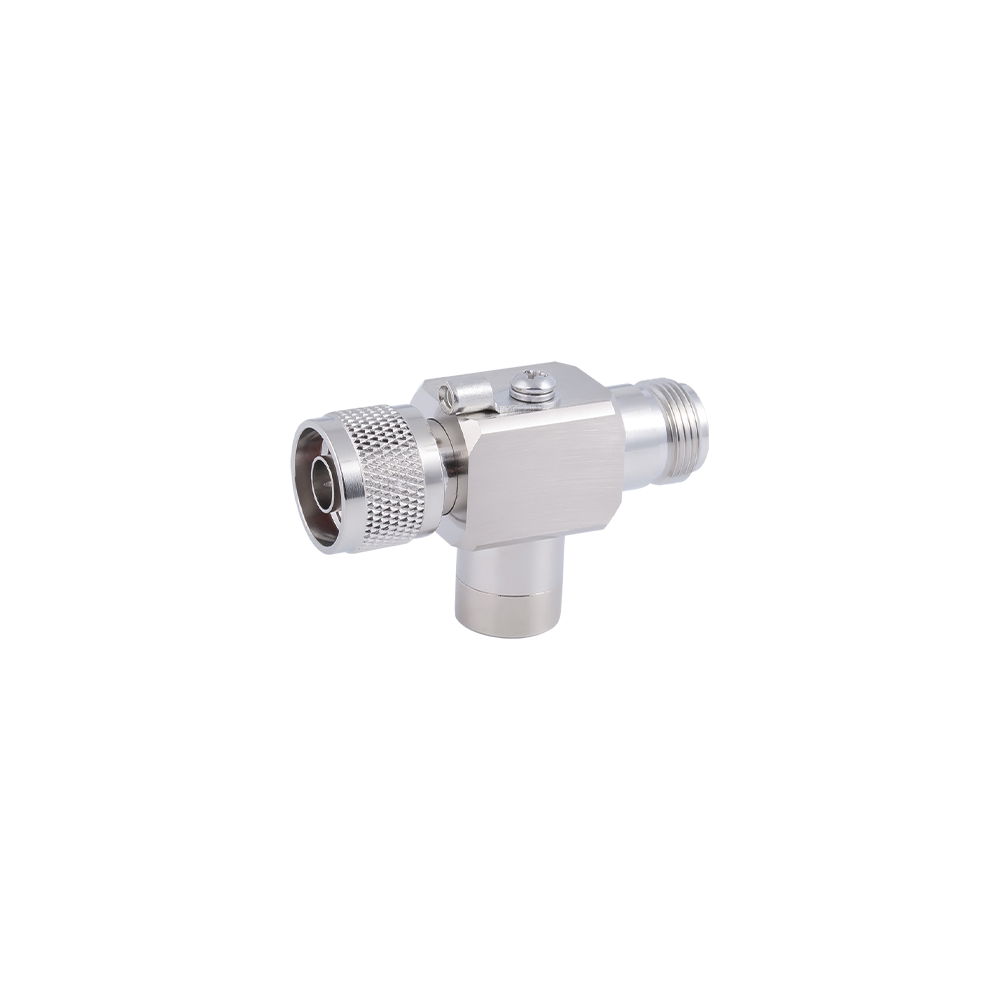
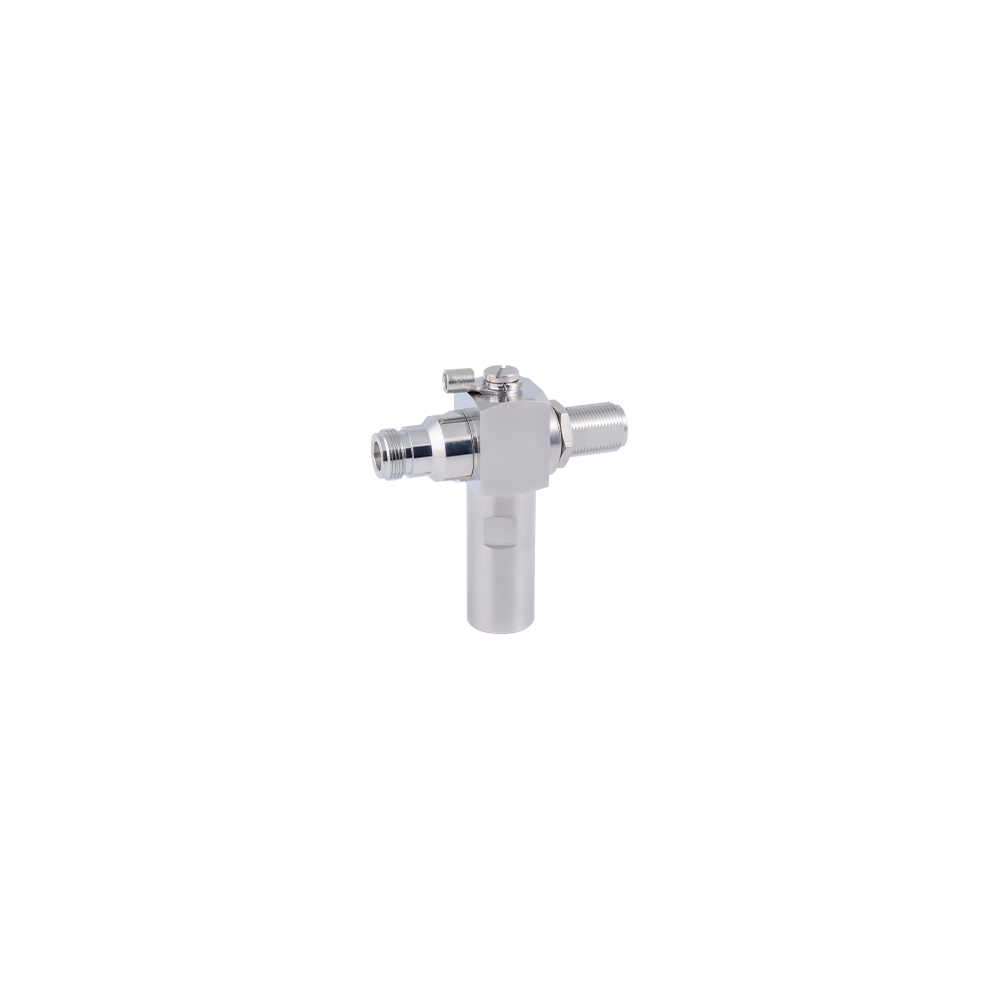
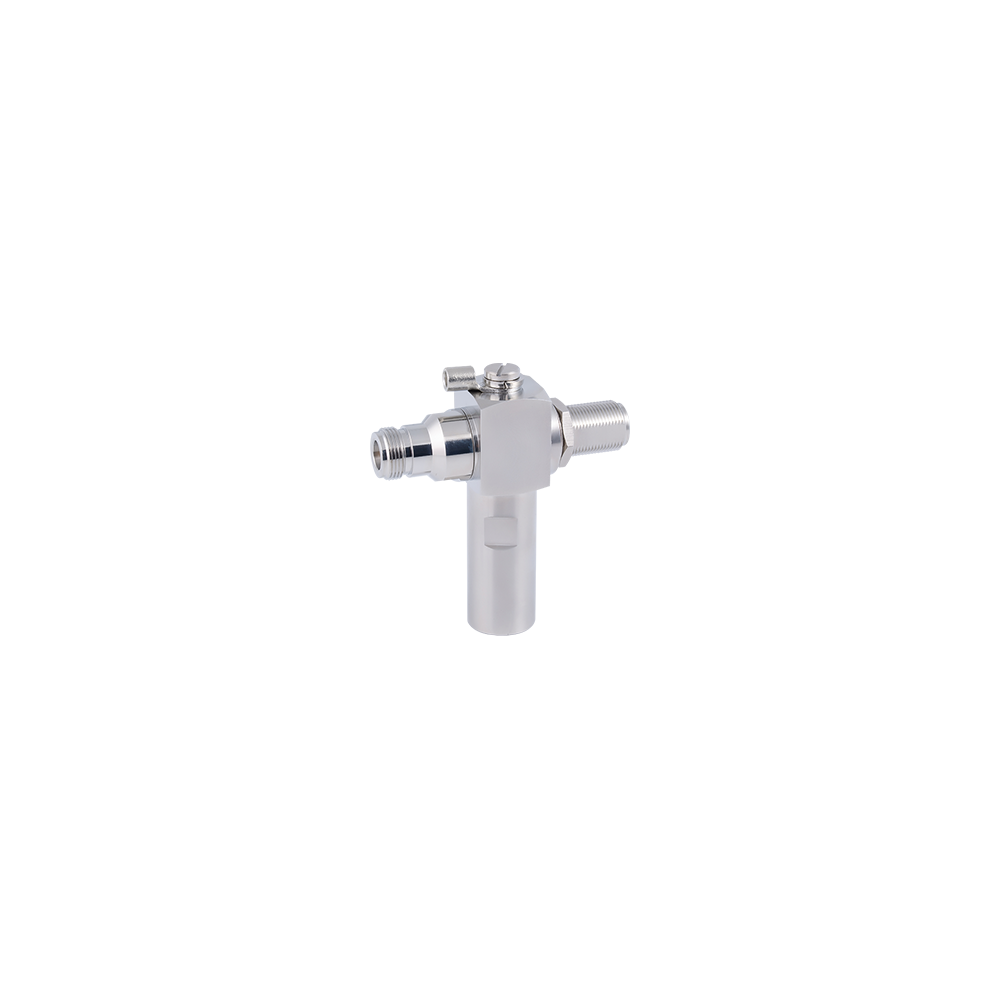
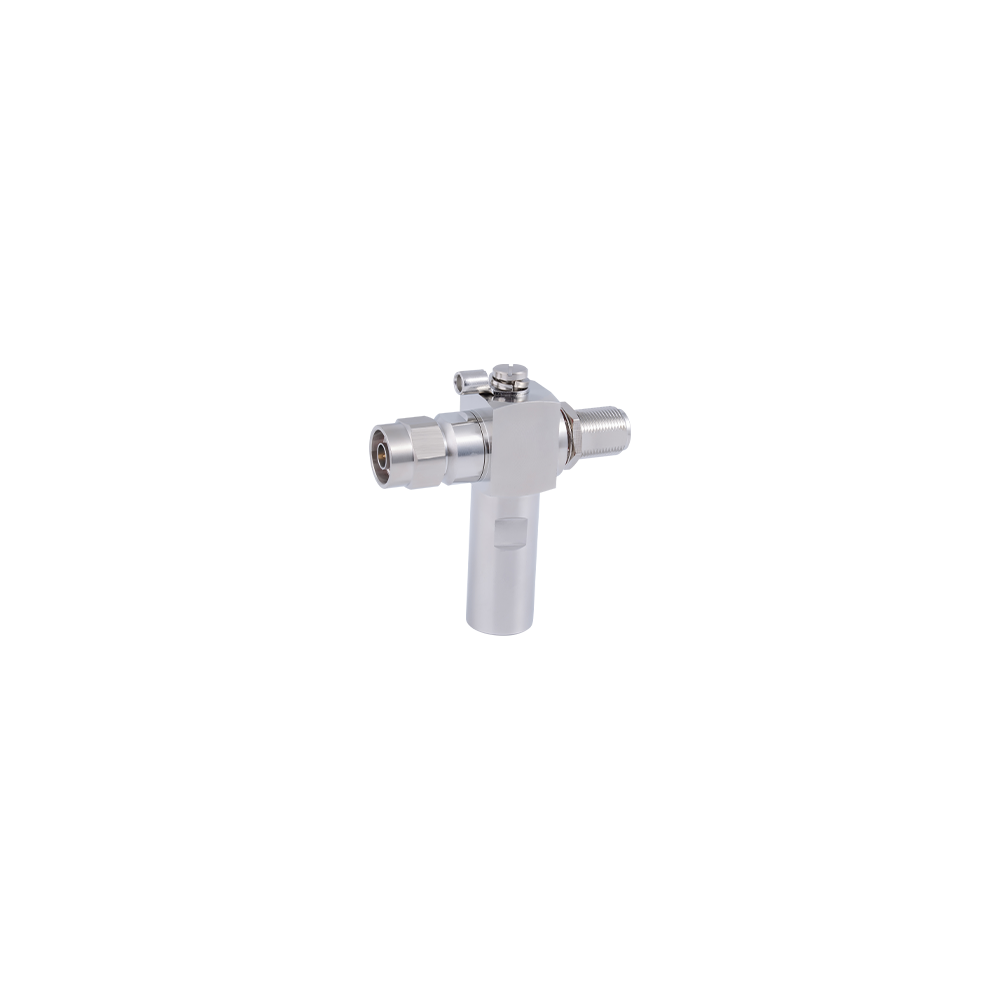
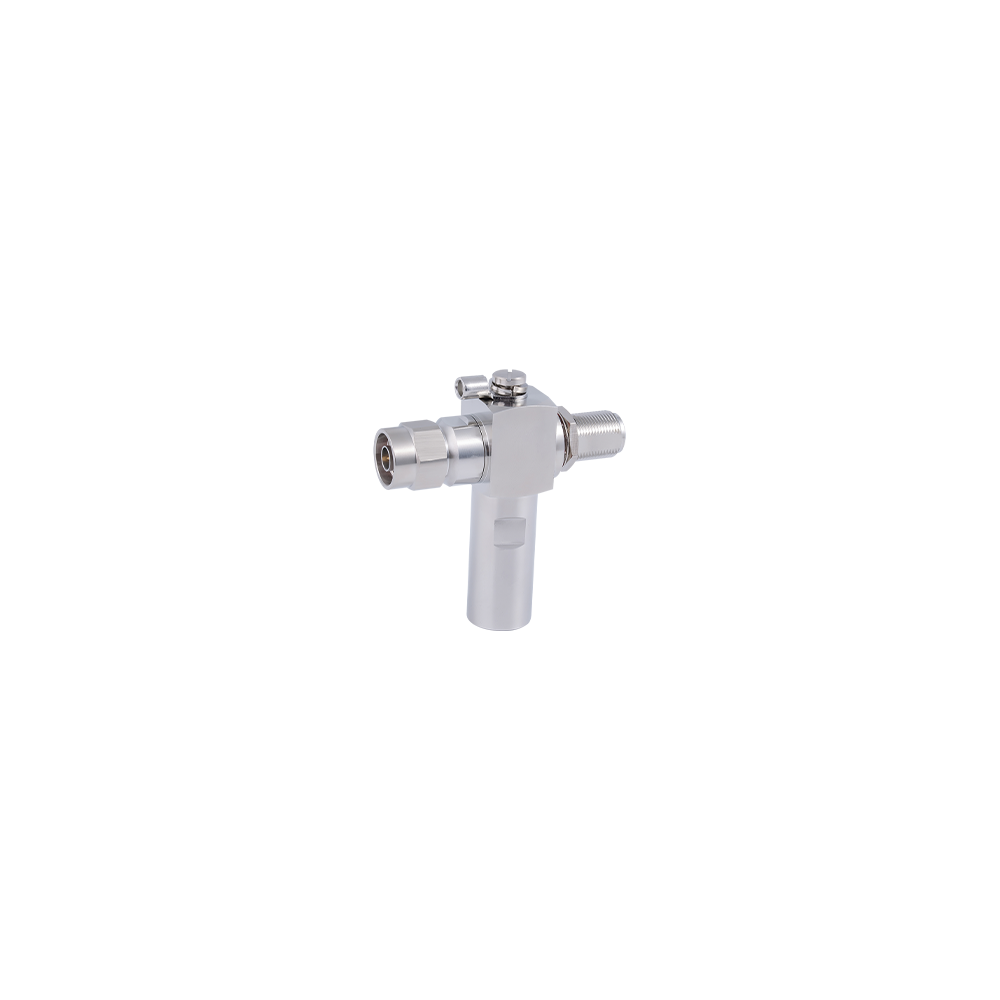
Our company has a wide range of lighting arrester products, a number of series and specifications for customers to choose. Provide one-stop service for customers.Lighting arresters is an essential selection and a safe- guard accessory when build the base station. Correct exertion is a guarantee to the high-efficient system.
Lightning strike by lightning means a big test to the radio equipment. Perhaps in a few microseconds instant, the voltage of surge can be as high as the dozens kilovolt/meter. The whole system will load enormous, and bring the damage to the equipment as a consequence. Our company produces arresters will meet the requirement of switching voltage. It is an essential selection and a safe- guard accessory when build the base station. Correct exertion is a guarantee to the high-efficient system.
Yangzhou Jingcheng Electronics Co., Ltd., a premier China Coaxial Lightning Protector Manufacturer and Coaxial Lightning Arrester Supplier, was founded in 1999. It is a high-tech enterprise specializing in the R&D and manufacturing of RF coaxial connectors, cable assemblies, and passive microwave components.
Equipped with a comprehensive R&D and production system, the company has obtained international certifications including ISO9001. Adhering strictly to standards such as MIL, IEC and GB, we offer over 30 product series with more than 2,000 specifications, covering SMA, BNC, N-type and other mainstream models. Our products are widely applied in the fields of communications, aerospace, automotive electronics and beyond, and exported to many countries and regions across Europe, America and Asia.
We uphold the tenet of "Quality as the Foundation, Customers as the Core", committed to providing reliable interconnection solutions and professional services for global clients.
A Coaxial Lightning Protector is an inline RF safeguard component installed along a coaxial feeder line to divert transient surge energy away from sensitive radio equipment during a lightning event or induced surge. Sitting between the antenna feed line and the connected radio module, a Coaxial Lightning Protector allows normal RF signal transmission to pass through with minimal impact while providing a controlled discharge path the moment surge voltage exceeds a defined threshold. Base stations, distributed antenna systems, and other outdoor RF installations commonly rely on a Coaxial Lightning Protector as a standard safeguard accessory, since an unprotected feeder line offers no defense against the extremely high transient voltages that a nearby lightning strike can induce. This category shares a common purpose across its several available configurations: preserving signal integrity under normal operation while protecting connected equipment from a sudden surge event. This article covers the working principle, common types, application scenarios, comparative performance factors, and maintenance guidance relevant to the Coaxial Lightning Protector category.
2. Working Principle Behind Surge Protection
During a lightning event, induced surge voltage on a feeder line can reach extremely high levels within a matter of microseconds, with surge field strength potentially reaching the range of tens of kilovolts per meter near a strike point. A Coaxial Lightning Protector is designed to detect this abrupt rise in voltage and respond by diverting the surge current to ground through a dedicated discharge path, rather than allowing it to continue traveling down the line toward connected radio equipment. Depending on the internal protection element, this response may rely on a gas discharge tube that ionizes and conducts once a threshold voltage is reached, or a quarter-wave stub design that uses transmission line geometry to short circuit surge frequencies while remaining transparent to the RF operating frequency. Because normal RF signal transmission must continue uninterrupted under everyday conditions, the protector is engineered to remain effectively invisible to the signal path until an actual surge event occurs, at which point it activates within a very short response window measured in nanoseconds.
3. Common Types And Features
(1) Gas Discharge Tube Type
This type uses a sealed gas discharge tube that ionizes once surge voltage crosses a defined threshold, providing a low-loss discharge path across a broad range of connector series and frequency bands.
(2) Quarter-Wave Stub Type
A quarter-wave stub design uses transmission line theory to present a short circuit at direct current and low frequency while remaining transparent at the designed RF operating frequency, offering a durable, wear-resistant protection method.
(3) Hybrid Protection Type
Hybrid designs combine multiple protection elements to broaden effective frequency coverage or improve response consistency across varying surge conditions, often used where equipment sensitivity requires layered protection.
4. Coaxial Lightning Protector Compared With An Unprotected Feeder Line
The table below summarizes the core differences between a feeder line fitted with a Coaxial Lightning Protector and an unprotected feeder line during a surge event.
Comparison between a protected and an unprotected coaxial feeder line during a surge event
Attribute
With Coaxial Lightning Protector
Unprotected Feeder Line
Surge discharge path
Dedicated path to ground
None available
Response to surge event
Activates within nanoseconds
No mitigation occurs
Impact on normal RF signal
Minimal insertion loss
Not applicable
Risk to connected equipment
Substantially reduced
High exposure to surge damage
5. Application Scenarios And Selection Points
Before viewing the stacked bar chart below, it is useful to understand how demand for Coaxial Lightning Protectors is generally distributed across different installation environments. Base station and communications tower installations typically account for the largest share of demand, since these structures are frequently the tallest point in their surrounding area and therefore carry elevated lightning strike exposure. Broadcast and aerospace ground support installations also represent a meaningful share, given the outdoor, elevated nature of their antenna systems. General outdoor RF installations, including smaller relay and monitoring stations, make up the remaining share. The chart below presents an illustrative distribution across three installation categories rather than a measured industry-wide statistic.
In this stacked bar chart, the base station row shows the largest dark red segment, representing the highest relative exposure to lightning-induced surge among the three categories, consistent with the elevated, often isolated positioning of communications towers. The broadcast row shows a similarly notable but somewhat smaller high-exposure segment, reflecting the outdoor antenna systems common to broadcast and aerospace ground support installations. The general outdoor category shows a more balanced distribution across exposure segments, reflecting the wider variety of installation heights and surrounding structures found in smaller relay and monitoring stations. When selecting a Coaxial Lightning Protector for a specific project, the main considerations are the connector series already in use, the expected surge exposure level based on installation height and geographic lightning frequency, the RF operating frequency range, and whether a gas discharge tube, quarter-wave stub, or hybrid protection type best matches the application's response and frequency coverage requirements. Selecting a protector with a discharge threshold and frequency range matched to the specific installation helps maintain both signal integrity and equipment safety under normal and surge conditions alike. This proportional view is illustrative and intended to convey general relative exposure levels rather than an exact measured industry breakdown.
6. Surge Response Performance At A Glance
Before viewing the gauge chart below, it helps to understand what response speed means for a Coaxial Lightning Protector and why it matters. Because a lightning-induced surge rises to peak voltage within microseconds, the protector's internal element must activate and begin diverting current almost immediately to be effective, and this activation speed is typically measured in nanoseconds. A slower-responding protection element allows more of the surge energy to pass toward connected equipment before the discharge path becomes active, which reduces overall protective value even if the same threshold voltage is eventually reached. The gauge below illustrates a general response-speed positioning for a well-engineered Coaxial Lightning Protector relative to the full range of possible response times, rather than a specific measured test result for one part number.
The needle in this gauge sits well into the upper portion of the arc, which is meant to represent a Coaxial Lightning Protector engineered for fast, nanosecond-range activation once surge voltage crosses its defined threshold. This fast response is important because it limits how much surge energy reaches the connected radio equipment before the discharge path takes over, which directly affects how much protective value the component provides during an actual lightning event. A gas discharge tube element generally offers strong current handling once ionized, while a quarter-wave stub design offers a continuously present short-circuit path at surge-relevant frequencies without needing a separate activation threshold at all, and hybrid designs attempt to combine favorable characteristics of both approaches. For base station and broadcast installations facing frequent lightning exposure, response speed is often weighed alongside discharge current capacity and frequency range when comparing available Coaxial Lightning Protector options. It is also worth noting that response speed is only one factor in overall surge protection performance, and it should be evaluated together with the discharge current rating and insertion loss characteristics discussed elsewhere in this article rather than in isolation. As with the other visual in this article, this gauge is illustrative and intended for general educational reference rather than as a certified test result for a specific product configuration.
7. Maintenance Guidance For Coaxial Lightning Protectors
Confirm the grounding connection is intact and properly bonded, since the discharge path depends on a reliable ground reference.
Inspect the weatherproofing seal at each connector interface periodically, particularly for outdoor tower-mounted installations.
After a known significant surge event, inspect or test the protector to confirm it remains within normal operating parameters.
Avoid mechanical stress at the connector body during installation, since deformation can affect both RF performance and surge response.
Keep records of installation date and any surge events to support planned inspection intervals over the system's service life.
8. Manufacturing Background
Yangzhou Jingcheng Electronics Co., Ltd., founded in 1999, specializes in the research, development, and manufacturing of RF coaxial connectors, cable assemblies, and passive microwave components, including Coaxial Lightning Protector products across SMA, BNC, N-type, and other mainstream series. Operating under ISO9001 certification and in line with standards such as MIL, IEC, and GB, the company offers a broad product range applied across communications, aerospace, and automotive electronics fields, with distribution across multiple regions internationally, providing a one-stop selection of lightning protection accessories for base station and outdoor RF installation needs.
9. Frequently Asked Questions
Q1: Why is a Coaxial Lightning Protector needed at a base station?
Base stations are often the tallest structure in their area, which increases exposure to lightning-induced surge, making a dedicated discharge path an essential safeguard for connected radio equipment.
Q2: Does a Coaxial Lightning Protector affect normal signal transmission?
A well-engineered protector is designed to introduce minimal insertion loss under normal operating conditions while remaining ready to activate during a surge event.
Q3: What is the difference between a gas discharge tube type and a quarter-wave stub type?
A gas discharge tube activates once a threshold voltage is reached, while a quarter-wave stub presents a continuous short circuit at surge-relevant frequencies without needing a separate activation threshold.
Q4: How often should a Coaxial Lightning Protector be inspected?
Routine periodic inspection, along with a check after any known significant surge event, helps confirm the protector and its grounding connection remain in good working order.


 English
 中文简体
中文简体