English
 中文简体
中文简体
Choosing a coaxial cable without comparing impedance, attenuation, and connector compatibility usually ends in poor signal quality. The practical rule is short: 50 Ω cables such as RG58 are for radio equipment, test instruments, and compact RF modules, while 75 Ω cables such as RG59, RG6, and RG11 are for video, TV, satellite, and broadband. Inside each impedance family, the decision comes down to run length, operating frequency, and how easily the cable must bend and terminate. This coax cable comparison covers the four most common RG cables, explains the numbers that matter, and maps each cable to the connector series that will actually fit it.
Content
What a Coax Cable Comparison Must Cover
Six parameters determine whether a cable will work in your application: characteristic impedance, attenuation per unit length, frequency ceiling, outer diameter, flexibility, and shielding quality. Of these, impedance and attenuation cause the most mis-buys.
- Characteristic impedance — 50 Ω is the standard for RF systems, test equipment, and antennas; 75 Ω is the standard for video, TV, and broadband. Mismatches create reflections and extra loss.
- Attenuation — Measured in dB per 100 feet or per metre, attenuation climbs as frequency rises. A cable that works at 10 MHz can be unusable at 2.4 GHz over the same distance.
- Frequency ceiling — The highest usable frequency before loss or dimensional instability makes the cable impractical.
- Outer diameter and flexibility — Thick cables such as RG11 have low loss but a large bend radius; thin cables such as RG58 route easily but lose more signal.
- Shielding — Braid and foil layers reject interference; double-shielded constructions suit noisy industrial environments.
- Cable-to-connector fit — The connector series must match the cable's impedance and accept its outer conductor and dielectric diameters.
RG58 vs RG59 vs RG6 vs RG11: Side-by-Side
Once impedance splits the group into 50 Ω and 75 Ω families, the remaining differences are mainly attenuation, diameter, and stiffness. The table below condenses the comparison.
| Parameter | RG58 | RG59 | RG6 | RG11 |
|---|---|---|---|---|
| Characteristic impedance | 50 Ω | 75 Ω | 75 Ω | 75 Ω |
| Outer diameter | 4.95 mm | 6.15 mm | 6.9-7.0 mm | 10.3 mm |
| Dielectric | Solid PE | Solid PE | Foam PE | Foam PE |
| Typical attenuation at 100 MHz | ~4.5 dB/100 ft | ~3.5 dB/100 ft | ~2.0 dB/100 ft | ~1.5 dB/100 ft |
| Common applications | Test leads, short RF interconnects | Analog video, CCTV | Satellite, TV, broadband | Long outdoor drops |
RG58: Best for Short 50 Ω Interconnects
RG58 is the right choice for short 50 Ω interconnects when flexibility and easy termination matter more than ultra-low loss. Its slim 4.95 mm diameter and soldered or crimped centre conductor make it the default cable for test leads, radio patch cords, and GPS pigtails. Typical loss runs about 4.5 dB per 100 ft at 100 MHz, so keep runs under roughly 10 m (33 ft) for UHF and shorter still at 1 GHz.
RG59: Acceptable for Short 75 Ω Analog Video
RG59 works acceptably for short 75 Ω analog video runs, but becomes too lossy above roughly 50 MHz or beyond 30-50 m (100-165 ft). It is slightly thicker than RG58 and easier to terminate with BNC connectors than RG6. However, attenuation of about 3.5 dB per 100 ft at 100 MHz makes it a poor choice for high-definition video or long camera drops.
RG6: The Default 75 Ω Broadband Cable
RG6 is the default 75 Ω cable for satellite, cable TV, and residential broadband because it combines lower attenuation with stronger shielding. Foam polyethylene dielectric reduces loss to roughly 2.0 dB per 100 ft at 100 MHz, more than 40 percent lower than RG59. Quad-shielded versions reject interference in congested environments, and F-type connectors are the standard termination.
RG11: Low Loss for Long Outdoor Drops
RG11 is the low-loss 75 Ω option for long outdoor drops where RG6 attenuation would force an amplifier. Its thicker foam dielectric and larger conductor cut loss to about 1.5 dB per 100 ft at 100 MHz, extending usable runs to several hundred feet. The trade-off is a stiff 10.3 mm cable with a large bend radius and demanding termination, so reserve RG11 for trunk lines and multi-dwelling distribution.
Frequency and Distance: How Far Can Each Cable Really Run?
Attenuation, not signalling speed, is what limits real coax runs. The following guidance works for most installations, assuming connectors are correctly installed and the system is impedance-matched.
- Below 30 MHz (HF radio): RG58 can cover 30 m (100 ft) with acceptable loss; beyond that, move to a lower-loss 50 Ω feeder such as RG213 or RG8-class cable.
- 50 to 500 MHz (VHF/UHF, TV): on the 75 Ω side, use RG6; RG59 is only for short analog drops. On the 50 Ω side, keep RG58 under 10 m and switch to a foam-dielectric cable for longer runs.
- Above 1 GHz: RG58 and RG59 become impractical beyond a few metres. Use low-loss foam-dielectric, semi-rigid, or flexible microwave cables, and pair them with SMA or N connectors.
Which Connector Goes With Which Cable
Pick the connector after the cable, not before. The connector must match the cable's impedance and accept its outer diameter; forcing the wrong fit is a common cause of intermittent VSWR and signal drop.
| Cable | Impedance | Typical connector series | Common applications |
|---|---|---|---|
| RG58 | 50 Ω | BNC, SMA, TNC, N | Test leads, radio interconnects, GPS |
| RG59 | 75 Ω | BNC, F-type | CCTV, composite video |
| RG6 | 75 Ω | F-type, BNC | Satellite, cable TV, broadband |
| RG11 | 75 Ω | F-type | Long broadband distribution |
| RG213 / RG8-class | 50 Ω | N, UHF | Base stations, high-power feeders |
BNC and TNC for Thin Cables
BNC is the standard connector for RG58 and RG59 in test and video applications, while TNC adds a threaded coupling that resists vibration. BNC's bayonet lock is fast and reliable for patch cords and instrument front panels. For RG58 patch cords and RG59 video drops, a complete range of BNC connectors for flexible coaxial cable covers straight, right-angle, and bulkhead styles.
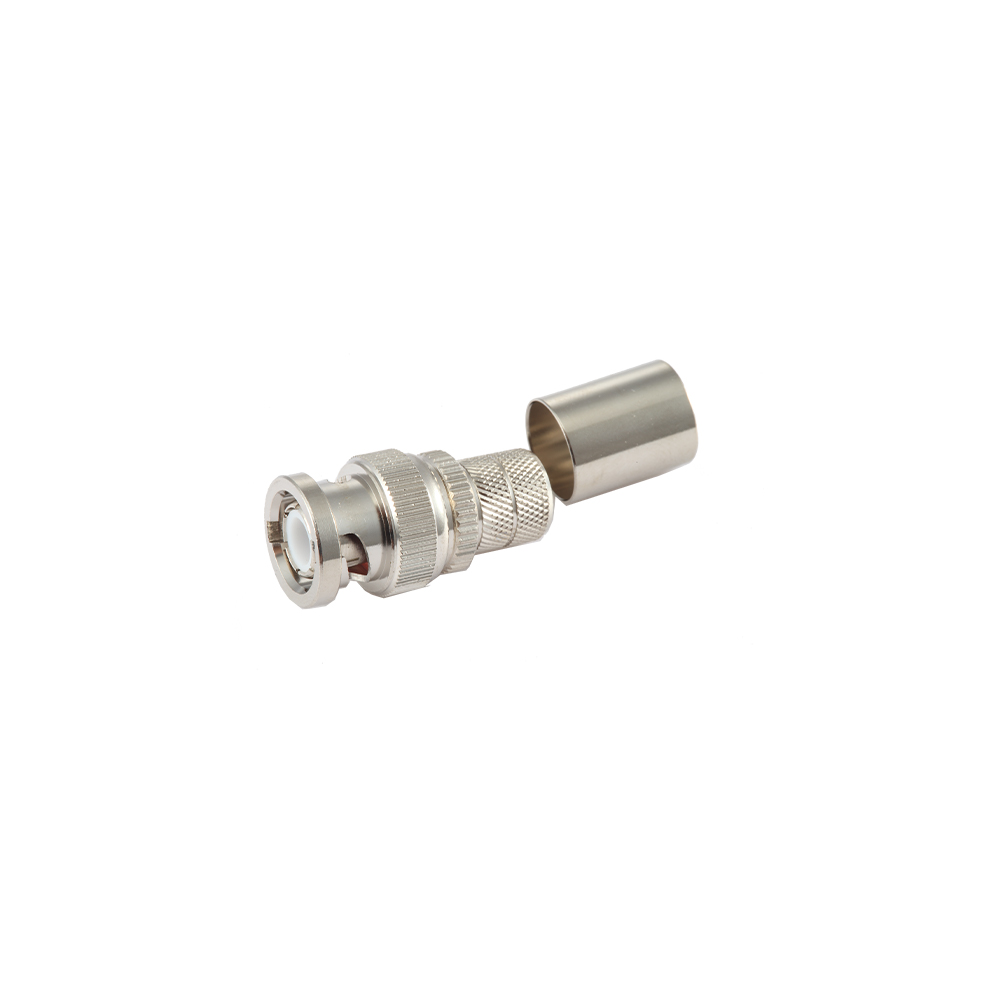 Custom BNC Connectors for Flexible Cable Manufacturer, SupplierYangzhou Jingcheng Electronics Co., Ltd. is China BNC Connectors for Flexible Cable manufacturer and BNC Connectors for Flexible Cable su...View Product →
N-Type for Outdoor and Higher-Power Runs
N-type is the 50 Ω outdoor workhorse, sealed against moisture and consistent up to 11 GHz, making it the safest choice for exposed radio feeders. N connectors handle higher power than BNC and SMA, and their weatherproof construction suits antennas and base stations. When coax runs leave the building, choose N-type connectors for flexible coaxial cable with crimp or clamp attachment.
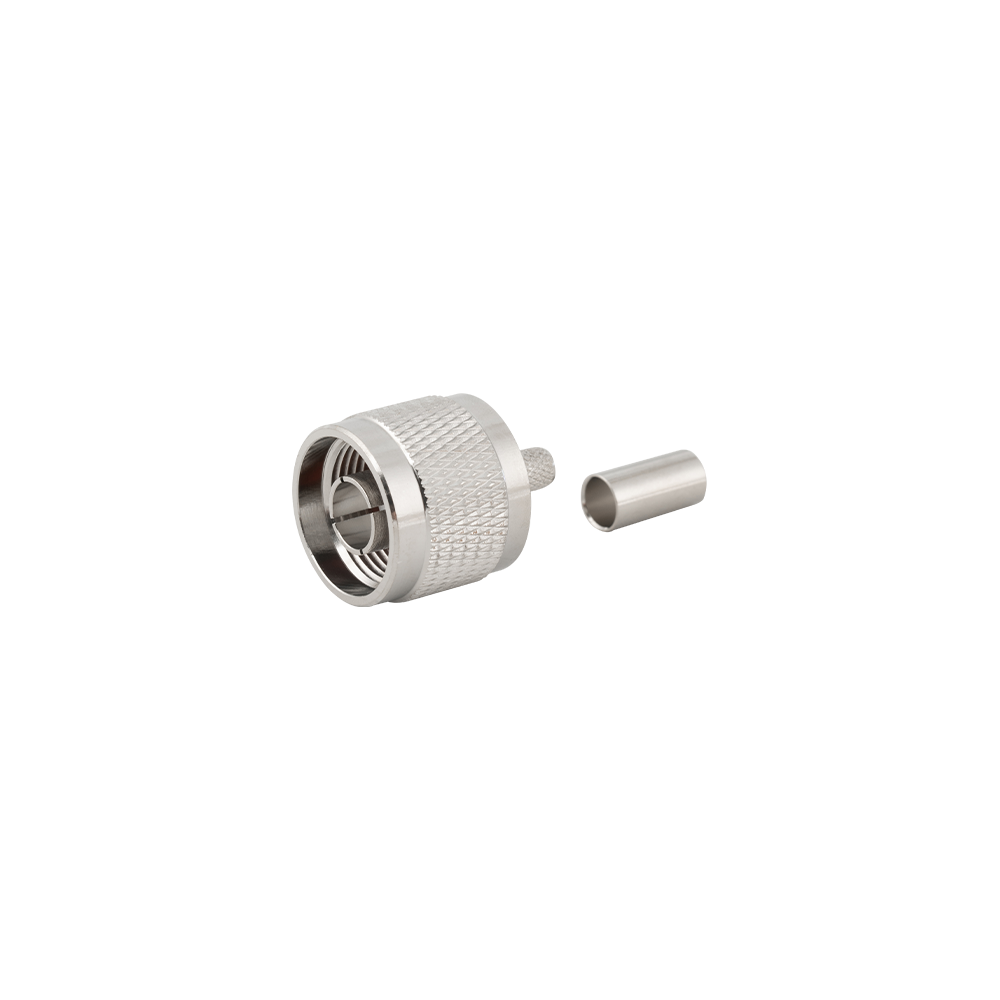 Custom N Connectors for Flexible Cable Manufacturer, SupplierYangzhou Jingcheng Electronics Co., Ltd. is China N Connectors for Flexible Cable manufacturer and N Connectors for Flexible Cable suppli...View Product →
SMA for Compact Modules
SMA is the compact 50 Ω connector for small-diameter flexible and semi-rigid cables where board space is limited and frequency is high. SMA connectors are rated well into the microwave range and appear on radio modules, attenuators, and test adapters. For small flexible cables, SMA connectors for flexible coaxial cable preserve the 50 Ω interface without the bulk of N or BNC.
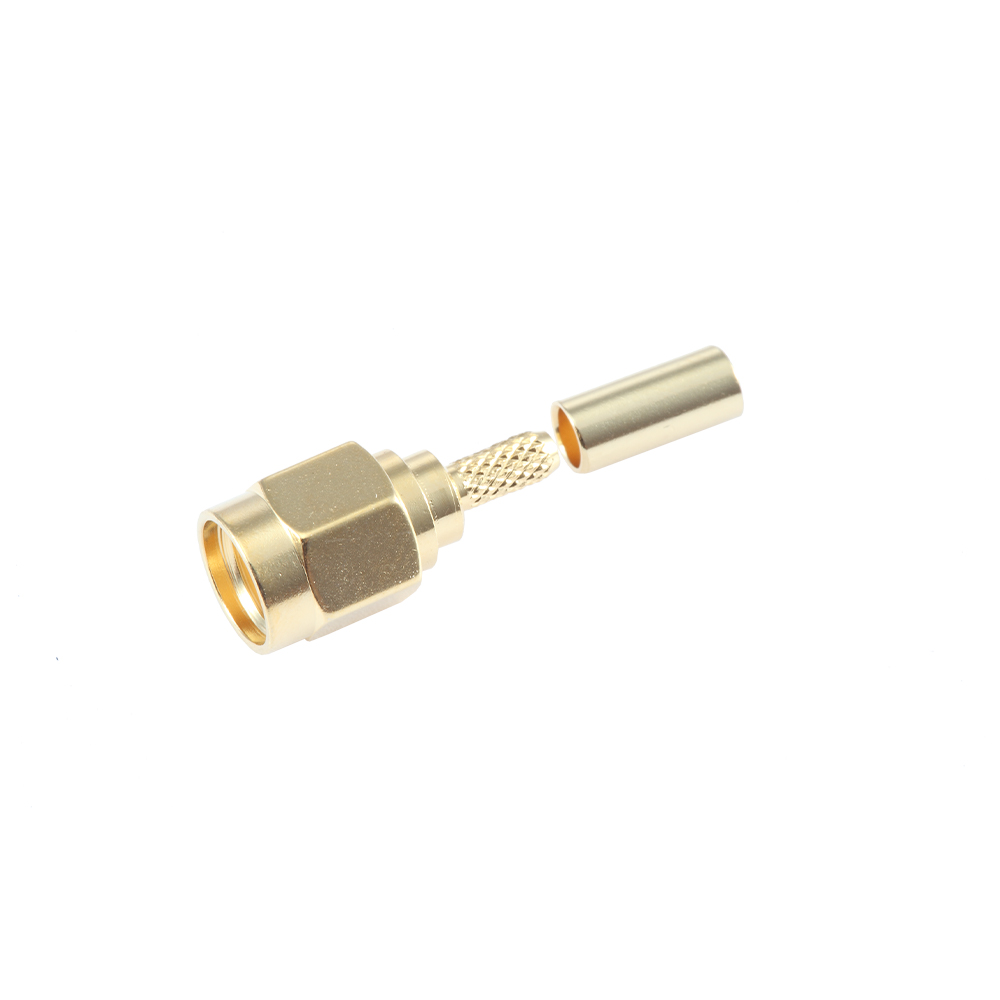 Custom SMA Connectors for Flexible Cable Manufacturer, SupplierYangzhou Jingcheng Electronics Co., Ltd. is China SMA Connectors for Flexible Cable manufacturer and SMA Connectors for Flexible Cable su...View Product →
F-Type for RG6 and RG11
F-type is the inexpensive 75 Ω screw-on connector for RG6 and RG11, but quality depends heavily on the crimp tool and the connector finish. Use compression-style fittings with RG6 and RG11 and avoid cheap die-cast bodies that corrode outdoors.
Application-Based Coax Recommendation
Most coax selections fall into four application classes: radio, video, broadband, and test. Define the class first, then apply the cable and connector mapping above.
- HF/VHF/UHF radio (50 Ω): RG58 for short patch and jumper runs; RG213 or RG8-class for longer feeds; N or UHF connectors; ground and protect any outdoor run.
- CCTV and analog video (75 Ω): RG59 up to roughly 30-50 m; RG6 for longer runs; BNC connectors.
- Satellite, cable TV, and broadband (75 Ω): RG6 as the standard drop; RG11 for long outdoor spans; F-type connectors.
- Test and measurement (50 Ω): RG58 with SMA or BNC; verify VSWR and keep all adapters matched.
- Base stations and high-power transmitters (50 Ω): low-loss feeders with N or 7/16 DIN connectors; RG213-class cable or better.
For any cable that crosses a roof or mast, add surge protection at the building entry point — see our coaxial lightning protection guide for rated product families and installation practice. When you need to narrow down an interface family from the many available series, our RF coaxial connector selection guide walks through each type and its intended use.
Procurement Considerations
Connector and cable defects rarely appear in an ohmmeter test; they show up as intermittent VSWR, corrosion, or noisy video after installation. Four checks catch most problems before purchase.
- Cable diameter versus connector entry: verify outer diameter and dielectric diameter against the connector drawing; a 0.2 mm difference can ruin a crimp.
- Plating: gold-plated contacts suit critical and low-intermodulation paths; nickel is acceptable for general indoor use.
- Impedance consistency: confirm 50 Ω or 75 Ω marking on both cable and connector; mixing families is the most common field error.
- Batch data: ask for attenuation and VSWR test values rather than relying only on catalogue figures.
- Single-source supply: buying cable, connectors, adapters, and surge protectors from one RF supplier keeps tolerances aligned; the detailed overview of our one-stop RF supply capability explains how that workflow is organised.
Frequently Asked Questions
These are the questions buyers ask most often when comparing coax cables.
Is RG6 better than RG59?
Yes for satellite, broadband, and any run over a few metres: RG6 has roughly 40 percent lower attenuation and stronger shielding. RG59 is only preferable for short indoor analog video runs where its flexibility and cheaper termination matter.
Can I use RG58 for CCTV?
No. CCTV cameras and recorders expect a 75 Ω signal path, while RG58 is 50 Ω. Use RG59 for short camera runs or RG6 for longer ones, terminated with BNC connectors.
What happens if I mix 50 Ω and 75 Ω components?
The impedance mismatch causes reflections that reduce signal level and increase return loss. The system may still work at low frequencies or short distances, but it becomes unreliable at UHF and above.
Which connector should I use for RG58?
BNC for general test and patch use, SMA for compact modules, TNC when vibration is a concern, and N for outdoor or higher-power runs.
Start with impedance, then run length and frequency, then the connector family. That sequence turns any coax cable comparison into a short specification sheet — and it ensures the cable you choose can actually be terminated with connectors that are available, verified, and priced for your volume.